

You are using an out of date browser. It may not display this or other websites correctly.
You should upgrade or use an alternative browser.
You should upgrade or use an alternative browser.
Pipe threading disaster! What am I doing wrong?
- Thread starter chris142
- Start date
TexMedium
Well-known member
Get yourself some DARK thread cutting oil, and flood the die with it as you work. Put a pan beneath the work to catch the drips, then strain out the metal. The oil will be OK to re-use. My wild guess is you are trying to use motor oil now.
CJ7VFR
Well-known member
Are you backing up the die a bit after you cut some of the threads?
We were taught to always spin the die backwards about a half turn after each full turn of cutting the threads. This helps to clear the cut metal shavings out of the new threads you are cutting, as well as keeping them out of the die. It also helps keep you from trying to cut the threads too fast.
I don't know if this well help, but it has always worked for us when we wanted threads on solid rod, pipe or whatever.
Jim
We were taught to always spin the die backwards about a half turn after each full turn of cutting the threads. This helps to clear the cut metal shavings out of the new threads you are cutting, as well as keeping them out of the die. It also helps keep you from trying to cut the threads too fast.
I don't know if this well help, but it has always worked for us when we wanted threads on solid rod, pipe or whatever.
Jim
Last edited:
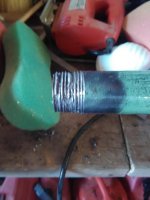
looks like no cutting oil to me. threads galling
its a 1 way ratchet. To reverse it I must take the pipe out of the vise,turn it around and re clamp it. Real pita!Are you backing up the die a bit after you cut some of the threads?
We were taught to always spin the die backwards about a half turn after each full turn of cutting the threads. This helps to clear the cut metal shavings out of the new threads you are cutting, as well as keeping them out of the die. It also helps keep you from trying to cut the threads too fast.
I don't know if this well help, but it has always worked for us when we wanted threads on solid rod, pipe or whatever.
Jim
Get yourself some DARK thread cutting oil, and flood the die with it as you work. Put a pan beneath the work to catch the drips, then strain out the metal. The oil will be OK to re-use. My wild guess is you are trying to use motor oil now.
Thanks. The only oil they had was for high speed cutting. The hired help at home depo said that would not work when threading by hand. He said any light weight oil would work. I was using the lightest oil I have which is atf. Went to another place and got cutting oil which helped a lot.
I hope I never see another pipe as long as I live.
Hot Rod Grampa
Well-known member
A gas pipe is a bad place to learn new skills. Sorry but we have to know when to admit we need a pro. If this was a water line above your computer and big screen tv, would you be willing to chance a leak? I would hope my neighbor was smart enough not to endanger his life or ours trying to save $100.00
marinusdees
Well-known member
It may be the lousy Chinese or Korean pipe.
I have a pipefitter friend who was installing a natural gas line for his daughter. He wound up buying mil-spec pipe. Even the original threads on the threaded end are of such poor quality that it is impossible to assemble without having leaks.
Jus' sayin'.
I have a pipefitter friend who was installing a natural gas line for his daughter. He wound up buying mil-spec pipe. Even the original threads on the threaded end are of such poor quality that it is impossible to assemble without having leaks.
Jus' sayin'.
driz
Well-known member
Gas line is a really bad place to practice a new skill. If it was me I’d practice on some scrap before ever touching the real thing. It’s a simple skill but there’s a lot at stake if it’s not right now and later on. Be especially careful With gas line more so than anything else you do.
Sent from my iPad using Tapatalk
Sent from my iPad using Tapatalk
gnpenning
Well-known member
Don't forget to use thread sealant that is gas specific.
bad_idea
Well-known member
I fit pipe for a living on Navy ships. Don't thread a lot of pipe, but I have threaded enough to be proficient. That said, I would hire out a gas line. Too much at stake.
If your threader will only ratchet in one direction, sounds like a cheap threader. If so, that is part of your problem. Cheap tools net cheap results. As previously said, need the correct oil. Here is a gallon of the good stuff on Amazon: https://www.amazon.com/RIDGID-70830-Thread-Cutting-Threading/dp/B0002YPMUM/ref=sr_1_5?ie=UTF8&qid=1530741208&sr=8-5&keywords=pipe+threading+oil&dpID=418pFrpSP0L&preST=_SY300_QL70_&dpSrc=srch. If you call around town, you can probably find the oil locally.
To buy quality tools and DIY a small project like this, it's probably not too much more to hire it out.
If your threader will only ratchet in one direction, sounds like a cheap threader. If so, that is part of your problem. Cheap tools net cheap results. As previously said, need the correct oil. Here is a gallon of the good stuff on Amazon: https://www.amazon.com/RIDGID-70830-Thread-Cutting-Threading/dp/B0002YPMUM/ref=sr_1_5?ie=UTF8&qid=1530741208&sr=8-5&keywords=pipe+threading+oil&dpID=418pFrpSP0L&preST=_SY300_QL70_&dpSrc=srch. If you call around town, you can probably find the oil locally.
To buy quality tools and DIY a small project like this, it's probably not too much more to hire it out.
lakelandcat
Well-known member
- Joined
- Sep 25, 2017
- Messages
- 7,327
gas pipe is uber hard, normal cutter won't work well, find someone at HD or Lowes that knows how to run the pipe cutter and let them use the big mach.
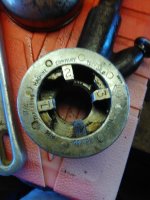
the threader was my fathers. Made in USA,prolly from the 1940" s.I fit pipe for a living on Navy ships. Don't thread a lot of pipe, but I have threaded enough to be proficient. That said, I would hire out a gas line. Too much at stake.
If your threader will only ratchet in one direction, sounds like a cheap threader. If so, that is part of your problem. Cheap tools net cheap results. As previously said, need the correct oil. Here is a gallon of the good stuff on Amazon: https://www.amazon.com/RIDGID-70830-Thread-Cutting-Threading/dp/B0002YPMUM/ref=sr_1_5?ie=UTF8&qid=1530741208&sr=8-5&keywords=pipe+threading+oil&dpID=418pFrpSP0L&preST=_SY300_QL70_&dpSrc=srch. If you call around town, you can probably find the oil locally.
To buy quality tools and DIY a small project like this, it's probably not too much more to hire it out.
The cheapest quote I got for this job was $1200...money I don't have. My pipe job can't be as bad as the old leaking pipe that leaked 200 gallons out in a month.
I got the yellow gas pipe sealer,20mill tape etc.
tdcisco1
Well-known member
at work we recieved a load of brasilian 2 in pipe. wouldnt thread worth a darn, ended up junking it.
ard
Well-known member
its a 1 way ratchet. To reverse it I must take the pipe out of the vise,turn it around and re clamp it. Real pita!
are you SURE? Lots of ratchets have a plunger you pull, rotate 180 and it reverses.
But yes, reverse a bit to shear off the chips, lots of oil. Fond memories of doing that for 1" line 90 ft from tank to house....
is that pipe green ?looks like an aged/pitted brass pipe to me... I always have to back out 1/2 turn for every 1/4 turn I advance, when I am using a manual pipe threader even with the ridgid cutter. I used dark cutting oils.
oops it's 1/2 turn for every 1/4 turn I advance... not every turn... maybe my cutters are cheaper
oops it's 1/2 turn for every 1/4 turn I advance... not every turn... maybe my cutters are cheaper
Last edited:
are you SURE? Lots of ratchets have a plunger you pull, rotate 180 and it reverses.
But yes, reverse a bit to shear off the chips, lots of oil. Fond memories of doing that for 1" line 90 ft from tank to house....
Where were you 7 hrs ago? Ya it does pull out and twist. I had no clue! Neither did my neighbor that came over to see what the cussing was about.
Attachments
welder4956
Well-known member
I hope you are using Schedule 80 pipe. Schedule 40 is not thick enough to thread if you want it to last awhile.
Anyone in the business know why some pipe is junk? I believe two places mentioned as COO were China and Brazil. I never had problem threading pipe, but it's been a LONG time since I've done it.
chris142 >> Glad it worked out for you. Those initial pics looked like ****.
chris142 >> Glad it worked out for you. Those initial pics looked like ****.
7635tools
Well-known member
Are you backing up the die a bit after you cut some of the threads?
We were taught to always spin the die backwards about a half turn after each full turn of cutting the threads. This helps to clear the cut metal shavings out of the new threads you are cutting, as well as keeping them out of the die. It also helps keep you from trying to cut the threads too fast.
I don't know if this well help, but it has always worked for us when we wanted threads on solid rod, pipe or whatever.
Jim
I’ve never had to do that with a rigid 700 threader. They use the same dies as the hand threader. Why would hand threading pipe be any different seeing you’re using the same die.
LifeLongWNYer
Well-known member
I just did a gas job for my daughter.... Her ( existing ) gas pipe, in her cellar, was run from the meter, at one end, to the far end, with no unions. I cut into it, three places, added unions "T's" and valves, adding drops for a dryer and for possible a future gas stove and pool heater.
Then through cellar wall and under exterior deck to BBQ. It turned out well, I am an amateur, but did a similar job in my Mom's house and when the utility inspector came he complimented my "plumber" for an excellent job.
The was a real international job. Pipe was made in Turkey, fittings in China and the valves in Italy.
Now that I am done, I have a question on the thread sealant. The plumber that I borrowed the tools from gave me a can of tan-colored Rector-Seal. When I ran out, the plumbing guy ( a real plumber, not a high school kid ) sold me a can of some light blue stuff. It looked like the Rector-Seal, except for the color. Both knew I was working with gas. Do I need to worry about leaks?
.
Then through cellar wall and under exterior deck to BBQ. It turned out well, I am an amateur, but did a similar job in my Mom's house and when the utility inspector came he complimented my "plumber" for an excellent job.
The was a real international job. Pipe was made in Turkey, fittings in China and the valves in Italy.
Now that I am done, I have a question on the thread sealant. The plumber that I borrowed the tools from gave me a can of tan-colored Rector-Seal. When I ran out, the plumbing guy ( a real plumber, not a high school kid ) sold me a can of some light blue stuff. It looked like the Rector-Seal, except for the color. Both knew I was working with gas. Do I need to worry about leaks?
.
The new blue stuff is badass. Both are fine but there are other aspects of a gas line installation that are critical. The first being a pressure test, never ever consider putting one into service without one. Soaping joints with only gas pressure which is 3psi isn't prudent. A gauged test should be completed at 10-15psi for a minimum of ten minutes with no pressure drop.
... A gauged test should be completed at 10-15psi for a minimum of ten minutes with no pressure drop.
I ran HDPE to my garage, and used the constab's for risers.did it myself. pretty sure my gas guy did a 24 hr test @ 30 psi .
I ran HDPE to my garage, and used the constab's for risers.did it myself. pretty sure my gas guy did a 24 hr test @ 30 psi .
Yup, back when I built pools we were required to do them at 60 for 24.
I think I began threading pipe in 1965. Even then you could ***** about the quality of the pipe. I don’t do much of that work today, but I continue to ***** about the pipe. Sharp properly set dies, the right oil, a properly set vice where you don’t have to jump to get the dies to move, thereby tearing the threads and the ability to reverse and clear the cutting edges will generally deliver a good threaded pipe. I think the blue stuff is called Mag-lock. The sick yellow colored Rectorseal is a great proven product. It isn’t the dope on the threads. It is the dope on the end of the wrenches
ard
Well-known member
Where were you 7 hrs ago? Ya it does pull out and twist. I had no clue! Neither did my neighbor that came over to see what the cussing was about.
Hey, kudos for sticking to this and getting it done!
FWIW- some of my short stubs, I would clamp them in the pipe vise and that would tear up the green coating- Just 'patch' it with the same tape that covers the couplings. The whole thing does LOOK pretty, but it will last a LONG time.
CJ7VFR
Well-known member
thanks! Once I got the right oil it worked
Excellent! Did you take any pictures of the nice threads?
Jim
CJ7VFR
Well-known member
I’ve never had to do that with a rigid 700 threader. They use the same dies as the hand threader. Why would hand threading pipe be any different seeing you’re using the same die.
It was always something that the old timers I learned from did. Even when I was in school, in the different shop classes, we always backed out a half turn for every full turn to clear the chips out of the die and newly cut threads.
It always worked, even when using a tap to cut interior threads.
Jim
CraigStu
Well-known member
My brother had that exact problem w/ chinese pipe. The shop explained to him that the US pipe was nearly double the $ so he went w/ the chinese. He was ready for a great weekend of getting a big chunk of his project done. tried different oils. Tried a new die in the threader. The following Monday he took it all back except one length and traded it in for US pipe.It may be the lousy Chinese or Korean pipe.
I have a pipefitter friend who was installing a natural gas line for his daughter. He wound up buying mil-spec pipe. Even the original threads on the threaded end are of such poor quality that it is impossible to assemble without having leaks.
Jus' sayin'.
TractorJeff
Well-known member
Backing up a Tap or a Die is normal on all threading instructions EXCEPT Pipe Threaders!
Over the years in the Northwestern PA oilfields I threaded thousands of feet of pipe. Sometimes on a RIGID threading machine, most times with RIGID hand threaders. Pipe size ran form 1/4" to 4 & 1/4". Got to use Thread Cutting oil or the threads will be inferior!
Over the years in the Northwestern PA oilfields I threaded thousands of feet of pipe. Sometimes on a RIGID threading machine, most times with RIGID hand threaders. Pipe size ran form 1/4" to 4 & 1/4". Got to use Thread Cutting oil or the threads will be inferior!
Strouty
Well-known member
Also looks like the OP has an adjustable cutter, so could be too tight, that in conjunction with not enough oil could have been the main problem.
HoosierBuddy
Well-known member
Where were you 7 hrs ago? Ya it does pull out and twist. I had no clue! Neither did my neighbor that came over to see what the cussing was about.
Toledo. We had one of those around here and I couldn't find replacement dies for it. Had to junk it. I wouldn't buy any threader that didn't say Ridgid on it. We have several around here that have been in daily service for 30 or 40 years. You DO have to replace the dies when they get dull though...which I think yours needed about 20 years ago.
Phil