d42jeep
Well-known member
It’s news to me about the handles being a different color between Plomb and Proto. I always assumed that although the name changed the handles remained the same.
-Don
-Don


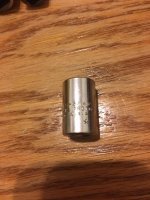
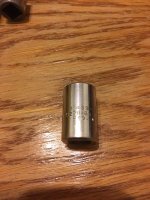
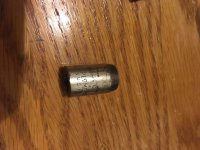
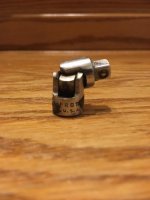
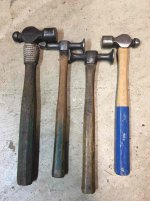

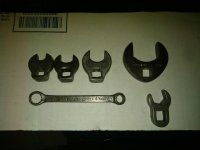
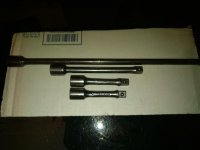
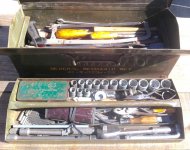
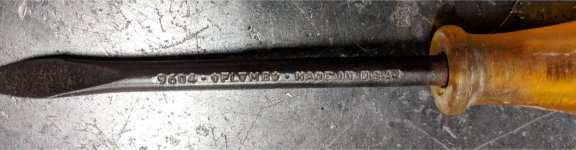
Picked this stuff up over the weekend.
Sent from my iPhone using Tapatalk
Here is a picture of plvmb, proto and p&c octagonal hammer handles... the proto on the far left is lighter than the proto hammer the second one in from the left. The plvmb, which is the second from the right is the darkest while the p&c is blue... all plvmb empire hammers had octagonal handles and the plvmb one where the darkest . The plvmb hammer has almost no paint on it so I had to turn it on it’s side in order to be able to see it
Sent from my iPhone using The Garage Journal mobile app
Thanks for the pictures. Very informative. Although I have several old Proto hammers of various descriptions I really haven’t seen many original handle Plomb. My WW2 sets call for ball pein hammers which obviously rules out Plomb, since they had agreed not to make any with their name on them.
-Don
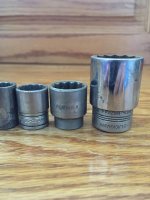
I see your socket you are talking about with the weird words... it means British standard which I believe is whitworth sizing ? It will work for guys with British bikes/ motorcycles but not so much on standard American sizes or metric
Sent from my iPhone using The Garage Journal mobile app
Whitworth isn't quite the same as BS (British Standard), that dimension came out, I think, during WWII as the Brits were trying to save steel, not unlike US dimensional lumber. You will see some marked with both Whitworth and BS dimensions and they are about 1/8 difference. So, 1/4 BS-5/16 Whitworth marked on the same socket.


Thank you sir! However plvmb made ball pein hammers under the paschall name so you can have an era correct plvmb empire hammer ! I do not have any of those but have a few friends that do
Sent from my iPhone using The Garage Journal mobile app
WW2 era Plomb ball pein
Are you willing to trade/sell it?I’ve got an 1161 pebble in excellent condition.......

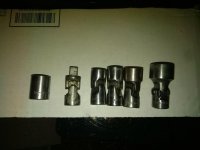
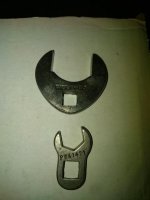


Absolutely. And, given the fact that the hinge handle in question is a US Army Air Forces tool, especially in the context of working around aircraft and fuel. Although I will add that another alternative explanation could be patina. I have seen certain dark oxide finishes get coppery, or certain steel go coppery in the presence of certain fumes. I have a bunch of Williams DBEs in particular that have taken on a bronzey appearance with age. EDIT: But I have to admit that hinge handle sure does look intentionally plated. From afar, I would swear it's BeCu.OTOH, it would not surprise me to find out that Plomb made small runs of certain other copper plated tools that weren't in their catalogs.

Thanks sent you a PM on it.Set aside for r_olson_06.....
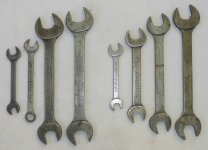
Those no tool number, NON Whitworth Plombs that pop up in the U.K include other non catalog size combinations that aren't standard Jeep or GMTK sizes either.These are the wrenches found in WW2 Motor Vehicle Mechanics Tool Sets (MVMTS) and General Mechanics Tool Sets (commonly referred to as GMTKs) throughout WW2.
41-W-991 DOE Wrench 3/8" x 7/16" - 723
41-W-1003 DOE Wrench 1/2" x 19/32" - 25
41-W-1005-5 DOE Wrench 9/16" x 11/16" - 27C
41-W-1008-10 DOE Wrench 5/8" x 25/32" - 28S
41-W-1012-5 DOE Wrench 3/4" x 7/8" - 731A
41-W-1021 DOE Wrench 15/16" x 1" - 1033C
If Plomb wanted to get in on being a supplier for those toolsets and others, they were going to have to come up with some 27C and 28S equivalents and it looks like they did. Most of these sets were shipped to the war in Europe and the Pacific and Im sure appearance wasnt high on their priority list, just like the WF tools.
-Don
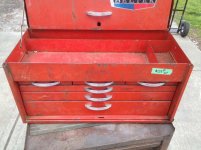
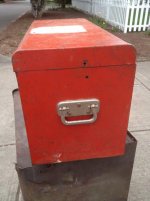


Those no tool number, NON Whitworth Plombs that pop up in the U.K include other non catalog size combinations that aren't standard Jeep or GMTK sizes either.
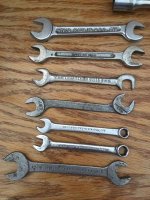
I'm going to avoid getting into a "correct" "not correct" g503 style never ending discussion but I will comment on that last bit. These are less finished than their WF tools. Barcalo, Fairmount, Vlchek, Duro Chrome, Bonney, etc. weren't sending over wrenches that rough from what I've seen. Maybe it was some kind of emergency fill or maybe just a money saving deal but I'll bet they had a little pros and cons debate about it at Plomb before they went ahead and did it.
There's nothing unusual about that. Most of the major mfgrs, including those you cited later in your post, supplied DOE wrenches in a full range of sizes, satisfying the requirements of other tool-sets beyond the sizes specified by the US Ordnance Dept for on-board tool-sets. (Just as an aside FYI - while most famous as "Jeep wrenches", the sizes were actually specified for many vehicles - including many of the other trucks Ford made, all Chevys/GMCs, etc, except Dodge, which required some odd sizes. Same for GMTK at 2nd echelon, plus the 33C.) If you're arguing that you don't think the non-catalog Plomb wrenches were specifically made for on-board toolkits, I concur, and have written about this many times before. The US Ordnance Dept was Plomb's smallest customer, by far. And Plomb wrenches just don't show up in Ordnance Dept re-packs like other suppliers do. But once the wrenches were in US Ordnance Dept hands, there's no telling where they went to meet whatever need they had. So motorpool Jeep and GMTK kits with Plomb are possible. FWIW, I have some pretty rough wrenches in all sizes, on-board and other, from a variety of mfgrs. Bonney, Armstrong and Williams comes immediately to mind. I've never collected Plomb DOEs so I don't have any to compare in person. I agree that they appear to be even less-finished than WF counterparts. Whatever the contract, it clearly eschewed a hard buffing.Those no tool number, NON Whitworth Plombs that pop up in the U.K include other non catalog size combinations that aren't standard Jeep or GMTK sizes either.
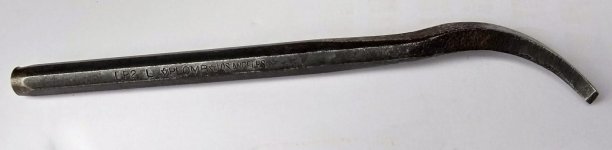
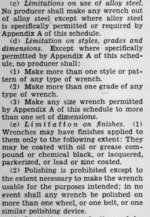
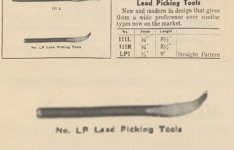
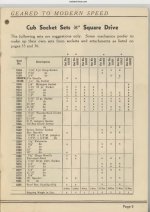
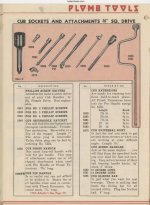
See Pic, excerpted from 1941. The 1939 catalog has the same image and list. Your markings (PLOMB LOS ANGELES) are clearly older than that, and you'll note that there is no LP2 L, but the 1920's and early 1930's catalogs that I have access to are strictly for the automobile and aviation industry, and they do not include the tools included in these later Plomb catalogs for the plumbing, oil, mining, RR, etc industries. Having said all that, it looks original and unmolested to me. Nice find!I have this PLOMB LP2 L (Lead Picking Left) tool and want to verify it hasn't been modified but I can't find any images on line. Can anyone help?
See Pic, excerpted from 1941. The 1939 catalog has the same image and list. Your markings (PLOMB LOS ANGELES) are clearly older than that, and you'll note that there is no LP2 L, but the 1920's and early 1930's catalogs that I have access to are strictly for the automobile and aviation industry, and they do not include the tools included in these later Plomb catalogs for the plumbing, oil, mining, RR, etc industries. Having said all that, it looks original and unmolested to me. Nice find!
There's nothing unusual about that. Most of the major mfgrs, including those you cited later in your post, supplied DOE wrenches in a full range of sizes, satisfying the requirements of other tool-sets beyond the sizes specified by the US Ordnance Dept for on-board tool-sets. ..... Armstrong and Williams comes immediately to mind. ...I've never collected Plomb DOEs so I don't have any to compare in person. I agree that they appear to be even less-finished than WF counterparts. Whatever the contract, it clearly eschewed a hard buffing. )
I agree, there's nothing unusual about that if that is what Plomb was doing. I was just giving Don info or evidence he may or may not have already for his theory. I'll dig around for some examples so I can add some pics.
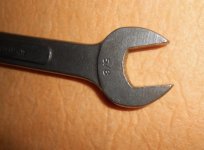
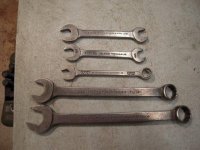
Not knocking Armstrong in general but you reminded me of one of the worst contract offerings I remember seeing, which was their DOE contribution to the Merlin Packard kit.
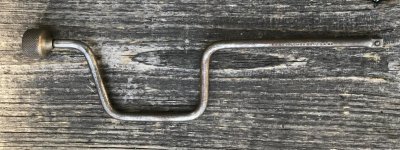







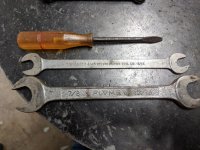
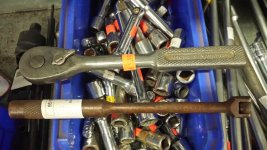

![IMG_1317[1].jpg](/forum/data/attachments/688/688009-96378522cacc1d7389fbf66103492cda.jpg)
![IMG_1319[1].jpg](/forum/data/attachments/688/688289-0a7ded87e5979d7db455c78d9738ae06.jpg)
![IMG_1318[1].jpg](/forum/data/attachments/688/688262-7c55a946020654ff6c7ef4cd4c85a918.jpg)