To avoid these ads, REGISTER NOW!

Possible Foundation Issues

rockcrawler

Well-known member
Joined
Jan 11, 2013
Messages
930
Location
Dallas, TX
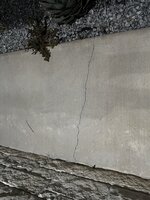
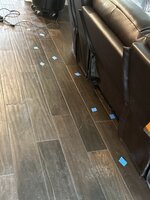
We are having some issues with our newish home. House is about 5 years old and we have had issues with the ceramic tiles popping up in various places. Actually, we have a lot of hollow tiles throughout due to poor installation and a few have cracked. Close to the middle of the house we have a long crack on the front porch, long crack on the back porch, crack in the ceiling, and a row of tiles through the house that are in line with the cracks on the porches that are cracking and coming up. We have had 2 structural engineers out to take measurements and they both say that nothing significant is occurring, just seasonal movement. I question this. When we built the house, we were told that a significant amount of piers were required, so we paid up believing that they were needed to eliminate significant foundation issues in the future. We are just confused about what is happening. It‘s frustrating and a bit scary. The foundation is post tension.
 
To avoid these ads, REGISTER NOW!

strength_and_power

Well-known member
Joined
Apr 26, 2015
Messages
1,392
Nothing to add here but I live in North Texas so I can probably learn something that may come in handy down the road.
 

Dig Doug

Well-known member
Joined
Apr 16, 2018
Messages
1,083
Do you have any pictures from the build?
where are these piers in relation to the cracks? Why did you need the piers ?
Is there clay/ moisture in the yard, what about sand?

contact civil/ geotechnical - soils engineer -
you should have one from the home build and there should be a soils report detailing the soil and the need for the piers. Dig up all your plans / specs - paperwork from your home build.

if you do not have anything contact the contractor & or the city and make copies

the structural engineer would look at everything above the ground, not below the ground. There will be a structural engineer that did the design for the home

there could be a plumping issue - unlikely, but a possibility
water leak if water lines were run under the slab & or a broken drain/ waste line

Those items are fairly easy to rule out
excess water usage on the meter
camera the waste line
 
Last edited:

jack stand

Well-known member
Joined
Feb 29, 2012
Messages
3,304
Location
Lakes Region Maine
In a "development"?
Talk to your neighbors to see if this is anything that they're seeing in their house.
It could be a lot of things from materials, labor to Geotechnical problems.
Look for common issues especially with the direct adjoining homes.
 

Rusty Wrench

Well-known member
Joined
Aug 19, 2021
Messages
190
There may not be enough evidence for professional concern yet, not to minimize that gnawing gut feeling most us would incur in like circumstances.
Some good questions and advice above.
I would also suggest attaching a crack monitoring gauge(s) in, if possible, unobtrusive areas. A simple plastic card with fine graduations. Record the movement. Try for mounting on horizontal and vertical faces. Good luck
 

ConCretin

Well-known member
Joined
Jan 20, 2011
Messages
3,378
Location
Central Maine
Post tensioning suggests the presence of expansive soils, which expand and contract with changes in moisture. Concrete is going to crack under these condition but the post tensioned cables are there to keep the cracks tight. If you are seeing are hairline cracks, I wouldn't be too concerned. If the cracks have opened up at all, it might be a bigger problem.

I suppose it's possible a few localized tile issues could develop at the cracks but if the problems are widespread, it's probably just a crappy tile job.
 

75gmck25

Well-known member
Joined
Jul 21, 2014
Messages
1,313
Location
Alexandria, VA
Many places in Texas have problems with expansive soil, so small cracks in a huge concrete slab are hard to completely avoid. When I lived in San Antonio there were some folks that even watered around their slab during hot temps so that it kept the soil moisture around the slab more constant. In my experience, the small cracks do not mean there is a major foundation problem. YMMV

However, before they installed tile they should have put a good quality decoupling membrane over the concrete. That membrane helps prevent slab cracks from becoming visible in the tile. This is one company with that type of product. https://www.schluter.com/schluter-u...hluter®-DITRA-&-DITRA-XL/p/DITRA?facets=false
 
OP
R

rockcrawler

Well-known member
Joined
Jan 11, 2013
Messages
930
Location
Dallas, TX
Pictures would help illustrate your concerns.

Front Porch

IMG_4133.jpeg

Back Porch

71468233471__5376058D-8C0B-460E-98DD-DFFCD2FE53BC.jpeg

Hollow tiles in line with cracks on porches.

IMG_3397.jpeg

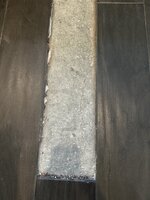
Area where tiles were removed because they were hollow and popping up. You can see the cracks that were running under the tiles.

IMG_3394.jpegIMG_3389.jpeg


We tried to get the builder to fix the floor but they say it’s not their problem. We know now that it was installed incorrectly and very poorly. The tile was made by Interceramic, who has since gone out of business and we do not have any tiles left. So, we are looking at having to spend upwards of $30K to replace all of the flooring in a 5 year old house.
 
Last edited:
OP
R

rockcrawler

Well-known member
Joined
Jan 11, 2013
Messages
930
Location
Dallas, TX
Do you have any pictures from the build?
where are these piers in relation to the cracks? Why did you need the piers ?
Is there clay/ moisture in the yard, what about sand?

contact civil/ geotechnical - soils engineer -
you should have one from the home build and there should be a soils report detailing the soil and the need for the piers. Dig up all your plans / specs - paperwork from your home build.

if you do not have anything contact the contractor & or the city and make copies

the structural engineer would look at everything above the ground, not below the ground. There will be a structural engineer that did the design for the home

there could be a plumping issue - unlikely, but a possibility
water leak if water lines were run under the slab & or a broken drain/ waste line

Those items are fairly easy to rule out
excess water usage on the meter
camera the waste line

We built outside the city limits, so since there are no inspections required, we believe quite a bit was overlooked. We have never built a house, so we have learned a few very hard lessons.

They told us that the foundation company required that the piers be used. We do not have pictures of where they are.

There was never a soil sample performed on our property, which we learned later in the build. They claimed that they did it on a few lots on the street and that was good enough.

Here in NE Texas, the soil is loam/clay, so there is a bit of seasonal movement. We are just concerned to see so many cracks in a new home.

We had a plumbing test performed as well and they said there were no leaks.

I will have to check with the county to see if anything was filed from our build.

Like I said, we learned, and are still learning some hard lessons from all of this.

The builder has already done the Texas contractor shuffle, which is so popular with contractors here. Very little, to no regulations on Texas contractors. They do what they want and then ****, they are gone. They perform crappy work and when enough people are after them, they simply go out of business on Friday and open a new business on Monday, and they cannot be touched.………and they know it. Completely legal and accepted here in Texas.
 
OP
R

rockcrawler

Well-known member
Joined
Jan 11, 2013
Messages
930
Location
Dallas, TX
In a "development"?
Talk to your neighbors to see if this is anything that they're seeing in their house.
It could be a lot of things from materials, labor to Geotechnical problems.
Look for common issues especially with the direct adjoining homes.

There are multiple homes in our neighborhood that had to have tile replaced due to crappy installation. And the builder fixed it. Ours just happened too late, so the builder told us they will not fix it. Then they closed that business and opened a new one. The neighborhood is small and semi secluded. Three streets, one way in and out, and all lots are 1.5 to 4 acres.
 
Last edited:

Firebrick43

Well-known member
Joined
May 12, 2015
Messages
13,975
Location
West central Indiana
Well, there's your problem.

Not supposed to be done that way for the exact reason you are having issues
Most tile is set directly on concrete with thin set mortar? Under layment is usually for tile on top of wood subfloors

Front Porch

IMG_4133.jpeg

Back Porch

71468233471__5376058D-8C0B-460E-98DD-DFFCD2FE53BC.jpeg

Hollow tiles in line with cracks on porches.

IMG_3397.jpeg

Area where tiles were removed because they were hollow and popping up. You can see the cracks that were running under the tiles.

IMG_3394.jpegIMG_3389.jpeg


We tried to get the builder to fix the floor but they say it’s not their problem. We know now that it was installed incorrectly and very poorly. The tile was made by Interceramic, who has since gone out of business and we do not have any tiles left. So, we are looking at having to spend upwards of $30K to replace all of the flooring in a 5 year old house.
Are those tile pics right after the tile is pulled up? Or has the thin set been scraped off the concrete before they were taken?
 

DGersic

Well-known member
Joined
Mar 12, 2017
Messages
6,260
Location
DeKalb, IL
Front Porch

IMG_4133.jpeg

Back Porch

71468233471__5376058D-8C0B-460E-98DD-DFFCD2FE53BC.jpeg

Hollow tiles in line with cracks on porches.

IMG_3397.jpeg

Area where tiles were removed because they were hollow and popping up. You can see the cracks that were running under the tiles.

IMG_3394.jpegIMG_3389.jpeg


We tried to get the builder to fix the floor but they say it’s not their problem. We know now that it was installed incorrectly and very poorly. The tile was made by Interceramic, who has since gone out of business and we do not have any tiles left. So, we are looking at having to spend upwards of $30K to replace all of the flooring in a 5 year old house.

IMHO, the concrete cracks look minor. The tile seems to be your only problem.

No good suggestions on the tile. If it has to come up, maybe you could scavenge and re-use most of it? Maybe something creative with a pattern or border or something? Might cost more in labor than it’s worth to save on materials.

If it comes up easy, can you pull it up yourself to save on labor? Skilled tile installation is worth paying for, but demo I can generally do myself. Not much skill needed to tear something up.
 

DGersic

Well-known member
Joined
Mar 12, 2017
Messages
6,260
Location
DeKalb, IL
Most tile is set directly on concrete with thin set mortar? Under layment is usually for tile on top of wood subfloors


Are those tile pics right after the tile is pulled up? Or has the thin set been scraped off the concrete before they were taken?

Could be that it’s stuck to the back of the tile.
 

Shiftless

Well-known member
Joined
Mar 9, 2014
Messages
14,459
Location
East Bay SFO
Or has the thin set been scraped off the concrete before they were taken?
If those spots had no (or very little) thin set on the floor, that’s further evidence of a really crappy install. The tile setter skimped on material and probably just buttered up some or most of the tiles and flopped them down onto a dry floor.

I am not a pro, but have done my share of (successful1) DIY tile installations on floors and walls.
 
To avoid these ads, REGISTER NOW!

Firebrick43

Well-known member
Joined
May 12, 2015
Messages
13,975
Location
West central Indiana
Decoupling membranes such as the Ditra mentioned earlier are NOT the cement board underpayments used over wooden floors.
If your getting underpaid you should talk to your boss about it.

If those spots had no (or very little) thin set on the floor, that’s further evidence of a really crappy install. The tile setter skimped on material and probably just buttered up some or most of the tiles and flopped them down onto a dry floor.

I am not a pro, but have done my share of (successful1) DIY tile installations on floors and walls.
yes, large tile needs thin set applied with a proper size notched trowel on the floor and back buttered as well.
 

dcg9381

Well-known member
Joined
Jun 20, 2018
Messages
11,627
Location
Austin, TX
When we built the house, we were told that a significant amount of piers were required, so we paid up believing that they were needed to eliminate significant foundation issues in the future.
So you had an engineered foundation done, which indicated that drilling piers and a post-tension slab was required. I assume they were installed and inspected when poured. You've had it measured for shift by another engineer who says it's within normal... I'd call that "peace of mind".

By eyeball, your cracks don't look any more substantial that I've seen in other homes in my area... Not that eyeballs mean much, but I trust the engineer.

We tried to get the builder to fix the floor but they say it’s not their problem. We know now that it was installed incorrectly and very poorly.
Welcome to "home warranty" in Texas where we don't license GCs. Frankly at 5 years, I don't think many home builders would help you out here. Likely their "tile installers" were bottom bid, unless you have the name of a reputable sub-contractor that's still in business.. But my experience getting subs to come back after cutting a check borders on near 0%.

The tile was made by Interceramic, who has since gone out of business and we do not have any tiles left. So, we are looking at having to spend upwards of $30K to replace all of the flooring in a 5 year old house.
Even if you found the same tile, batch matters to get it to match.
30k is a big number. It's a ***** to get old ceramic tile up, but I think that number is high in TX. It might be higher if they laid tile under cabinets, etc.

I agree with others, I think you got a ****-tastic tile job and have normal shifting in the home.

It's not usual to lay tile on concrete around here, but it looks like the adhesion is totally gone...
 
OP
R

rockcrawler

Well-known member
Joined
Jan 11, 2013
Messages
930
Location
Dallas, TX
Most tile is set directly on concrete with thin set mortar? Under layment is usually for tile on top of wood subfloors


Are those tile pics right after the tile is pulled up? Or has the thin set been scraped off the concrete before they were taken?

I think most of the thin set came up with the tiles.
 
OP
R

rockcrawler

Well-known member
Joined
Jan 11, 2013
Messages
930
Location
Dallas, TX
So you had an engineered foundation done, which indicated that drilling piers and a post-tension slab was required. I assume they were installed and inspected when poured. You've had it measured for shift by another engineer who says it's within normal... I'd call that "peace of mind".

By eyeball, your cracks don't look any more substantial that I've seen in other homes in my area... Not that eyeballs mean much, but I trust the engineer.


Welcome to "home warranty" in Texas where we don't license GCs. Frankly at 5 years, I don't think many home builders would help you out here. Likely their "tile installers" were bottom bid, unless you have the name of a reputable sub-contractor that's still in business.. But my experience getting subs to come back after cutting a check borders on near 0%.


Even if you found the same tile, batch matters to get it to match.
30k is a big number. It's a ***** to get old ceramic tile up, but I think that number is high in TX. It might be higher if they laid tile under cabinets, etc.

I agree with others, I think you got a ****-tastic tile job and have normal shifting in the home.

It's not usual to lay tile on concrete around here, but it looks like the adhesion is totally gone...

It will require a total tear out of about 3K sq. ft. of ceramic tile. All cabinets, and a huge island were all installed on top of the tile. In the kitchen, living room, etc. we have found about 50 hollow tiles.
 

Pete D.

Well-known member
Joined
Jul 31, 2007
Messages
270
Location
Chicago
My BIL is a tile setter, and he glues down an anti fracture membrane when he tiles over concrete. He uses that in basements. They make an interior and exterior adhesive.
 
OP
R

rockcrawler

Well-known member
Joined
Jan 11, 2013
Messages
930
Location
Dallas, TX
My BIL is a tile setter, and he glues down an anti fracture membrane when he tiles over concrete. He uses that in basements. They make an interior and exterior adhesive.

The more we research the issue, we find that the install was very shoddy and that a membrane should have been used. We have had several tile companies come out and look at what was done and they have all said the same thing, really bad installation. The builder did send their tile guy out to replace a few loose tiles with the last few extras we had left. They used the wrong color grout and damaged one of the tiles that we didn’t have a replacement for. The gout they used has since turned to dust and completely disappeared. There are tiles now that have no grout left between them.
 

Hank11

Well-known member
Joined
Aug 19, 2019
Messages
1,137
Location
Tennessee
You should talk with a Texas lawyer who handles defective construction cases regularly. Most would offer a free consultation. You may have an actionable claim and don’t know it.
 

Shiftless

Well-known member
Joined
Mar 9, 2014
Messages
14,459
Location
East Bay SFO
the install was very shoddy and that a membrane should have been used
They used the wrong color grout and damaged one of the tiles that we didn’t have a replacement for. The gout they used has since turned to dust and completely disappeared. There are tiles now that have no grout left between them.

With such a shoddy job, a membrane wouldn’t have helped much. The guys obviously didn‘t properly use thin set mortar applied to the floor with a notched trowel and then back butter the tiles and lay them before the thin set dried and hardened so much as to not stick to the concrete floor.
 

paredown

Well-known member
Joined
Jan 12, 2012
Messages
544
Location
Pomona, NY
Concrete doesn't look that concerning to me, but I agree about the quality of the tile job. Big tiles = back butter... And Ditra plus acrylic grout with a properly prepped floor is a must,

I remember the first floor I did (I was still a young guy, so a long time ago). It was the office for my Dad's business (we used to make brick ties and other misc metal bits for concrete and facing work.) One of the brickies came by to see about a job, saw the new floor and grabbed a machine bolt off my Dad's bench and walked around the floor doing the 'tap test'.

No voids. He said it was better than most of his apprentices, and did I want a job?

Sorry about your floor.
 

BombShelter

Well-known member
Joined
Nov 16, 2015
Messages
541
Location
State of Hockey
I do some foundation work and look at hundreds of them every year, for me personally, they all seem to start cracking right after three years along with the garage floor and front landings. I see at least a handful similar to yours every year but we have basements here so that can act as a buffer. If you want to see some really bad jobs, look up the big new homebuilders on YouTube, the amount of crappy work is mind-boggling.

I like watching the videos on the Millennium Tower in SF, it sounds like the builder didn't go down to bedrock with the piers, I wonder what your foundation guy did with yours. We have a local 1950's neighborhood built on wet ground here, all the homes are on piers and they are still standing straight, the concrete flatwork on the other hands needs to be replaced every couple decades.

 
OP
R

rockcrawler

Well-known member
Joined
Jan 11, 2013
Messages
930
Location
Dallas, TX
I do some foundation work and look at hundreds of them every year, for me personally, they all seem to start cracking right after three years along with the garage floor and front landings. I see at least a handful similar to yours every year but we have basements here so that can act as a buffer. If you want to see some really bad jobs, look up the big new homebuilders on YouTube, the amount of crappy work is mind-boggling.

I like watching the videos on the Millennium Tower in SF, it sounds like the builder didn't go down to bedrock with the piers, I wonder what your foundation guy did with yours. We have a local 1950's neighborhood built on wet ground here, all the homes are on piers and they are still standing straight, the concrete flatwork on the other hands needs to be replaced every couple decades.


We are hoping that it doesn’t get worse. We do have a crack in the garage that you can drop a nickel into.
 
To avoid these ads, REGISTER NOW!
Top Bottom