To avoid these ads, REGISTER NOW!

Post Tension Slab - Cable Sheathing Question

TX2021

Member
Joined
Dec 9, 2021
Messages
8
Background: Single story post-tension slab approximately 2300 sq. ft. new construction. Contractor has installed formwork and laid out post tension cables.
Contractor has "overstripped" the sheathing from the post tension cables approximately 3" on both ends. In other words there is 3" of exposed cable between the sheathing and the anchorage points on both ends of the cable. This is the part inside of the formwork.

Question: Is it acceptable practice for the steel tension cables to be left exposed to the concrete in this manner when it is poured?
I've spent hours trying to find an answer but can't. Unfortunately it is 2 days before pour is scheduled and the job site isn't close and I don't have a good picture.
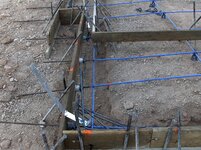
 
To avoid these ads, REGISTER NOW!

MoonRise

Well-known member
Joined
Nov 5, 2010
Messages
4,031
Location
NJ
Instant STOP WORK ORDER until the engineer of the project reviews the status of the tensioning cables.

The engineer then determines whether the cables can be used as they are now or if they need to be fixed or replaced.

Short answer is probably that the cables can NOT be used as-is. But I am not your project's engineer of record (EOR).
 

pima67

Well-known member
Joined
Dec 5, 2009
Messages
310
Location
Tucson, AZ
Here is a pic of our PT slab before pour. May need to enlarge your view to see the lack of sheath at the thickened slab edge ( from 2006)
 

Attachments

  • HPIM0056.JPG
    HPIM0056.JPG
    1.5 MB · Views: 67

PCustoms

Well-known member
Joined
Jul 23, 2011
Messages
23,498
Location
VT
Here is a pic of our PT slab before pour. May need to enlarge your view to see the lack of sheath at the thickened slab edge ( from 2006)
Doesn't the sheathing need to be cut back to allow for tensioning?
 

Rusted Nut

Well-known member
Joined
Dec 11, 2022
Messages
1,829
Location
Northern Arizona
Look at your engineered PT shop drawings. Installed work should be exactly as shown on shop drawings. Without seeing shop drawings, I’d say no this is not correct. Water from concrete will rust the cable out. A PT high rise in Seattle had to be demolished for a similar issue. Resolve this before pouring.
 

gsmith22

Well-known member
Joined
Jul 14, 2015
Messages
337
Location
Central NJ
OP needs to contact EOR not us blowhards on garage journal. but for those who would like the engineering rationale here goes:
you have unbonded tendons in a sheath that are tensioned after the slab is cast. sure, the sheath protects the cable from corrosion but more importantly allows the cable to move and shorten within the sheath so the maxiumum amount of tension gets transfered from the stressing end to the dead end (which in trun transmit the tension in the cable as compression into the slab). ignoring all of the corrosion issues (which will be many), if you cast the slab and it bonds to the unsheathed cable at its end (ie near where it will be stressed), that will act like an intermediate "dead end" and a reduced amount of tension will get to the other dead end. so you won't get all of the tension in the cable as compression in the slab becaseu the cable is trying to shorten between the stressing end and where the cable bonded to the concrete (3" away). but don't believe me. DISCUSS WITH YOUR EOR
 

gsmith22

Well-known member
Joined
Jul 14, 2015
Messages
337
Location
Central NJ
Here is a pic of our PT slab before pour. May need to enlarge your view to see the lack of sheath at the thickened slab edge ( from 2006)
if your cable shortened 3" (or whatever that distance is that is unsheathed), you would have a serious cracking issue with your slab because everything would have moved that far. slab still square? think fractions of an inch for the shortening leaving a pretty large distance unsheathed.
 

pima67

Well-known member
Joined
Dec 5, 2009
Messages
310
Location
Tucson, AZ
No slab cracking on ours. Note the light blue cone shaped item next to the form board and the length of cable outside of the board. The specified tension is applied to the cable outside of the slab after board removal an curing and then an anchor is fastened to the cable and the rest of the cable is cut off. The unsheathed portion is pulled to the edge of the slab during the tensioning process.

From the: https://www.concretenetwork.com/post-tension/basics.html
"When the strands are stressed, the wires will stretch—about 4 inches for a 50 foot strand—to apply 33,000 pounds of load.Stressing should only be done by qualified workers. After stressing, the tendon is cut off and the pocket in which the anchors are located is filled with grout to protect them from corrosion. "
 
To avoid these ads, REGISTER NOW!
OP
T

TX2021

Member
Joined
Dec 9, 2021
Messages
8
Here is a pic of our PT slab before pour. May need to enlarge your view to see the lack of sheath at the thickened slab edge ( from 2006)
Yes, that's pretty close to exactly what I'm looking at/area of concern.
 

gsmith22

Well-known member
Joined
Jul 14, 2015
Messages
337
Location
Central NJ
No slab cracking on ours. Note the light blue cone shaped item next to the form board and the length of cable outside of the board. The specified tension is applied to the cable outside of the slab after board removal an curing and then an anchor is fastened to the cable and the rest of the cable is cut off. The unsheathed portion is pulled to the edge of the slab during the tensioning process.

From the: https://www.concretenetwork.com/post-tension/basics.html
"When the strands are stressed, the wires will stretch—about 4 inches for a 50 foot strand—to apply 33,000 pounds of load.Stressing should only be done by qualified workers. After stressing, the tendon is cut off and the pocket in which the anchors are located is filled with grout to protect them from corrosion. "
I misspoke. yes your cable elongates (~4" in your example) inside the sheath when you stress it that causes fractions of an inch compressive shortening in the concrete slab. But the sheath doesn't elongate, shorten, or otherwise move. So that 3" area with no sheath remains that way (as long as the concrete doesnt bond to the cable where there is no sheath). The cone and board form don't move over to the right in your picture. they can't because your slab edge will be all out of alignment now if that occured. The elongation of the cable is over its total length so you have a very small amount of elongation over the area pictured with no sheath.
 
OP
T

TX2021

Member
Joined
Dec 9, 2021
Messages
8
Look at your engineered PT shop drawings. Installed work should be exactly as shown on shop drawings. Without seeing shop drawings, I’d say no this is not correct. Water from concrete will rust the cable out. A PT high rise in Seattle had to be demolished for a similar issue. Resolve this before pouring.
I read about the high rise in Seattle when checking on this, actually. It appears there are some difference in certain tolerances that are/are not allowed in multi-story structures versus single story structures. High rises/parking garages basically = no tolerance and full protection but single story doesn't have the same requirements (for some reason I have not gotten any illumination on).
 
OP
T

TX2021

Member
Joined
Dec 9, 2021
Messages
8
OP needs to contact EOR not us blowhards on garage journal. but for those who would like the engineering rationale here goes:
you have unbonded tendons in a sheath that are tensioned after the slab is cast. sure, the sheath protects the cable from corrosion but more importantly allows the cable to move and shorten within the sheath so the maxiumum amount of tension gets transfered from the stressing end to the dead end (which in trun transmit the tension in the cable as compression into the slab). ignoring all of the corrosion issues (which will be many), if you cast the slab and it bonds to the unsheathed cable at its end (ie near where it will be stressed), that will act like an intermediate "dead end" and a reduced amount of tension will get to the other dead end. so you won't get all of the tension in the cable as compression in the slab becaseu the cable is trying to shorten between the stressing end and where the cable bonded to the concrete (3" away). but don't believe me. DISCUSS WITH YOUR EOR
I posted here because I wanted to see if anyone had similar experience or could help point in the right direction - both of which happened. Not to get actual engineering advice.
 
OP
T

TX2021

Member
Joined
Dec 9, 2021
Messages
8
Instant STOP WORK ORDER until the engineer of the project reviews the status of the tensioning cables.

The engineer then determines whether the cables can be used as they are now or if they need to be fixed or replaced.

Short answer is probably that the cables can NOT be used as-is. But I am not your project's engineer of record (EOR).
After all the time it took to get from planning to where I am now - I actually forgot I paid an engineer to produce the plans! Communicated with the EOR as you suggested. He said up to 6" of exposed sheathing is allowable (though wouldn't elaborate on if it is desireable).

My general contractor also previously said that he sees it all the time.

I really don't like it - though now that my engineer has chimed in I don't really have a leg to stand on with the concrete contractor. Reason being is my understanding is concrete is water vapor permeable. If that is the case (which obviously it is widely understood that it is) then it seems bizarre to me that a contractor would do it and that an engineer would allow it. Seems an obvious candidate for where the tendons will corrode.

Perhaps the thick slimy grease both protects the steel from corrosion and prevents the concrete from bonding to it? That's my only guess.

Thank you for your reply - it pointed me in the right direction at least.
 

ConCretin

Well-known member
Joined
Jan 20, 2011
Messages
3,379
Location
Central Maine
As you've noted, the primary purpose of the plastic sheath is to prevent the concrete from bonding to the cable and preventing from it being tensioned. A few inches of exposed cable isn't going to prevent this from occurring. Concrete doesn't corrode steel. Concrete and steel have a symbiotic relationship whereby steel adds tensile strength to the concrete and the chemistry of concrete provides resistance to corrosion provided there is adequate cover. Most post tensioning failures occur due to corrosion occur at the anchor lugs in marine environments. Your garage slab will be fine.
 
Last edited:

Rusted Nut

Well-known member
Joined
Dec 11, 2022
Messages
1,829
Location
Northern Arizona
Someone had to engineer these tendons (for length, elongation, stressing, etc..), and then document that engineering ( in a set of shop drawings). I urge you check the engineered shop drawings; those should clear this up.
 

PCustoms

Well-known member
Joined
Jul 23, 2011
Messages
23,498
Location
VT
As you've noted, the primary purpose of the plastic sheath is to prevent the concrete from bonding to the cable and preventing from it being tensioned. A few inches of exposed cable isn't going to prevent this from occurring. Concrete doesn't corrode steel. Concrete and steel have a symbiotic relationship whereby steel adds tensile strength to the concrete and the chemistry of concrete provides resistance to corrosion provided there is adequate cover. Most post tensioning failures occur due to corrosion occur at the anchor lugs in marine environments. Your garage slab will be fine.
What are you, like some sort of concrete expert or something?

;)
 
To avoid these ads, REGISTER NOW!
Top Bottom