d42jeep
Well-known member
That decal is near-mint. Nice find!
Brian
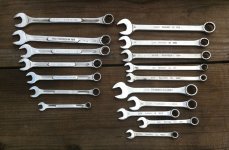
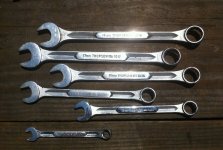
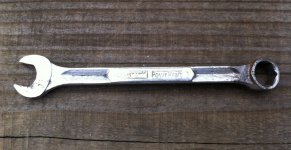
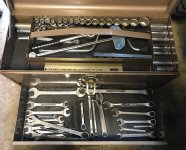
I went through the Thorsen collection yesterday and moved some tools around to fill that new box. Here are several of the green boxes with tools in them.
-Don

That decal is near-mint. Nice find!
Brian
That's a sweet collection you have going there, Don. I have never seen a Thorsen box out here on the right coast, and I can count the Thorsen pieces I have found on one hand.


Not a clue.
I believe there were some new NOS metric "v-groove" Thorsen wrench sets at Meridian Tool - not sure what he has left there.
http://www.meridiantool.com
I think he sells stuff through his Facebook page (not sure how that works.)
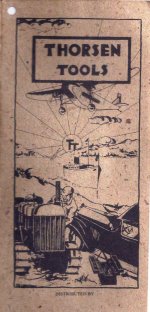
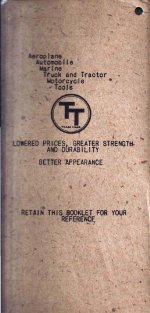
It's on the cover, inside cover, and page 1 of the Thorsen catalog we have dated as c. 1930, accompanied by "TRADE MARK". I remember a half-hearted attempt to (EDIT: more definitively) date that catalog by the address, the phonetic phone numbers, and, by analysis, some of the contents, before giving up.I probably have 20 or so thorsen TMs but haven't seen that one.
And they note that no record of its registration as a trademark with the USPTO was found. The catalog they say it first appears in is undated in their library. It could be (and very likely is) the catalog as the catalog in our TA library. No way to know for sure, unfortunately, because AA doesn't have an open library. Taking the same approach I tried before I gave up, it looks like AA is estimating 1931 as the date based on a reference to "Techniheat" in the catalog, which AA dates to 1931.AA mentions the "TT in a circle" logo here
It also may not have been registered under "tools" or "wrenches." if not, I'll find it when I go through this pass of TMs.And they note that no record of its registration as a trademark with the USPTO was found. The catalog they say it first appears in is undated in their library. It could be (and very likely is) the catalog as the catalog in our TA library. No way to know for sure, unfortunately, because AA doesn't have an open library. Taking the same approach I tried before I gave up, it looks like AA is estimating 1931 as the date based on a reference to "Techniheat" in the catalog, which AA dates to 1931.
EDIT: Also, ICYMI, I edited my first post and I may have been editing as you were typing.
It's on the cover, inside cover, and page 1 of the Thorsen catalog we have dated as c. 1930, accompanied by "TRADE MARK". I remember a half-hearted attempt to (EDIT: more definitively) date that catalog by the address, the phonetic phone numbers, and, by analysis, some of the contents, before giving up.
notlob:
You may want to check out that catalog if you haven't already.
- There are no 1/4-inch drive tools in that catalog (only 3/8, 1/2, 5/8, and 3/4)
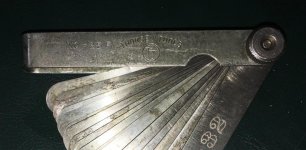
- There is no No. 25-F feeler gage in that catalog (only gages with classic 9 leaves in different lengths with model numbers in a 5XXX series)
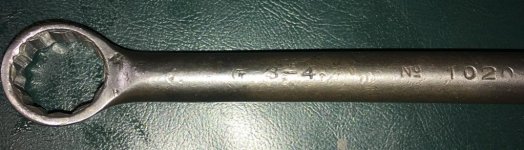
- There is a No. 1020 DBE wrench (in a 10XX series of DBEs) looking similar to yours
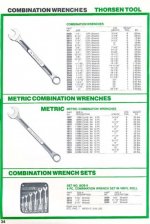
That catalog is very crudely made, with most too figures being drawings rather than photos. The only tools I can see actually bearing the (TT) logo are tappet wrenches, hand drawn.
That's a good catch, Don.Since the newest Ford specialty tools it lists are specific to a Ford Model A ('28 - '31), the catalog was almost certainly printed within those years.
I went through the Thorsen collection yesterday and moved some tools around to fill that new box. Here are several of the green boxes with tools in them.
-Don
Those are the logos and the catalog I was referring to in post #339...some vintage TT's
...and again in post #342.It's on the cover, inside cover, and page 1 of the Thorsen catalog we have dated as c. 1930, accompanied by "TRADE MARK".



some vintage TT's
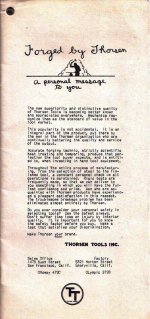
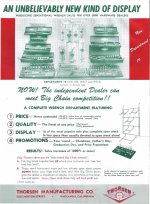
^^ Who do you think the targeted "big chain" competition was? Western Auto? Sears? NAPA?
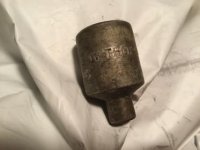
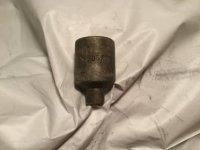
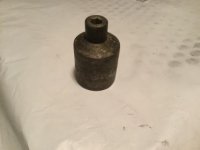
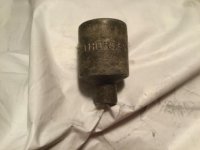
Indeed. A service opening typically found in the midget (1/4-inch drive) range. Hence the bulky base to accommodate the 1/2-inch drive. The cadmium could be a 1930's economy line finish (it was used prior to WWII, despite it being thought of as an exclusively WWII finish), but most likely wartime. A good question is whether Thorsen made 1/4-inch drive tools in wartime. I just went through my records and don't see any, but Don might know. EDIT: If the answer is no, then they had no other choice but to machine a 1/2-inch drive socket that far down for a 3/16" service opening. If the answer is yes, my next thought would be some kind of special socket for a special fastener that would torque-challenge a midget size tool.Here’s an odd one.
1/2” drive 3/16 socket.
#506X. Cadmium plating.
When I was growing up in the East Bay of the SF Bay Area (Thorsen’s home base), I bought my Thorsen tools at the local El Cerrito Grand Auto store, now O’Reilly auto parts. The main competition in this area was the Sears store in Oakland and the Wards store in Richmond. Thorsen was an affordable option for a car crazy kid with an extremely low budget that couldn’t afford those expensive Craftsman tools!
-Don
Indeed. A service opening typically found in the midget (1/4-inch drive) range. Hence the bulky base to accommodate the 1/2-inch drive. The cadmium could be a 1930's economy line finish (it was used prior to WWII, despite it being thought of as an exclusively WWII finish), but most likely wartime. A good question is whether Thorsen made 1/4-inch drive tools in wartime. I just went through my records and don't see any, but Don might know. If the answer is no, my next thought would be some kind of special socket for a special fastener that would challenge a midget size tool.
Lugz,
I could double check but it seems to me like all my 1/4” drive stuff is chrome. My wartime looking sockets all seem to be in the larger drive sizes.
-Don
Thanks, Don. 3bay's socket poses an interesting question then. As evidenced by the c. 1928-1931 catalog, Thorsen wasn't making midget drive size tools at that time. If they still weren't making them in the mid 40's (i.e., wartime), would they really machine down the larger drive sizes to get to the smaller fastener openings?Lugz,
I could double check but it seems to me like all my 1/4” drive stuff is chrome. My wartime looking sockets all seem to be in the larger drive sizes.
But did you see that there weren't any 1/4-inch drive tools in that catalog? I agree it's definitely special. And I agree that's probably what the X signifies. But do you think it's 'special' explicitly because it's so unusual for that small of a service opening? And do you think they did it to accommodate customers who needed to turn standard smaller fasteners? Or a special fastener with torque requirements that would challenge the integrity of a midget socket?Thanks for the input guys. I would almost bet it was special application, though it does follow the “500” series numbering system for 1/2” drive sockets in that 30’s catalog. Maybe the X meant special.
I replied to Don before seeing your post, 3bay. Sorry.
But did you see that there weren't any 1/4-inch drive tools in that catalog? I agree it's definitely special. And I agree that's probably what the X signifies. But do you think it's 'special' explicitly because it's so unusual for that small of a service opening? And do you think they did it to accommodate customers who needed to turn standard smaller fasteners? Or a special fastener with torque requirements that would challenge the integrity of a midget socket?