To avoid these ads, REGISTER NOW!

Power Probe, tester or power?

Danglerb

Well-known member
Joined
Sep 6, 2007
Messages
9,736
Location
SoCal
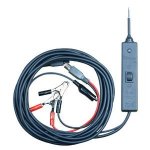
I've seen a few things advertised as "Power Probes" and they look kind of like a typical test light, except they connect to both sides of the battery, and some of the description makes it sound like they can supply 12v as well as test for it.

Is that how they work?

Is it a useful thing?

What makes a good one?

Thanks.
 

Attachments

  • PPR19.jpg
    PPR19.jpg
    12.9 KB · Views: 9
To avoid these ads, REGISTER NOW!

JayL

Well-known member
Joined
Apr 17, 2008
Messages
1,789
Location
Manila, Philippines
This has been in my amazon saved items for quite sometime now. Its on the want list but not on top for now as we still get along with the VOM and test light. Looks like it could make things a lot more convenient and faster to do for what it's designed for.

http://www.amazon.com/gp/product/B000KPU8MK/?tag=atomicindus08-20

( not so sure if they placed the correct main picture here, can somebody please confirm this )
 
Last edited:

Stick

Well-known member
Joined
Dec 12, 2007
Messages
2,302
Location
Alaska
Incredibly useful tool. In fact, it's probably my go-to tool for electrical problems. I've got the PPIII, which has a voltmeter built into it, which is handy for checking those 5V reference signals, in addition to the standard B+ voltages.

They can supply power, ground, check continuity, and activate components in your hand with the pigtail (great for checking relays, bulbs, etc).

Out of the six guys in our shop, two have bought one after seeing how much stuff can be done with mine. Check youtube or the Powerprobe website for a demo video.
 

Toolhorder

Well-known member
Joined
Nov 9, 2009
Messages
5,711
Location
Montana
It's my good to tool too. I like it more than my DVOM...You have to know what you're testing though, if you supply power to a computer ground or something you're F'ed. Also you can't apply power to high amp circuits. Some window motors pop the circuit breaker. Overall though it's a great tool. I have the latest one, and have had every version as well over the years.
The volt meter and LED lights in the front are worth the extra $ if you are thinking about getting an older model that's cheaper. Also with the 3 you can remove the probe and use optional tips and accessories.
 

usdemt

Well-known member
Joined
Nov 1, 2010
Messages
644
Location
South Dakota
Get the PowerProbe 3. It has an actual display that will give you readouts. I absolutely love mine. I picked up the big kit with everything but the short circuit finder. It paid for itself in saved time the first time I used it. Granted I do primarily automotive wiring. With the PP3 it even has features like a speaker built in to test speaker leads. One of my other favorites is that it has a dual tone. I can use a piercing tip to connect to a wire then be away from the probe checking connections and it will emit a high or low pitch tone depending on what the wire is outputting + or -. I never thought I would use it as much as I have but now I dont think I would ever do my job without one.
 

Toolhorder

Well-known member
Joined
Nov 9, 2009
Messages
5,711
Location
Montana
Get the PowerProbe 3. It has an actual display that will give you readouts. I absolutely love mine. I picked up the big kit with everything but the short circuit finder. It paid for itself in saved time the first time I used it. Granted I do primarily automotive wiring. With the PP3 it even has features like a speaker built in to test speaker leads. One of my other favorites is that it has a dual tone. I can use a piercing tip to connect to a wire then be away from the probe checking connections and it will emit a high or low pitch tone depending on what the wire is outputting + or -. I never thought I would use it as much as I have but now I dont think I would ever do my job without one.

I've never used it for testing speakers, how do you do that?
 

Stick

Well-known member
Joined
Dec 12, 2007
Messages
2,302
Location
Alaska
I've never used it for testing speakers, how do you do that?

Powerprobe Mode Chart (PDF)

Press and hold the black button to switch modes. Keep switching until the peak to peak range mode shows up (50-10-5-2-1-.5-.2), set to .2V and turn the speaker on.

You should be able to hear any audio signal over the speaker.
 

Toolhorder

Well-known member
Joined
Nov 9, 2009
Messages
5,711
Location
Montana
Powerprobe Mode Chart (PDF)

Press and hold the black button to switch modes. Keep switching until the peak to peak range mode shows up (50-10-5-2-1-.5-.2), set to .2V and turn the speaker on.

You should be able to hear any audio signal over the speaker.

Amazing, didn't even know it did that....you learn something new everyday.
I think I'm so used to the tool I never read the manual. Just assumed the volt readout and LED lights was the difference. lol
 

scott37300

Well-known member
Joined
May 5, 2010
Messages
3,450
Location
Wisconsin
I have the original one I bought 6 or so years back. Mine just tells you if it's a power or ground, none of the other fancy things. I love mine for all sorts of things. Installing remote starters it is a must. I have wanted one of the newer PP3s for a while now but don't have the money right now. Well worth the money if you have it. Easier to use than a DVOM and can do most of the features of a DVOM.
 
OP
D

Danglerb

Well-known member
Joined
Sep 6, 2007
Messages
9,736
Location
SoCal
Damn, I didn't make it far into the description before I started thinking I have to have one.

Number one electrical problem with the Porsche 928 are bad ground connections, and this thing says it checks them "instantly". Hows that work (in practice)?
 

scott37300

Well-known member
Joined
May 5, 2010
Messages
3,450
Location
Wisconsin
Damn, I didn't make it far into the description before I started thinking I have to have one.

Number one electrical problem with the Porsche 928 are bad ground connections, and this thing says it checks them "instantly". Hows that work (in practice)?

I'm not a master of the PP but to check for grounds it has a continuity tester and also can just touch the probe to a wire or metal and if it's grounded it will light up. It can also send ground to something so if it's a bad ground wire and you send ground to say electric radiator fan and the fan turns on you know the fan is good but it's not getting ground.
 

Stick

Well-known member
Joined
Dec 12, 2007
Messages
2,302
Location
Alaska
sounds like a great way to wreck something. especially in the wrong hands.

It does have a circuit breaker in it, so it shouldn't damage most things if you supply power or ground to the wrong wire. That said, I wouldn't go around blindly probing and supplying B+ or Ground to wires that I didn't know what they were either. But for stuff like solenoids and relays, simple motors, lights, trailers (with an external battery), etc. is where it shines.

Just today I used mine to find a wiring fault in the starter relay circuit in one of our Peterbuilts that caused a non-cranking no-start. Could I have done the same thing with a meter or a logic probe? Sure, but without going back to the toolbox, I was able to get the truck started (by supplying the missing ground to the solenoid that supplied power to the starter solenoid), and I was able to drive the truck into the shop, where I repaired the damaged wiring.

Total time to get the truck running? About 10 minutes or so, including putting the dash back together after verifying power and grounds to the keyswitch, starter button, and neutral safety switch.

Amazing, didn't even know it did that....you learn something new everyday.
I think I'm so used to the tool I never read the manual. Just assumed the volt readout and LED lights was the difference. lol

This is one of those few tools that it's worth it to not only read the manual, but reference it often enough that you learn everything the tool can do.

Damn, I didn't make it far into the description before I started thinking I have to have one.

Number one electrical problem with the Porsche 928 are bad ground connections, and this thing says it checks them "instantly". Hows that work (in practice)?
Red LED indicates voltage, green LED indicates ground. No switching logic probe connections around to B+ instead of ground to check ground connections.
 
Last edited:

MrMark

Well-known member
Joined
Jan 25, 2010
Messages
4,626
Location
Southern Cal.
I guess I don't see the value of the device. What can it do beyond a fused jumper and a test wire with clamps. A skilled person with a multimeter and those things should be able to figure out anything. You could have simply used a wire with two alligator clips to supply the return path (ground here.)

I would worry that people not knowing what they are doing would start touching B+ to sensitive electronics. I think the passive approach is better and then use the fused jumper to test the relays, solenoids, etc.

Thanks Stick.
 
OP
D

Danglerb

Well-known member
Joined
Sep 6, 2007
Messages
9,736
Location
SoCal
For what I do most, I'm thinking this Equus 3420 might be ok, $17 shipped free from amazon, but I'm keeping looking for now, and the suppling power or ground to test stuff I KNOW I need, but I actually from time to time need BIG wire (35 amp fan motor). I may also need to measure voltage drops on the grounds, not just a good bad thing.

Equus 3420
http://www.tooltopia.com/equus-3420.aspx
 

MrMark

Well-known member
Joined
Jan 25, 2010
Messages
4,626
Location
Southern Cal.
just connect your multimeter across the ground to measure its resistance (you'd have to open it up). Or, in a live ciruit measure across the ground to check if any voltage is being dropped across the suspect ground (ground acting as a resistor).
 
Last edited:

Stick

Well-known member
Joined
Dec 12, 2007
Messages
2,302
Location
Alaska
I guess I don't see the value of the device. What can it do beyond a fused jumper and a test wire with clamps. A skilled person with a multimeter and those things should be able to figure out anything. You could have simply used a wire with two alligator clips to supply the return path (ground here.)

I would worry that people not knowing what they are doing would start touching B+ to sensitive electronics. I think the passive approach is better and then use the fused jumper to test the relays, solenoids, etc.

Thanks Stick.

Just to be clear, Power Probes don't kill ECM's, People kill ECM's.

It's not like you are blindly supplying B+ or ground to everything you probe, it's an active choice to supply power or ground to the circuit. What the power probe will tell you is if the wire you are probing is a valid source of voltage or ground.

Could I have done the job with a meter and a jumper wire? Sure, but the ability to move around the vehicle checking power and ground sources in the cab, and then under the hood without having to move my meter connections around is a valuable thing. Plug the power probe in the cigarette lighter socket, and I can check power and ground without having to question my sources. How else would you check grounds with a meter, knowing that an ohm check is near worthless for wiring concerns. Beats moving connections around any day, and the ability to supply B+ or ground to a circuit is icing on the cake.

Want to check lights on a trailer, I just grab the jump box, the power probe, and go. Plug the power probe into the jump box, hook up the pigtail to the trailer chassis, and you can power up any lighting circuit on the trailer. Beats dragging our test cart across the yard or hooking up a truck to the trailer for a simple lighting problem.

It's not a tool that replaces everything else, it's a tool that makes life easier and quicker for simple tasks. One of those things that once you start using it to it's full potential, and see everything you can use it for, you wonder how you got along without it.

For what I do most, I'm thinking this Equus 3420 might be ok, $17 shipped free from amazon, but I'm keeping looking for now, and the suppling power or ground to test stuff I KNOW I need, but I actually from time to time need BIG wire (35 amp fan motor). I may also need to measure voltage drops on the grounds, not just a good bad thing.

You can do voltage drops with the power probe too.... Just keep in mind everything you measure is going to be from the battery or cigarette lighter. Just probe where you would normally make your connections for the voltage drops, and do the subtraction. If you have 12.8V showing at one end of the wire, and 12.4V showing at the other, you know the wire dropped .4V somewhere along the way. Takes a bit longer and not quite the resolution of a true meter, but it's doable in a pinch.

On the ground side, it's often easier to just supply a known good ground with the power probe where you would do the voltage drop.

Again, it's not the end all be all of electrical tools, but it's probably the best thing out there for quick checks and problem solving.
 
Last edited:
To avoid these ads, REGISTER NOW!

usdemt

Well-known member
Joined
Nov 1, 2010
Messages
644
Location
South Dakota
I guess I don't see the value of the device. What can it do beyond a fused jumper and a test wire with clamps. A skilled person with a multimeter and those things should be able to figure out anything. You could have simply used a wire with two alligator clips to supply the return path (ground here.)

I would worry that people not knowing what they are doing would start touching B+ to sensitive electronics. I think the passive approach is better and then use the fused jumper to test the relays, solenoids, etc.

Thanks Stick.


The big thing is that it does all of those things in a compact easy to use and read tool. You dont need to mess with multiple tools, wire leads and such its got everything you need. Instead of using a wire with 2 alligator clips you can just put the tip where you want it and hit the button and you know you have a good connection at the tip, no worries of trying to find a good ground for the other side of the alligator clip or messing with the chincy little things. The only thing I wish it did was have a way to provide constant +12volts to the tip instead of having to hold the switch down but thats just me.

Also its not like you have + flowing through it all the time, you have to press a button. And without having to do anything you can check a ground and provide positive to the other to test a fog lights or something of the sort.

O and a huge advantage is that you dont have multiple wire leads, with a conventional multimeter you have to have 3 even 4 hands one to hold each test lead, one to hold the multimeter in a position you can see, and sometimes one to hold a wire. This does it all with one lead and the display is in the palm of your hand. You can have a cut unstripped wire and poke the tip in to check the polarity while working under a vehicle, try doing that easily with a multimeter, it just wont happen.
 

MrMark

Well-known member
Joined
Jan 25, 2010
Messages
4,626
Location
Southern Cal.
OK, I guess if I did this kind of thing all the time it would be worth it as a time saver. You guys have convinced me.
 

Stick

Well-known member
Joined
Dec 12, 2007
Messages
2,302
Location
Alaska
Amazing, didn't even know it did that....you learn something new everyday.
I think I'm so used to the tool I never read the manual. Just assumed the volt readout and LED lights was the difference. lol

Almost forgot, another thing you can do is "listen" to sensors. Take for instance an ABS tone ring. Same settings, just backprobe the connector and listen. If you are missing a tooth in the tone ring, you will be able to hear it drop out. Other sensors work like this too. I've got a co-worker that uses his this way for quick checks before breaking out the more powerful tools like labscopes and such.

It has the same buffered input as a meter so it's safe enough to do, just keep your fingers clear of the rocker switch.
 

Stick

Well-known member
Joined
Dec 12, 2007
Messages
2,302
Location
Alaska
Oh, and intermittent short finding.

It uses a banana plug connector, so use a meter test lead and a standard weatherpack or metripack spade connector to get into the fuse box. Turn the tones on, and in a short to ground it will sound the low tone. Move the wire bundle you are checking until the tone stops, and you have found the area that the short is in.

Tons of uses, you just need to get creative.
 
Last edited:

usdemt

Well-known member
Joined
Nov 1, 2010
Messages
644
Location
South Dakota
OK, I guess if I did this kind of thing all the time it would be worth it as a time saver. You guys have convinced me.

With modern electronics in cars some mechanics are working on the systems like they used to. So I could see this as an obsolete tool for quite a few. I install lights, sirens, radios etc on emergency vehicles so I get more than my fair share of use out of it.
 
Last edited:

scott37300

Well-known member
Joined
May 5, 2010
Messages
3,450
Location
Wisconsin
With modern electronics in cars not many wrenchers are working on the systems any more. So I could see this as an obsolete tool for quite a few. I install lights, sirens, radios etc on emergency vehicles so I get more than my fair share of use out of it.

This doesn't make sense to me. You still need to troubleshoot and find a problem, like if an electric cooling fan isn't working. You need to track down where the problem is, bad wire, bad fan, bad connector, bad relay, bad switch, etc. I'm not sure what you mean by most wrenchers aren't working with electrical systems anymore?
 

grom

Well-known member
Joined
Oct 8, 2010
Messages
53
I like cool things as much as the next guy, but I don't find the use in them. If you're working with a high amp circuit, a test light works just fine. A low amp and electronic circuits you should use a meter. Most of the time when diagnosing low amp circuit problems you need a reading anyway...
 

usdemt

Well-known member
Joined
Nov 1, 2010
Messages
644
Location
South Dakota
This doesn't make sense to me. You still need to troubleshoot and find a problem, like if an electric cooling fan isn't working. You need to track down where the problem is, bad wire, bad fan, bad connector, bad relay, bad switch, etc. I'm not sure what you mean by most wrenchers aren't working with electrical systems anymore?

Back home (yes tiny town of 1300) there are 3 automotive places (non are dealerships), not a single one will do anything with troubleshooting a wiring problem on a newer vehicle. They will do trailer lights starters, battery cables, basic stuff but if a headlight is out and the bulb is fine they wont go any further. They would probably benefit from having one in the shop but as far as each tech buying there own it wouldnt pay off. Sure they can check the connectors on whatever item isnt working but as far as relays switches etc they will not touch it. Once again though these are more of tire oil change type places but they are all ASE certified mechanics. All of the local police cars get their work done at one place through a contract but if there is ever any issue with anything light/siren/radio I get a call to come in and fix it, because like I said they dont like messing with electronics on the vehicles. The new Dodge Charger PPVs can be a real PITA if you dont know what you are doing. And they come pre wired for the emergency equipment. They also require additional modules to get the full functions of some of the additional equipment.

I also know a lot of "the old guys" the ones you learn a ton from that are doing the same. I was just talking to a guy I work with and he had a Grainger catalog on his desk and we got into talking about automotive wiring, he had a new import car and screwed up the LCM by trying to fix a wire. Had to replace the whole unit.

Just my experience though.
 
Last edited:

ATTappman

Well-known member
Joined
Apr 28, 2009
Messages
393
One obstacle I've found with using my Powerprobe is that it isn't easy to backprobe a small connector. The probe is too thick, and you can't always get the Powerprobe into a position where you can see the screen. I always use a multimeter when I have to backprobe something.

PP sells a backprobe adapter, but it's for their ECT2000 short circuit detector. I don't know if it would work with a Powerprobe.

Anybody backprobe connectors with their Powerprobe? Do you use the standard probe, or something else?

Powerprobes are good when you're underneath a really dirty engine, just want to check voltages, and you don't want to get your expensive multimeter and leads all crapped up with grease.
 

scott37300

Well-known member
Joined
May 5, 2010
Messages
3,450
Location
Wisconsin
Back home (yes tiny town of 1300) there are 3 automotive places (non are dealerships), not a single one will do anything with troubleshooting a wiring problem on a newer vehicle. They will do trailer lights starters, battery cables, basic stuff but if a headlight is out and the bulb is fine they wont go any further. They would probably benefit from having one in the shop but as far as each tech buying there own it wouldnt pay off. Sure they can check the connectors on whatever item isnt working but as far as relays switches etc they will not touch it. Once again though these are more of tire oil change type places but they are all ASE certified mechanics. All of the local police cars get their work done at one place through a contract but if there is ever any issue with anything light/siren/radio I get a call to come in and fix it, because like I said they dont like messing with electronics on the vehicles. The new Dodge Charger PPVs can be a real PITA if you dont know what you are doing. And they come pre wired for the emergency equipment. They also require additional modules to get the full functions of some of the additional equipment.

I also know a lot of "the old guys" the ones you learn a ton from that are doing the same. I was just talking to a guy I work with and he had a Grainger catalog on his desk and we got into talking about automotive wiring, he had a new import car and screwed up the LCM by trying to fix a wire. Had to replace the whole unit.

Just my experience though.

I can see where a small town tire and oil change place wouldn't touch electrical but any dealership or real repair shop is going to need diagnose electrical problems. If the little oil change places send the owner down the road they still need to go somewhere to get the vehicle fixed, so to make a statement "not many wrenchers are working on the systems anymore" isn't really a true statement. Any decent repair place(more than an oil change shop) will fix electrical problems. Anybody that needs to track down a problem that involves electrical at all can benefit from a PP. You can send power or ground to a motor or switch to see if it's working, you can do test wires, find out what wires are ground or voltage, can test voltage, test relays, connectors, can test just about anything to do with electrical, not the only electrical trouble shooting tool but deffinately one of the better ones that will do about 90% of all electrical testing. Just plug it in and go, no moving the test light from ground to poitive, no using jumper wires.

I have a fluke, test light, and PP and the PP is the nicest to use and what I uaually grab when I need to test something.
 

Stick

Well-known member
Joined
Dec 12, 2007
Messages
2,302
Location
Alaska
I like cool things as much as the next guy, but I don't find the use in them. If you're working with a high amp circuit, a test light works just fine. A low amp and electronic circuits you should use a meter. Most of the time when diagnosing low amp circuit problems you need a reading anyway...
I think most of us are talking about the Power Probe 3, and not the original Power Probe 1 like in the OP. The three adds a volt meter, continuity checks and more.

Also, in my experience, most high amp draws are going to be switched on the ground side of things, so you can use the power probe to check the entire positive side of the circuit with a quick press of the rocker switch. If you are checking lower voltage control circuits and such, the PP3 has a volt meter built in, making checks quick and easy.

One obstacle I've found with using my Powerprobe is that it isn't easy to backprobe a small connector. The probe is too thick, and you can't always get the Powerprobe into a position where you can see the screen. I always use a multimeter when I have to backprobe something.

PP sells a backprobe adapter, but it's for their ECT2000 short circuit detector. I don't know if it would work with a Powerprobe.

Anybody backprobe connectors with their Powerprobe? Do you use the standard probe, or something else?
I've got a couple of things I use. The PP3 takes regular banana connectors, so I can use a regular meter lead along with my normal backprobes. I've also got some of the style with the backprobe pin soldered on an alligator clip, and a box of 100 T-pins is about $5 at most any craft store. Don't think that you have to cram the regular test probe in a connector.

I have a fluke, test light, and PP and the PP is the nicest to use and what I uaually grab when I need to test something.
Ditto. I've got probably four assorted test lights/logic probes, the power probe, a fluke 179, an original Vantage for a graphing meter, and a labscope.

The power probe solves probably 95% of the electrical problems I see everyday.

I think what I'm seeing is that the guys who actually do electrical daily have one and live it, and the guys who don't do that kind of work often just don't see the advantages that it brings by working with a tool like that.
 

I can fix anything

Well-known member
Joined
Aug 14, 2010
Messages
2,689
Location
TeXaS
One obstacle I've found with using my Powerprobe is that it isn't easy to backprobe a small connector. The probe is too thick, and you can't always get the Powerprobe into a position where you can see the screen. I always use a multimeter when I have to backprobe something.

PP sells a backprobe adapter, but it's for their ECT2000 short circuit detector. I don't know if it would work with a Powerprobe.

Anybody backprobe connectors with their Powerprobe? Do you use the standard probe, or something else?

Powerprobes are good when you're underneath a really dirty engine, just want to check voltages, and you don't want to get your expensive multimeter and leads all crapped up with grease.

Back probe with this and then just touch the Power probe to the other end.

http://www.toolschest.com/wtd9912.html?mr:referralID=fc689f1a-024d-11e0-ad8e-001b2166c62d
 

scott37300

Well-known member
Joined
May 5, 2010
Messages
3,450
Location
Wisconsin
I think what I'm seeing is that the guys who actually do electrical daily have one and live it, and the guys who don't do that kind of work often just don't see the advantages that it brings by working with a tool like that.

I think your right. I didn't know how usefull it was till I bought the original one way back when, the one that only had a red and green light to tell you if it was ground or positive. I was into car stereos and installed a bunch of remote starters and the shop I delt with showed me them and ordered me one. Has been a great adition but I wouldn't have know how useful it actuall was if it wasn't for my buddies telling me.
 

grom

Well-known member
Joined
Oct 8, 2010
Messages
53
I think most of us are talking about the Power Probe 3, and not the original Power Probe 1 like in the OP. The three adds a volt meter, continuity checks and more.

Also, in my experience, most high amp draws are going to be switched on the ground side of things, so you can use the power probe to check the entire positive side of the circuit with a quick press of the rocker switch. If you are checking lower voltage control circuits and such, the PP3 has a volt meter built in, making checks quick and easy.

Yeah, I understand. My meter can do that too. I'm not saying it's not a useful tool, but in my perspective I can spend the 100+ something dollars on something a little more useful. Though I'm not like a lot of wrenches where my box has to have the latest and greatest all the time.

I also think it's extremely silly to try to say tech's today aren't diagnosing electrical systems, and that this is a necessary tool for that, because it's not. If the op feels like he needs to have it, then by all means I'm not gonna say he's wasting his money. I'm just saying there's nothing that can't be done with a meter and test light. just my .02.
 

scott37300

Well-known member
Joined
May 5, 2010
Messages
3,450
Location
Wisconsin
Yeah, I understand. My meter can do that too. I'm not saying it's not a useful tool, but in my perspective I can spend the 100+ something dollars on something a little more useful. Though I'm not like a lot of wrenches where my box has to have the latest and greatest all the time.

I also think it's extremely silly to try to say tech's today aren't diagnosing electrical systems, and that this is a necessary tool for that, because it's not. If the op feels like he needs to have it, then by all means I'm not gonna say he's wasting his money. I'm just saying there's nothing that can't be done with a meter and test light. just my .02.

You're right that almost everything can be done with a meter and test light, except send power to circuits and other things. Everybody has their preferences on what they spend their tool money on. They are just a lot easier to use most of the time than a meter or test light. Just plug it in and you have access to power and ground and also can test power and ground without moving the test light clamp.

If you do a lot with electrical trouble shooting or things like installing remote starters this tool is very valuable. I have a good fluke meter and also a good test light but they hardly ever get taken out of the box. I just grab the PP and go at it and have everything I need right at my finger tips.
 

Racr350

Well-known member
Joined
Aug 24, 2010
Messages
216
Location
Rochester, NY
My favorite tool for 4WD diag when winter hits. Customers typically dont use their 4WD systems in the summer, so when winter hits, ADD actuators are siezed an wont engage. I just disconnect the connector hooked up to the actuators and give them a good workout by applying power to each side of the motor until the free up and engage. Saves the customer almost $1300 on a new actuator, plus i get good diag. time for it. Win Win for everybody.
 

usdemt

Well-known member
Joined
Nov 1, 2010
Messages
644
Location
South Dakota
I can see where a small town tire and oil change place wouldn't touch electrical but any dealership or real repair shop is going to need diagnose electrical problems. If the little oil change places send the owner down the road they still need to go somewhere to get the vehicle fixed, so to make a statement "not many wrenchers are working on the systems anymore" isn't really a true statement. Any decent repair place(more than an oil change shop) will fix electrical problems. Anybody that needs to track down a problem that involves electrical at all can benefit from a PP.

There I edited it a bit :thumbup:

And I was by no means putting down the PP, it is by far my favorite tester and one of my top 10 most used tools. There are many who could benefit from it even if they don't use it as much as me.
 

komobu

Well-known member
Joined
Dec 16, 2008
Messages
212
Location
Newport News Virginia
Maybe a little late to the discussion, but I wanted to add my two cents.

I started out with a PP2. It has the red light green light depending on if you are touching a power or a ground. It does not have the meter telling you the voltage of the wire you are touching.

I was installing a Remote Start on a Ford Explorer. I saw a wire that appeared hot during cranking. While testing the system, I gave this wire 12 volts from the tip of my pp2 by pressing the rocker arm. This wire actually went to the PATs module and I fried the Anti theft system. Vehicle had to go to the dealer with a 400 dollar repair bill. It was an expensive lesson learned.

I immediately bought the PP3. If I had had the PP3, I would not have made that mistake. Even though the led would have glowed red, I would have seen the meter with less that one volt on it, so I wouldn't have applied 12 volts to that circuit.

I love my power probe and it is a go to tool for me, but I would spend the extra few dollars and get the PP3 model over the PP1/PP2 model. They can be found on ebay pretty reasonable...They are on there now for 95.00 and I have seen new ones on there for as low as 80. It is an exceptional tool for the price. It is far easier to use than dragging out and setting up a dvom.
 

adamcarp

Member
Joined
Sep 25, 2007
Messages
6
I have owned all 3 power probes and I love the the III the best. By far the go to electrical tool. I work on a large municipal fleet with lots of eletrical controlled pneumatic and hydraulic systems. My DVOM has dust on it now! You must understand what you are working on before randomly applying power and ground signals any time you work with electrical circuits.
 

diesel research

Well-known member
Joined
Sep 12, 2010
Messages
5,440
Location
gulf coast, TEXAS
How else would you check grounds with a meter, knowing that an ohm check is near worthless for wiring concerns.

Agreed (as far as nearly worthless ohm test)

As far as checking grounds with a meter, pretty simple. :D

Let's say I want to check my main cable ground. One lead on neg post, one on engine block, several electrical loads switched on. Just that quick the main cable is tested. Maybe just a headlight wire. Same principle, one lead on negative, other lead at end of ground wire you are testing. Nothing disconnected, and device switched on. Import sensor grounds? One lead at main ground junction at rear of engine, other back probed into sensor ground for sensor being tested. Done. Same could be done on positive side as well. One lead at each end of a wire being tested while device is turned on) Or across a switch or relay contact. Reading over .300/300mV? Time to replace/repair.


(still think the PPIII is a good choice for plenty of tests)
 
To avoid these ads, REGISTER NOW!
Top Bottom