To avoid these ads, REGISTER NOW!

Power to pole barn questions

bill1261

Member
Joined
May 16, 2015
Messages
24
Hello Garage Journal. This is my first thread. First off, I would like to thank all of you who have helped me with my research. This website has been the most informative. I am a stubborn DIYer.
This is my situation:
I am running a 100amp service to my pole barn from my 200amp service in my house. The soil here (central MN) is mostly sand. My 30' x 60' barn has a small woodshop, a shallow well pump (dedicated to my garden), some overhead lights, and other outlet receptacles. My future plans are a complete bathroom (the room is built), and a small recording studio.
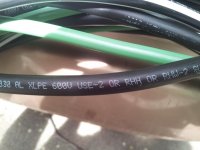
Yesterday I bought 150' of AL MHF 2-2-2-4 ($1.47 per foot) and a 90 amp breaker ($70:eek:). The MHF has USE-2 OR RHH OR RHW-2 SUN-RES printed on it.
From what I've been reading, I can direct bury this cable 24" down (no conduit)from structure to structure and bring it out of the ground in conduit to both load centers. I plan on buying a 100 amp load center today along with a ground rod and conduit. Here are some questions:
1. I will be crossing a driveway. Do I have to use conduit? Can I run conduit just the driveway distance? What size conduit?
2. When I hook up the feeder, is it as simple as directly connecting the 2 hots, neutral, and ground? (Thought I read that the neutral and ground need to be tied together in the 100amp barn load center)
3. Where does the ground rod have to be in relation to the load center?
4. If I want to run CAT5 (internet) and possibly coax (satellite TV) , should that be buried in conduit 12" above the MHF?
5. If I can bring the MHF into my (unfinished-attached)garage 20' before the load center, can I drill holes in the 2x6 studs and run it in that way? This would keep the MHF underground coming into the house, which would make my wife happy about the "messy conduit sticking up".:headscrat

Thank you,
Bill
 
To avoid these ads, REGISTER NOW!

jonjon1

Well-known member
Joined
Mar 11, 2015
Messages
1,036
I would run everything in conduit the entire way...

I did 3 wire to detached garage, just run 2 hots and neutral with 2 8 ft ground rods at the detached building, neutral and ground bonded... {may need 4 wire now}...

With that many questions you may want to do some more research before going too much further, are you pulling permits for this or sneaking it in, if its not going to be inspected you still kind of want it to be safe, lol..

I run 3 wire from main panel, 2 from the breaker 1 from the neutral bar to the new panel in conduit the entire way, I ALWAYS oversize conduit, bigger the better and run a rope with it, and use the right cement, its not purple primer and glue, lol...

Dig as deep as you can go the more cover the better {within reason, lol}, trench it, clean the bones out of my trench, lay a bed of sand or stone or both, cover it with nice new clean material, {dont forget the warning tape and to call digsafe to make sure you are not digging up a power company easement, I know a guy that happened to, almost died}...

For the connection to the building I connect 2 hots to the main breaker and the neutral to the the new neutral bar {bonded} ground 2 8ft rods {+6ft from each other} and as close to the panel as you can get {not sure if there is a code for how far from the panel the rods have to be, normally just go as close as possible}...

I know there are some electricians on here, someone should chime in soon enough, good luck...
 
Last edited:

mjbasford

Active member
Joined
Apr 25, 2015
Messages
32
Location
https://t.me/pump_upp
If the structure is deattached, it is required to have a 4 wire feed, 2 hots neutral and ground. The ground and neutral need to be isolated from each other and 2 ground rods 6' apart added. The 3 wire you have was code years ago, but no longer.

Also OP, i would recommend conduit the whole way.

The Data and Video cables 12 inches above the mhf should be fine.
 
OP
B

bill1261

Member
Joined
May 16, 2015
Messages
24
What size and type conduit do you recommend for the MHF? When you say go all the way, I assume you mean from box-to-box with no possibility of water to infiltrate the conduit.
 

jonjon1

Well-known member
Joined
Mar 11, 2015
Messages
1,036
What size and type conduit do you recommend for the MHF? When you say go all the way, I assume you mean from box-to-box with no possibility of water to infiltrate the conduit.

PVC sched 40 conduit, the grey stuff, use the conduit glue though, I seen people use drainage glue, don't work...

I would go right into the boxes the entire way, solid and done...
 

mrolds88

Well-known member
Joined
Feb 17, 2010
Messages
117
Location
WV
What size and type conduit do you recommend for the MHF? When you say go all the way, I assume you mean from box-to-box with no possibility of water to infiltrate the conduit.

I use 3" to do my runs. I also use conduit box to box. And glue them super good.
 

theoldwizard1

Well-known member
Joined
Feb 22, 2011
Messages
43,246
Location
SE MI
Yesterday I bought 150' of AL MHF 2-2-2-4 ($1.47 per foot) and a 90 amp breaker ($70:eek:). The MHF has USE-2 OR RHH OR RHW-2 SUN-RES printed on it.
It does NOT have MHF printed anywhere on it ? Sounds fishy to me. Some Big Box store employees don't know their wire types. Southwire USE2/RHH/RHW2 wire is a single copper conductor. MHF look like this
mh_feeder.gif


From what I've been reading, I can direct bury this cable 24" down (no conduit)from structure to structure and bring it out of the ground in conduit to both load centers.
Depth is specified by local code but that sounds about right. When you transition from underground to above ground you must use a conduit "sweep". Schedule 80 if the transition will be exposed (not inside of a building).

1. I will be crossing a driveway. Do I have to use conduit?
To the best of my knowledge, you do not have to use conduit.

4. If I want to run CAT5 (internet) and possibly coax (satellite TV) , should that be buried in conduit 12" above the MHF?
Most codes are very loose on "low voltage" wiring. Conduit is not required, but if you do not use it, ake sure those cables are rated for "direct burial".

5. If I can bring the MHF into my (unfinished-attached)garage 20' before the load center, can I drill holes in the 2x6 studs and run it in that way?
MHF must be in conduit when used inside any structure. You can install a J-box where the MHF enters your garage and transition to a less expensive table that is not rated for direct burial.


Despite what others are saying, there is no real advantage to use conduit if the cable is rated for direct burial.

I might use conduit on the low voltage wire so I could avoid buying direct burial wire and so it can be replaced if it ever fails. (CAT5e and RG6 are cheap but get expensive quickly if you buy direct burial.)
 

theoldwizard1

Well-known member
Joined
Feb 22, 2011
Messages
43,246
Location
SE MI
What size and type conduit do you recommend for the MHF? When you say go all the way, I assume you mean from box-to-box with no possibility of water to infiltrate the conduit.

No conduit should be thought of as truly "water tight" unless it is specifically rated that way. You can't afford that stuff ! :lol:

Not sure why everyone is pushing you that way for your power feed. The big reason for conduit is easy installation of additional or replacement conductors (make sure to leave a pull cord in there !). With a 90A feed you are good. From what you are saying about your loads, you could probably get away with a 60A feed.
 
OP
B

bill1261

Member
Joined
May 16, 2015
Messages
24
This is what I purchased yesterday:
 

Attachments

  • mhf01.jpg
    mhf01.jpg
    148.9 KB · Views: 62
  • mhf02.jpg
    mhf02.jpg
    130.6 KB · Views: 56
OP
B

bill1261

Member
Joined
May 16, 2015
Messages
24
The feeder says GENERAL CABLE S 2 AWG (33.6 mm2) COMPACT STABILOY (R) AA-8030 AL XLPE 600V USE-2 OR RHH OR RHW SUN-RES (UL) 2014 NOV

I bought it from a local dealer The description listed it as 2224MHF

Hope I didn't get the wrong feeder!!!
 
OP
B

bill1261

Member
Joined
May 16, 2015
Messages
24
No conduit should be thought of as truly "water tight" unless it is specifically rated that way. You can't afford that stuff ! :lol:

Not sure why everyone is pushing you that way for your power feed. The big reason for conduit is easy installation of additional or replacement conductors (make sure to leave a pull cord in there !). With a 90A feed you are good. From what you are saying about your loads, you could probably get away with a 60A feed.

I'm not sure why some are conduit supporters. Maybe they've had experiences in the past where conduit was needed and the feeder failed?
 

theoldwizard1

Well-known member
Joined
Feb 22, 2011
Messages
43,246
Location
SE MI
The feeder says GENERAL CABLE S 2 AWG (33.6 mm2) COMPACT STABILOY (R) AA-8030 AL XLPE 600V USE-2 OR RHH OR RHW SUN-RES (UL) 2014 NOV

I bought it from a local dealer The description listed it as 2224MHF

Hope I didn't get the wrong feeder!!!

Well, it is NOT MHF. From a code/installation stand point, I do not know the difference.


RETRACT THAT STATEMENT !

What you are reading is the individual conductor ratings. Here is a spec sheet for General Cabl/Stabiloly MHF
Obviously the same stuff.
 
Last edited:

theoldwizard1

Well-known member
Joined
Feb 22, 2011
Messages
43,246
Location
SE MI
I'm not sure why some are conduit supporters. Maybe they've had experiences in the past where conduit was needed and the feeder failed?
Other than the benefits I already mentioned, it does give a certain amount of protection from digging. It is not going to stop a back hoe and a yellow plastic CAUTION tape at 12" is probably better at stopping hand digging from injuring the wire.

3/4" bell-end 10' PVC conduit for your low voltage wire is less than $2/stick.
 
Last edited:
OP
B

bill1261

Member
Joined
May 16, 2015
Messages
24
It does NOT have MHF printed anywhere on it ? Sounds fishy to me. Some Big Box store employees don't know their wire types. Southwire USE2/RHH/RHW2 wire is a single copper conductor.

theoldwizard1 has me concerned. If the feeder doesn't have "MHF" printed on it, yet the dealer has it listed as 2224MHF, what should I do?
 

Beemer533

Well-known member
Joined
May 9, 2014
Messages
2,057
Location
Syracuse, NY
Conduit is relatively cheap insurance against future problems or mechanical damage like hand digging.

I would at least put in a conduit for the LV cabling as those might need to be changed for a future upgrade (fiber, etc). A 90A service to a home shop likely won't need o be upgraded..
 

theoldwizard1

Well-known member
Joined
Feb 22, 2011
Messages
43,246
Location
SE MI
Conduit is relatively cheap insurance against future problems or mechanical damage like hand digging.
Not when you get to 1½-2" conduit ! That stuff is $4.50-$6.00 a stick.

I would at least put in a conduit for the LV cabling as those might need to be changed for a future upgrade (fiber, etc). A 90A service to a home shop likely won't need to be upgraded..

I concur with both of those statements.
 
Last edited:
To avoid these ads, REGISTER NOW!
OP
B

bill1261

Member
Joined
May 16, 2015
Messages
24
With a 90A feed you are good. From what you are saying about your loads, you could probably get away with a 60A feed.

I guess I didn't mention all my amperage needs. I just purchased a Craftsman 113.24181 Table Saw. It is a direct drive, 240 volt, 7amp saw and the manual recommends a 15amp 2pole breaker. I also have a 220v hot water heater that I intend to hook up in the bathroom someday. Who knows what else I will hook up in the future?
 
OP
B

bill1261

Member
Joined
May 16, 2015
Messages
24
Thank you all for your input! Today is Menards (like HD or Lowes) last day for 11% off everything so I will be purchasing the 100amp 20 space load center, conduit, 2 ground rods, etc.. while it's cheaper. Then off to work.......
 

Beemer533

Well-known member
Joined
May 9, 2014
Messages
2,057
Location
Syracuse, NY
Not when you get to 1½-2" conduit ! That stuff is $4.50-$6.00 a stick.

He bought 150' of wire, so assuming 120' trench (not counting anything above ground since that is required either way), I come up with $72 (12 10' sticks @$6 ea) plus glue..

Say $85 including tax; this seems cheap to me for something like this, but everybody's opinion of cheap differs obviously!

This post edited by the NSA
 

logixjock

Well-known member
Joined
Jun 17, 2012
Messages
636
Location
Sturgeon, MO
I'm not sure why some are conduit supporters. Maybe they've had experiences in the past where conduit was needed and the feeder failed?

I had this at my house, PO direct buried the feeder under the driveway, 10 years later I come home to a dead leg in the house. Had a sharp piece of flintrock work it's way down and pierce one of the legs, corrosion did it's thing after that. You better believe the replacement is in conduit now.

It probably would have been alright, had the original trench been deeper and lined with clean sand. There are NO codes out here in the country and everything was done in the shoddiest and cheapest way possible. :shocking:
 

jonjon1

Well-known member
Joined
Mar 11, 2015
Messages
1,036
I am surprised some people would direct bury it, I was figuring $150 for 3" with the tape, a couple pull 90's, a couple sweeps, and the pull rope maybe even a bottle of lube...

I like it in conduit I would never do that with out pvc. I prefer it, I can back fill it a little better, if I want to change it or repair it someday i just pull it out, no more digging, etc.. Put it in pipe, you went this far, why is that even a discussion, its $100ish and an hour...

I helped a neighbor {couple years back} bury some conduit, it was to a pool house, 90 feet, I trenched it for him with my ditch witch, he bought enough tot do a single 1", I talked him into putting another 3" and that 1", it was like $100 of materials, and a week later he was running cable wires in it, alarm wires, camera wires, intercom wires, all stuff that he never thought he would want, good thing that extra conduit was in there...


If you take anything from this thread you started OP, put that wire in pipe, I never heard anyone regret using conduit, lol I know 10+ stories of people who regret not...
Ground freezes, frost moves rocks, someday you drive a 10 wheeler over it, or you need a sprinkler system repair, what ever, its cheap insurance...
 
Last edited:

dw1

Well-known member
Joined
Jan 26, 2015
Messages
1,335
Location
Ky
I just put mine in 2" pvc (140' from meter base to tap box, $7.00 a -10' stick) I'm not doing it twice and there is alot of rocks on the property I have, even if you try to keep the rocks out of the ditch when back filling, its cheap insurance.
 

wyliesdiesels

Well-known member
Joined
Aug 14, 2012
Messages
20,071
Location
Modesto, CA
Hello Garage Journal. This is my first thread. First off, I would like to thank all of you who have helped me with my research. This website has been the most informative. I am a stubborn DIYer.
This is my situation:
I am running a 100amp service to my pole barn from my 200amp service in my house. The soil here (central MN) is mostly sand. My 30' x 60' barn has a small woodshop, a shallow well pump (dedicated to my garden), some overhead lights, and other outlet receptacles. My future plans are a complete bathroom (the room is built), and a small recording studio.
Yesterday I bought 150' of AL MHF 2-2-2-4 ($1.47 per foot) and a 90 amp breaker ($70:eek:). The MHF has USE-2 OR RHH OR RHW-2 SUN-RES printed on it.
From what I've been reading, I can direct bury this cable 24" down (no conduit)from structure to structure and bring it out of the ground in conduit to both load centers. I plan on buying a 100 amp load center today along with a ground rod and conduit. Here are some questions:
1. I will be crossing a driveway. Do I have to use conduit? Can I run conduit just the driveway distance? What size conduit?
2. When I hook up the feeder, is it as simple as directly connecting the 2 hots, neutral, and ground? (Thought I read that the neutral and ground need to be tied together in the 100amp barn load center)[/b]
3. Where does the ground rod have to be in relation to the load center?
4. If I want to run CAT5 (internet) and possibly coax (satellite TV) , should that be buried in conduit 12" above the MHF?
5. If I can bring the MHF into my (unfinished-attached)garage 20' before the load center, can I drill holes in the 2x6 studs and run it in that way? This would keep the MHF underground coming into the house, which would make my wife happy about the "messy conduit sticking up".:headscrat

Thank you,
Bill

1: i would use conduit the WHOLE length! As has already been mentioned, it is cheap insurance. Imagine if its direct butied and u loose a leg to corrosion. Guess what, u have to dig it up again! Not sure why oldwizard is so opposed to it! :dunno
2: Sort of. The neutral and EGC(ground) is connected to the same bar in thr main panel. However, in the subpanel, the neutral bar needs to be isolated from the enclosure and EGC bar. Some panels DO NOT come with a grd bar which then needs to be purchased separately.
3: u need 2 rods and i would put them as close to the oanel as possible. These are for lightning. The longer the wire the more resistance to earth u will have. The wire needs to be continous and can be by itself if solid #6 cu as long as its not subject to damage. If u use #8, it needs to be in conduit...

What size and type conduit do you recommend for the MHF? When you say go all the way, I assume you mean from box-to-box with no possibility of water to infiltrate the conduit.

Min 2". Bigger wont hurt...i would bury a separate smaller conduit for communication cables...

It does NOT have MHF printed anywhere on it ? Sounds fishy to me. Some Big Box store employees don't know their wire types. Southwire USE2/RHH/RHW2 wire is a single copper conductor. MHF look like this
mh_feeder.gif
....

To the best of my knowledge, you do not have to use conduit.....

Despite what others are saying, there is no real advantage to use conduit if the cable is rated for direct burial.....

Mobile home feeder has NEVER had MHF printed on it. At least all the stuff i have seen and bought...

There is no real advantage to using conduit? Clearly u have never experienced a corroded direct buried cable...Im not sure why youre so opposed to using conduit....:dunno:
 

brian1210

Member
Joined
May 16, 2015
Messages
16
I'm currently doing the same thing, Electricians that bid the job, I thought were to high. But all of them stated, 3 feet is safer then 2 feet, which is safer then 18 inches.
18inches is code for 100 amp subpanel in conduit, but I'm going 2 feet deep with 2 inches of sand under and over it.

I only want to do it once.

from my garage to my home is only 22 feet. 10 hours of digging by hand, I'm 1/2 way done.
 

checkthisout

Well-known member
Joined
Sep 5, 2008
Messages
5,232
Looking back, I would install 3" conduit and put the feeder in the that.

I would then run 2" conduit in the same trench for my TV cable, fiber optic or whatever.

Of course wifi is even easier than conduit.
 

CNGsaves

Well-known member
Joined
Sep 26, 2012
Messages
13,233
Location
KS and OK
OP . . . you still need sparkies to tell you what BREAKER needs put in house to feed the garage as you're over 100 ft with the MHF 2-2-2-4 Al wire to the garage.

At MOST, it can be 90A but may be LESS due to your length.

+1 to put 2" conduit at least 36" deep for the electrical feed the ENTIRE way (ie sch 40 conduit underground, and sch 80 above ground). Backfill 12" and then put in 1 1/2" conduit for your low voltage. Then another 12" backfill and your yellow caution tape.
 
OP
B

bill1261

Member
Joined
May 16, 2015
Messages
24
I chose a 90amp breaker based on what I read in this forum. If I misunderstood what amperage I'm allowed, I will return the 90amp and get the right breaker for my distance. I am not great with math. I've seen references leading to web pages but when I went to them, I got more confused.:confused:
 
OP
B

bill1261

Member
Joined
May 16, 2015
Messages
24
Oh, and thank you all again for your input. I have decided to go with conduit all the way. It just makes sense based on the cost and effort.
 

theoldwizard1

Well-known member
Joined
Feb 22, 2011
Messages
43,246
Location
SE MI
Looking back, I would install 3" conduit and put the feeder in the that.

I would then run 2" conduit in the same trench for my TV cable, fiber optic or whatever.
It always amazes me how free people are withe someone elses money !

A 3" and a 2" Schedule 40 conduit would add about $20/foot to the cost, not including fitting, glue, and junction boxes.

ERROR !

Correction : $20/10 foot
 
Last edited:

Dagny

Well-known member
Joined
Jul 25, 2014
Messages
3,018
Location
Northern Wi.
If your soil is all sand I would consider no conduit. One state over in Wis. we have plenty of of rock and plenty of trouble with underground wire. The frost brings rocks up from below and pokes holes in it. Any wire installed inside a building has to be flame retardant the RHH and RHW markings make your wire good to go. Something I've never seen mentioned here a pipe under ground with a sweep on each end is a big trap that will eventually fill with water.Something to think about.
 

pattenp

Well-known member
Joined
Jun 4, 2008
Messages
10,175
Location
Virginia - USA
It always amazes me how free people are withe someone elses money !

A 3" and a 2" Schedule 40 conduit would add about $20/foot to the cost, not including fitting, glue, and junction boxes.

Is this a typo? 3" Sch 40 PVC conduit is less than $2 a foot and 2" PVC conduit is less than $1 a foot.
 
OP
B

bill1261

Member
Joined
May 16, 2015
Messages
24
Like I said in my original post, it is MOSTLY sand. If I were to estimate, I would say 10% rock. That being the case, I would hate to have frost push a sharp rock into my feeder.
Here's a (maybe) dumb :Homer:idea:
Drill drainage holes in the conduit and face the holes down. Any water accumulated would easily drain out into my sandy soil into the earth. This way the feeder is protected, and water can't form.
(I am in the process of drilling hundreds of 1/16" holes in schedule 40 pvc for my garden drip irrigation system-no big deal)
Any thoughts?
 
Last edited:
To avoid these ads, REGISTER NOW!
Top Bottom