To avoid these ads, REGISTER NOW!

Pre-wiring / Pre-plumbing for ductless split

dcg9381

Well-known member
Joined
Jun 20, 2018
Messages
11,638
Location
Austin, TX
So I'll be installing 2 x 24k BTU pioneer units from https://www.highseer.com. This is in a steel framed building (foam insulated) where I am still framing in stud walls.
I have the appropriate wiring run outside to AC-disconnects, so that's done.

What remains seems to be two things:
1) "control wire" wiring for the inside unit (evaporator)
2) Setting up the drains
3) Running the coolant lines

I think I'd prefer to run the coolant lines inside the walls, rather than out the top and down the exterior. To facilitate that, I'm thinking of using 3/4" SCH 40 PCVC (electrical PVC) as it has nice radius bends. Using a single 3/4 drain for both units.

Someone school me on how they'd do it if they were to do it over...
 
To avoid these ads, REGISTER NOW!

Jackfre

Well-known member
Joined
Dec 26, 2010
Messages
4,406
Location
N CA
3/4" drain for each unit will be fine, but you want a tight connection in the wall. I put a 3/4 slip by 1/2 female coupling on the pvc pipe and then screw a 1/2" mpt by barbed fitting which will connect to your flexible line from the unit with a hose clamp. Tough to do in the wall. The line-set can go in the wall. If you have a long line-set in the wall you will have a hell of a time as they nice buttery smooth tubing hardens in a hurry as you handle it. It is not a one man job. Electrical control wire should be a single piece with no splices of what ever size is called for.
 

Raisedonadeere

Well-known member
Joined
Jul 31, 2017
Messages
436
Location
Central KY
Cooling condensate line needs to be insulated. It will sweat inside that wall. Not good. Might work without if you go vertical into a floor drain
 

jjrbus

Well-known member
Joined
Dec 8, 2018
Messages
614
Location
Florida
Can't comment on running inside walls, not something I would do.

Wire between units it is common to use SOOJ (heavy extension cord) An inspector can fail it. Need to use THHN Tray cable for a hassle free installation. Weather inspector is right or wrong is highly debatable, I just don't feel like debating with them. No idea what gauge Pioneer specs?

Southwire has come out with a special communication wire for mini's, have not looked it, requires no conduit. CU EZ-IN mini split MC cable.

Most minis say no P traps in drain lines if they say anything. https://skipthewarehouse.com/index.php?_route_=ez-trap-mini-waterless-in-line-trap-ezt-180.html&_vsrefdom=adwords&gclid=Cj0KCQiA05zhBRCMARIsACKDWjcGX1mI0CSeBu_VhshZ5n90KEKyCQ__iAc8km5S-LrRvSJ_hNzFSWAaAvpUEALw_wcB

There are 3 top mini manufacturers, number 1 is Fujitsu or Mitsubishi depending on who you talk to. Number 3 is Daikin. All three have thicker copper in the coils among other things. When doing my due diligence Pioneer quickly fell off the list. There is also far more info for Daikin online than lesser brands and repair parts are more available.

HTH, not an AC guy just another homeowner trying to get by.
 
OP
D

dcg9381

Well-known member
Joined
Jun 20, 2018
Messages
11,638
Location
Austin, TX
Thanks. I'll look at those brands. This is a shop that's used 1 day in 7 - so units won't be run very much.

I have a lot of space in the wall, easily 4" currently and I can remove the sheeting prior to install. I hear the drain line needs to be insulated. If I run these into PVC, is that still the case?

Linesets will be pre-configured, either 10' or 15'.

The 24k units pull about 8 amps (240V) off the top of my head. They're on 15A breakers, so I can use 14 ga wire. I found southwire split MC cable (Home Depot) - so that's an option. I (personally) haven't worked with MC cable - I've been using traditional conduit.

I'd "prefer" to have a little of this install exposed on the exterior wall - they typically drop down from the top of a wall, but if this isn't practical, I can adjust...
 

jjrbus

Well-known member
Joined
Dec 8, 2018
Messages
614
Location
Florida
It is recommended that the flair nuts from the units be used instead of the nuts on the premade lines. These nuts will expand and contract many thousands of times over the life of the unit.

The nuts on the pre made lines are much lighter, thinner than the nuts supplied on the units.

For occasional use you will likely not care for the Mitsubishi or the Fujitsu price!

1 day in 7, if possible I would put window units in. One service call on a mini will eat up a few years of any energy savings.
 

cahilj

Member
Joined
Dec 30, 2018
Messages
7
Location
KS
I'm an HVAC guy. I've put in well over 100 mini split systems of various brands. Take that for what it's worth.

One service call on a mini will eat up a few years of any energy savings.

This. I've done more repairs on customer installed systems than installs of new systems. Most of the time, the customer would've ended up paying much less to just have it installed correctly the first time than paying to have someone come fix it properly. Mini splits are not something you want to do without the correct tools, especially the line set.

What size is your building? 2 24k units is quite a bit for the type of insulation you have. Also, from the way you want to use 1 drain line for both heads, it seems you want them installed next to each other? Mini splits do much better in large areas when they're farther apart.

Anyway, I don't recommend running anything in the wall. You should have a hole directly to the exterior behind the indoor head. Make all your lineset and drain connections OUTSIDE. They're easier to repair if need be, and if there is a leak, it won't destroy the inside wall. The drain line shouldn't need insulation unless you plan on using the AC in the freezing months. If you do, you're going to want to drain to an inside location.

I second using THHN wire. Whatever the manufacturer recommends for conductors/gauge (typically 14/4). Run it right alongside the lineset. Don't use MC, it's not appropriate for mini splits. Personally, I wouldn't use any type of solid wire for mini splits.

Tips for the lineset- flares should be done with the appropriate flare tool. Don't sweat any joints (unless it's a Samsung multi-head system with their weird 3 pages of sweating instructions....). Don't use gas pipe flare fittings for joints. Definitely don't use compression fittings for joints. Use as little joints as humanly possible (one at indoor head, one at condenser should be all you have/need). Use a tubing bender, not your hands.
 
OP
D

dcg9381

Well-known member
Joined
Jun 20, 2018
Messages
11,638
Location
Austin, TX
Plan is to buy pre-flaired line sets. These may come pre-charged. If not, I've got the tools (I need an adapter) to appropriately vacuum test the lines.

I appreciate the advice on the flare nuts.

This is a 2400 sqft "shop" with R15 insulation (foam). It's in Texas and recommendation is for R30 for climate zone - but it's infrequent use. No windows, but 16' eves. It will not be cooled most of the time and 48k BTU of AC is probably enough to knock down 20 degrees of summer heat, as necessary.

I hear what you are saying about having it professionally installed, but adding "professional installation" takes the cost up 200-300% (I've checked) and to me, that's just ridiculous. The middle ground is having it "professionally provisioned" which is not something that I'm against necessarily. These simply aren't - from my perspective - rocket science to install and not having to sweat cooling lines and having pre-flaired, pre-filled connectors makes it pretty easy.

Again, I hear the recommendation to take it out of the wall immediate - versus through the wall. My walls are "removable" (unfinished) - so not sure if that makes a difference or not, but if it was residential, I'd agree 100%.


I am reconsidering use of the Daikin units over Pioneer..
 

brewchief

Well-known member
Joined
Sep 20, 2008
Messages
2,370
Location
Michigan
Taking it straight out the back is much easier, try to make the line set connection without being able to push it back through the wall is tough.
I always cut off and reflare the linesets, thay way the nuts included with the units can be used.
You can buy wire designed for the interconnection, I've seen two styles, one is tray cable that is similar to soow wire and the other is a coated version of mc cable, both have the stranded conductors that all the mini splits I've installed called for.

Sent from my SM-G965U using Tapatalk
 

jjrbus

Well-known member
Joined
Dec 8, 2018
Messages
614
Location
Florida
A mini install is not rocket science but most mini failures are due to improper installation.

I purchased about $500 worth of tools to do my install, one of which was a flair gauge tool. This is a simple go, no go gauge and 3 of the ready made flairs failed. The flairs are under over 500 psi and need to be done properly. Unlikely even a poor flair will fail instantly, but will fail in a few months or years.

The bulk of the online videos for installing minis are very poor at best and some are just outright wrong! As soon as you see someone installing flair nuts with a crescent wrench, just assume the rest of the video is wrong.
 
OP
D

dcg9381

Well-known member
Joined
Jun 20, 2018
Messages
11,638
Location
Austin, TX
As soon as you see someone installing flair nuts with a crescent wrench, just assume the rest of the video is wrong.

Torque wrench required.. :) I dunno if I've ever seen a "professional" HVAC tech with one around here..
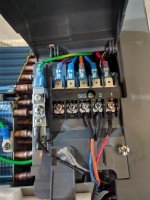
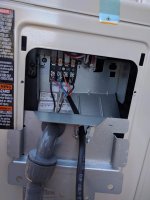
I've seen a few line flare tool sets that appear pretty dummy proof, but with pre-filled lines that are pre-flared, I would probably go that way.

Thanks guys, it looks like I'm going to buy Daikin units, 24k, cool only, about $1000 each:

https://www.heatandcool.com/24-000-btu-daikin-15-seer-wall-mounted-ductless-mini-split-inverter-cooling-only-air-conditioner-230-volt.html
 

jjrbus

Well-known member
Joined
Dec 8, 2018
Messages
614
Location
Florida
Torque wrench required.. :) I dunno if I've ever seen a "professional" HVAC tech with one around here..

I've seen a few line flare tool sets that appear pretty dummy proof, but with pre-filled lines that are pre-flared, I would probably go that way.

Thanks guys, it looks like I'm going to buy Daikin units, 24k, cool only, about $1000 each:

https://www.heatandcool.com/24-000-btu-daikin-15-seer-wall-mounted-ductless-mini-split-inverter-cooling-only-air-conditioner-230-volt.html

After much due diligence I would not let a "Pro" touch a 410a system without a torque wrench or a micron gauge or proper flairing tools! Charging in the area of $100 hour for service show up with the right tools! If you do not want to use the right tools and follow the proper procedures you will be better off buying an under $500 throw away unit.

There are some pros out there who do great work. The problem is they are always busy and don't need new customers.

The only precharged lineset I saw were Mr Cool, no way I am spending that kind of money for unproven technology. Plus units of unknown quality.


Just another homeowner trying to get by, this post is only my opinion and worth what you are paying for it..
 
To avoid these ads, REGISTER NOW!

jjrbus

Well-known member
Joined
Dec 8, 2018
Messages
614
Location
Florida
Pre charged lines have been around for a very long time, I think back into the 60's and have not caught on, must be a reason for that.
 
OP
D

dcg9381

Well-known member
Joined
Jun 20, 2018
Messages
11,638
Location
Austin, TX
You guys are right - the lines I can get from ecool are not pre-filled, they're just pre-flared and insulated:
https://www.heatandcool.com/15-ft-i...ng-with-interconnecting-electrical-wires.html

I've got the tools to vacuum the lines - will need to buy a crows foot for my torque wrench. It looks like the Daikin RKN24NMVJU is setup to be "chargeless" for line lengths up to 32-13/16 (10), lines are 1/4 and 5/8.
 

deej63

New member
Joined
Jan 24, 2019
Messages
1
Location
Greenville, Texas
There are 3 top mini manufacturers, number 1 is Fujitsu or Mitsubishi depending on who you talk to. Number 3 is Daikin. All three have thicker copper in the coils among other things. When doing my due diligence Pioneer quickly fell off the list. There is also far more info for Daikin online than lesser brands and repair parts are more available.

HTH, not an AC guy just another homeowner trying to get by.

What was it that caused Pioneer to fall off of your list? Pioneer is currently out of stock on the unit that I wanted to buy. Sounds like it may be fortunate that they are sold out.

Also, what recommendations would you make as far as where to purchase quality line sets?

I really appreciate your input.
 

nsula_country

Well-known member
Joined
May 23, 2013
Messages
1,534
Location
Northwestern Louisiana
So I'll be installing 2 x 24k BTU pioneer units from https://www.highseer.com. This is in a steel framed building (foam insulated) where I am still framing in stud walls.
I have the appropriate wiring run outside to AC-disconnects, so that's done.

What remains seems to be two things:
1) "control wire" wiring for the inside unit (evaporator)
2) Setting up the drains
3) Running the coolant lines

I think I'd prefer to run the coolant lines inside the walls, rather than out the top and down the exterior. To facilitate that, I'm thinking of using 3/4" SCH 40 PCVC (electrical PVC) as it has nice radius bends. Using a single 3/4 drain for both units.

Someone school me on how they'd do it if they were to do it over...

What are coolant lines? These units have coolant in them?

CT
 

jjrbus

Well-known member
Joined
Dec 8, 2018
Messages
614
Location
Florida
What was it that caused Pioneer to fall off of your list? Pioneer is currently out of stock on the unit that I wanted to buy. Sounds like it may be fortunate that they are sold out.

Also, what recommendations would you make as far as where to purchase quality line sets?

I really appreciate your input.

I am home recovering from surgery and this gives me something to do.

That was some time ago so hard to say exactly what took Pioneer off the list. When watching videos on installs and repairs I noticed that most of the guys that seemed knowledgeable were usually working on Mitsubishi, Fujitsu and Daikin.

The most reasonable price I could find on lineset is. I bought a 35 footer and used it for a 22 and 10 foot run. https://www.ebay.com/itm/1-4-x-3-8-x-35ft-insulate-100-Copper-mini-split-Ductless-Line-set-Control-wire/111672638321?hash=item1a00353b71:g:uagAAOSwg3FUkKMn:rk:8:pf:0

Most manufactures recommend no less than 10 foot of lineset.

The communication wire from inside to outside is tray cable, not extension cord (SJOOW??) which most are selling. A building inspector can fail the extension cord type wire. It is debatable weather the inspector is right or wrong but I have no desire to debate with them!

This is of course only my opinion and worth what you are paying for it.
 
OP
D

dcg9381

Well-known member
Joined
Jun 20, 2018
Messages
11,638
Location
Austin, TX
What was it that caused Pioneer to fall off of your list? Pioneer is currently out of stock on the unit that I wanted to buy. Sounds like it may be fortunate that they are sold out.

Also, what recommendations would you make as far as where to purchase quality line sets?

I really appreciate your input.


Read jjrbus's post - #4.
I did buy line-sets from the vendor that sold me the Daikin units.. I don't know their quality from any other, however.
 

justinjoyal

Well-known member
Joined
Apr 30, 2015
Messages
888
Location
Quebec
After much due diligence I would not let a "Pro" touch a 410a system without a torque wrench...


Lol... really ?

It’s a copper flare, not a aircraft ball bearing. I’ve installed hundreds of mini-splits without a torque wrench... no leaks at the flares. Common sense goes a long way.
 

Raisedonadeere

Well-known member
Joined
Jul 31, 2017
Messages
436
Location
Central KY
Pre charged lines have been around for a very long time, I think back into the 60's and have not caught on, must be a reason for that.
I had a comfort air or some such name heat pump installed on a house I built in central KY in 1973. I knew nothing about hvac. I do recall the guy bragging on the prefilled lines and watched them installed. That setup ran for 23 years and failed due to a evaporated leak.

In early 2000’s I got involved with hvac and it was all brazing. Automobiles use all sorts of O ring connections that work quiet well. HVAC Industry just never pushed for eliminating need for brazing.
 

jjrbus

Well-known member
Joined
Dec 8, 2018
Messages
614
Location
Florida
I had a comfort air or some such name heat pump installed on a house I built in central KY in 1973. I knew nothing about hvac. I do recall the guy bragging on the prefilled lines and watched them installed. That setup ran for 23 years and failed due to a evaporated leak.

In early 2000’s I got involved with hvac and it was all brazing. Automobiles use all sorts of O ring connections that work quiet well. HVAC Industry just never pushed for eliminating need for brazing.

I thought about cars also. My guess is that the HVAC industry is dead set against DIY installs and will not develop it for HVAC.

If they sold more than one size lineset I might have considered Mr Cool, but I have 2 units with short runs leaving 15 extra feet to do something with.
 

Raisedonadeere

Well-known member
Joined
Jul 31, 2017
Messages
436
Location
Central KY
I thought about cars also. My guess is that the HVAC industry is dead set against DIY installs and will not develop it for HVAC.

If they sold more than one size lineset I might have considered Mr Cool, but I have 2 units with short runs leaving 15 extra feet to do something with.

As I was wrestling with how to install central heat pump in my new house, of which I have done several for other folks years ago using mapp gas and btw they all operated well, 15 years later now, the new mapp gas, mapp gas pro, is not hot enough. All the alternatives to buying or renting acetylene and CO were so problematic I just wished for some other scheme.

I decided to install two hyperheat units in my 1920 sqft open kitchen/dining/living area manufactured home. Builder insisted I needed 3 or 3 1/2 ton heat pump so in I installed 12k in master bedroom and bath area and 18k in living area. Expecting 2 1/2 ton to be under sized for the winter I just assured wife we would let the electric furnace make up the difference when the cool days come. This all btw was just stop gap plan while I worked out hvac next summer when I build garage.

My curiosity for hyperheat minisplits and the flared fitting opened the door to do a fast install in the nick of time before cold weather, but thinking 2 1/2 ton combined isn’t going to cut it- I anxiously watched performance as temps went into the teens. The house is absolutely cozy, holding 72 during the night in living area and restoring to 72 quickly after setting on 64 in bedroom for the night with door shut. Perfect zone control. It has made it through 7 degree night still holding 72 and blowing hot not warm air all the while with no on off type behavior. The unit just increases or decreases output as needed with no fanfare.

We are expecting sub zero next week so the story is not over but for now I am hero number one with my wife over the comfort of this house and visitors all comment on the comfort level on cold days.

Only thing I would do different is down size the 12 k to 9k in master bedroom but we’ll see next summer when humidity control comes into play.
 

jjrbus

Well-known member
Joined
Dec 8, 2018
Messages
614
Location
Florida
As I was wrestling with how to install central heat pump in my new house, of which I have done several for other folks years ago using mapp gas and btw they all operated well, 15 years later now, the new mapp gas, mapp gas pro, is not hot enough. All the alternatives to buying or renting acetylene and CO were so problematic I just wished for some other scheme.

I am in SW Florida so heat was not part of the figuring, use heat maybe 15 days a year! The central air that was in the house had an electric element for heat. When heat was on you could hear the electric meter spinning and the bills quickly spiked. Even though I am in an electric co-op and the rates are low, $0.0864 Kwh.

The minis work super well for heat, keeping in mind I am heating the house when it is 50 out. I really don't save much money as I use the heat now when I would not have used it before. So am far more comfortable with the same electric bills.

Speaking of "pros" I had several estimates where they insisted I needed 3 tons for a house that a manual J shows between 2 and 2 1/2 tons.
 
OP
D

dcg9381

Well-known member
Joined
Jun 20, 2018
Messages
11,638
Location
Austin, TX
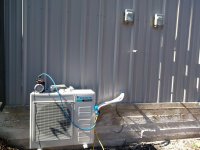
So I finished the install of one of the Daikin units this weekend.
Here's what I learned:

  • Watch you tube videos and remove the cover from the indoor unit. That manual seems to indicate that you mount the unit with the cover on (and perhaps you can) but it's easier to get at things without the plastic cover.
  • The indoor unit itself is fairly "cheaply" built - lots of plastic, lots of snap together. Be careful with it.
  • I bought 15' lines from the vendor selling the unit. I really don't know one copper tube from another, but these were easy enough to work with and the insulation was good. It might be the same price to buy USA-copper lines off ebay and a flare tool, for those inclined.
  • I did the lines - inside the walls - mainly because my building has a lot of space between the framing and the metal exterior. And I didn't want to use those PVC covers that would only be screwed into building sheet metal. In my case, I'm glad I did it this way. Both lines and insulation fit very well into 2" SCH 40 Gray PVC, and easily curve 90 degrees using a radius bend. The only penetration on my building is a capped end of 2" PVC.
  • Separate the lines at least 3' on each end before attempting to connect them. (the insulation on mine was bonded together)
  • I placed the interior unit first, the lines second, and the exterior unit LAST. I would recommend doing it this way (as long as you have the exterior space). For me, it's easier to re-locate the exterior unit than it would be to cut, flare, and deal with the lines.
  • My unit was a 24k unit, indoor hung at about 10' height. It's a one-man job for indoor work - but about at the limit of what I'm comfortable with. The outdoor unit requires 2 people to deal with it safely.
  • I bought a crow-foot wrench set, but the larger nut is 1 1/16 (about 27.5mm), so you'll need that if you want to torque yours... Most sets are up to 1".

Units are very very quiet... I had concerns about mounting them on the side of my building, but in retrospect, I'd absolutely do that if I needed to.
 

Attachments

  • indoor_control.jpg
    indoor_control.jpg
    82.4 KB · Views: 33
  • outdoor_wiring.jpg
    outdoor_wiring.jpg
    73.1 KB · Views: 34
  • rear_indoor_unit.jpg
    rear_indoor_unit.jpg
    153.3 KB · Views: 33
  • IMG_20190127_130320.jpg
    IMG_20190127_130320.jpg
    129.3 KB · Views: 34
  • thru.jpg
    thru.jpg
    88.1 KB · Views: 39
Last edited:
To avoid these ads, REGISTER NOW!
Top Bottom