

You are using an out of date browser. It may not display this or other websites correctly.
You should upgrade or use an alternative browser.
You should upgrade or use an alternative browser.
Premier Garage
- Thread starter laedwards
- Start date
- Status
- Not open for further replies.
hotrod66paul
Banned
I have the premier cabinets in my garage after seeing them on display at Barrett Jackson a couple of years ago and have been saving up for their floor coating after seeing their samples at the booth. The floor is a little salty price wise as were their cabinets but if the coating is of the quality as the cabinets are then I will have no problem with the cost. Just my 2 cents for what its worth.
Mordi
Well-known member
They were at my hours last week and gave me a quote of $4.00/sq ft - Looks like a quality product 
Mordi
Mordi
The concrete had porperly cured It ia 4 years old no issues, vapor barrier and they shot peened it. Had the floor for 1 year, $2.84 psft was my price. It's lifting after 1 year under tire contact areas. Does not hold up well under hard use either. Heavy floor jacks and engine lifts will remove the coating . I do not recomend it espeically at $4 psft. Polished concrete or tile is the only way to go. Thinking about really testing their 5 year guarentee. Like having them strip it off.
JD in DFW
Well-known member
I would do some serious research on Premier Garage before you drop one c-note with them. As I understand it they have quite a few law suites against them at this time from their distributors for faulty product and warranty issues. The work I have seen of theirs here in the DFW area is less to be desired. Very shoty work, hot tire tears in the tire paths and delamination all over the floor and in the corners.
If I were you I would look into the polyaspartic or polyurea coatings...yes they the cost is more, but then you get what you pay for. Their are a few companies that install these products, but I wont name them here...just do a search for either word and you'll find them. I have had mine for a few years now and it looks today just as it did 3 years ago.
Premier Garage=****!
If I were you I would look into the polyaspartic or polyurea coatings...yes they the cost is more, but then you get what you pay for. Their are a few companies that install these products, but I wont name them here...just do a search for either word and you'll find them. I have had mine for a few years now and it looks today just as it did 3 years ago.
Premier Garage=****!
Floorguy
Well-known member
I have been doing floors in Austin for over 5 years now. There are alot of new companies selling and installing quick install/cure products. This allows them to cut the labor cost by about 1/3. I do the old method, it takes 4 days, shotlbast all the floors, top with a urethane, and use quality slow cure products. Have not had a failure or delamincation yet. I know most of the visitors to this site are DIY type guys. Some things are best left to experienced people that have the tools and experience, with lots of references to back them up. Doing a floor is something you want to do once and be done. Having to remove a failing coating and starting over is going to cost big dollars. Do it once, do it right and be done with it. You will be greatful in the long run. Obviously I am a little biased since I do this for a living but am truly trying to be honest here.
cdrewferd
Well-known member
So what is everybodys views on the polyaspartic floor coating? I think this is what I'm going to do in my garage but not sure.
thegarageguy
Well-known member
I've heard that the dealers are being sued by their clients therefore the dealers are suing the main company. Their floors from what I heard are failing miserably. I never understood how you can give a 10 year guarantee on a product that hasnt been long term tested. Also, when most of the dealers started, they where acid etching and using bondo to fill cracks. All 3 are a recipe for disaster.
I've seen their floors up close and its a pure poly eurea rolled on system. the chip spread is blotchy and the concrete imperfections are very noticable since its rolled on thin. They are basically spreading their primer(tinted poly-eurea) at 300 sqft per gallon, chipping into it at about 5 lbs per 100 sqft and clear poly-eurea over that. They advertise it being done in one day but it usually takes them 2 days. In a 400 sq ft garage they are using aprox a total of 3-4 gallons when most honest epoxy installers would use aprox 8-10 gallons and a full broadcast is considered 55lbs per 300-350 sq ft. Premier's chip system in NY and NJ sells for $6.50 sq ft.
Hey lucca77, please let us know how they handle their warranty with you. I would be very curious to know.
I've seen their floors up close and its a pure poly eurea rolled on system. the chip spread is blotchy and the concrete imperfections are very noticable since its rolled on thin. They are basically spreading their primer(tinted poly-eurea) at 300 sqft per gallon, chipping into it at about 5 lbs per 100 sqft and clear poly-eurea over that. They advertise it being done in one day but it usually takes them 2 days. In a 400 sq ft garage they are using aprox a total of 3-4 gallons when most honest epoxy installers would use aprox 8-10 gallons and a full broadcast is considered 55lbs per 300-350 sq ft. Premier's chip system in NY and NJ sells for $6.50 sq ft.
Hey lucca77, please let us know how they handle their warranty with you. I would be very curious to know.
SC-Eric
Well-known member
Most of you guys are serious about your garages and the floors take some serious abuse. Your floors need good 100% solids technology on them. There are some good polyaspartic formulations... BUT... most companies have not figured it out yet. In addition, polyaspartic is temperamental with moisture. The moisture accelerates the cure and that is not always a good thing. There are some oxidolidine type additives that can help, but VERY few companies understand or utilize that type of technology. In other words, it's difficult to find the 3-4% of good products out there. So, if you are good at picking needles out of haystacks and don't mind paying extra to save some cure time hours, then polyaspartic is a good choice. In addition, as I have eluded, polyaspartics really need to be applied by someone who knows how to do it. Currently, we are not willing to sell polyaspartic for DIY applications.
I'm sorry to hear about Premier Garage. I'm not sure who makes their coatings for them but it's not us! The smart move when coating a garage floor is to avoid products that contain either water or solvent. Use a PRIMER! Take your time... Don't skimp on cheap products!
I'm sorry to hear about Premier Garage. I'm not sure who makes their coatings for them but it's not us! The smart move when coating a garage floor is to avoid products that contain either water or solvent. Use a PRIMER! Take your time... Don't skimp on cheap products!
I've called Premier out for estimates on multiple occasions after first requesting them to fax a copy of their warranty documentation. They failed to show on all occasions. My feeling was that they were concerned about a future warranty claim.
level of service seems to be a function of the local franchisee. The guys here are very good at customer service. Ive had this addressed once prior and they come out within a week or two to inspect and repair. they are coming back next week to repair the area. will post
thegarageguy
Well-known member
I'm not sure who makes their coatings
Arizona Polymer
I used their product before Premier claimed it as their own. Goes on too thin, dries too fast, therefore causing chips not to properly bond creating a patchy look. Couldn't give a guarranty on such a new and untested product. In the end, for me, quality suffers, and now their floors are failing. It seems I made the right choice.
Jabberwalk
Well-known member
I am a new form member.(referred from syty.net). I have several years of flooring experience as well as owning a PremierGarage franchise. I hate to hear about problems with the product. I spent 2 years evaluating PG vs. other companies and chose PG over the rest. As was mentioned, each franchise is individually owned and operated. I speak to other owners on a regular basis and prices are all over the board depending on what the local market bears. Many PG have gone to a lifetime warranty- I have chosen a 10 year offering. I am biased (like floorguy) but I think think the product I install are top notch. I hope to add to discussions on the board in the future. Feel free to post up questions/concerns or flame away.
On another note- I just got my floor done and decided to have some fun with it:


Jason
On another note- I just got my floor done and decided to have some fun with it:
Jason
Jabberwalk
Are you aware of any lawsuits by franchisees such as yourself against the franchsior Premier Garages as a result of warranty claims?
TIA
Are you aware of any lawsuits by franchisees such as yourself against the franchsior Premier Garages as a result of warranty claims?
TIA
I am a new form member.(referred from syty.net). I have several years of flooring experience as well as owning a PremierGarage franchise. I hate to hear about problems with the product. I spent 2 years evaluating PG vs. other companies and chose PG over the rest. As was mentioned, each franchise is individually owned and operated. I speak to other owners on a regular basis and prices are all over the board depending on what the local market bears. Many PG have gone to a lifetime warranty- I have chosen a 10 year offering. I am biased (like floorguy) but I think think the product I install are top notch. I hope to add to discussions on the board in the future. Feel free to post up questions/concerns or flame away.
Jabberwalk
Well-known member
I don't know of any.
I hate to hear about the issues that are happening in Texas.
My customers are happy in Tennessee!
I hate to hear about the issues that are happening in Texas.
My customers are happy in Tennessee!
Last edited:
SC-Eric
Well-known member
Here is a link that suggests that several "Premier Garage" franchises are suing Premier Garage for $5,000,000.00 ... OW!
http://dockets.justia.com/docket/court-azdce/case_no-2:2007cv01791/case_id-357981/
http://dockets.justia.com/docket/court-azdce/case_no-2:2007cv01791/case_id-357981/
Jabberwalk
Well-known member
They were at my hours last week and gave me a quote of $4.00/sq ft - Looks like a quality product
Mordi
Was it Bob Nakamura? Tell him Jason says Hello!
Jabberwalk
Well-known member
Here is a link that suggests that several "Premier Garage" franchises are suing Premier Garage for $5,000,000.00 ... OW!
http://dockets.justia.com/docket/court-azdce/case_no-2:2007cv01791/case_id-357981/
It is not for product issues.
SC-Eric
Well-known member
I'm going to guess that if you know it is not for product issues then you have enough information to elaborate on why they are getting sued for $5,000,000 bucks??? I'm pretty curious... 5 million clams is alot!
Jabberwalk
Well-known member
It is public information-- but I am not going to post it. Just remember McDonalds was sued for 3 million for hot coffee.I'm going to guess that if you know it is not for product issues then you have enough information to elaborate on why they are getting sued for $5,000,000 bucks??? I'm pretty curious... 5 million clams is alot!

Back to the original post- Is Premier a good floor? We are installing over 50,000 sq ft of flooring every day. The products are good. Are they the best?- it comes down to personal preference. Ford< Chevy?? Coke> Pepsi?? Premier> Wolvorine??

Find a company that you are comfortable with and enjoy your floor.
thegarageguy
Well-known member
Find a company that you are comfortable with and enjoy your floor.
i would suggest to go with a reputable company that youve seen their work and that come highly recommended. feeling comfortable is all good until the floor fails.
btw, Jabberwalk, nice work!
Like Jason I own a PremierGarage franchise in California. We have been putting down our Hybrid Polymer floors since they came out (3.5 years). Prior to 2005 PremierGarage use to do epoxy. We average over 150 garage floors a year. In this amount of time I have had probably 2-3 failures (lifting or peeling in spot), all were due to improper floor preparation, and none were related to the material. I can’t comment on the law suits because I don’t know about it. I do know there is one law suit where some previous franchise owners went out of business. My guess it’s most likely their own fault. They may have had their franchise taken away because they did not adhere to Premier’s standards per their contract. I would question if these franchisees were actually using PremierGarage’s material, or a cheap alternative.
It’s like anything else; if you don’t know what you are doing you are going to have problems, if a PremierGarage owner is not calling you back that’s bad business on their part. In our area we have a good reputation and get most of our business from referrals. Our customers love our floors.
A good analogy might be a McDonalds franchise, if you don’t make a Big Mac or the other items per the recipe it won’t taste the same, and you will probably go out of business. If the other franchisees don’t follow the proper methods that they were trained to, then they will have problems.
Our floor material is not Polyurea, it’s a Hybrid, which means it consist of a number of components. It’s 95% solid. The formula was design by a coating company for Premier and tested several years before being released. It’s a proprietary formula which is patented. PremierGarage now owns the rights and manufactures the coating themselves. The chemists who invented the Hybrid system are on retainer and consult when needed. The coating is good stuff. Compare our adhesion results with another epoxy.
See our technical data here
http://home.comcast.net/~tdickman/PremierOne Technical Data.pdf
Compare for yourself to another
http://www.sherlink.com/sher-link/ImgServ?id=datapages/armorseal_1000_hs_epoxy_8-22.pdf
I agree with Wolverine’s comments. But In California most polyaspartics are illegal because they contain solvents which increase the VOC’s. They are also highly flammable when installing. Even though some materials with VOCs higher than 250 g/l (the California legal limit) some competitors still use them. Solvents are added typically to make the material easier to use and apply. Here is some good info on polyaspartics http://www.concretenetwork.com/polyaspartic-floor-coatings/
PS…I typed up this post after reading the first page not realizing Jason had made some posts.
Here is a picture of our some of our work

It’s like anything else; if you don’t know what you are doing you are going to have problems, if a PremierGarage owner is not calling you back that’s bad business on their part. In our area we have a good reputation and get most of our business from referrals. Our customers love our floors.
A good analogy might be a McDonalds franchise, if you don’t make a Big Mac or the other items per the recipe it won’t taste the same, and you will probably go out of business. If the other franchisees don’t follow the proper methods that they were trained to, then they will have problems.
Our floor material is not Polyurea, it’s a Hybrid, which means it consist of a number of components. It’s 95% solid. The formula was design by a coating company for Premier and tested several years before being released. It’s a proprietary formula which is patented. PremierGarage now owns the rights and manufactures the coating themselves. The chemists who invented the Hybrid system are on retainer and consult when needed. The coating is good stuff. Compare our adhesion results with another epoxy.
See our technical data here
http://home.comcast.net/~tdickman/PremierOne Technical Data.pdf
Compare for yourself to another
http://www.sherlink.com/sher-link/ImgServ?id=datapages/armorseal_1000_hs_epoxy_8-22.pdf
I agree with Wolverine’s comments. But In California most polyaspartics are illegal because they contain solvents which increase the VOC’s. They are also highly flammable when installing. Even though some materials with VOCs higher than 250 g/l (the California legal limit) some competitors still use them. Solvents are added typically to make the material easier to use and apply. Here is some good info on polyaspartics http://www.concretenetwork.com/polyaspartic-floor-coatings/
PS…I typed up this post after reading the first page not realizing Jason had made some posts.
Here is a picture of our some of our work
Jabberwalk
Well-known member
Hey Terry- glad you found us!
Fuller
Well-known member
I just read the 85 pages of lawyer-speak. Most of those issues are finance related but there are some claims of poor product performance. I think a lot of it is related to the fact that the defendants knew very little about small business issues and even less about flooring when they jumped on board.
I talked to Premier Garage way back in 2003 but decided not to become a dealer. I flew out to Phoenix and found Mark L and his crew to be good people. He's done very well with his business and his franchisees (like jabber) seem to be doing well, but for me, staying independent was the right choice. I compete heads up with the Tampa Premier group and enjoy a good competitive relationship with them.
As for the floors I would bet that any outright failures are probably due to application errors rather than an inherent product problem.
I talked to Premier Garage way back in 2003 but decided not to become a dealer. I flew out to Phoenix and found Mark L and his crew to be good people. He's done very well with his business and his franchisees (like jabber) seem to be doing well, but for me, staying independent was the right choice. I compete heads up with the Tampa Premier group and enjoy a good competitive relationship with them.
As for the floors I would bet that any outright failures are probably due to application errors rather than an inherent product problem.
I have had my Premier Floor for a year, and other than some minor rubber tire scuffs I habe no poblems.
Does anyone have a source for the floor coating that premier uses ? I would like to purchase some in order to do some minor touch-up. Thanks
Does anyone have a source for the floor coating that premier uses ? I would like to purchase some in order to do some minor touch-up. Thanks
thegarageguy
Well-known member
Why wouldn't you have PG come back and fix it? The floor is guaranteed, no?
Jaguar Fan
Well-known member
Like Jason I own a PremierGarage franchise in California...
What part of CA? Bay area?
I'm sure it's gauranteed. I'm single and travel a lot, an on minor issues I find it sometimes easire in the long run to deal with things myself on my schedule, rather than having to setup an appointment and be home. If it was major I definitley would.
Jabberwalk
Well-known member
I have had my Premier Floor for a year, and other than some minor rubber tire scuffs I habe no poblems.
Does anyone have a source for the floor coating that premier uses ? I would like to purchase some in order to do some minor touch-up. Thanks
If its rubber marks, try denatured alcohol. We had a customer do a burnout out of the garage and it cleaned off easily. You will not be able to buy any PG products unless your installer gives you some.
Central Valley...Stockton Modesto areaWhat part of CA? Bay area?
Fuller
Well-known member
Hey Jabberwalk,
Just what is their "hybrid polymer" anyway. Despite my glowing endorsement of the competition, I've always been annoyed by that term. It could be Elmer's Glue, its such a generic term. I have to laugh when my retail customers try to be knowledgeable and start talking about hybrid polymers; I know the Premier guy has been there before me.
Just what is their "hybrid polymer" anyway. Despite my glowing endorsement of the competition, I've always been annoyed by that term. It could be Elmer's Glue, its such a generic term. I have to laugh when my retail customers try to be knowledgeable and start talking about hybrid polymers; I know the Premier guy has been there before me.
Hello all
I had a premier floor installed about two years ago (following the installation of a 'paver' driveway). They had to go over it a number of times since my original floor was extremely rough and needed to be smoothed. It never met my expectations but I got tired of having them come out. In addition they splattered some of the coating on my NEW driveway!!! (if anyone knows how to get this stuff off pavers let me know) My only other problem since installation is when I tried to pull my car up on ramps, they both shot out underneath the car!!
Jeff
I had a premier floor installed about two years ago (following the installation of a 'paver' driveway). They had to go over it a number of times since my original floor was extremely rough and needed to be smoothed. It never met my expectations but I got tired of having them come out. In addition they splattered some of the coating on my NEW driveway!!! (if anyone knows how to get this stuff off pavers let me know) My only other problem since installation is when I tried to pull my car up on ramps, they both shot out underneath the car!!
Jeff
thegarageguy
Well-known member
interesting read!! learn more about how PG treats some dealers and something about their floor training and application. (page 18-25) very very interesting.
Page 35 number 156. "Ultimately, PremierGarage admitted that the PremierOne system was
defective. Ex. 7. " UUUUUF!!
Really interesting to me because I alsmost went with them. I learned the biz off a competing company (who now is defunct) and had a similar scenerio. Especially with acid etching and bondo. Almost eerie!
http://www.learnaboutlaw.com/documents/premier_suit.pdf
Hey Fuller, you should print this out and hand it to your next "retail customer" that mentions "hybrid polymer". Make sure you use highlighter.
Page 35 number 156. "Ultimately, PremierGarage admitted that the PremierOne system was
defective. Ex. 7. " UUUUUF!!
Really interesting to me because I alsmost went with them. I learned the biz off a competing company (who now is defunct
) and had a similar scenerio. Especially with acid etching and bondo. Almost eerie!http://www.learnaboutlaw.com/documents/premier_suit.pdf
Hey Fuller, you should print this out and hand it to your next "retail customer" that mentions "hybrid polymer". Make sure you use highlighter.
Last edited:
Kingham
Well-known member
Mark a Premier garage is doing great because he packaged up a franchise and is charging a lot of money to get into the business. top fortune 500 franchises tells you something. Not sure if the franchizees are making money but he is.
Some of his suppliers has screwed him, some of his franchisees shouldn't be in the business.
It's the risk he took to go Big...
But all this is good ammo for when I go up against my local PG here in Austin.
i've tried alot of products. I'm still sold on the old epoxy/polyurethane system I researched 5 years ago.
Some of his suppliers has screwed him, some of his franchisees shouldn't be in the business.
It's the risk he took to go Big...
But all this is good ammo for when I go up against my local PG here in Austin.
i've tried alot of products. I'm still sold on the old epoxy/polyurethane system I researched 5 years ago.

aleicgrant
Member
- Joined
- May 7, 2008
- Messages
- 6
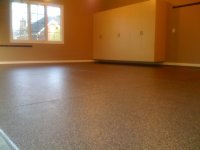
is that the Sedona color and what size chip did you choose?
is that the Sedona color and what size chip did you choose?
The color is called Desert and I just chose from the standard sample boards Premier offered. The chip size is !/4 and when they spread them the floor was completely covered by them. They appear to be a medium size. It was all "standard" Premier choices and so far it has been great. Shows no dirt at all. Since we have two large dogs, that was what we were after.
Last edited:
This is amazing. Two brand new posters in a row, singing praises of the same product. What are the odds?
my exact same thought. a bit of a fishy smell to it.
thegarageguy
Well-known member
Hey final finish guy, if you have researched it, can you break it down for us dummies? You say you know the downsides to using pg and slide-lk, can you please elaborate?
Please show me your data on how your product is so much better than every other industrial manufacturer out there.
BTW, your first post as smg3228, you said you did not know where pg gets there stuff but a few posts later you say, as final finish floor that you know exactly who they get it from. So which one is it?
I think I'll wait for your proof of the best system in the world before I quit buying from my industrial manufacturers. I'm sure they are all shaking in there boots and will soon all go bankrupt because now the word is out that their product is inferior and doesn't hold a candle to your product.
Amazing how one product can do it all. Can we buy stock from this company? Its gonna be a gold mine! Where do I sign up?!?!
Yes I know I'm being sarcastic but you sound ridiculous. I'm sure its a good product that you use but its not the only solution nor the cure all.
Please show me your data on how your product is so much better than every other industrial manufacturer out there.
BTW, your first post as smg3228, you said you did not know where pg gets there stuff but a few posts later you say, as final finish floor that you know exactly who they get it from. So which one is it?
I think I'll wait for your proof of the best system in the world before I quit buying from my industrial manufacturers. I'm sure they are all shaking in there boots and will soon all go bankrupt because now the word is out that their product is inferior and doesn't hold a candle to your product.
Amazing how one product can do it all. Can we buy stock from this company? Its gonna be a gold mine! Where do I sign up?!?!
Yes I know I'm being sarcastic but you sound ridiculous. I'm sure its a good product that you use but its not the only solution nor the cure all.
- Status
- Not open for further replies.