To avoid these ads, REGISTER NOW!

Preparing for tile install

Jbmotorsports

Well-known member
Joined
Jun 27, 2021
Messages
101
I've read a lot about this and could probably draw my own conclusions from that but want to see if I'm missing anything or misinterpreting any information.

Decided on a 6x36 porcelain tile. I got a 10' straightedge and my floor is surprisingly good despite what I had thought.

To start, is there any prep work besides just washing the concrete I should do?

At what point do I need to consider a patching/leveling product as opposed to using the thinset? Is there a measurement to base this off of? My floor has no slope at all just some low/uneven areas.

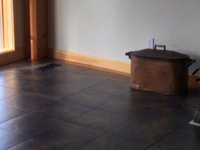
How do I deal with the small raised areas of the slab in the corners? It seems that it would be difficult, and by that i mean impossible, to get a cup grinder all the way into the corner.

There's so many opinions on what to use for thinset I don't know what to choose. Seems that the kerabond/keralastic is mentioned frequently. How about trowel notch size? I will be back buttering all tiles. I had wanted to avoid using a decoupling membrane mainly due to cost as well as the fact it will slightly raise the floor. I figured i can just buy enough extra tiles to deal with future issues, but opinions here would be welcome as well. I've also seen a product that looks like a web of sorts that is marketed as a crack preventer, how well that actually works I don't know. My slab is getting close to a year old, about 28x28 and they did not cut control joints but it was reinforced and is 6" thick. We all know concrete has one guarantee, and that's that it will crack at some point.

Should I get any of the levelling systems? To me it seems that they could lift tiles creating a void. I watched a really interesting video of tile certification installation and it was very interesting using glass plated to show how the way its troweled and laid affects strength and coverage.

Then we have grout. Same deal as thinset, lots of opinions. Epoxy seems like a lot of work and is crazy expensive. Saw some people using a poly blend (?) that seems to have similar properties

Lastly, for now, is the transition at the garage doors. My 10' wide doors drop into a depression at the front. I wondered if I just found a ramp transition that could sit there then I could tile to the edge. Or I could leave that bare and start the ramp just inside that area, seems it would look strange as there would be tile next to the ramps on each side. This may be hard to understand without a picture.

I know this is a long read so thanks to those of you that have taken time out our busy lives to read this and help me on this journey. I've decided to have a go at this job myself but with assistance from someone who's been tiling for some time but never done a garage. This allows for extra funds that if necessary could go towards a ditra mat or similar
 
To avoid these ads, REGISTER NOW!

duneslider

Well-known member
Joined
Jan 20, 2013
Messages
2,247
Location
Riverton, Utah
To start, I have been a licensed tile contractor for close to 20 years. I no longer do tile full time for my job. Every job I have done has calculated risks, it is tough to always do EVERY little thing that would make a job perfect.

I honestly have a really hard time doing any job without a proper underlayment. Ditra or Statamat are my go to's. I use them in my own house and I use them in my basement over concrete. I have done thousands upon thousands of feet of flooring using those products and have seen zero failures.

If you don't want to spring for an underlayment then I would for sure use a good quality thinset that has some flex properties. Kerabond/keralastic isn't marketed as having flex but it is super sticky and seems to offer some flex. It is a very high end thinset combo. I have also used Customs Flexbond and like it a lot. Laticrete platinum is super sticky and like k/k isn't marketed as having flex but seems to provide some based on my experience. I really like Laticrete products. K/K, Platinum, and Flexbond are not cheap thinsets, you might want to compare the price of using those compared to using an uncoupling mat and the much less expensive mortars. You can use versabond above and below ditra. Versabond is 12.50 a bag compared to Flexbond at 30 a bag. Also, versabond is much easier for a DIYer to work with compared to Flexbond or any of those other high end mortars.

Now, truth be told, you could do the whole floor just using versabond and the tile will stick and not come up. That is a risk that you could take and you very well could make it a lifetime with zero issues. The uncoupling membrane or better mortar is sort of like insurance, there is a good chance it will prevent some cracks from happening if you get a small slab crack but there is no guarantee and you could still end up getting a crack.

TCNA calls for a control joint (soft joint) every 20-25' indoors and every 8-10 feet outdoors. Garages are technically speaking outdoors and should have control joints every 8-12 feet. This is very hard to do with the type tile you are doing. Not putting in a soft joint is a risk you have to decide on. Google "tile tenting" and you will see what can happen without soft joints.

Some grouts offer a little flexibility and can help with the soft joint issue. Epoxy and some of the premixed stuff (lots of choices now days) offer a little flex and I have taken some risks before and not put soft joints in when using these. Epoxy is definitely harder to work with and I generally try to avoid it because it is physically more work for me. I like using the premixed grouts and if directions are followed to the T they are great. I have had no issues with the ones I have used, I used some in my house.

Most people are using the Schluter Reno ramp for the transition from tile to concrete.

I really like the leveling systems. I don't HAVE to use them but I do feel like I can get a flatter floor faster with them. They have a cost though but they do make life easier and progress a little faster.

The standard portland based grouts will be as durable as concrete. I still think they are great and hard to beat. I used a lot of permacolor grout in my house, it is generally my favorite. I do like the mapei ultracolor FA a lot too and that is easy to get at Lowes in most areas.
 
OP
J

Jbmotorsports

Well-known member
Joined
Jun 27, 2021
Messages
101
In regards to the control joints, I realize this type of tile can't have a straight joint but should I still do a jagged one in that direction? If my concrete has no saw cuts should I cut the slab into 1/4s or just leave it and do soft joints?

Currently, versabond is 16 and kerabond is 22 so not enough of a difference to matter to me. Would that change an opinion? Ditra will end up costing around 1k to do so unless it's felt to be absolutely necessary I'd rather pass. Mapei also has another thinset they call uncoupling membrane mortar, I don't know if it's being marketed as to be used in lieu of or in conjunction with a mat.
 
Last edited:

duneslider

Well-known member
Joined
Jan 20, 2013
Messages
2,247
Location
Riverton, Utah
In regards to the control joints, I realize this type of tile can't have a straight joint but should I still do a jagged one in that direction? If my concrete has no saw cuts should I cut the slab into 1/4s or just leave it and do soft joints?

Currently, versabond is 16 and kerabond is 22 so not enough of a difference to matter to me. Would that change an opinion? Ditra will end up costing around 1k to do so unless it's felt to be absolutely necessary I'd rather pass. Mapei also has another thinset they call uncoupling membrane mortar, I don't know if it's being marketed as to be used in lieu of or in conjunction with a mat.
Kerabond needs to be mixed with Keralastic, not sure what the cost of a 5 gallon bucket of keralastic is now days. I haven't used the stuff in 10-15 years but it was not cheap back when I was using it. I am guessing a 5 gal bucket is well over $100 now days. I think it is about a gallon per bag, so conservatively speaking you are probably close to $50 bucks a bag to go with K/K.

Uncoupling mortar is comparable to Kerabond. They changed all the names of products sold at Lowes to not be the same as names of products sold at pro stores. Kerabond (without keralastic) and Uncoupling mortar are what we call unmodified mortars, so they have no polymer/latex modifiers in them. Versabond for example is a modified mortar which has dry polymers in the mix. Schluter calls for using unmodified mortars over their mat. Hence the name Uncoupling mortar to be used with the uncoupling mat.

You could do a jagged soft joint. I would not cut a slab that doesn't have cracks after a year. It is possible you will be lucky and the slab won't crack.
 

duneslider

Well-known member
Joined
Jan 20, 2013
Messages
2,247
Location
Riverton, Utah
@duneslider Which leveling system are you referring to?
Any of them, they all do basically the same thing. Some are a little easier to use than others, some have fancy tools to apply pressure. I currently am using this one. It isn't the best I have used but I got a screaming deal on a bunch of it a couple years ago and bought up a bunch to last me a few years. It has worked fine. You still have to know what you are doing and get it pretty close but it helps speed me up.
 
OP
J

Jbmotorsports

Well-known member
Joined
Jun 27, 2021
Messages
101
Uncoupling mortar is comparable to Kerabond. They changed all the names of products sold at Lowes to not be the same as names of products sold at pro stores. Kerabond (without keralastic) and Uncoupling mortar are what we call unmodified mortars, so they have no polymer/latex modifiers in them. Versabond for example is a modified mortar which has dry polymers in the mix. Schluter calls for using unmodified mortars over their mat. Hence the name Uncoupling mortar to be used with the uncoupling mat.

You could do a jagged soft joint. I would not cut a slab that doesn't have cracks after a year. It is possible you will be lucky and the slab won't crack.

Ok, so I will at the least do a soft joint. For knowledge sake why do you need to use a different mortar for the mat. Forgive my ignorance but the thinset/mortar nomenclature usage is a bit confusing to someone just learning and trying to "research" is equally difficult as there's as many opinions on what to use in a particular situation as there are products available. I saw flexbond mentioned a few times as being a cheaper yet still good alternative to the K/K system (which I now understand) but a lot of anecdotal evidence that versabond is just fine for it. How does the versabond compare to the flexbond, the price difference isn't as drastic there. Why is the k/k system so much more well regarded? What property about it makes it superior to the others or is it a situational difference?
 

duneslider

Well-known member
Joined
Jan 20, 2013
Messages
2,247
Location
Riverton, Utah
So, a book could be written here but I will try to keep it somewhat concise. Schluter invented the uncoupling membrane, they are smart people and I believe what they say and I have seen the test results and tested it myself. I think they have put more time into product testing and research than most other companies. I believe schluter's patent ran out and now there are a lot of companies making "similar" products. At one point there were a lot of others and most were disasters due to the companies not understanding the concept and not doing their own testing and just trying to copy. The only two I will use are Ditra and Laticrete Stratamat, they are similar but have some significant differences.

There are 3 basic types of thinsets available. Unmodified, Modified, and 2 part.

Kerabond is an unmodified mortar (there are other brands of unmodified but Kerabond is a very good quality unmodified). Unmodified just means that it does not have any latex or polymers added.

Versabond is a modified mortar. It is what I would call a lightly modified mortar. It has some dry polymers added to the mix to enhance the mortar. I have used thousands of bags of versabond and for the price it is very good.

Flexbond is a Highly Modified mortar. It has been modified with characteristics that make it more flexible and more sticky. I have used it a fair amount and like it.

Kerabond mixed with Keralastic is a 2 Part System. The keralastic is a latex modifier admix used in place of water. It used to be the K/K was the gold standard when it came to sticky pookie. Due to the amount of latex it is also fairly flexible but I don't think they sell it for that purpose.

Now days, technology has gotten to such that dry polymers can rival or exceed what the 2 parts can do, so I just don't see people using K/K much anymore. It is a lot easier to just mix with water.

Schluter's testing showed that a high quality unmodified mortar over their impervious mat and under impervious tile cured faster and adhered to all tiles great. Modified mortars need some aspect of air to help facilitate curing. So, a heavily modified mortar over ditra and under porcelain tile will take longer to cure. My experience has shown that using versabond over ditra is just fine and cures at a similar rate. I also use Laticrete Gold over ditra with good results.

Using an unmodified mortar to set any tile over say concrete or backerboard is a recipe for disaster. The concrete or board will **** the moisture out too fast for the bond to form between the tile and the thinset. Modified thinsets are designed to hold water longer and create higher bond strength.
 

duneslider

Well-known member
Joined
Jan 20, 2013
Messages
2,247
Location
Riverton, Utah
In your particular use case I would probably use flexbond over K/K. If you use flexbond you at least have Custom's testing saying it can handle some movement. They used to say something like a 1/16" or something but I think the lawyers had that removed.
 

engineer2

Well-known member
Joined
Dec 13, 2009
Messages
11,795
Location
Chicago burbs
I'm not a tile contractor, but have lots of DIY (and some materials science experience).

IMHO, I'm not sure I would use 6x36 planks in a garage, but it's up to you. As said, control joints are going to be a problem and I've also seen some long tiles with a slight bow in them. Any mortar inconsistencies in setting a long tile may cause it to crack when you drive a car on it. I would prefer good old fashioned square tile or 12x24. Get porcelain that has the same color all the way through.

I did some research before tiling my outdoor porch and asked some tile guys. They said tiling right on concrete is OK as long as it is clean, not polished, stable, and you keep water from permeating and freezing (unlikely in a garage). Nothing wrong with Ditra for added insurance.

I would bite the bullet (and the dust mask) and grind those high corners down. An oscillating tool with a triangular abrasive attachment will let you finish the corners. If those corners are an inch high, its going to be a lot of work.

There are some very good regular grouts, but epoxy is impervious to about everything. Epoxy grout isn't that bad if you have a helper and the right solvent for cleanup (citrus oil, mineral spirits or whatever the manufacturer recommends). Do it in sections. You and your helper will get faster as you do more.
 
OP
J

Jbmotorsports

Well-known member
Joined
Jun 27, 2021
Messages
101
What a fantastic response duneslider. That not only benefits me directly but I'm sure it will come up on Google searches for years to come. Thanks so much for that. Based on what you wrote (even besides your opinion on what to use) I would have gone with the flexbond due to its apparent price/performance ratio.

Before going further into the grouting section I'd like to discuss flattening the floor. I have a 10' straightedge. Are you to only address areas over 1/8" in 10'? I should i be addressing those areas anyhow and/or grinding any high spots down? The slab does have a lot of small areas like that, as long as it's not 1/2" should I just use the thinset to get flat? I don't want to get into levelling the entire floor but I do have one particularly low area that will need to be addressed. Would that be better served with a patch or self levelling? I guess I need to find the high spot in the room and work off of that.
 
OP
J

Jbmotorsports

Well-known member
Joined
Jun 27, 2021
Messages
101
Engineer: I believe there may be a grout that fits my need in the "in between" camp but i cant recall the name. Is there not some kind of modifier you can put into grout to give it more epoxylike properties?

Yeah I could figure out what to use in the corners as I definetly want to drop them down a bunch. I didn't think about any type of abrasive working on concrete for sanding. Any chance you could link me to an example?

I am not particularly worried about slight bows and will deal with any issues that you mention as they come up. I've already stretched this entire garage to its theoretical maximum, I'm starting to apply string theory physics to the budget at this point lol

And thankfully I never sealed my concrete and its already really rough, I would imagine a clean up and it should be more than ready to accept the mortar
 

engineer2

Well-known member
Joined
Dec 13, 2009
Messages
11,795
Location
Chicago burbs
I believe there may be a grout that fits my need in the "in between" camp but i cant recall the name.
Yes, there is, but I can't recall the name either. Duneslider might know. Mapei Kerapoxy is a water based epoxy, but I've never used it. My experience is with regular epoxy that cleaned up with mineral spirits. The main advantage of plastic-based epoxy grouts is that water won't penetrate.

A cupped diamond wheel on an angle grinder with grind the concrete down, but it's going to make a lot of dust. I suppose you could wet it down to keep the dust down. Also google "concrete grinding in corners" for idea. Looks to be a common situation.

Al long as any dips don't exceed the max thickness allowed for the thinset you use, it should be OK. I'd ask duneslider, but you might be able to use the same thinset to build up the low spots before tiling. The key is to trowel it flat and smooth as it begins to set up.
 

duneslider

Well-known member
Joined
Jan 20, 2013
Messages
2,247
Location
Riverton, Utah
Don't get hung up on grouts, lots of marketing dollars are spent trying to promote why one is better than another but at the end of the day they have different purposes and uses. In the case of a house or garage floor any option is going to be perfectly serviceable. You just need to pick which characteristics are most important to you. Each option has ups and downs. Each needs to be installed correctly to work right. I have been paid by multiple manufacturers to fix floors and in almost all cases it was grout failure due to improper installation and not a product fault.

I have no intention to use epoxy grout ever again to be honest. It has a place in the commercial world but I don't do that so I don't care. When it comes to epoxy, the specralock pro is really the only one I would choose to use but even that is more work than I want and it costs more.

I have been a fan of the acrylic based (pre-mixed) grouts since they came out but still go with a high quality portland based most of the time. Sealed grout performs pretty darn good for most applications.

I would personally use a cup wheel on the edges that are a little rough and the little triangle that is left in the corners I would knock down with a chisel and hammer. I promise the thinset won't care that it is rough in the corners. The little triangle grinding attachments work okay on thinset but take a lot of time on cured concrete and they are a bit pricey. Grind what you can and then knock out the rest with a cold chisel in let time than it takes to find the multitool.
 
OP
J

Jbmotorsports

Well-known member
Joined
Jun 27, 2021
Messages
101
I figure most anything printed on a product is hype which unfortunately makes choosing the correct one really difficult for a newcomer

I almost mentioned using a chisel or my rotary hammer but thought it would get poo pood as I could make it worse lol. Good, that's easily taken care of then. Another thinset question. So mapei has a modified LFT for around 22, and they have ultraflex LFT rapid at around 33. The more I look the more confused I get. I assume ultraflex of any type would be a waste of money or overkill for being on a slab. Seems would be best for a more flexible floor, is that where the major differences and advantages are? Or are they once again based on a situational usage as opposed to being good all around?
 

engineer2

Well-known member
Joined
Dec 13, 2009
Messages
11,795
Location
Chicago burbs
Hey dunslider, not to sidestep this thread but I'm doing a bathroom and want it to be teen-proof, so I'm looking for a grout that won't get moldy or absorb water. I don't mind Miracle sealer now and then. I've never tried pre-mixed. Is it water proof?
 
To avoid these ads, REGISTER NOW!

duneslider

Well-known member
Joined
Jan 20, 2013
Messages
2,247
Location
Riverton, Utah
LFT is their thinset for Large Format Tile. It has some properties to help prevent the thinset sagging under the weight of heavy tile. So, one reason I use the "levelers" is that you can set tile perfectly flat and then when you come back the next day a little shrinkage has occured or the thinset has sagged and the pieces are no longer level. The LFT is supposed to help with that. Back in the day we called these Medium Bed mortars, the marketing department thought LFT sounds better. LFT Rapid is just a fast setting mortar. Don't use it unless you like throwing buckets of hard thinset away, sets up too fast for most people to use effectively. We used to use it on rush jobs. One guy would spread thinset as fast as he could and someone would follow behind slapping tile down as fast as he could and then a couple hours later you were grouting it.

Ultraflex is a bit of a poor name choice. It doesn't "flex". It is flexible in that it has a wide range of uses. Ultraflex 2 would be considered similar to Versabond. Mapei doesn't have a comparable product to Flexbond that I am familiar with.

Rotary hammer would be great for those corners after you cup wheel everything that you can (that is what I do, my chipping hammer is my favorite)
 

duneslider

Well-known member
Joined
Jan 20, 2013
Messages
2,247
Location
Riverton, Utah
Hey dunslider, not to sidestep this thread but I'm doing a bathroom and want it to be teen-proof, so I'm looking for a grout that won't get moldy or absorb water. I don't mind Miracle sealer now and then. I've never tried pre-mixed. Is it water proof?
Truth is, if you are getting mold the grout isn't your issue. Normal grout is anti-microbial by nature (highly alkaline). Mold needs food, moisture, heat. Food is latex caulk and soap and human stuff. A properly built shower should dry out fairly quick. Improperly built showers hold a lot of moisture and never fully dry out and grow yucky stuff.

However, pre-mixed is pretty waterproof, and anti-microbial, and may help a little but won't compensate for a poorly built shower. Maybe try getting a timer for your bathroom fan and see if leaving in on for an hour or two after showers and see if it helps. My master shower is bone dry an hour or two after use.
 

engineer2

Well-known member
Joined
Dec 13, 2009
Messages
11,795
Location
Chicago burbs
We have a 120 cfm fan right over our shower, rinse and squeegee it after every use, and leave the shower door open to help dry it out. It too is dry in an hour or two. I should say the mold isn't real bad, and as you said it's from mostly from soap scum and whatnot. I keep some bleach spray handy. After a month it's noticeable in some areas.

The kids however never squeegee and rarely clean. Their 100 cfm fan has a humidity sensor, but I found the makeup air to the room is inadequate, which I'll fix with an air return. We may use epoxy grout because we are familiar with how to use it, plus it's not a huge project, just your normal 3x5 tub area and 5x6 floor. The epoxy grout on our outdoor front porch looks as good as the day I put it in.

Kids are hard on bathrooms. They have managed to flood it a few times, shatter a PEI 5 porcelain tile (over Ditra), literally etch material out of a granite countertop, rust the interior of the medicine cabinet, stain the shower niche shelf purple (my fault for using marble), remove the plating from part of the faucet, etc..

I remember I did pre-mix in our entryway 20 years ago and soon learned never to use light colored grout on a floor. Decently water resistant, but not very stain resistant. Ground it all out last year and used dark gray with 1776.
 

Copymutt

Well-known member
Joined
Sep 3, 2016
Messages
3,386
Location
Colorado
Raised areas in the corners? I think your looking at the stem wall where it surrounds your slab. Floor will stay warmer and not conduct heat from the room/slab to the stem wall if there is a thermal break between the two. Ideally foam board. If you lay tile over both you bridge that and create a thermal path. Couple ways to deal w/ that. I usually do a border of mdf or strip flooring undercut & or planed to match tile finish height.
B36C4C2B-EC4B-4F00-9305-77C99043344F.png2CA4087E-08B8-4072-A2E8-1B9618AFECA6.jpeg
 
OP
J

Jbmotorsports

Well-known member
Joined
Jun 27, 2021
Messages
101
Duneslider: So would the mapei LFT be a better choice perhaps than flexbond? Technically my tiles are large format. I also keep forgetting to ask what you think would be the best way to tackle one area, say 7 or so sqft, that is a noticeable low spot by one of the walls. Is patching preferred over a self leveller?

Copymutt: actually I'm referring to the slab itself being slightly higher right in the corners where it meets the stem wall cinderblock. I have, however, been throwing around some different ideas for that for when it's all finished up
 

duneslider

Well-known member
Joined
Jan 20, 2013
Messages
2,247
Location
Riverton, Utah
I think Flexbond is better.

sounds like the low spot isn't really big just float it out a little the day before with some left over thinset then tile away the next day. I only use patching compounds or self leveler if the areas in question are large.
 
OP
J

Jbmotorsports

Well-known member
Joined
Jun 27, 2021
Messages
101
Oh awesome. That makes life a little easier.

Can I just ask why you think it's better. I'm sure I'll understand at some point but what quality is it that makes it the better choice, in your opinion. Does it have to do with its workability? Sometimes people like something more just because maybe it mixes better
 
OP
J

Jbmotorsports

Well-known member
Joined
Jun 27, 2021
Messages
101
Oh sorry I meant between the mapei LFT and flexbond, unless that's the same as ultraflex with a different naming scheme? Just to satisfy my curiosity honestly
 

duneslider

Well-known member
Joined
Jan 20, 2013
Messages
2,247
Location
Riverton, Utah
I would still use Flexbond personally in your application. Flexbond is also rated for LFT. I really do think that flexbond is a fantastic product for the price. What it does at that price is very good.
 
OP
J

Jbmotorsports

Well-known member
Joined
Jun 27, 2021
Messages
101
Awesome. Guess I'm all settled then, I appreciate the guidance and sharing of opinions. Maybe I'll post up some pics once I get started
 
OP
J

Jbmotorsports

Well-known member
Joined
Jun 27, 2021
Messages
101
LOL. You are certainly correct. If I found this thread a year ago and the guy didn't post pics I'd be really bummed. Would the etiquette be to start a new post or put it here?

Oh shoot one more question, is there a good way to estimate how much product (thinset, grout, etc) i will need. I've seen the general recommendations when googled but don't know how accurate that it
 
OP
J

Jbmotorsports

Well-known member
Joined
Jun 27, 2021
Messages
101
Ooooo ooooo I know the answer to this.....yes. As for this and every other question you asked in this thread you should start your own thread for it, for numerous reasons
 
To avoid these ads, REGISTER NOW!
Top Bottom