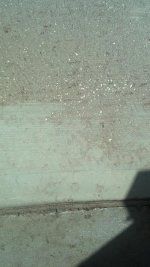
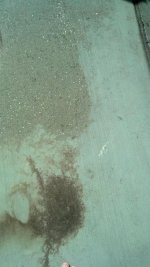
I have some stains on the driveway of my brand new house (3 months old) and my wife and I started to pressure wash them off and noticed the concrete was flaking away. Is this damage we did or is there a problem with the concrete? We were using the 15 degree nozzle. I will post pictures later when I can get some.


You are using an out of date browser. It may not display this or other websites correctly.
You should upgrade or use an alternative browser.
You should upgrade or use an alternative browser.
Pressure Washer Damage?
- Thread starter tegguy
- Start date
Jim B
Well-known member
I wouldn't call it flaking away. That's just what happens when you hit concrete with a high pressure washer. Live and learn.
I wouldn't call it flaking away. That's just what happens when you hit concrete with a high pressure washer. Live and learn.
So this is typical? The reason I ask if it's a concrete defect is becuase our home is under warranty and we've had workman ship issues on other things.
If it isn't a concrete defect is there any easy way to fix it? Any recommendations for getting the stains off using less pressure?
Junkman
Well-known member
The concrete hasn't finished curing. No way to fix this, other than to start over. Live and learn. High pressure isn't the way to clean most surfaces that are new.
The concrete hasn't finished curing. No way to fix this, other than to start over. Live and learn. High pressure isn't the way to clean most surfaces that are new.
How long does it take to fully cure? We've lived here for 3 months and driveway was poured about a month before that. We tried driveway cleaner and scrubbing but it didn't seem to work. Maybe we needed a different method.
kd3pc
Well-known member
To mitigate the stains, you need to know what they are....
oil/grease/etc....good old fashion dish detergent like Dawn and an old fashioned scrub brush. You can get the kind on a stick, but it is easier to apply elbow grease down close. rinse with clean water from a hose. Some synthetic oils will be tougher and may need some methanol alcohol to remove, then the soap. The key is to soak up as much as you can (think kitty litter/oil dry) WHEN it happens, and to PREVENT it when ever possible. I have an old plastic tarp and a moving blanket that I use when working in the driveway. Plastic tarp, then the old blanket, then the work. oil dri stays nearby in a 5 gallon bucket.
nature stains are tougher...as you don't really know what they are. start with the weakest "solution" possible and work up from there. IE, soap and water, then some clorox/weak bleach mixed with water and let it soak a bit, not more than an hour or so, and rinse well.
Then you can step up to some of the more caustic "driveway cleaners", commercial cleaners, or abrasives and pressure.
But you have to be careful with each, they each have consequences and some may take more than one application with some nature time in between.
Now as to the pressure washer, especially if this is your first house..set it aside. There is nothing on a modern house that requires using a pressure washer to clean. I have family members who have the top of the line pressure washer, some one of each gas and electric. And they have all paid the price for improper use.
The pressure washer will easily knock the paint and gel coat from a truck cap, similarly it will rip the soft grain from a deck or anything made of real wood, they can render vinyl siding dull and remove the finish, paint from your mowing machine, even break windows, and peel auto trim from the body.
They are good for removing grafitti from cinderblock, decent for removing mud/concrete from construction equipment and if you are careful, the cat's meow, for cleaning boat bottoms when used promptly after the boat is hauled. But even then if you are not careful, you can blast a hole in 1/2" fiberglass.
Didn't say where you are, but concrete can take a long time, especially when poured in inclement weather or when additives are used to expedite things, to cure, and you may have a "quality" issue with your contractor, but the pics don't show the normal spalling associated with that. IMHO. Others may chime in.
All the best,
oil/grease/etc....good old fashion dish detergent like Dawn and an old fashioned scrub brush. You can get the kind on a stick, but it is easier to apply elbow grease down close. rinse with clean water from a hose. Some synthetic oils will be tougher and may need some methanol alcohol to remove, then the soap. The key is to soak up as much as you can (think kitty litter/oil dry) WHEN it happens, and to PREVENT it when ever possible. I have an old plastic tarp and a moving blanket that I use when working in the driveway. Plastic tarp, then the old blanket, then the work. oil dri stays nearby in a 5 gallon bucket.
nature stains are tougher...as you don't really know what they are. start with the weakest "solution" possible and work up from there. IE, soap and water, then some clorox/weak bleach mixed with water and let it soak a bit, not more than an hour or so, and rinse well.
Then you can step up to some of the more caustic "driveway cleaners", commercial cleaners, or abrasives and pressure.
But you have to be careful with each, they each have consequences and some may take more than one application with some nature time in between.
Now as to the pressure washer, especially if this is your first house..set it aside. There is nothing on a modern house that requires using a pressure washer to clean. I have family members who have the top of the line pressure washer, some one of each gas and electric. And they have all paid the price for improper use.
The pressure washer will easily knock the paint and gel coat from a truck cap, similarly it will rip the soft grain from a deck or anything made of real wood, they can render vinyl siding dull and remove the finish, paint from your mowing machine, even break windows, and peel auto trim from the body.
They are good for removing grafitti from cinderblock, decent for removing mud/concrete from construction equipment and if you are careful, the cat's meow, for cleaning boat bottoms when used promptly after the boat is hauled. But even then if you are not careful, you can blast a hole in 1/2" fiberglass.
Didn't say where you are, but concrete can take a long time, especially when poured in inclement weather or when additives are used to expedite things, to cure, and you may have a "quality" issue with your contractor, but the pics don't show the normal spalling associated with that. IMHO. Others may chime in.
All the best,
The stains are from little brown things off tree's in our yard (I believe they are some kind of oak). This isn't my first house and know what to use a pressure washer on and what not to (or so I thought). I've never had an issue with concrete doing this. We are located in Florida.
Sorry to see what happened while using your pressure washer. As the others have already stated, the damage is done and irreversible. Your driveway is far from being fully cured and the pressure washer simply removed the finish (the butter so to speak) that helps seal the concrete. These washed areas are extremely porous now and stains will set in much deeper than before.
A good pressure washer will do this same thing even on a seasoned driveway slab.
There are actually processes now days to topcoat concrete with good results, but unfortunately they can be pricey.
A good pressure washer will do this same thing even on a seasoned driveway slab.
There are actually processes now days to topcoat concrete with good results, but unfortunately they can be pricey.