To avoid these ads, REGISTER NOW!

Propane System Install for New Residence

Two Pump Chump

Well-known member
Joined
Sep 27, 2020
Messages
106
Location
N CA
Looking for a YouTube video that doesn't bring the amateur weekend warrior ****. A comprehensive look at a new instal for a new residence. Code, Safety, tank, regulators, UG line, House wall penetration, house interior runs, appliance connection, line sizing. A lot to ask for I know, but my first 45 minutes was a waste and looked like amateur hack night before the fireball. - thanks.
 
To avoid these ads, REGISTER NOW!

dcg9381

Well-known member
Joined
Jun 20, 2018
Messages
11,627
Location
Austin, TX
I don't think the plumbing (house) side of it is rocket science. Assuming you've got it sized correctly, around here it's all black pipe that gets leak tested (for days). The regulator, supply, all that stuff - that's done by the propane company (typically the company where you buy the tank from).

There is some advanced stuff that I've used a little bit of, specalized flex lines and fittings.
 

larry4406

Well-known member
Joined
Jan 27, 2006
Messages
18,975
Location
Northern Virginia
...I would highly suggest iron pipe and not csst...
Agreed.

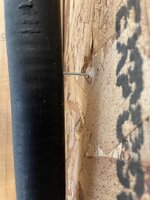
I have chased too many leaks from CSST systems. Trim nails if too long can puncture the CSST as can siding nails. Nail plates are useless for protection when the CSST runs thru a stud bay and blind nailing is involved.

Here are pictures of CSST run thru an exterior 2x6 wall stud bay. A siding nail punctured the line. Ideally, the CSST would have been strapped to the middle of the stud vs dangling in the bay which may have afforded some protection.

This was fun trying to find the source of the gas smell.

Watch your nail size!
IMG_9462.JPGIMG_9461.JPG
 

Firebrick43

Well-known member
Joined
May 12, 2015
Messages
13,975
Location
West central Indiana
Agreed.

I have chased too many leaks from CSST systems. Trim nails if too long can puncture the CSST as can siding nails. Nail plates are useless for protection when the CSST runs thru a stud bay and blind nailing is involved.

Here are pictures of CSST run thru an exterior 2x6 wall stud bay. A siding nail punctured the line. Ideally, the CSST would have been strapped to the middle of the stud vs dangling in the bay which may have afforded some protection.

This was fun trying to find the source of the gas smell.

Watch your nail size!
IMG_9462.JPGIMG_9461.JPG
I wish I would have kept a pic but in Oct I responded to a leak that the siding guy got lucky and had three nails in the CSST. Amazing how little it leaked to. They were using it for over a month and a half and would just occasionally catch a whiff. They howled like hell when we started cutting drywall.
 

gmcgeo

Well-known member
Joined
Mar 11, 2019
Messages
3,701
I don't think the plumbing (house) side of it is rocket science. Assuming you've got it sized correctly, around here it's all black pipe that gets leak tested (for days). The regulator, supply, all that stuff - that's done by the propane company (typically the company where you buy the tank from).

There is some advanced stuff that I've used a little bit of, specalized flex lines and fittings.
Pipe fitter
 

Rusted Nut

Well-known member
Joined
Dec 11, 2022
Messages
1,800
Location
PNW
Propane is heavier than air. So, where your propane appliances are located, you will need a floor drain the the exterior (not into the plumbing system); so if there is a leak the propane will fall to the floor and go out the drain. Not sure what part of the country you are in, but this is code in Washington.
 
OP
T

Two Pump Chump

Well-known member
Joined
Sep 27, 2020
Messages
106
Location
N CA
Propane is heavier than air. So, where your propane appliances are located, you will need a floor drain the the exterior (not into the plumbing system); so if there is a leak the propane will fall to the floor and go out the drain. Not sure what part of the country you are in, but this is code in Washington.

??

Never mind. Too much here that . . . . .. . . . Never mind. Thanks
 

gmcgeo

Well-known member
Joined
Mar 11, 2019
Messages
3,701
Propane is heavier than air. So, where your propane appliances are located, you will need a floor drain the the exterior (not into the plumbing system); so if there is a leak the propane will fall to the floor and go out the drain. Not sure what part of the country you are in, but this is code in Washington.
I would like to see this code
 

dcg9381

Well-known member
Joined
Jun 20, 2018
Messages
11,627
Location
Austin, TX
Pipe fitter
Weird. Here it's plumbers that do the gas lines.


Propane is heavier than air. So, where your propane appliances are located, you will need a floor drain the the exterior (not into the plumbing system); so if there is a leak the propane will fall to the floor and go out the drain. Not sure what part of the country you are in, but this is code in Washington.
No such code in TX, so YMMV. (probably a good idea)
How big are these drains?
 

fitter30

Well-known member
Joined
Jun 23, 2019
Messages
2,960
Location
Peace Valley,mo
Any gas system should be pressure tested before put in service. Lp the danger element is more that natural. Lp doesn't have any mercaptan for smell and lp is heavier that air just sits in cavities.
 
To avoid these ads, REGISTER NOW!

gmcgeo

Well-known member
Joined
Mar 11, 2019
Messages
3,701
Any gas system should be pressure tested before put in service. Lp the danger element is more that natural. Lp doesn't have any mercaptan for smell and lp is heavier that air just sits in cavities.
Yes, it does. I use to put it in at the plant
 

Firebrick43

Well-known member
Joined
May 12, 2015
Messages
13,975
Location
West central Indiana
Any gas system should be pressure tested before put in service. Lp the danger element is more that natural. Lp doesn't have any mercaptan for smell and lp is heavier that air just sits in cavities.
LPG has one pound of mercaptan per 10k gallons and has for as long as I have been cognizant.
 

gmcgeo

Well-known member
Joined
Mar 11, 2019
Messages
3,701
I am not sure where in the world he got the idea that it has no mercaptan.... that's some bad info
 

fitter30

Well-known member
Joined
Jun 23, 2019
Messages
2,960
Location
Peace Valley,mo

Firebrick43

Well-known member
Joined
May 12, 2015
Messages
13,975
Location
West central Indiana
Stand corrected but never smelled it in lp. Walk into a house with natural gas can smell it with a very small leak. Ferrell gas put in less than .1% in their lp.
1lbs / 42000lbs is .002 percent so yes it’s less than .1 percent.

NFPA 58

“4.2
All LP-Gases shall be odorized prior to delivery to a bulk plant by the addition of a warning agent of such character that gases
are detectable, by a distinct odor, to a concentration in air of not over 1/5 the lower limit of flammability.

The presence of odorant shall be determined by sniff testing or other means, and the results shall be documented as follows: 1) When LP-Gas is delivered to a bulk plant
2) When shipments of LP-Gas bypass the bulk plant
A.4.2.1
Experience has shown that ethyl mercaptan in the ratio of 1 lb. per 10,000 gallons of liquid LP-Gas has been recognized as an effective odorant.
A.4.2.3
Another method of determining the presence of odorant is the stain tube test. The method involves using a small handheld
pump to draw a sample across a filled glass tube and reading the length of color change.”


The 1 pound per 10,000 gallons is 3.9 ppm minimum.
The average human nose can detect 1.6 ppm

NG has 2-4ppm injected.

It’s very detectable in each gas to me
 
Last edited:

Rusted Nut

Well-known member
Joined
Dec 11, 2022
Messages
1,800
Location
PNW
I would like to see this code
NFPA 58

6103.2.1.1 Use in basement, pit or similar location.
LP-gas containers shall not be used in a basement, pit or similar location where heavier-than-air gas might collect. LP-gas containers shall not be used in an above-grade underfloor space or basement unless such location is provided with an approved means of ventilation.

Building officials interpret this differently. In one case I had to install the furnace in an enclosed, sealed closet with a floor drain. In another case, we had to install floor drain in the kitchen for the range.
 

Rusted Nut

Well-known member
Joined
Dec 11, 2022
Messages
1,800
Location
PNW
??

Never mind. Too much here that . . . . .. . . . Never mind. Thanks

Don’t let this intimidate you. A floor drain is nothing more than a 1 1/2” PVC pipe through the floor, a 90, and a straight run to exterior. Talk to your local building dept., and see exactly what they will require.
 

gmcgeo

Well-known member
Joined
Mar 11, 2019
Messages
3,701
NFPA 58

6103.2.1.1 Use in basement, pit or similar location.
LP-gas containers shall not be used in a basement, pit or similar location where heavier-than-air gas might collect. LP-gas containers shall not be used in an above-grade underfloor space or basement unless such location is provided with an approved means of ventilation.

Building officials interpret this differently. In one case I had to install the furnace in an enclosed, sealed closet with a floor drain. In another case, we had to install floor drain in the kitchen for the range.

That is for an lp container. that code does not apply for what we are talking about.

you are reading the code incorrectly
 
To avoid these ads, REGISTER NOW!
Top Bottom