To avoid these ads, REGISTER NOW!

Pumped in insulation

andyvh1959

Well-known member
Joined
Feb 15, 2020
Messages
2,597
Location
Green Bay WI
My house is a 1973 built tri-level in east central Wisconsin. It has the usual 2nd level overhangs, cedar siding above over brick on the ground level, overhangs above the brick level are about 12" to maybe 18". I know the house in woefully lacking in decent insulation. Once I gained access to the kitchen level overhang, and found no insulation in the area I accessed. So I am consdering hiring an insulation company to come in and pump foam insulation into the walls. Since I've never done this, or hired someone to do this I'm curious what overs on the forum have experienced and what results you got.

Being the house was built in 1973, the walls are 2x4 construction, and other than 3/4" plywood at the corners, the outside of the stud walls are covered with the common lightweight fiber board sheets, and then covered with vertical cedar car siding. Insulation is older fiberglas where I have gotten into the walls over the years. Certainly over 50 years the minimal insulation has settled in some areas, and in 1973 there was no plastic sheeting that went over the exterior before the siding was installed. The house has a central gable over the livving room and a simple shed roof over the east (bedrooms) and west end (kitchen, dining room). Over the bedrooms is a loft and attic, so part of the walls in the attic are not insulated, but the floor in the loft attic has some insulation. Same for the attic area above the kitchen and dining room. 20250218_144302.jpg
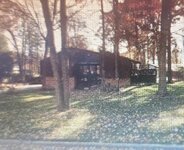
Since the house has such minimal old style insulation, and since homes built before the first big energy crunch had little real focus on sealing and insulating the house, any insulation gain is a plus. Me being the type to do all my work myself, when I do hire out work I'm even more critical about getting the best return form my money.
 
Last edited:
To avoid these ads, REGISTER NOW!

billconner

Well-known member
Joined
Jul 20, 2021
Messages
6,964
Location
Thousand Islands NYS
In attic areas have cellulose blown in. I have 20" in climate zone 6 - northern NY on Canadian border. May be a little over kill but not a lot Code for new would be 15" or so. But top is highest priority.

I the overhangs I would not recommend foam. Too many liabilities. There I would love for dense packed cellulose. That's 3 pound per cubic foot and not like the attic where it's loose and will settle and is probably in the 1 1/2 pcf range.

You can sense pack walls but I sense this might be more disruptive than makes sense for you.

Besides insulation and maybe first, I should have said air sealing would get biggest and fastest return on investment. Start at foundation and do the sills and band sill. Good place for rigid foam and caulk or spray foam in a can. Easy to find on Google. Doors and windows - adding weather stripping, double pane or good storm windows. Gaps around penetrations. And biggest, hopefully accessible, gaps in ceilings. Light fixtures, plumbing vents, flues, and the tops of interior walls. Spray foam, tape, poly, aluminum, etc are the weapons.

There are good weatherization contractors who can do this stuff, and probably start with some testing. Not cheap but a blower door test before and then after upgrades would be a good idea. Here in NY the extension service offers a lot of free guidance and references. I'm guessing Wisconsin does too.

It's a big topic but the age of your house is does seem ripe for this kind of work.
 

DGersic

Well-known member
Joined
Mar 12, 2017
Messages
6,304
Location
DeKalb, IL
My house is a 1973 built tri-level in east central Wisconsin. It has the usual 2nd level overhangs, cedar siding above over brick on the ground level, overhangs above the brick level are about 12" to maybe 18". I know the house in woefully lacking in decent insulation. Once I gained access to the kitchen level overhang, and found no insulation in the area I accessed. So I am consdering hiring an insulation company to come in and pump foam insulation into the walls. Since I've never done this, or hired someone to do this I'm curious what overs on the forum have experienced and what results you got.

Being the house was built in 1973, the walls are 2x4 construction, and other than 3/4" plywood at the corners, the outside of the stud walls are covered with the common lightweight fiber board sheets, and then covered with vertical cedar car siding. Insulation is older fiberglas where I have gotten into the walls over the years. Certainly over 50 years the minimal insulation has settled in some areas, and in 1973 there was no plastic sheeting that went over the exterior before the siding was installed. The house has a central gable over the livving room and a simple shed roof over the east (bedrooms) and west end (kitchen, dining room). Over the bedrooms is a loft and attic, so part of the walls in the attic are not insulated, but the floor in the loft attic has some insulation. Same for the attic area above the kitchen and dining room. 20250218_144302.jpg
Since the house has such minimal old style insulation, and since homes built before the first big energy crunch had little real focus on sealing and insulating the house, any insulation gain is a plus. Me being the type to do all my work myself, when I do hire out work I'm even more critical about getting the best return form my money.

I don’t think you can do spray foam in enclosed cavities. You’d have to remove walls down to studs, inside or outside, then spray foam.

On my house (1948) there was no insulation in the walls. Just cedar siding over insulation board on the outside, and rock lath and plaster inside. Combine with old single pane windows, and we weren’t very energy efficient.

I talked to several contractors before coming up with a plan. I had the top coarse of siding removed (cut nails from below). Behind that, the insulation board was drilled with 3” holes into each wall cavity. Then blown in cellulose insulation was put in each one, filling the cavities. Put the siding back on, caulk, and paint.

I also had the windows replaced with modern vinyl double pane units.

The attic has about 4” of vermiculite, covered with about 6” of blown in shredded fibreglass. I’d like to put more in the attic, but I don’t expect huge gains in efficiency at this point.
 

Rusted Nut

Well-known member
Joined
Dec 11, 2022
Messages
1,809
Location
PNW
In the ‘80’s here in the Pacific NW, blowing foam into stud cavities was popular. Drill a 3 or 4” hole in each stud bay, and fill er up. In the end it didn’t work very well. Lots of blocking, pipes ,etc.. in wall left huge voids. Didn’t up the R value very much. As others said, air seal , and blow cellulose in the attic.
 

theoldwizard1

Well-known member
Joined
Feb 22, 2011
Messages
43,145
Location
SE MI
So I am consdering hiring an insulation company to come in and pump foam insulation into the walls.
Daughter had one very bad experience. Company "claimed" to have "pumped the wall cavities full" of foam. About 2 years later, while doing a major kitchen renovation, we found there was actually very little foam in the wall.

YMMV
 
OP
A

andyvh1959

Well-known member
Joined
Feb 15, 2020
Messages
2,597
Location
Green Bay WI
Well, these replies are exactly why I'm anxious about hiring this out to local "experts" about having foam pumped into the walls. IF the house walls are consistent 16" C-C studs, without cripples, without horizontal strigers, without other structure to block the tubing shoved into the wall cavities to pump in the foam, then it should be a decent result. But, expanding foam itself, how do they control the expansion? I'd expect to see foam creeping in through outside wall outlet and switch boxes, or expanding into living spaces through what were drafty cracks.

The overhangs on my trilevel are easy to open and access, and I should first do them, block them in with rigid pink where the floor joists rest over the lower walls (which also seals off the overhangs from the floor joist sections), and then pack the overhang sections with celluose and finally rigid foam pieces to hold the insulation in, then re-install the soffit panels.

Windows in the three bedrooms were all replaced with new high-tech windows. Windows in the lower sections, I'll replace them myself as they are easy to handle at ground level. That will take care of all the windows and standard doors. This spring I'm replacing the three patio door sets with new high-tech windows. That'll cover all the doors and windows. The rest of the usual things to seal, and insulate I'll take care of myself. That leaves the walls as the big issue, which is why I thought about hiring the wall insulation. I may get some quotes, and I'll drill them on how they can be sure of getting the walls fully pumped in.
 

tarmy

Well-known member
Joined
May 28, 2014
Messages
4,675
Location
Nor Cal
I am looking to do this very thing in our vacation house. 50 years old, entire interior is beautiful pine T&G so no way to get to the cavity from the inside. I am planning on adding Hardiplank to the exterior…so no issue with a couple holes per bay. Best I can figure is that dense pack cellulose (around here) seems to be the best solution. Nobody does the retrofit spray foam. Following this thread for other folks comments.
 
OP
A

andyvh1959

Well-known member
Joined
Feb 15, 2020
Messages
2,597
Location
Green Bay WI
USA Insulation has a franchise here in Green Bay. I may at least get a quote from them to understand some options, but being a franchise has some concerns versus a fully locally owned/operated company. I've read reviews online for other USA Insulation franchises, and many are not good at all. In this area is also City Wide Insulation, a local contractor, and they have a showroom to view their processes and products They even request a scheduled showroom visit instead of just showing up. So I might visit them to get a better idea if pumped in insulation is really an effective option for my home.
 

reader2580

Well-known member
Joined
Dec 31, 2014
Messages
14,522
Location
Minneapolis, MN
I believe RetroFoam is one of the companies doing this. Search for photos and videos of walls cut open after foam had been pumped in at some point. The pictures and photos I have seen show the foam only partially filling the wall. Now, these could be marketing jobs, and not showing all of the good walls, but there are sure a lot of bad ones.
 
OP
A

andyvh1959

Well-known member
Joined
Feb 15, 2020
Messages
2,597
Location
Green Bay WI
Exactly my concern. Seems to me the only way to know for certain your walls are properly/completely filled means:
1. The contractor has to be very familiar with home construction styles and methods, and various house styles, perhaps even local knowledge of home builders in the area and their impact on house construction
2. The contractor would have to do an in depth evaluation of the house, and not just the typical test to show the home owner how much heat the house is loosing. To me that is a given and is why I contact the contractor. Yes it is a worthwhile before and after evaluation. The evaluation should also note any inner wall obstructions like electrical box locations, so when the fill pipe is inserted into the wall they know what they might run into obstruction wise.
3. The contractor would have to do an exterior heat image analysis of the house to show where the major insulation issues are in the walls. Attics, crawl spaces, basements are all givens, I want to know about the walls.
4. The contractor would have to confirm how to not overfill the cavities to the point of failing the drywall/plaster inside if the product is an expanding foam style insulation (which is why pumped in cellulose is better?).

Then, to me, the contractor, after gaining access into the wall cavitities should extend a measured pipe UP into the wall space until it contacts the underside of the top plate (or other obstruction) and then pull the fill pipe down as it dispenses the insulation product. If the pipe stops well before the top plate, then the contractor must know where/what the obstruction is to get around it and fully into the cavity. By measured pipe I mean if the wall is 96" tall, then the pipe should have markings on it to confirm how high up in the wall the pipe reaches. Or if the cavity access is made some distance up the wall, the pipe should show a measure up to the top plate, and then also DOWN to the base plate. So if filling starts up on the wall, it must be filled from the top down and bottom up.

Then, after completing the project, the contractor should come back and do the usual leaks assesment, but also do another heat imaging assesment to confirm the known areas that needed insulation pumped in actually got the product fully filled into the walls. Without all these issues addressed I don't feel I could be confident I get what I paid for without actually opening up the wall cavities. And without these steps why should I waste me money with a contractor since it comes down to return on the dollars spent. If the job costs $5000 and I really only get partial filling and my heating/cooling costs do not noticeably change, where is my return on the investment?
 

pcmeiners

Well-known member
Joined
Aug 13, 2009
Messages
7,899
Location
In the only town in Pennsylvania, Bloomsburg.
the house walls are consistent 16" C-C studs, without cripples, without horizontal stringers, without other structure to block the tubing shoved into the wall cavities to pump in the foam, then it should be a decent result.
If they use the correct non expanding foam, and if they study where chocks etc. are in the wall, and if an IR scan is done after the initial foaming, and if you get to see a pictorial of the IR scan of every wall completed printed out , if you are with the IR scanner during the scan, if they promise to fill every cavity even if they must come back to do it, if the contract promises the foam will not shrink, if all this is written into the contract and if you hold back some payment (15%) until everything is done. Is the company bonded ? What is the fire rating of the foam? Might pay to buy a cheap IR scanner (Vevor etc).

Years back they used foam which shrank, becoming a block of foam with at least an inch of air surrounding it on all sides within the wall cavities, totally useless.
 
OP
A

andyvh1959

Well-known member
Joined
Feb 15, 2020
Messages
2,597
Location
Green Bay WI
Hmm,...I like the idea of buying an IR scanner, another cool tool for the shop. But also if I do that and then show the contractor what I already know of the house then they'll know I'm much more prepared, and expectant of results. I think the current injectable foams are likely better than was done years ago, or at least I hope so. Like you said if it shrinks and now has air gaps, yes its still better insulation than what is now on my walls, but I'm paying for full coverage and coverage that does not degrade over time.

Little curious Ebay shopping and:


Neither one is cheap, but then better to spend about $500 or so to make sure $5000 on contracted work is worth it. Now I'll have to research infrared sensor systems to understand if one of these is even capable of sensing accurately enough to make it wirth the bucks.
 

tarmy

Well-known member
Joined
May 28, 2014
Messages
4,675
Location
Nor Cal
Hmm,...I like the idea of buying an IR scanner, another cool tool for the shop. But also if I do that and then show the contractor what I already know of the house then they'll know I'm much more prepared, and expectant of results. I think the current injectable foams are likely better than was done years ago, or at least I hope so. Like you said if it shrinks and now has air gaps, yes its still better insulation than what is now on my walls, but I'm paying for full coverage and coverage that does not degrade over time.

Little curious Ebay shopping and:


Neither one is cheap, but then better to spend about $500 or so to make sure $5000 on contracted work is worth it. Now I'll have to research infrared sensor systems to understand if one of these is even capable of sensing accurately enough to make it wirth the bucks.
Well done OP….well done. Any CJer worth a damn always find the need for more tools.
 

Just_Steve

Well-known member
Joined
Jun 2, 2020
Messages
882
Location
Dutchess County, NY
Hmm,...I like the idea of buying an IR scanner, another cool tool for the shop. But also if I do that and then show the contractor what I already know of the house then they'll know I'm much more prepared, and expectant of results. I think the current injectable foams are likely better than was done years ago, or at least I hope so. Like you said if it shrinks and now has air gaps, yes its still better insulation than what is now on my walls, but I'm paying for full coverage and coverage that does not degrade over time.

Little curious Ebay shopping and:


Neither one is cheap, but then better to spend about $500 or so to make sure $5000 on contracted work is worth it. Now I'll have to research infrared sensor systems to understand if one of these is even capable of sensing accurately enough to make it wirth the bucks.
Too much money for those. Below cost $129.00 from the Tick Tock shop.

IMG_4078.jpegIMG_4079.jpeg
 
OP
A

andyvh1959

Well-known member
Joined
Feb 15, 2020
Messages
2,597
Location
Green Bay WI
Cool! Can you give any report on how well it works? If I had that, standing in my yard (22F outside right now) say about 50' from the house, would it show thermal details of where the house is emitting too much heat? And if it did, would it be accurate enough to tell where its giving off more heat than other areas?

For $120 if it does work I'll order one right now. But if I can only order it on Tik Tok or Temu, no deal, I will not buy unless its from a reputable seller and I sure as hell won't buy anything on Temu (don't care how cheap Temu sells anything). Did some online searching and found a Flir brand which I'd sooner trust than almost any other:


Not bad for a known brand name that uses my smart phone for the image projection. Also found a Flir handheld for $379. More in the ball park than dropping near $800 for a commercial device.
 
Last edited:

pcmeiners

Well-known member
Joined
Aug 13, 2009
Messages
7,899
Location
In the only town in Pennsylvania, Bloomsburg.
. But also if I do that and then show the contractor what I already know of the house then they'll know I'm much more prepared, and expectant of results.
Yep beat them at their own game, let the contractor know about your scan. Agree with Just_Steve, those scanners are too expensive, especially Fluke, as your paying >50% just for the name.

If you have a meter, you can scan before the job and once they are finished, before you pay them.... besides any EXCUSE to get a new tool is a good excuse.

As to the pitiful foam jobs mentioned, that was years ago.

Vevor, 30 day return, 1 year warranty

 
Last edited:

Just_Steve

Well-known member
Joined
Jun 2, 2020
Messages
882
Location
Dutchess County, NY
Cool! Can you give any report on how well it works? If I had that, standing in my yard (22F outside right now) say about 50' from the house, would it show thermal details of where the house is emitting too much heat? And if it did, would it be accurate enough to tell where its giving off more heat than other areas?

For $120 if it does work I'll order one right now. But if I can only order it on Tik Tok or Temu, no deal, I will not buy unless its from a reputable seller and I sure as hell won't buy anything on Temu (don't care how cheap Temu sells anything).
Just got it the other day, haven't checked it outdoors but I can find all of my cold spots inside.
Found it on amazon for $149 if that helps.
 
To avoid these ads, REGISTER NOW!
OP
A

andyvh1959

Well-known member
Joined
Feb 15, 2020
Messages
2,597
Location
Green Bay WI
When I search the net for "best infrared imager" the top choices all come up as Flir brand. Flir is like FLuke brand name wise, so Flir may be more than a home DIYer like myself. But Flir may also be a better choice for image capability and accuracy. Might do some Ebay, CL or FBM shopping for a decent pre-owned Flir device.

If these infrared devices are good at "seeing" plumbing and wiring in walls it would be good shop addition.
 

txvwnut

Well-known member
Joined
Jan 1, 2015
Messages
7,619
Location
Bedford, Texas
My house was built in '56 and the only insulation it had was vermiculite in the attic. In the '70's my parents had a company come in and blow insulation in the attic and walls. How the walls got done was they removed bricks from the exterior and poked a hole through the masonite and blew in the same stuff they put in the attic. The big issue with doing that is if the insulation snags on anything it will pack up from there and give the idea that the wall is full. I found that out when I was doing the reno on the house several years ago. The best way to get insulation in the walls is to start with a bare stud wall and use whatever flavor you want to deal with.
 

i4ni

Well-known member
Joined
Jan 23, 2010
Messages
1,015
My tri level home was built in 74 with the same cheezy products of that era and my solution has been to gut the interior and remodel every level one level at a time up-grading everything. Styro foam and furring in the basement, sprayfoamed the middle level,and the crawl space walls below it and styrofoam with batts in the upstairs. I kinda wish I would have dense packed the spray foamed walls in addition to because that level seems cold to me. We added on to that level and vaulted the ceilings so that may be part of it. I call it the money pit
 

billconner

Well-known member
Joined
Jul 20, 2021
Messages
6,964
Location
Thousand Islands NYS
How the walls got done was they removed bricks from the exterior and poked a hole through the masonite and blew in the same stuff they put in the attic. The big issue with doing that is if the insulation snags on anything it will pack up from there and give the idea that the wall is full.
With cellulose and a vinyl tube, you push the tube in to plate and start blowing, withdrawing tube slowly as it starts to almost clog. You can mark tube to know if in far enough.
 

cannuck

Well-known member
Joined
Nov 30, 2021
Messages
4,618
Location
Rural SK
We are in a 1980 home with 2x6 walls. One bedroom was so bad in corners it would frost the wall on a cold day. I also had a good friend who owned an insulation and construction materials company, and he explained that the biggest losses on walls were through the thermal bridge of the studs...and especially corners and top plates. He made it quite clear that the best way to do retrofit walls was to add rigid p/u board outside of the sheathing. We went with 1 1/2 taking the walls from a nominal R19 to more like R28. Made a HUGE difference in the former cold corners. Usually means new siding and a good time to tidy up all leaks around windows and doors. We still (25 years later) haven't done the attic and I am embarassed about that. Was going to spray in (we use a lot of p/u for various things and have a gun/pumps now) but will some day just go up there and put in vent cardboard ducts to eaves and blow in another foot of loose fill material.
 

PWC Repair

Well-known member
Joined
Dec 27, 2012
Messages
3,178
Location
Arkansas
With cellulose and a vinyl tube, you push the tube in to plate and start blowing, withdrawing tube slowly as it starts to almost clog. You can mark tube to know if in far enough.
That's how I've seen it done around here on older non-insulated homes. Years down the road there WILL be a bit of settling but you still get a pretty full cavity that you can still pull wires through if needed.
 

billconner

Well-known member
Joined
Jul 20, 2021
Messages
6,964
Location
Thousand Islands NYS
When I did it, no way you could pull wires. From attic down 2 story's. Airlock machine set very lean so really blasting the cellulose out so it sticks. When I pulled off some wall low, it was really dense and didn't move.
 
To avoid these ads, REGISTER NOW!
Top Bottom