To avoid these ads, REGISTER NOW!

Push pin outlets

Iroc-Z

Well-known member
Joined
Mar 21, 2006
Messages
720
Location
New Germany, MN
What are your opinions on new outlets that allow you to push the wire in to lock it instead of ****** it around the screw?
 
To avoid these ads, REGISTER NOW!

walrus

Well-known member
Joined
Nov 12, 2008
Messages
11,676
Location
Maine
What are your opinions on new outlets that allow you to push the wire in to lock it instead of ****** it around the screw?

Depends, if all you do is stick the wires in a hole and you are done, they ****. If you push the wire in the hole and then tighten the clamp on the wire, those are great
 

Zrexxer

Well-known member
Joined
Jan 23, 2007
Messages
5,058
Location
Pflugerville, TX
What are your opinions on new outlets that allow you to push the wire in to lock it instead of ****** it around the screw?
Whatever floats your boat, but I never felt compelled to **** an electrical component. :wtf:

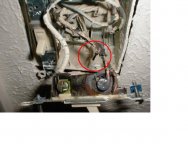
But talking about back-stab fixtures, this was my experience with them: Damn near caught my house on fire. The backstabbed connection started to create resistance, followed by heat, and I suspect the heat cycling made it worse and worse over time until it started sparking and just burned up.

fire2.jpg
 

Mickey O

Well-known member
Joined
Oct 25, 2009
Messages
6,153
Location
Chicago, IL
Usually referred to as back stabbing, it's UL approved and meets NEC code, I would never do it and the new one are only for use with 14 ga, so no good for 20 amp circuits. I do have some old ones that are rated for 12 ga, still prefer a loop and screws.
 

Charles (in GA)

Well-known member
Joined
Jan 11, 2006
Messages
12,489
Location
50 mi south of Atlanta
Whatever floats your boat, but I never felt compelled to **** an electrical component. :wtf:

But talking about back-stab fixtures, this was my experience with them: Damn near caught my house on fire. The backstabbed connection started to create resistance, followed by heat, and I suspect the heat cycling made it worse and worse over time until it started sparking and just burned up.

fire2.jpg

The wire on that switch is clearly wrapped around the screw (though not the 2/3's of the way required by code) how do you say that it was backstabbed connection?

Charles
 

Zrexxer

Well-known member
Joined
Jan 23, 2007
Messages
5,058
Location
Pflugerville, TX
The wire on that switch is clearly wrapped around the screw (though not the 2/3's of the way required by code) how do you say that it was backstabbed connection?
Because the wire indicated below was backstabbed into that switch, and that's where the sparking/burning started. The backstab connection became burned so badly that the wire popped out, which is how I found the problem - the circuit went dead downstream. The damaged screw terminal that you see on top was collateral damage from the heat.

Despite your willing skepticism, I do know the difference in a screw terminal and a backstab. :spit:
 

Attachments

  • Fire.JPG
    Fire.JPG
    41.6 KB · Views: 65

MrMark

Well-known member
Joined
Jan 25, 2010
Messages
4,626
Location
Southern Cal.
It's in there. Look under wiring methods. And that screw looks 2/3 to me. I use the needle nose and bend them all the way around. I get at least 3/4 that way.
 

Aceman

Well-known member
Joined
Jan 28, 2007
Messages
2,513
Location
Eastern Oregon
It looks to me like there was a loose screw connection on that recep. The wire on the screw is far more melted than the wire that pulled out of the back. I have a feeling when the screw connection heated up, it ruined the springs temper so the wire pulled out when you removed the device.

It's in there. Look under wiring methods.

The closest you'll find is 110.3(B) which states to follow manufacturer's directions when installing their equipment. If the manufacturer has a requirement for 2/3-3/4 wrap then you must, but the code doesn't specifically require that.
 

Worsedog

Well-known member
Joined
Mar 2, 2008
Messages
1,511
Location
Central FL
It looks to me like there was a loose screw connection on that recep. The wire on the screw is far more melted than the wire that pulled out of the back. I have a feeling when the screw connection heated up, it ruined the springs temper so the wire pulled out when you removed the device.


The closest you'll find is 110.3(B) which states to follow manufacturer's directions when installing their equipment. If the manufacturer has a requirement for 2/3-3/4 wrap then you must, but the code doesn't specifically require that.


The other thing I was thinking that if it was a screwdown backstab then with both the screw and the backstab being used it did not tighten properly. Which lead to the next question, isn't there something in the code about not causing a problem downstream if a device fails? Or does that only apply to the ground circuit?
 

Aceman

Well-known member
Joined
Jan 28, 2007
Messages
2,513
Location
Eastern Oregon
The other thing I was thinking that if it was a screwdown backstab then with both the screw and the backstab being used it did not tighten properly. Which lead to the next question, isn't there something in the code about not causing a problem downstream if a device fails? Or does that only apply to the ground circuit?

That applies to the neutral of MWBC(shared neutral) circuit.
 

MrMark

Well-known member
Joined
Jan 25, 2010
Messages
4,626
Location
Southern Cal.
It looks to me like there was a loose screw connection on that recep. The wire on the screw is far more melted than the wire that pulled out of the back. I have a feeling when the screw connection heated up, it ruined the springs temper so the wire pulled out when you removed the device.


The closest you'll find is 110.3(B) which states to follow manufacturer's directions when installing their equipment. If the manufacturer has a requirement for 2/3-3/4 wrap then you must, but the code doesn't specifically require that.

I thought I saw it in the Code somewhere, maybe under aluminum wiring commentary, maybe I am imagining things. Must have been the device instructions then.
 

walrus

Well-known member
Joined
Nov 12, 2008
Messages
11,676
Location
Maine
I thought I saw it in the Code somewhere, maybe under aluminum wiring commentary, maybe I am imagining things. Must have been the device instructions then.

I see it in the handbook under aluminum wiring but its commentary not code.
 

Zrexxer

Well-known member
Joined
Jan 23, 2007
Messages
5,058
Location
Pflugerville, TX
It looks to me like there was a loose screw connection on that recep.
You can postulate any theory you like... :)

I was there. I'm quite certain what happened. Feel free to wire your whole house that way - there won't be any more backstabbed connections in mine.
 
Last edited:

BioHazard

Banned
Joined
Feb 3, 2010
Messages
743
I love the type with the push in-screw down clamps. I try to use only industrial grade switches and outlets in my house and shop, and most of those come with that sort of thing.

I would never use the backstab kind without any screws. I can't believe UL/NEC allow that.
 

Torque1st

MEMBER EMERITUS
Joined
Sep 14, 2008
Messages
5,668
Location
KC Metro, Kansas
UL allows all kinds of ****. Never depend on UL listings. Look for Canadian, German, or European listings.

Never depend on the back stab electrical connections.
 

Norcal

Well-known member
Joined
Mar 16, 2008
Messages
13,753
I love the type with the push in-screw down clamps. I try to use only industrial grade switches and outlets in my house and shop, and most of those come with that sort of thing.

I would never use the backstab kind without any screws. I can't believe UL/NEC allow that.


The big issue is the 2008 NEC requires "tamper resistant" receptacles in residential , so the better grade devices will be harder to find.:( & stay code compliant.

The nickname for backstab is "Push & Pray" push them in & pray they hold...
 
To avoid these ads, REGISTER NOW!

JBurgess

Well-known member
Joined
Mar 1, 2008
Messages
372
Location
Arizona
Do you still call it backstab if it's on the side of a breaker?

PICT0715.jpg


I guess the only thing worse than a 20 amp backstab breaker is a ZINSCO 20 amp backstab breaker.
 

MattT

Well-known member
Joined
Feb 20, 2010
Messages
3,201
UL allows all kinds of ****. Never depend on UL listings. Look for Canadian, German, or European listings.

Agreed. There's also a bunch of electricians out there who've never read the codes. Only electrical I've worked on worse than US was a chinese machine:shocking:
 

Norcal

Well-known member
Joined
Mar 16, 2008
Messages
13,753
Do you still call it backstab if it's on the side of a breaker?

PICT0715.jpg


I guess the only thing worse than a 20 amp backstab breaker is a ZINSCO 20 amp backstab breaker.

Zinsco is 1 reason I have no respect for UL.

Only thing I hate worse then Zinsco/Sylvania* is Europeon electrical gear/ machines.

*Sylvania later became Challenger , which now no longer exists.
 

sberry

Banned
Joined
Jun 18, 2005
Messages
35,747
Location
Brethren, Michigan
My place was wired with back stabs, they are listed for 12 wire and I was really surprised at how well they worked. When I first saw them I thought, "oh man" and checked several of them. If I recall they were a Cooper maybe? The quality of them is very good but I am with the rest of the guys here, I never install them that way and surprised code still allows them especially for feed thru.
 

Frankbank

Member
Joined
Dec 20, 2009
Messages
14
Location
massachusetts
I don't know if you guys ever saw one but Square D actually had a circuit breaker that had a stab in type connection built into it.Needless to say I replaced a few of those.
 

Norcal

Well-known member
Joined
Mar 16, 2008
Messages
13,753
Homeline and Ch's BR was the response to Challenger, they beat them up pretty bad.

Not true. BR stands for BRYANT which was Westinghouse's residential/light commecial line, they later dropped the Bryant name in favor of Westinghouse.
Westinghouse also bought the Challenger Electrical Equipment Corp. & replaced the Challenger breakers w/ breakers of their own design & in 1994 or so,they bought the CBS television network & decided to dump all their industrail lines, so the distribution & controls was sold to Eaton Corp. who folded it into their Cutler-Hammer unit. Challenger & the Westinghouse safety switch line was sold to Thomas & Betts who renamed it T&B, after they marketed it for a few years it disappeared....

After SQ Q brought out the HOM (Homeline) panels, Cutler-Hammer & Siemens both introduced a UL "Classified" replacement for SQ D QO breakers.
 
Last edited:

sberry

Banned
Joined
Jun 18, 2005
Messages
35,747
Location
Brethren, Michigan
Thats all the whats and who's but out in the world where Challenger had an edge was cost, 2 contractors bidding the same 100A service saves about a hundred bucks or so by using that stuff vs QO and CH, the SQ D marketing geniuses are people I wouldn't mind having work for me. They taken over as the big brand in the box stores now and mobiles and modulars I have seen lately come with Homeline stuff as OEM, real brainstorm.
 

Norcal

Well-known member
Joined
Mar 16, 2008
Messages
13,753
Thats all the whats and who's but out in the world where Challenger had an edge was cost, 2 contractors bidding the same 100A service saves about a hundred bucks or so by using that stuff vs QO and CH, the SQ D marketing geniuses are people I wouldn't mind having work for me. They taken over as the big brand in the box stores now and mobiles and modulars I have seen lately come with Homeline stuff as OEM, real brainstorm.

Current production SQ D QO & HOM are just cheap quality junk,compared to the prev. (Ceased production in the 80's) QO line which had a well deserved reputation for quality, a sure sign of a cheap quality install is GE, SQ D HOM, & C-H BR panels, the successors to Zinsco.:mad:Oh, I forgot to add Murray to the list.....:(
 

JBurgess

Well-known member
Joined
Mar 1, 2008
Messages
372
Location
Arizona
Current production SQ D QO & HOM are just cheap quality junk,compared to the prev. (Ceased production in the 80's) QO line which had a well deserved reputation for quality, a sure sign of a cheap quality install is GE, SQ D HOM, & C-H BR panels, the successors to Zinsco.:mad:Oh, I forgot to add Murray to the list.....:(

Don't forget the FPE stab lock breakers!
 

Coach James

Well-known member
Joined
Jun 24, 2005
Messages
8,933
Location
Sandhills of North Carolina
My house, built 1999, has outlets ansd switches done with push in connections. We bought the house six years ago and I've replaced at least nine, I think. All were sparking or buzzing etc. Made me nervous as can be. I've thought about replacing the others even though they haven't failed..yet. I would never use that type. Screw terminal or clamp between two plates only for me.

Coach
 

Norcal

Well-known member
Joined
Mar 16, 2008
Messages
13,753
Any tract type, or spec built home will use back stabbed devices, older ones were better then whats out on the market now. Anything built by lowballers is going to be wired in that manner, 'cause that method is quick & cheap, that being said pigtailing & not relying on the device for the downstream connection is best practice.

Backstabbed = "Push and Pray". (Push & pray they work until the warranty expires, then it's a $ervice call).
 

burleymike

Well-known member
Joined
Feb 25, 2009
Messages
935
Location
SE Idaho
My parents house had an FPE panel. When they sold it the buyers could not get financing until it was replaced. I remember as a kid growing up the breakers tripped as they were supposed to when my mom revved up the microwave, toaster, and coffee pot.

The GFCI that protected the receptacle for the patio did not. Being a know it all kid I had to stick some wire in that outlet and see if my dad was telling me the truth that a shock hurts. GFCI never did trip, not even when my friend tried it on a dare :).

When we bought this place it had an FPE panel. When I replaced it I was not super surprised to see some burned breakers. That was the least of the electrical problems this house has seen. I could write a book about it.
 
To avoid these ads, REGISTER NOW!
Top Bottom