To avoid these ads, REGISTER NOW!

Question for cordless power tool aficionados

oldpops

Well-known member
Joined
Feb 23, 2018
Messages
303
Location
Southern California
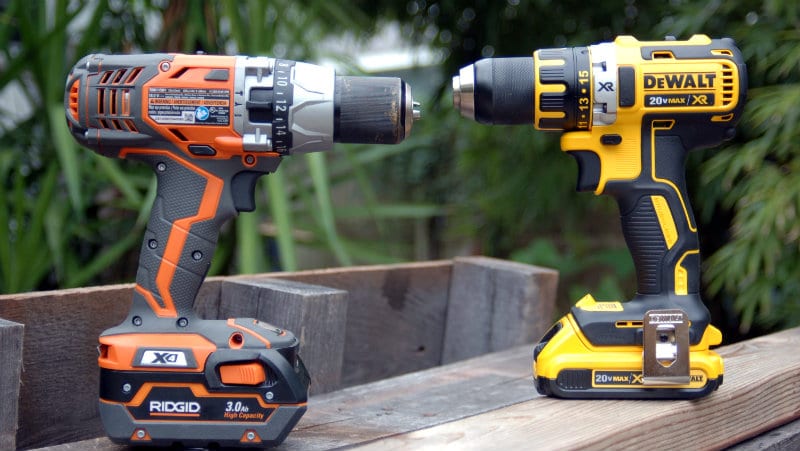
Hello all. After doing some online reading about the difference in power tool batteries, I have learned that 18v batteries and 20v batteries are essentially the same, and that saying that a battery is 20 volt is more of a marketing gimmick. (see: ) I also found where there are plenty of adapters where you can run/use a RIDGID 18v battery on a Black & Decker or Porter-Cable 20v tool. What I can't find is an adapter that works for using a Black & Decker/Porter-Cable battery on a RIDGID power tool. Does anyone know if such and adapter exists? I have several Black & Decker 20v batteries (and a charger) that I would love to be able to use on my new RIDGID drill & Impact drivers. Being on a fixed income, I can't afford to buy new batteries. Anyone know? Thanks in advance to all who offer help & advice!!
 
To avoid these ads, REGISTER NOW!

wssix99

Well-known member
Joined
Mar 2, 2011
Messages
5,161
Location
Chicago, IL
The person who wrote that article doesn't know what they are talking about. I would ignore it and delete it from the internet, if you can.

His conclusion is somewhat correct, but those batteries he is showing are equivalent to the energy/power that they hold. The power of the cells is 4 Amp-Hours and should be equavalent to the work that the battery packs can do. Voltage is not very relavant. A 20V tool can use that power faster than a 18V tool, but that's it. Yes, the 20V battery will have a voltage drop below 20V. However, the 18V battery will also have a voltage drop below its 18V also. Those batteries are likely made out of the exact same cells and the 18V batteries could probably put out 20V if the manufacturers wanted to. Instead, they have added electronics to step down the voltage and have them perform on the tool in a slightly different way. (That's not the marketing part.)

If you are interested in why there are 18V tools and 20V tools, you have to look back at history. The 18V tools were made from NiCd batteries, which had cells that were just over 1.5V each. When you stacked those up, you get 6V, 12V, 18V-ish batteries, etc. (That's why we had 18 originally.) When NiMh batteries made their way into tools, manufacturers had different cells to work with.

Theoretically, it should be possible to step down your 20V batteries to an 18V system. The question is if there is a demand big enough for someone to make the adapter. (DeWalt makes an adapter that allows me to use my new 20V batteries on my 18V DeWalt tools.)
 
Last edited:

duneslider

Well-known member
Joined
Jan 20, 2013
Messages
2,262
Location
Riverton, Utah
I didn't read the article but pretty much all cordless batteries are 18650 or 21700 cells. These all have a nominal voltage of 3.7volts. 5x3.7=18.5v. Let the marketing team round the numbers up and you have 4.0v x 5 cells = 20volts.

So, depending on which philosophy you want to use when doing battery math, yes they are all the same.

None of those batteries are putting out more than the other. I don't have a dewalt 20v but I am certain it shows the same voltage as my makita and bosch 18v batteries. There is no way anyone is converting 18v up to 20v in that battery pack. No room for a buck converter in there, all there is room for is a marketing sticker to make people think they are getting something more. I honestly don't know how they get away with the false advertising.

I will have to check but bet when I first pull my makita battery off the charger it will register really close to 20v.

Alright, I decided to go look at dewalts website.... https://www.dewalt.com/systems/cordless-platforms/20v Take a look, notice the * asterisk? Scroll down and read what it says.
 

Leaflessshadetree

Well-known member
Joined
Aug 1, 2013
Messages
7,165
Location
Don't ask.
IMO A brand having the variety of tools I want and tool quality are both larger considerations than the difference between 18 and 20V batteries. I'd rather have 18V batteries than 20V and messing around with adapters.
 
OP
O

oldpops

Well-known member
Joined
Feb 23, 2018
Messages
303
Location
Southern California
Thanks everybody! I went to the Dewalt site link provided by 'duneslider' and read the asterick(*) ":Maximum initial battery voltage (measured without a workload) is 20 volts. Nominal voltage is 18", so that must be what they were talking about when they say that there really is no difference between 18v & 20 v battery's. However, 'wssix99' makes some interesting points. So I a a bit confused at this point and will just keep all my battery's charged up for the correct tool. I also have an old, old RIDGID battery I got many years ago, that's dead & won't charge, but it wasn't ever registered so RIDGID will not replace it. Thinking of trying to replace the battery's inside to see if it will work.
 

duneslider

Well-known member
Joined
Jan 20, 2013
Messages
2,262
Location
Riverton, Utah
Thanks everybody! I went to the Dewalt site link provided by 'duneslider' and read the asterick(*) ":Maximum initial battery voltage (measured without a workload) is 20 volts. Nominal voltage is 18", so that must be what they were talking about when they say that there really is no difference between 18v & 20 v battery's. However, 'wssix99' makes some interesting points. So I a a bit confused at this point and will just keep all my battery's charged up for the correct tool. I also have an old, old RIDGID battery I got many years ago, that's dead & won't charge, but it wasn't ever registered so RIDGID will not replace it. Thinking of trying to replace the battery's inside to see if it will work.
Without being disrespectful, pretty much nothing wssix99 said is correct. There is ZERO difference between a dewalt 20v and the 18v of any other company. They all use the same cells and have the same voltage. Period. There is no 20v battery out there, just like there are NOT 12v cordless tools, those are all 10.8v (I know, how dare they!)

I'm not a fan of battery adapters but they should be fine to use if you find what you need. There is no telling what the chinese companies are doing when they make these and it is possible on higher amp draw uses that you could have issues with the adapters melting or catching fire. I doubt this would happen on drill or impact but who knows. If you can't find that adapter on amazon or ebay it may not exist, probably because there aren't many people who need that one. What if you sold the ridgid tools and used the money to buy a drill and impact in the flavor of batteries you have? You might have better luck that way?

Another option is that you could find someone to rebuild the bad battery packs, those cells aren't that expensive and if you can solder you should be able to replace the cells for cheap.
 

wssix99

Well-known member
Joined
Mar 2, 2011
Messages
5,161
Location
Chicago, IL
Without being disrespectful, pretty much nothing wssix99 said is correct. There is ZERO difference between a dewalt 20v and the 18v of any other company.
I think I made that point clear for the modern batteries. I went and tested my museum of DeWalt Batteries:

18V - NiCd = 18V
18V - Li-ion = 20V
20V - NiMh = 20V
20V - NiMh in 18V adapter = 20V

So, it looks like DeWalt isn't stepping their voltages down, but their NiCd batteries were indeed 18V. Thinking about the point more, it wouldn't make sense for these manufacturers to step down their voltages because they would waste power. (as heat)

I still think the person who wrote the article is off in their knowledge. They are incorrectly propping up voltage like it's measure function of power and are ignoring the background of where these systems came from (NiCd), which disingenuously promotes a "marketing conspiracy."

They all use the same cells and have the same voltage. Period.
This is a pretty extreme statement. Even if the cells inside are the similar, they can be different. Companies make cels in the same form factor that vary by several tenths of a volt, which can add up. With all of the far-away lands these tools and batteries come from, I would be suprised if 100% of them are realy equal. Certainly, when these systems were being created, that wasn't the case.

Another option is that you could find someone to rebuild the bad battery packs, those cells aren't that expensive and if you can solder you should be able to replace the cells for cheap.
I have done this with many appliances, but found that there wasn't enough room inside my battery packs for soldering and wires. The last time I had one to repair, it really needed to be spot welded.

... I'm surprised there aren't good recycling options for these but expect we have fallen into a disposable culture where people would rather throw away the old stuff and get a new kit?
 

duneslider

Well-known member
Joined
Jan 20, 2013
Messages
2,262
Location
Riverton, Utah
I think I made that point clear for the modern batteries. I went and tested my museum of DeWalt Batteries:

18V - NiCd = 18V
18V - Li-ion = 20V
20V - NiMh = 20V
20V - NiMh in 18V adapter = 20V

So, it looks like DeWalt isn't stepping their voltages down, but their NiCd batteries were indeed 18V. Thinking about the point more, it wouldn't make sense for these manufacturers to step down their voltages because they would waste power. (as heat)

I still think the person who wrote the article is off in their knowledge. They are incorrectly propping up voltage like it's measure function of power and are ignoring the background of where these systems came from (NiCd), which disingenuously promotes a "marketing conspiracy."


This is a pretty extreme statement. Even if the cells inside are the similar, they can be different. Companies make cels in the same form factor that vary by several tenths of a volt, which can add up. With all of the far-away lands these tools and batteries come from, I would be suprised if 100% of them are realy equal. Certainly, when these systems were being created, that wasn't the case.


I have done this with many appliances, but found that there wasn't enough room inside my battery packs for soldering and wires. The last time I had one to repair, it really needed to be spot welded.

... I'm surprised there aren't good recycling options for these but expect we have fallen into a disposable culture where people would rather throw away the old stuff and get a new kit?
The problem is you are trying to compare nicad/nimh to li-ion lifepo4 and it is not even close to an apples to apples.

Batteries are compared using nominal voltages and each technology has an industry standard nominal voltage.

Nicad and nimh batteries have a nominal voltage of 1.2v per cell. Every single new cell when charged and then rested will settle in really close to 1.2v. So, an 18v battery will have 15 cells. Go open up one and you will see that there will be 15 cells.

Li-ion cells have a nominal voltage of 3.65v and depending on who you talk to they call the nominal 3.6 or 3.7. So, in the case of li-ion batteries they will be using 5 cells at 3.6v for a total of 18v. Go ahead and open one of those packs up and depending on battery size you will see 5 cells in the smaller 2-3amp hour packs and 10 cells in the bigger 4+ packs. Its possible someone is using 15cells in the giant packs but I think most are just using 21700 cells in the bigger 8amp hour packs. All batteries right off the charger will read higher but once they rest they will settle down very close to the nominal. Nobody is making cells that are a "little" different and have a nominal voltage of 4v, not even Elon Musk. (Tesla's use 18650 LFP which are Lifepo4 cells with a 3.2v nominal, these are less likely to blow up and catch on fire)

Cells have 2 numbers associated with them. The nominal voltage and the capacity. So, a battery could have the nominal voltage of 3.6v and a capacity of 3000mah. Again, the capacity numbers are also misleading and I am sure like everyone the marketing teams are skewing those numbers too.

There are companies that will rebuild battery packs but the price isn't much different that buying on sale from what I have found. I have resoldered my own packs using the same nickel strips but you have to have a good soldering iron but generally yes, the little battery spot welders are better for this. There used to be a small batteries+ type location near me that would do this for work for a reasonable price.
 

Walkers

Well-known member
Joined
May 17, 2021
Messages
3,912
Location
Cave Creek Az
The person who wrote that article doesn't know what they are talking about. I would ignore it and delete it from the internet, if you can.

His conclusion is somewhat correct, but those batteries he is showing are equivalent to the energy/power that they hold. The power of the cells is 4 Amp-Hours and should be equavalent to the work that the battery packs can do. Voltage is not very relavant. A 20V tool can use that power faster than a 18V tool, but that's it. Yes, the 20V battery will have a voltage drop below 20V. However, the 18V battery will also have a voltage drop below its 18V also. Those batteries are likely made out of the exact same cells and the 18V batteries could probably put out 20V if the manufacturers wanted to. Instead, they have added electronics to step down the voltage and have them perform on the tool in a slightly different way. (That's not the marketing part.)

If you are interested in why there are 18V tools and 20V tools, you have to look back at history. The 18V tools were made from NiCd batteries, which had cells that were just over 1.5V each. When you stacked those up, you get 6V, 12V, 18V-ish batteries, etc. (That's why we had 18 originally.) When NiMh batteries made their way into tools, manufacturers had different cells to work with.

Theoretically, it should be possible to step down your 20V batteries to an 18V system. The question is if there is a demand big enough for someone to make the adapter. (DeWalt makes an adapter that allows me to use my new 20V batteries on my 18V DeWalt tools.)
Ya didn’t really read the article , did ya?
 

Walkers

Well-known member
Joined
May 17, 2021
Messages
3,912
Location
Cave Creek Az
Without being disrespectful, pretty much nothing wssix99 said is correct. There is ZERO difference between a dewalt 20v and the 18v of any other company. They all use the same cells and have the same voltage. Period. There is no 20v battery out there, just like there are NOT 12v cordless tools, those are all 10.8v (I know, how dare they!)

I'm not a fan of battery adapters but they should be fine to use if you find what you need. There is no telling what the chinese companies are doing when they make these and it is possible on higher amp draw uses that you could have issues with the adapters melting or catching fire. I doubt this would happen on drill or impact but who knows. If you can't find that adapter on amazon or ebay it may not exist, probably because there aren't many people who need that one. What if you sold the ridgid tools and used the money to buy a drill and impact in the flavor of batteries you have? You might have better luck that way?

Another option is that you could find someone to rebuild the bad battery packs, those cells aren't that expensive and if you can solder you should be able to replace the cells for cheap.
Thanks! This is how I understand it, and what I have seen when I have taken apart my junk batteries.
 

f121

Well-known member
Joined
Dec 8, 2018
Messages
2,077
Location
UK
Dewalt sell their Li-ion batteries as 18v in Europe and ‘20v max’ in the US. They’re the same batteries and are interchangeable across tools from different regions. It’s just marketing in the USA, presumably to sound better than the old 18v nicd/nimh.
 

wssix99

Well-known member
Joined
Mar 2, 2011
Messages
5,161
Location
Chicago, IL
The problem is you are trying to compare nicad/nimh to li-ion lifepo4 and it is not even close to an apples to apples.

Batteries are compared using nominal voltages and each technology has an industry standard nominal voltage.

Nicad and nimh batteries have a nominal voltage of 1.2v per cell. Every single new cell when charged and then rested will settle in really close to 1.2v. So, an 18v battery will have 15 cells. Go open up one and you will see that there will be 15 cells.

Thanks for setting me/us straight. I just put my 18V NiCd battery on the charger and it measured 20.75V fresh off that charger.

I've measured my NiCd batteries 100's of times and have been conditioned to seeing them at 18V. I also never counted the cells/did the math inside. After finding I needed a welder, (or a much better soldering kit) I threw in the towel.

The different batteries definitely don't rest the same. I expect this is how companies match marketing to measurements. Do you have any thoughts on that? Is it a fair assertion that the rules of labeling these things would have been different in a NiCd-only world vs. what we enjoy today?
 

wssix99

Well-known member
Joined
Mar 2, 2011
Messages
5,161
Location
Chicago, IL
Ya didn’t really read the article , did ya?
I read the whole thing. I just read it again.

It's still not good. The author would have gotten a C- in my 11th grade coposition class, their conclusion is disconnected and they continually get voltage mixed up with power.

This thread is a hell of a lot more informative than that article. (The author was proabably born after NiCd could no longer be found in baby monitors.) A science lesson to start would have been a better sell than a conspiracy theory. (Even if this marketing conspiracy theory may be true, its a really hard way to swallow and believe information.)
 

Walkers

Well-known member
Joined
May 17, 2021
Messages
3,912
Location
Cave Creek Az
I read the whole thing. I just read it again.

It's still not good. The author would have gotten a C- in my 11th grade coposition class, their conclusion is disconnected and they continually get voltage mixed up with power.

This thread is a hell of a lot more informative than that article. (The author was proabably born after NiCd could no longer be found in baby monitors.) A science lesson to start would have been a better sell than a conspiracy theory. (Even if this marketing conspiracy theory may be true, its a really hard way to swallow and believe information.)
You are the only one bringing up NiCad. The article was just telling you that an 18v Milwaukee and a 20v DeWalt are using the same number and type of cells, they are just using the old air compressor like sales tactics to make them seem better than they are.
 

fourjeepin

Well-known member
Joined
Feb 12, 2011
Messages
3,658
Location
Atlanta, GA
I am a big fan of adapters. With them, you can run longer and have fewer battery chargers. Plus not be limited to one tool line.

I have no experience with the B+D tools or batteries, but have been running Ridgid tools and batteries for a long time. I used to run Dewalt nicad and had a bunch but bought a Ridgid lithium impact and loved it. I built an adapter to run the Ridgid battery in the Dewalt tools and it worked great. But the old Dewalt stuff was bigger and heavier than the Ridgid so I went all in on Ridgid.

but then I wanted a hedge trimmer and Ridgid doesn’t have one. My Dewalt adapter got reworked to mate to Ryobi tools. I now have 3 Ryobi tools and added a 3D printed adapter. The purchased adapter looks better and is a bit smaller than my homemade one but they both work great.

I also converted my sons power wheels Jeep to accept the Ridgid batteries. This way he gets more power and speed. Plus no downtime with 4 batteries and 3 chargers. It seemed like the single 12 volt battery on it previously was always down for charging. With the Ridgid upgrade, he can carry spares under the hood and swap in a fresh battery himself.
 

CraigStu

Well-known member
Joined
May 22, 2014
Messages
4,037
Location
Blacksburg, Va
Lots of interesting info in this thread. I have 18V Makita and SIL has 20V Dewalt. I have been thinking I should have also gotten Dewalt but we didn't live 4 miles apart at the time so never thought to ask him. I was going to suggest a search for rebuilt batteries to the OP. Maybe they won't be much cheaper, as duneslider says, but I think it would still be worth some time searching the web. Sometimes I wonder if this is really worth the trouble. Battery tools are expensive, batteries are terribly expensive, and extension cords are not that bad. There are times when it is great to be able to drill/cut something where there is no outlet. But my leaf blower and hammer drill are both corded. I have a 100ft cord on a reel and another reel w/ two 50ft cords. It takes <2 minutes to unwind the cord and maybe 2 minutes to wind it.
This is the best $14 tool ever
 

jrsavoie

Well-known member
Joined
Jun 4, 2013
Messages
1,468
Location
North east Illinois
I didn't read the article but pretty much all cordless batteries are 18650 or 21700 cells. These all have a nominal voltage of 3.7volts. 5x3.7=18.5v. Let the marketing team round the numbers up and you have 4.0v x 5 cells = 20volts.

So, depending on which philosophy you want to use when doing battery math, yes they are all the same.

None of those batteries are putting out more than the other. I don't have a dewalt 20v but I am certain it shows the same voltage as my makita and bosch 18v batteries. There is no way anyone is converting 18v up to 20v in that battery pack. No room for a buck converter in there, all there is room for is a marketing sticker to make people think they are getting something more. I honestly don't know how they get away with the false advertising.

I will have to check but bet when I first pull my makita battery off the charger it will register really close to 20v.

Alright, I decided to go look at dewalts website.... https://www.dewalt.com/systems/cordless-platforms/20v Take a look, notice the * asterisk? Scroll down and read what it says.
I saw the asteroid, scrolled down and apparently didn't see what I was supposed to.

What exactly were we supposed to see?
 

jrsavoie

Well-known member
Joined
Jun 4, 2013
Messages
1,468
Location
North east Illinois
Without being disrespectful, pretty much nothing wssix99 said is correct. There is ZERO difference between a dewalt 20v and the 18v of any other company. They all use the same cells and have the same voltage. Period. There is no 20v battery out there, just like there are NOT 12v cordless tools, those are all 10.8v (I know, how dare they!)

I'm not a fan of battery adapters but they should be fine to use if you find what you need. There is no telling what the chinese companies are doing when they make these and it is possible on higher amp draw uses that you could have issues with the adapters melting or catching fire. I doubt this would happen on drill or impact but who knows. If you can't find that adapter on amazon or ebay it may not exist, probably because there aren't many people who need that one. What if you sold the ridgid tools and used the money to buy a drill and impact in the flavor of batteries you have? You might have better luck that way?

Another option is that you could find someone to rebuild the bad battery packs, those cells aren't that expensive and if you can solder you should be able to replace the cells for cheap.
I have a whole box of batteries I was going to send to the rebuilder I used for years.
He now just does scooter batteries and such.
I'm near Kankakee, Illinois
He's in Michigan. If anyone knows of a rebuilder I can use, I'd appreciate a heads up.
Thanks
 

Cheepbeer

Well-known member
Joined
Jun 4, 2017
Messages
158
Location
NW Ohio
I've got a bunch of Milwaukee batteries and have adapters for my Dewalt and ryobi tools.

They're available on Amazon.
 
To avoid these ads, REGISTER NOW!

jrsavoie

Well-known member
Joined
Jun 4, 2013
Messages
1,468
Location
North east Illinois
Lots of interesting info in this thread. I have 18V Makita and SIL has 20V Dewalt. I have been thinking I should have also gotten Dewalt but we didn't live 4 miles apart at the time so never thought to ask him. I was going to suggest a search for rebuilt batteries to the OP. Maybe they won't be much cheaper, as duneslider says, but I think it would still be worth some time searching the web. Sometimes I wonder if this is really worth the trouble. Battery tools are expensive, batteries are terribly expensive, and extension cords are not that bad. There are times when it is great to be able to drill/cut something where there is no outlet. But my leaf blower and hammer drill are both corded. I have a 100ft cord on a reel and another reel w/ two 50ft cords. It takes <2 minutes to unwind the cord and maybe 2 minutes to wind it.
This is the best $14 tool ever
If HDX is supposed to indicate heavy duty, I wouldn't be buying that line.

16 ga. Isn't what I would describe as heavy duty

We try to not buy anything less than 12 ga.
 

Renegade1LI

Well-known member
Joined
Mar 11, 2018
Messages
4,962
Location
long island ny
I really don’t read much into the voltage bs,
I just get whatever tool i need regardless of platform. Most times it’s almost cheaper to buy a new tool with batteries than just the tool.
 

jrsavoie

Well-known member
Joined
Jun 4, 2013
Messages
1,468
Location
North east Illinois
I've got a bunch of Milwaukee batteries and have adapters for my Dewalt and ryobi tools.

They're available on Amazon.
Do they have adapters to go the other way?
I have the old Milwaukee 18 volt tools. Mainly because of the hatchet saws and metal cutting circular saw
 

duneslider

Well-known member
Joined
Jan 20, 2013
Messages
2,262
Location
Riverton, Utah
Thanks for setting me/us straight. I just put my 18V NiCd battery on the charger and it measured 20.75V fresh off that charger.

I've measured my NiCd batteries 100's of times and have been conditioned to seeing them at 18V. I also never counted the cells/did the math inside. After finding I needed a welder, (or a much better soldering kit) I threw in the towel.

The different batteries definitely don't rest the same. I expect this is how companies match marketing to measurements. Do you have any thoughts on that? Is it a fair assertion that the rules of labeling these things would have been different in a NiCd-only world vs. what we enjoy today?
ALL batteries degrade with time. New batteries will hold a higher at rest voltage than older batteries. Li-ion batteries tend to degrade slower than the older nicad batteries. All batteries fresh off the charger will show a voltage higher than their nominal because they are charged at a higher voltage than their nominal, if you charge lower than nominal you won't fully charge. A 3.6 nominal will be charging at around 4.1-4.2, so right off the charger it will be around 4.0-4.1 when it is new and fresh. I haven't messed with nicad/nihm in a lot of years so I don't recall as much about them. I would assume the 1.2 cells are charged around 1.4. But their right off charger voltage won't be as high, maybe upper 1.25 or 1.3 but not much more.

When batteries are made they are charged, tested, graded. If you are super series about building the very best battery packs you "match" cells, which means you group batteries together that all have very similar characteristics such as Peak voltage, actual capacity, resting voltage, etc. Are mass produced cordless tool batteries matched...I highly doubt it, this takes a lot of time to do and that just isn't gonna happen.

There are definitely different grades of batteries also. You can buy battery cells with the panasonic stamp, or the samsung stamp, or the random chinese computer generated name. They will all be "similar" but the panasonic and samsung will cost more and generally be a higher quality.

But at the end of the day Dewalt is only applying marketing and any of the companies could make the SAME claim with their batteries. Again, EVERY company is calling their 12v lines 12v when reality is they are all 10.8v. If I remember right makita used to call their little drills a 10.8v but then everyone jumped on the 12v bandwagon and they followed suit to keep the sales flowing.
 

yatg

Well-known member
Joined
Aug 16, 2019
Messages
2,818
Location
Southern Oregon
If HDX is supposed to indicate heavy duty, I wouldn't be buying that line.

16 ga. Isn't what I would describe as heavy duty

We try to not buy anything less than 12 ga.
HDX is a brand name at Home Depot.
The link is for a reel, not a cord.
That reel in theory will hold 150' of 16/3 cord, or probably about 100' of 12/3.
 

PoorUB

Well-known member
Joined
Mar 29, 2021
Messages
11,648
Location
Fargo, ND
You are the only one bringing up NiCad. The article was just telling you that an 18v Milwaukee and a 20v DeWalt are using the same number and type of cells, they are just using the old air compressor like sales tactics to make them seem better than they are.
I don't know what wssix99 got out of the article, but what I read is 20 volt is actually 18 volt and even DeWalt admits it!
 

PoorUB

Well-known member
Joined
Mar 29, 2021
Messages
11,648
Location
Fargo, ND
I saw the asteroid, scrolled down and apparently didn't see what I was supposed to.

What exactly were we supposed to see?
Asterisk?

From DeWalt's web page,

"*Maximum initial battery voltage (measured without a workload) is 20 volts. Nominal voltage is 18."

Even they admit 20 volt = 18 volt.
 

duneslider

Well-known member
Joined
Jan 20, 2013
Messages
2,262
Location
Riverton, Utah
HDX is a brand name at Home Depot.
The link is for a reel, not a cord.
That reel in theory will hold 150' of 16/3 cord, or probably about 100' of 12/3.
I have one that is slightly broken (dropped it off a balcony in the winter) it holds a 75' 12/3 just barely. Been using it for easily 16 years.
 

Monza Harry

Well-known member
Joined
Dec 29, 2018
Messages
1,433
Location
Windsor ON
I'm confused with the claims of no 12V tools, NiCad and NiMh are both 1.2 V's so 12V is 10 x 1.2V I haven't torn a 12V batt' pack apart as it wasn't $ feasible at the time I was using them, however I'm hesitant to believe they are using 9 cells instead of a 10 pack, while 3 x 3 stack is somewhat easier to package than a 2 x 5 stack, in this era of rampant litigation why ask for a chance to explain with likely resultant financial burden. Harry
 

CraigStu

Well-known member
Joined
May 22, 2014
Messages
4,037
Location
Blacksburg, Va
HDX is a brand name at Home Depot.
The link is for a reel, not a cord.
That reel in theory will hold 150' of 16/3 cord, or probably about 100' of 12/3.
Thanks. I was going to reply after I got to the end of the thread. When I bought the 100ft cord I was looking at wire size vs $. I walked over to the leaf blower section and found the model I owned and read the amp requirements. Then back to the extension cord section. I don't remember for sure but think I ended up w/ 12ga. Just last week I needed maybe 20 more ft of cord to get to the last batch of leaves. I grabbed an old 50ft cord to add to the end of the good cord. The blower was immediately running slower than it had been. I only needed 3 minutes so I stuck w/ it because the other heavy cord was further away. Made a mental note to not use that old cord again.
 

duneslider

Well-known member
Joined
Jan 20, 2013
Messages
2,262
Location
Riverton, Utah
I'm confused with the claims of no 12V tools, NiCad and NiMh are both 1.2 V's so 12V is 10 x 1.2V I haven't torn a 12V batt' pack apart as it wasn't $ feasible at the time I was using them, however I'm hesitant to believe they are using 9 cells instead of a 10 pack, while 3 x 3 stack is somewhat easier to package than a 2 x 5 stack, in this era of rampant litigation why ask for a chance to explain with likely resultant financial burden. Harry
Here is the note following the asterisk on the dewalt website. *Maximum initial battery voltage (measured without a workload) is 12 volts. Nominal voltage is 10.8 volts.

You have to remember that nobody* is making a 12volt battery today that is nicad, or nimh, it just is old technology that can't keep up with current battery technology. Li-ion is the current king. A 10.8v li-ion will blow a 12v nicad out of the water hands down.

*I am sure someone makes them but none of the big brands do and for good reason.

I don't own and have never owned a 12v nicad battery but I would think they for sure had 10 cells and were a nominal 12v. We really have to get past comparing nicad/nimh battery packs to lithium technology, they just are not the same.

We are very conditioned to think of batteries in certain ways. Even car batteries, everyone defaults to it being a 12v system but it technically is not. A car battery at rest is 12.6v and when the car is running you are looking for 13.8v, 12v is a nice round number that everyone uses. The reality is that most modern cars won't start if the battery is 12.2v and if a battery shows 12v it most likely is bad.

We are also very conditioned to buy into the latest and greatest and whoever has the best marketing. Makita made a 10.8v drill and marketed it as a 10.8v drill. I used one quite a lot and it was a great small drill and impact but they lost the marketing battle against others claiming 12v.

If you really want your mind blown, the 40v makita batteries are really only 36v. Dewalt seems to be the only one that has an asterisk next to their claims. Makita's 40v 2.5Ah battery is essentially the same as their 18v 5.0Ah battery. They just run the cell packs in series instead of parallel.
 
OP
O

oldpops

Well-known member
Joined
Feb 23, 2018
Messages
303
Location
Southern California
here's a related question; Say you're a clumsy old senior, who has balance problems, trying to carry a couple of cordless 20 volt batteries, and you drop one (yes, it's me) And it turns out that it broke off a piece of one of the battery's when it hit the concrete. The piece that is missing helps hold the battery to the cordless drill, and you can't even find where the broken piece shot off to so you can't even try to glue it. I'm wondering if there is a place to get/buy pieces of the battery casings of different batteries? I know there are so many folks out there with 3D printers, I am just wondering because I would like to fix the battery since it was not that old. Thoughts? Suggestions? As always, thanks in advance for all help and advice!
 

duneslider

Well-known member
Joined
Jan 20, 2013
Messages
2,262
Location
Riverton, Utah
here's a related question; Say you're a clumsy old senior, who has balance problems, trying to carry a couple of cordless 20 volt batteries, and you drop one (yes, it's me) And it turns out that it broke off a piece of one of the battery's when it hit the concrete. The piece that is missing helps hold the battery to the cordless drill, and you can't even find where the broken piece shot off to so you can't even try to glue it. I'm wondering if there is a place to get/buy pieces of the battery casings of different batteries? I know there are so many folks out there with 3D printers, I am just wondering because I would like to fix the battery since it was not that old. Thoughts? Suggestions? As always, thanks in advance for all help and advice!
I haven't looked but doubt they sell parts of the battery case itself. If the battery will go on can you put some duct tape on to hold it in place during use? That is a bummer though, I have had pretty good luck with my batteries holding up well through drops and falls.
 

engineer2

Well-known member
Joined
Dec 13, 2009
Messages
11,803
Location
Chicago burbs
I'll have to check mine. I know a freshly charged Makita 18V actually reads around 20V.
I checked 3 LXT 18V batteries. These where the newer ones with the charge level indicators.
Partially used were 19.1 V, 19.4 V.
A freshly charged one was 20.0 V.
Apparently Makita is being very conservative with their specs.
 
To avoid these ads, REGISTER NOW!
Top Bottom