To avoid these ads, REGISTER NOW!

Question for heating engineers

JCJ

Active member
Joined
Mar 26, 2006
Messages
26
Location
Ohio
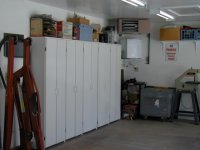
Here's the background. I live in NW Ohio (cold). My shop is 24 X 32 with 8' ceiling. All walls and ceiling are insulated. Overhead doors are insulated and sealed. Total glass is about 12 sq. ft. and double pane so it passes little heat. I have natural gas heat with a Reznor FT45 (45,000 BTU) furnace which works great. I have a lot of liquids that I don't want freezing (paints, glues, etc.) so I keep the temperature at 50 when I am not in the shop and turn it up to 65 when I am working. Only takes about 10 minutes to heat the place up.

Now my question. I am not a heating engineer but I am trying to understand this. Assuming the outside temperature is constantly below the minimum inside temperature, why do I lower the temperature when I leave? Once the inside temperature stabilizes, doesn't it take the same amount of energy to maintain 50 degrees as 65 degrees? In other words, if the thermostat turns on the heat when it drops say 3 degrees, doesn't it take the same amount of energy to raise the temperature from 47 to 50 as it does from 62 to 65?

I am sure I am missing something in my analysis but I need to be taught. Help teach me please. Thanks.
 

Attachments

  • P5290229A.JPG
    P5290229A.JPG
    71.1 KB · Views: 32
To avoid these ads, REGISTER NOW!

Ironcrow

Well-known member
Joined
Sep 30, 2005
Messages
1,169
Location
Arizona
Picture a compressed air tank with a leak. It takes more energy to keep the leaky tank at 120 psi than 60 psi because at higher pressure, the tank leaks faster.

Now substitute your garage for the tank and the heat for the leak. It takes more energy to keep the temperature in the garage higher, because the higher it is the faster the heat "leaks" out.
 
OP
J

JCJ

Active member
Joined
Mar 26, 2006
Messages
26
Location
Ohio
OK. I understand the analogy but is there enough extra "leakage" between 50 and 65 degrees? I know we are not comparing apples but your compressor is showing a 100% increase in pressure from 60 to 120 psi. It would be less leaky between 50 and 65 psi. Maybe I should count the number of times the furnace comes on per hour at the different temperatures.
 

MyDomain

Well-known member
Joined
Nov 7, 2006
Messages
199
Location
SouthCentral PA
Uggg, my head is throbbing thinking about this one.

Heat seeks equilibrium with the cold outside. The higher the temp the more activity the molecules have and they will equalize faster. At temps closer to equilibrium they have less activity and therefore equalize at a slower rate. It takes more energy to keep the molecules from equalizing when at the higher rate (temperature).

That's my theory...I'm not sure how much sense it makes but I understand it in my head ;) I'll post this to some pros and see what they say then get back to you.
 

CraigFL

Well-known member
Joined
Nov 1, 2005
Messages
704
Location
Panama City, FL
I think everyone has said it already in their way but from the engineering standpoint, heat lost thru the wall depends on the temperature difference between the inside and the outside. The higher the temperature difference, the more heat that is lost. Think of it at the lower limit where the outside temperature = inside temperature. In this case no heat is lost so no extra heat is required inside. As you increase the temperature, more and more heat leaks to the outside and the furnace has to come on more and more to replace it. This is why your energy company(gar or electric), tells you to turn your thermostat down in the winter(and up in the summer).
 

logical

Well-known member
Joined
Aug 31, 2005
Messages
2,436
Location
Northern fringe of the Motor City Suburbs
The key point was mentioned above.....the rate of heat transfer (or loss) thru the walls is faster when the difference between inside and outside temp is larger. So when you are trying to maintain 65-67 inside when its 25 outside, the inside temp is going to drop faster and trigger the heater more often than if you were only trying to keep the inside at 45-47.

Maybe an easy example to illustrate this is when you bring home a warm 6-pack. If you put them in the refrigerator, they will all get to be a more drinkable 40 degrees eventually, but if you put 5 in the fridge and one in a 0 degree freezer, the one will reach that magic 40 degrees much faster than the other 5.
 

bmwpower

Super Moderator
Staff member
Joined
Apr 24, 2005
Messages
12,578
Location
NJ
logical said:
Maybe an easy example to illustrate this is when you bring home a warm 6-pack. If you put them in the refrigerator, they will all get to be a more drinkable 40 degrees eventually, but if you put 5 in the fridge and one in a 0 degree freezer, the one will reach that magic 40 degrees much faster than the other 5.

Aaahhh, now I understand... :beer:
 
To avoid these ads, REGISTER NOW!

Dead Skunk

Well-known member
Joined
Sep 27, 2005
Messages
57
Location
Dexter,Michigan
Heat transfer is directly proportional to the temperature delta across the wall. So,for a simple example, in 30 deg. weather the interior of your shop could be kept at 45 deg. or 60 deg. At 60 the delta is 30 and at 45 it's 15. The heat loss through the wall at 60 will be twice what it is at 45.
 
OP
J

JCJ

Active member
Joined
Mar 26, 2006
Messages
26
Location
Ohio
OK. I think I understand now. It has to do with the difference between inside and outside temperatures and how fast heat can transfer through the walls. So the real question is how well insulated my walls are. If the heat transfer is very minimal because of insulation, it will still take more energy to maintain a higher temperature but if it takes long enough for the heat transfer to happen the cost may be insignificant. As I stated above, I need to count the number of times the furnace comes on per hour at 50 and 65 degrees. If I need to heat the air twice as many times at 65 than at 50, I will see it in my bill. If it only comes on 1 more time at 65 I might be able to leave it there and not see a cost difference. If I have this right it makes sense. I'll try to count cycles this weekend and report back.
 
OP
J

JCJ

Active member
Joined
Mar 26, 2006
Messages
26
Location
Ohio
MyDomain said:
Good answers guys! I have some other info for you, JCJ. Send me your email address and I will forward it to you.
Tim

You have it. Thanks.
 
OP
J

JCJ

Active member
Joined
Mar 26, 2006
Messages
26
Location
Ohio
MyDomain said:
Back at ya! You are welcome!! :bounce:

Tim, I got it. Thanks.

The short answer for anyone following this is: the greater the temperature difference between outside and inside the faster the heat loss through the walls so maintaining a higher temp causes faster heat loss and the furnace cycles more often. This gets tempered somewhat by how well insulated the building is but there will always be some heat loss.

Thanks to everyone for your help.
 
To avoid these ads, REGISTER NOW!
Top Bottom