You are using an out of date browser. It may not display this or other websites correctly.
You should upgrade or use an alternative browser.
You should upgrade or use an alternative browser.
Question for the auto technicians, mechanics and car guys
- Thread starter Atlas
- Start date
Buckgnarly
Well-known member
Frequent rotation....I'm **** as most of my stuff is oversize truck/Jeep stuff, but honestly if you are rotating at a decent interval I don't see how corrosion can be an issue. Rarely driven cars on the other hand I can see maybe being an issue...
Is there a reason you'd rather not use anti-seize?
Per the original post "to prevent over torquing the wheels". Now I am just a shade tree, but I though this much more of an issue on the finer things like heads and other engine stuff.
Never thought, most wheels, were that touchy when it came to torque. Meaning if you are tight a little it won't kill yah. I know some specialty wheels can warp, but again, just didn't think it was that tight a tolerance.
Interested in hearing from techs on the matter.
As for me, I always put the anti seize on the wheel/roter interface. Never had issues with the lugs themselves rusting or seizing.
Fordfixer
Active member
I was taught to never put anti-seize on wheel studs. A drop or two of engine oil on the threads prior to installing the lugnut is what I was taught and I believe what the Ford workshop manual recommends. Frequent rotations every 5000 miles should not allow to much buildup of rust.
Last edited:
BigAl62
Well-known member
If you don't want to use anti seize, old timers used liquid antacid on threads to keep things from seizing. I've never heard of milk of magnesia, so I don't know how that would work. Also make sure the threads are clean to begin with, run a thread chaser (NOT a thread die!) over the threads or use a small wire brush to make sure there is no rust.
melliott28
Well-known member
I'm just a DIY'er, but I have been putting a small amount of white lithium grease on my wheel studs for the past 18 years. It doesn't wash out easily, and doesn't require frequent reapplication (I put on about once or twice a year).
metalhead212121
Well-known member
- Joined
- Mar 21, 2010
- Messages
- 2,898

I used to use this stuff years ago at one shop I worked at. Was it expensive?? Hell yeah! It was MANITORY that if we pulled a wheel off that the threads were sparyed with a light coating of HHS 2000. I can tell you that we DIDN'T have many problems breaking lug nuts loose compared to other places I've worked. You can search for it online or maybe contact a fellow garage journal member as I know we have at least 1 member here who sells wurth products.
Dan
Gary S
Well-known member
If you rotate your tires at least once every few years and replace the tires when they are worn out, you should never have a problem with corroded or seized lug bolts and nuts. I drive old vehicles that have been around 20-40 years and have never had a problem. Anybody having a problem with anything newer than that should be able to see that they bought a very poor quality vehicle and replace it fast.
I realize that the vehicles built today aren't the quality of the old stuff, but this is ridiculous that lug nuts and bolts could be a problem in less than 20 or 30 years.
I realize that the vehicles built today aren't the quality of the old stuff, but this is ridiculous that lug nuts and bolts could be a problem in less than 20 or 30 years.
metalhead212121
Well-known member
- Joined
- Mar 21, 2010
- Messages
- 2,898
Gary S- dont take this the wrong way but have you ever worked on anything german?? German cars don't use lug nuts... they use bolts. I've had those bolts so tight that my impact gun wouldn't break them free. Had to bring the car back down and get my breaker bar out. Using my snap on breaker bar I could break them loose BUT when the "lug nut" would break free it would feel like a shock going through the handle into my hand ect ect. Fun times I swear! Keep in mind this was with a "hard handle" snap on breaker bar. Now snap on offers comfort grip but I'm too cheap to upgrade. You could say that someone over torqued the hell outta it.. ect ect. At the end of the day I had less of a problem with german "lug nuts" using HHS 2000. Just my .02
Dan
Dan
darkk
Well-known member
Actually I just read and article about lubes and over touqueing. Wish I had saved it. Evidently almost any lube will allow you to over torque. I can't remember the name, but there is a lube specifically made that prevents over torqueing. I don't understand why, but thems the facts. But on the upside, a few % over on wheels won't harm anything. I rotate every 5000 miles anyways so mine never get stuck. I also just wipe the threads with whatever oil I have handy if they look cruddy. I torque them down, crack them loose and retorque. Done deal....I don't think overtorquing is possible with the use of anti-seize. It's not THAT magically slippery.
jamesemery728
Well-known member
- Joined
- May 2, 2009
- Messages
- 961
I have used a couple drops of Marvel Mystery Oil for about 45 years and never have had a problem.
sberry
Banned
We use penetrating spray, even WD40 works, anything to give enough lube to prevent seizing during installation. We oil about any bolt we install anywhere. Old service manuals say, lightly lubricated, the old timers undrestood how a bolt and nut actually work.
Thank you all very much for the info. To shed more light: This is for my "fun" car which happens to be German and does use lug bolts but I am converting to studs and nuts for track purposes(easier wheel swaps which I do frequently and is required by some race bodies. Instructions say to use anti-seize but was always told not to on wheel bolts/nuts.
I use a 24" SO breaker to loosen, then an impact to remove bolt(soon to be nut).
Over torqueing is a concern but also want to avoid any sticky coating that will aid in making dirt stick to threads.
From what I read will most likely run them dry for track bust use a bit of oil on threads when on street set up for periods between track days.
Thanks for the replies and great info on the site!
I use a 24" SO breaker to loosen, then an impact to remove bolt(soon to be nut).
Over torqueing is a concern but also want to avoid any sticky coating that will aid in making dirt stick to threads.
From what I read will most likely run them dry for track bust use a bit of oil on threads when on street set up for periods between track days.
Thanks for the replies and great info on the site!
Last edited:
I used to use this stuff years ago at one shop I worked at. Was it expensive?? Hell yeah! It was MANITORY that if we pulled a wheel off that the threads were sparyed with a light coating of HHS 2000. I can tell you that we DIDN'T have many problems breaking lug nuts loose compared to other places I've worked. You can search for it online or maybe contact a fellow garage journal member as I know we have at least 1 member here who sells wurth products.
Dan
Great stuff. I use it all the time!
Anthony
bgott
Well-known member
I don't see many problems with the lug nuts but I'm not in the rust belt. The problem I'm seeing is the wheel sticking on the hub. Wheels used to be lugcentric, the taper on the lug nut centered the wheel. A lot of the newer cars are hubcentric, the wheel centers on the hub, and it can be a real pain to remove a stuck wheel. I work off of a rack so it's easier to beat on the wheel than if I was working on the ground, still, it's not something I'm thrilled to have to deal with. Clean the inside center of your wheels with emery cloth or a wire brush and then coat the lip on the hub with antiseize so you save yourself a nightmare at a later date.
lonestarky
Well-known member
Some physics theory-
A fastener generates clamp load (the force squeezing the wheel, and the rotor/drum together).
Friction is what actually generates the 'torque' you measure in your torque wrench.
Frictional force is equal to the normal force (equal to the clamp load applied to the threads/seat) multiplied by the friction coefficient. (a number, usually in the 0.1-0.4 range)
The friction on the threads and the nut or bolt seat is what prevents your fastener from backing out. The higher the clamp load (tighter) the harder it is to turn the fastener any direction.
So, when you add a lubricant to the threads or seat of any bolt, you don't modify anything but the friction coefficient of the interaction between the threads/seat and the nut/wheel.
That means, as you tighten the fastener, and the clamp load increases, your force resisting the tightening or backing of of the fastener will be proportionally less by the change in frictional coefficient. This allows for "over torqueing." What you're actually doing, is over clamping. You're still torqueing to the same 60 ft*lbs, but your clamp load is greater.
If the clamp load desired for the wheel to rotor interaction is 1000 lbs, and that equates to 200 lbs per lug, the engineer that specs that lug torque is going to assume dry threads, and a frictional coefficient of say 0.3 for metal on metal contact. He'll then spec a torque of say 60 ft lbs accordingly to generate that much clamp load.
If you add a lubricant to the threads or seat, and decrease the frictional coefficient to say an actual value of 0.15 for oiled metal on oiled metal, then when you torque to your spec of 60 ft lbs, you'll have to generate a greater clamp load, because the force resisting your torque wrench from the interaction between the fastener threads and seat is less. So a clamp load of say 250 lbs would be generated to create the same 60 lb*f of resistant torque. That increases the 'torque' because even though you went to 60 ft*lbs, you've actually generated MORE clamp load than was desired.
Generally, any modification from the ideal values, lubricant or corrosion, is going to change the desired clamp load between the items being fastened, higher or lower. Wheels are no exception.
A fastener generates clamp load (the force squeezing the wheel, and the rotor/drum together).
Friction is what actually generates the 'torque' you measure in your torque wrench.
Frictional force is equal to the normal force (equal to the clamp load applied to the threads/seat) multiplied by the friction coefficient. (a number, usually in the 0.1-0.4 range)
The friction on the threads and the nut or bolt seat is what prevents your fastener from backing out. The higher the clamp load (tighter) the harder it is to turn the fastener any direction.
So, when you add a lubricant to the threads or seat of any bolt, you don't modify anything but the friction coefficient of the interaction between the threads/seat and the nut/wheel.
That means, as you tighten the fastener, and the clamp load increases, your force resisting the tightening or backing of of the fastener will be proportionally less by the change in frictional coefficient. This allows for "over torqueing." What you're actually doing, is over clamping. You're still torqueing to the same 60 ft*lbs, but your clamp load is greater.
If the clamp load desired for the wheel to rotor interaction is 1000 lbs, and that equates to 200 lbs per lug, the engineer that specs that lug torque is going to assume dry threads, and a frictional coefficient of say 0.3 for metal on metal contact. He'll then spec a torque of say 60 ft lbs accordingly to generate that much clamp load.
If you add a lubricant to the threads or seat, and decrease the frictional coefficient to say an actual value of 0.15 for oiled metal on oiled metal, then when you torque to your spec of 60 ft lbs, you'll have to generate a greater clamp load, because the force resisting your torque wrench from the interaction between the fastener threads and seat is less. So a clamp load of say 250 lbs would be generated to create the same 60 lb*f of resistant torque. That increases the 'torque' because even though you went to 60 ft*lbs, you've actually generated MORE clamp load than was desired.
Generally, any modification from the ideal values, lubricant or corrosion, is going to change the desired clamp load between the items being fastened, higher or lower. Wheels are no exception.
Last edited:
I don't see many problems with the lug nuts but I'm not in the rust belt. The problem I'm seeing is the wheel sticking on the hub. Wheels used to be lugcentric, the taper on the lug nut centered the wheel. A lot of the newer cars are hubcentric, the wheel centers on the hub, and it can be a real pain to remove a stuck wheel. I work off of a rack so it's easier to beat on the wheel than if I was working on the ground, still, it's not something I'm thrilled to have to deal with. Clean the inside center of your wheels with emery cloth or a wire brush and then coat the lip on the hub with antiseize so you save yourself a nightmare at a later date.
All my current cars use hub centric wheels and I do the same from when they are new. Side note: I always tell the tech or tire guy, since they are used to having to bang the **** out of wheel to loosen, to be careful as mine will slide right off! ;-)
I use a little bit of anti-sieze. Does it make fictional or false torque reads , yeah maybe it does. But if you're torquing a lug nut down and you can't tell the difference between 60 ft-lbs and the amount of force it takes to get 250 ft-lbs, you probably should find another hobby.
True, I agree. But I'm more concerned the difference between 90ft lbs and 115-120ft lbs may not be too noticeable with the anti-seize, add heat and strain from track session and not sure what differences it would take to warp a rotor or loosen a nut.
Great advice all. Thanks again.
Great advice all. Thanks again.
sams
Well-known member
now for a tottaly different bit of advice, if it's your own car what about pushing the studs out and getting them zinc plated?
metalhead212121
Well-known member
- Joined
- Mar 21, 2010
- Messages
- 2,898
Thank you all very much for the info. To shed more light: This is for my "fun" car which happens to be German and does use lug bolts but I am converting to studs and nuts for track purposes(easier wheel swaps which I do frequently and is required by some race bodies. Instructions say to use anti-seize but was always told not to on wheel bolts/nuts.
Stupid question.. are you doing the conversion JUST for easy installation??? Back in the day I knew a guy that had a tool that was basically a long threaded rod that he used to hold the tire on the car while he screwed the "lug nuts" on. I assumed he got it from a car dealer. This came in handy when the cars didnt have the screws in the rotor and you had to line everything up. (Everything meaning tire, rotor and hub) I know some of you guys are gonna call me a ***** for wanting to use something like that. The only reason why I liked it is just for my shear dislike of german car designs. I'll never have the patience for them. All the guys I worked with at BMW (I work/worked in the parts department) had no problem getting the "lug nuts" started.... I guess they were just used to it day in day out.
Dan
1950ChevySuburban
Well-known member
I work at the U of Arizona Garage. We have a fleet of over 2000 vehicles, and wheels are pulled at least annually for safety checks, plus whenever repairs are needed. Used to use anti-sieze, but it gums up and turns kinda worthless. Now we just spray a shot of WD-40 or similar.
If you're really concerned about torque, by a t-wrench or t-sticks. Yes, rotors can warp if overtorqued.
If you're really concerned about torque, by a t-wrench or t-sticks. Yes, rotors can warp if overtorqued.
lonestarky
Well-known member
if you add anti seize to the lugs, you're still tightening to 60 ft lbs. 60 ftlbs is 60 ftlbs. Anti seize isn't going to make your torque wrench wrong...
Like I said before, you'll just clamp tighter when you reach 60 ftlbs and you'll warp rotors or damage wheels...particularly soft aluminum race wheels. Stamped steel wheels are usually in the 90 ftlb range for a torque spec, and a lot tougher than aluminum.
If you have aluminum wheels for your track car, IMHO, anti-seize on the seat surface between the aluminum rim and the cast rotor (due to oxidation or corrosion seizing them together, them being dis-similar metals) and just torque the nuts to the torque spec indicated by the wheel supplier, no friction modifier/lubricant added.
Like I said before, you'll just clamp tighter when you reach 60 ftlbs and you'll warp rotors or damage wheels...particularly soft aluminum race wheels. Stamped steel wheels are usually in the 90 ftlb range for a torque spec, and a lot tougher than aluminum.
If you have aluminum wheels for your track car, IMHO, anti-seize on the seat surface between the aluminum rim and the cast rotor (due to oxidation or corrosion seizing them together, them being dis-similar metals) and just torque the nuts to the torque spec indicated by the wheel supplier, no friction modifier/lubricant added.
Stupid question.. are you doing the conversion JUST for easy installation??? Back in the day I knew a guy that had a tool that was basically a long threaded rod that he used to hold the tire on the car while he screwed the "lug nuts" on. I assumed he got it from a car dealer. This came in handy when the cars didnt have the screws in the rotor and you had to line everything up. (Everything meaning tire, rotor and hub) I know some of you guys are gonna call me a ***** for wanting to use something like that. The only reason why I liked it is just for my shear dislike of german car designs. I'll never have the patience for them. All the guys I worked with at BMW (I work/worked in the parts department) had no problem getting the "lug nuts" started.... I guess they were just used to it day in day out.
Dan
I have the wheel hanger bolts and they do help. The reasons for changing are stronger than OEM lug bolts(which are over 2 yrs old and due to be replaced), better engagement on hub, can run spacers if want on same set, and most of all not constantly running a bolt into the hub to tighten. The stud stays in and nut tightens.
Thank you all for the advice. Looks like I'll do some antacid prior to track days, dry race days and light oil/wurth when in-between track time/season.
That should keep all bases covered!

tankboy_taylor
Well-known member
we use anti-sieze,motor oil,penetrating oil for truck lug nuts.
In my experience when doing most engine work the FSM tells you to lubricate bolts plus threads.
In my experience when doing most engine work the FSM tells you to lubricate bolts plus threads.
ptschram
Well-known member
Back in the '80s when I was a young A&P apprentice (but already NIASE certified) I was working on the guy I worked for's car and he demanded I put anti-seize on the lug studs of his car. I got defensive. I was quickly schooled on residual torque, inclined planes and threaded fasteners.
He was a PE and far more knowledgeable than I at that time.
It wasn't very much later that I read a book on the SBC by Smokey Yunick where he stated that no fastener should ever be assembled without oil, anti-seize, pipe dope, etc.
Fast forward 30 years, I'm out of college working as an engineer in my own shop and begin to encounter wheels that are so badly stuck to the hub that a hydraulic ram is necessary to remove them from the hubs! We use a LOT of anti-seize in my shop!
I have a tech who works for me now who has finally learned to never say to me "It's what I was taught" as clearly, he was taught by a bunch of morons for some of the things he thinks ad hard and fast laws, when in fact, they barely classify for old-wive's tale status.
If I hear him say another word about compression fittings, I'm gonna string him up from the rafters!
He was a PE and far more knowledgeable than I at that time.
It wasn't very much later that I read a book on the SBC by Smokey Yunick where he stated that no fastener should ever be assembled without oil, anti-seize, pipe dope, etc.
Fast forward 30 years, I'm out of college working as an engineer in my own shop and begin to encounter wheels that are so badly stuck to the hub that a hydraulic ram is necessary to remove them from the hubs! We use a LOT of anti-seize in my shop!
I have a tech who works for me now who has finally learned to never say to me "It's what I was taught" as clearly, he was taught by a bunch of morons for some of the things he thinks ad hard and fast laws, when in fact, they barely classify for old-wive's tale status.
If I hear him say another word about compression fittings, I'm gonna string him up from the rafters!
nissan_crawler
Well-known member
I use anti-seize, never been an issue. I don't get how it would warp a rotor, but maybe it can. I've seen uneven torque do it, but never heard of higher torque doing it.
Either way, I'll stick to anti-seize. I had to pull the wheels off my trailer a while back. I had put 2 on with anti-seize, and two without (couldn't remember where I had sat the bottle). Want to guess which ones came right off, and which ones made the aircat rattle like hell, then ate up the studs? That proved its worth to me.
Closed (acorn) type lugnuts I haven't had much issue with, but open ones have been a real mother without anti-seize. These are ones I had personally installed, so I know they were torqued right before.
Either way, I'll stick to anti-seize. I had to pull the wheels off my trailer a while back. I had put 2 on with anti-seize, and two without (couldn't remember where I had sat the bottle). Want to guess which ones came right off, and which ones made the aircat rattle like hell, then ate up the studs? That proved its worth to me.
Closed (acorn) type lugnuts I haven't had much issue with, but open ones have been a real mother without anti-seize. These are ones I had personally installed, so I know they were torqued right before.
jsaw
Well-known member
Either way, I'll stick to anti-seize. I had to pull the wheels off my trailer a while back. I had put 2 on with anti-seize, and two without (couldn't remember where I had sat the bottle). Want to guess which ones came right off, and which ones made the aircat rattle like hell, then ate up the studs? That proved its worth to me.
I see this all the time.
I see this all the time.
cwolfley
Well-known member
international torqueing compound no.2. we use is all the time at work, especially on big diesel engine main bearings, cyl head bolts, and con-rod nuts. dont know where to buy they get it in bulk and us mechs just parts rec it from parts dept and they bring it back to us.
my work. www.powerlinecomponents.com.
my work. www.powerlinecomponents.com.
http://www.boltscience.com/pages/info.htm
Spend some time at the above site. They have their own opinions too. One sub article there , http://www.boltscience.com/pages/casestdy.htm somewhat applies to the question here.
lg
no neat sig line
Spend some time at the above site. They have their own opinions too. One sub article there , http://www.boltscience.com/pages/casestdy.htm somewhat applies to the question here.
lg
no neat sig line
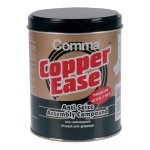
$24.25 at Amazon. http://www.amazon.com/dp/B0002XRDLE/?tag=atomicindus08-20Great stuff. I use it all the time!
Anthony
babzog
Well-known member
I would also think that the factory tq specs are presuming clean and burr free threads. After a few years of rust and abuse (those threads are not going to be factory smooth any more), you would be seeing LESS clamp load at that 60lbs of torque as you've got that much more friction to overcome.
tatra
Well-known member
fluid film, good stuff......reminds me i need to buy some more..........
What we are talking about here is putting wheels on a car and taking them off. While this is extremely important, it's not rocket science. Clean the threads and the hub, a little lube of your choice, don't cross the threads and tighten them evenly in a cross pattern and your done.
When I worked at dealerships I always used a little grease on the threads and the hub. Used a torque wrench to tighten and never had a problem. Now I work for a construction company and i use anti-seize on any and every bolt, hub, shaft, pin, knuckle, you name it that I might ever want to take apart again. (red lock-tite on any thing that i never want to come apart.)
When I worked at dealerships I always used a little grease on the threads and the hub. Used a torque wrench to tighten and never had a problem. Now I work for a construction company and i use anti-seize on any and every bolt, hub, shaft, pin, knuckle, you name it that I might ever want to take apart again. (red lock-tite on any thing that i never want to come apart.)
Packard V8
Well-known member
I've only been using anti-seize compounds on wheel fasteners for fifty years, so can't really comment on the long term safety of its use. I do drop the torque setting on the wrench by 10-15%. If the book says ninety, I use eighty. Never had a fastener stick or loosen. Never warped a rotor or drum.
For the "No good deed ever goes unpunished," file. A few years back, a VW Rabbit with a couple of young doofuses had a flat rear tire across the street. The factory lug wrench wouldn't loosen the fasteners. I saw their predicament and went over with a 1/2" breaker bar and a 17mm Easco (Dahner) socket. I leaned on the breaker bar. Nothing moved, so I put some muscle behind it and the socket split up the side.
Looking closer, through the brake dust, I saw the original Continental tire. "How old and how many miles has this thing got on it?" "It's six years old; got about seventy thousand." and the rear tires had never been off the car. I went back for an impact socket and a longer breaker bar. They came off screeching and squaaking, rusty and nasty. Even an economy car wheel needs a little love and lube.
By that time, Easco was not made any more and I've got a unmatched 17mm socket.
jack vines
For the "No good deed ever goes unpunished," file. A few years back, a VW Rabbit with a couple of young doofuses had a flat rear tire across the street. The factory lug wrench wouldn't loosen the fasteners. I saw their predicament and went over with a 1/2" breaker bar and a 17mm Easco (Dahner) socket. I leaned on the breaker bar. Nothing moved, so I put some muscle behind it and the socket split up the side.
Looking closer, through the brake dust, I saw the original Continental tire. "How old and how many miles has this thing got on it?" "It's six years old; got about seventy thousand." and the rear tires had never been off the car. I went back for an impact socket and a longer breaker bar. They came off screeching and squaaking, rusty and nasty. Even an economy car wheel needs a little love and lube.
By that time, Easco was not made any more and I've got a unmatched 17mm socket.
jack vines