To avoid these ads, REGISTER NOW!

Question on disconnect switch box fuses

hfdff

Active member
Joined
Jul 11, 2011
Messages
42
We have a hose dryer that dries fire hose after we clean it, that is not working at our station. The disconnect switch box has 3 fuses and one of them seems to have blown. The disconnect switch box is 30amp. My question is what amp fuse do I need to buy to get the dryer going again. Do I need to buy 3 10amp fuses to equal 30 amps or do I buy 3 30amp fuses. One more question can you test the fuse with a meter? Thanks for the help. Here's a pic of the fuse that are installed.
fuse.jpg
 
To avoid these ads, REGISTER NOW!

MixManSC

Well-known member
Joined
Jan 6, 2014
Messages
154
Location
South Carolina
What the box says and what is installed can be 2 different things. If it's proper then each will be 30a as the box states. Best option is to disconnect power to that box and pull the blown fuse. It will say what size it is. Replace it with the same size and type. Realistically if it is a 30 amp circuit then all 3 fuses will be 30a fuses, not 10a. I've slowly been replacing those fused style disconnects as I get to them. I just don't like the idea of a fuse blowing and whatever is connected stops but still having high voltage potential on 2 of the wires since their fuses are still good. With a proper breaker when one line shorts both poles (or all 3 if 3 phase) get disconnected.
 

Bnagy

Active member
Joined
Feb 4, 2014
Messages
28
You will need a 30A Fuse. It would be best to turn the disconnect off and whatever is feeding the disconnect and pull and replace the fuse. The fuse will have a part number on it. the last part of the part number should be something like -30 if it is in fact a 30a fused disconnect and not rated for 30a. If it is rated for 30a, then you will have to determine what the fuse size is by the part number.

There are few ways you can test the fuse with a voltmeter/multimeter. With power to the disconnect, you can change the dial setting on the meter to AC Voltage and check from a good ground point to the top and bottom of the fuse and if there is power on both, you know its good. If there is power on only one side then it is bad. You can also check the fuse by using the AC voltage setting and going to both sides of the fuse and if it shows voltage the fuse is bad. You can check it with the power off by using the Continuity or Ohm setting. You test that way by touching both sides of the fuse. If the meter shows "OL"(open) the fuse is bad.

I would start by checking the fuses, since you seem to believe that is the issue. It would be a lot safer to do so with the power OFF.

You have 3 phase power, so you may have lost just one leg. If that is the case, hopefully you did not damaging anything that is connected to the disconnect.

Let us know what you find.
 

rlitman

Well-known member
Joined
Oct 18, 2010
Messages
24,591
Location
Long Island
Sometimes fuses are needed, because they have the potential to clear a bigger fault faster than a corresponding breaker.
However, many times, an electrician installs a fused disconnect because it was just easier to source than a non-fused disconnect.

I agree with MixManSC that having the breaker trip first is safer, as it should interrupt all three phases together.

Anyway, what you have is a "coordination" issue. You burned out a fuse before the breaker tripped, when what you may really want is to trip the breaker first.
If that is the case, you might want to replace those fuses with time-delay fuses at 30A.

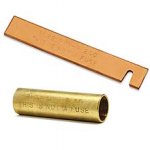
OR, if you know for sure that fuses are not required in this disconnect (an electrician can verify this), then there is such a thing as a "dummy" fuse that you could use that would never blow, which would convert your fused disconnect to a non-fused one. Sometimes when an electrician installs a fused disconnect, they just put in fuses, because they need to stick something in there.
 

Attachments

  • BUS_Ele_NNB_NTN_R_220.jpg
    BUS_Ele_NNB_NTN_R_220.jpg
    33.9 KB · Views: 1
Last edited:
To avoid these ads, REGISTER NOW!
OP
H

hfdff

Active member
Joined
Jul 11, 2011
Messages
42
Thanks for the replies. If I remember correctly they were all 10amp fuses that were time delay, if thats the case I'll have to buy the correct fuses. I won't be back to work until Sunday to see.I'll keep yall up to date. Thanks again.
 

Aceman

Well-known member
Joined
Jan 28, 2007
Messages
2,513
Location
Eastern Oregon
There is some poor advice on this thread.

If you blow a fuse, you don't replace the fuse to fix the problem. You identify and fix the problem that blew the fuse and then replace the fuse.

Recommending dummy fuses or 30 amp replacements when you have no idea of the equipment rating or the correct fuse sizing is simply bad advice.
 

skiingman

Well-known member
Joined
Apr 25, 2010
Messages
280
All I know is the first time I blew a time delay fuse in a disconnect like that I got a rude surprise at the supply house when I saw the replacment cost. 12 bucks or so IIRC?
 
To avoid these ads, REGISTER NOW!
Top Bottom