Couch Potato
Member
- Joined
- Dec 20, 2023
- Messages
- 20
Hello, I had a question that i wanted to post on here and maybe get a discussion going about Wilton bullet vises.
My question: Are Wilton's top 3 bullet design vises (Combination vises: C1/C2/C3, Machinist vises: 400S/600S/800S and tradesman vises: 1755/1765/1780 all made of ductile iron? The reason I'm asking this is because I was always under the impression and led to believe by the many posts, discussions, threads, and search results, that Wilton's top 3 bullet style vises were all made of ductile iron rating at 60,000 psi. Everytime Wilton vises come up in a discussion, most people seem to agree and say that Wilton's best vises are the Machinist bullet vises and the Commination (C1/clC2/C3) bullet vises, followed by the tradesman or pro mechanics vise, I'm guessing this is due to a few different reasons, the main reasons being: the machinist/combo vises are the only ones that are still being made in USA, the Machinist/Combo vises have the biggest and heaviest vises Wilton has to offer C3/800S, lastly because they are rated at 60,000 psi made of ductile iron (or that's what I and many others were led to believe if the information i gathered is correct, it's possible that I'm mistaken which is why I made this post to hopefully get some feedback and other people's thoughts/opinions on the matter)
The reason I worded my previous sentence that way is because I always thought and was told that Wilton's bullets vises: Machinist/Combo/Tradesman are made of ductile iron rated at 60,000 psi, while the latter may be true, Im led to believe that the part about all of them being made of ductile iron is incorrect. I say that because a few days ago I was browsing Wiotons store on Amazon, and while looking at the different vises which I mentioned in this post, I noticed something unusual (at least to me it was) is that the only vise that was described as being made of ductile iron was the Tradesman out of the 3 bullet variations. This lead me to believe that Amazon was mistaken and put the wrong information in the product specs section, so I decided to go to Wilton's official website and check look at the catalogs for the different vises and all the specifications for those vises, after seeing the same information i decided to go to all the websites that Wilton posted as being authorized dealers and see if the information matched. Well the results i found are:
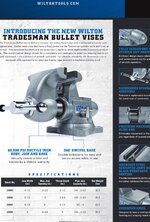
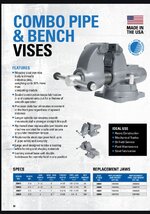
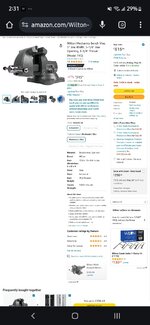
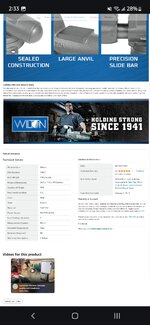
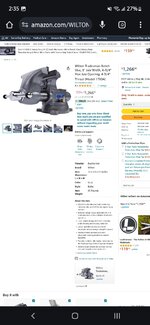
Almost all authorized dealers websites, Wilton's official website and their vise catalog's, and Wilton's Amazon store, mostly all had matching information stating that the tradesman vise jaw, body, swivel mount all made of ductile iron rated at 60,000 psi, and the machinist/combo vises are made out of cast iron. In the specs/detail area of each website or catalog, they noted that Machinist/combo vises are 30% heavier than other vises and are 60,000 psi, but they don't mention ductile iron, instead they specifically state it's made of cast iron. I'm not sure exactly how they measure the tensile strength of a vise or how the type of metal a vise is made out of correlates to the being rated at higher psi, which is why i wanted to get others thoughts/inputs/knowledge. For example, I know the 745 mechanics vise is rated by Wilton's catalog as 30,000 psi but also it's labeled as being ductile iron in catalogs and descriptions, then the tradesman being 60,000 psi ductile iron, and comb/Machinist vises being 60,000 psi cast iron. Which makes me wonder, does the type of material a vise is made from play a role in the psi rating? Example being: Ductile iron, cast iron, pig iron, wrought iron, white ductile iron, ect. Or does weight also play a part in the psi rating, for example if its more about the weight, then it would make sense that C3/800S vises being the heaviest over 200± pounds, are still rated at 60,000psi even though they are made from cast iron (if fhe information I gathered is correct that is) and is that the reason they chose to make the tradesman completely from ductile iron because it's not as beefy as the others, I have a older made in usa snap-on/Wilton 1780 tradesman that's around 110pounds, but that's nearly double *** less as C2 and even more less then a 800S but they are all rated at 60,000 psi tensile strength. Some other information I can add is that i called Wilton's customer service number and decided to speak to a vise specialist/expert, and when i asked about if all 3 variants were made from ductile iron and rated at 60,000 psi, he kept saying "yeah they are all 60,000 psi and the machinist and combo being made in the US" but when i mentioned that i saw the website and catalog that tradesman is made of ductile iron and the machinist/combo is labeled as cast iron, he assured me that and i quote "they are definitely 60,000 psi, there's no way you could break these, basically indestructible) but never actually answering the actual question about material being used to make the vises. Any information or thoughts would be appreciated and sorry for the long post, I will add some images/screenshots below of the website description about the vises that I took from Wiltons authorized dealers websites, Wilton's catalogs and website, to show examples/info of what I am discussing in this post.
Edit: now that i looked over the catalog pictures and other vise screenshots, I'm having a hard time even find anything that states or shows that c2/c3/600s/800s vises are 60,000psi, for tradesman it clearly states on all sites and catalogs that it's ”60,000 psi tensile streangh jaw, body and base, virtually indestructible and 2× stronger then grey cast iron" for the combo/machinist all it says is " massive cast iron virtually indestructible, weighing 30% more then competitor models" so was 60,000psi and ductile iron both things that were made up about combo/machinist vises because I thought i have seen it detailed as such in different websites and from peoples comments??





My question: Are Wilton's top 3 bullet design vises (Combination vises: C1/C2/C3, Machinist vises: 400S/600S/800S and tradesman vises: 1755/1765/1780 all made of ductile iron? The reason I'm asking this is because I was always under the impression and led to believe by the many posts, discussions, threads, and search results, that Wilton's top 3 bullet style vises were all made of ductile iron rating at 60,000 psi. Everytime Wilton vises come up in a discussion, most people seem to agree and say that Wilton's best vises are the Machinist bullet vises and the Commination (C1/clC2/C3) bullet vises, followed by the tradesman or pro mechanics vise, I'm guessing this is due to a few different reasons, the main reasons being: the machinist/combo vises are the only ones that are still being made in USA, the Machinist/Combo vises have the biggest and heaviest vises Wilton has to offer C3/800S, lastly because they are rated at 60,000 psi made of ductile iron (or that's what I and many others were led to believe if the information i gathered is correct, it's possible that I'm mistaken which is why I made this post to hopefully get some feedback and other people's thoughts/opinions on the matter)
The reason I worded my previous sentence that way is because I always thought and was told that Wilton's bullets vises: Machinist/Combo/Tradesman are made of ductile iron rated at 60,000 psi, while the latter may be true, Im led to believe that the part about all of them being made of ductile iron is incorrect. I say that because a few days ago I was browsing Wiotons store on Amazon, and while looking at the different vises which I mentioned in this post, I noticed something unusual (at least to me it was) is that the only vise that was described as being made of ductile iron was the Tradesman out of the 3 bullet variations. This lead me to believe that Amazon was mistaken and put the wrong information in the product specs section, so I decided to go to Wilton's official website and check look at the catalogs for the different vises and all the specifications for those vises, after seeing the same information i decided to go to all the websites that Wilton posted as being authorized dealers and see if the information matched. Well the results i found are:
Almost all authorized dealers websites, Wilton's official website and their vise catalog's, and Wilton's Amazon store, mostly all had matching information stating that the tradesman vise jaw, body, swivel mount all made of ductile iron rated at 60,000 psi, and the machinist/combo vises are made out of cast iron. In the specs/detail area of each website or catalog, they noted that Machinist/combo vises are 30% heavier than other vises and are 60,000 psi, but they don't mention ductile iron, instead they specifically state it's made of cast iron. I'm not sure exactly how they measure the tensile strength of a vise or how the type of metal a vise is made out of correlates to the being rated at higher psi, which is why i wanted to get others thoughts/inputs/knowledge. For example, I know the 745 mechanics vise is rated by Wilton's catalog as 30,000 psi but also it's labeled as being ductile iron in catalogs and descriptions, then the tradesman being 60,000 psi ductile iron, and comb/Machinist vises being 60,000 psi cast iron. Which makes me wonder, does the type of material a vise is made from play a role in the psi rating? Example being: Ductile iron, cast iron, pig iron, wrought iron, white ductile iron, ect. Or does weight also play a part in the psi rating, for example if its more about the weight, then it would make sense that C3/800S vises being the heaviest over 200± pounds, are still rated at 60,000psi even though they are made from cast iron (if fhe information I gathered is correct that is) and is that the reason they chose to make the tradesman completely from ductile iron because it's not as beefy as the others, I have a older made in usa snap-on/Wilton 1780 tradesman that's around 110pounds, but that's nearly double *** less as C2 and even more less then a 800S but they are all rated at 60,000 psi tensile strength. Some other information I can add is that i called Wilton's customer service number and decided to speak to a vise specialist/expert, and when i asked about if all 3 variants were made from ductile iron and rated at 60,000 psi, he kept saying "yeah they are all 60,000 psi and the machinist and combo being made in the US" but when i mentioned that i saw the website and catalog that tradesman is made of ductile iron and the machinist/combo is labeled as cast iron, he assured me that and i quote "they are definitely 60,000 psi, there's no way you could break these, basically indestructible) but never actually answering the actual question about material being used to make the vises. Any information or thoughts would be appreciated and sorry for the long post, I will add some images/screenshots below of the website description about the vises that I took from Wiltons authorized dealers websites, Wilton's catalogs and website, to show examples/info of what I am discussing in this post.
Edit: now that i looked over the catalog pictures and other vise screenshots, I'm having a hard time even find anything that states or shows that c2/c3/600s/800s vises are 60,000psi, for tradesman it clearly states on all sites and catalogs that it's ”60,000 psi tensile streangh jaw, body and base, virtually indestructible and 2× stronger then grey cast iron" for the combo/machinist all it says is " massive cast iron virtually indestructible, weighing 30% more then competitor models" so was 60,000psi and ductile iron both things that were made up about combo/machinist vises because I thought i have seen it detailed as such in different websites and from peoples comments??