To avoid these ads, REGISTER NOW!

Questions for wire crimpers / strippers

1982fxr

Well-known member
Joined
Jan 7, 2012
Messages
10,004
Location
Phoenix
I need to rewire my Harley. Wiring is not my thing, so currently I just have a hf pair of those cheapy ones with the stripper on the back/inside of the handle and the crimper out front. I'm leaning towards Channellocks for the strippers...

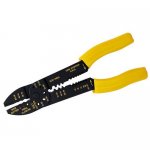
Do they, or anyone else good US made for reasonable $$ make a crimper where it does the crimping out front at the jaws? Not a better version of what I already have, but strictly a crimper that would have the sizes for motorcycle wiring?

Hopefully that made sense. I need a good crimper for motorcycle wiring...
 
To avoid these ads, REGISTER NOW!

zkling

Well-known member
Joined
Jan 23, 2007
Messages
16,939
I'm waiting to find a deal on one, but have narrowed it down to the following based on the expert advice from GJ members in the field. Do a search you will find lots of threads on this.

Crimpers
Klein 1005 $
Ideal 30-429 $$
T&B WT-112 $$$

Strippers
Craftsman
Ideal T series
Ideal strip master

After that you pretty much get into ratchet crimpers, which tend to be $$$$$$ :shocking:
 
OP
1

1982fxr

Well-known member
Joined
Jan 7, 2012
Messages
10,004
Location
Phoenix
so the Klein 1005 look the same as the Channellock 909. I notice they didn't make your list...not a fan of Channellock?
 

zkling

Well-known member
Joined
Jan 23, 2007
Messages
16,939
There have been more than a handful of people having issues with the channellock crimpers. I know there are many happy owner, but it just isn't worth the risk for me. If I'm going to spend some money, I want to make sure I get something nice. Probably leaning towards the Klein's unless I can find a smoking deal on the others.

http://www.garagejournal.com/forum/showthread.php?t=208773&showall=1
 

nanofrog

Well-known member
Joined
Mar 1, 2012
Messages
1,323
A ratcheting crimper does a far superior job. Also, the die profile is specific to the terminals being used (why the one-size-fits-all plier types don't perform that well; also requires more skill regarding how much pressure to apply, as well as the usual; strip length and insertion into the terminal without disturbing the strands).

You won't find US made on the cheap unless it's used (Sargent, *possibly* a Daniels model). Good ones come out of Germany and Sweden (not what most would think as budget priced; cheapest being ~$50 for a bare frame <no die>, to $400+ with one die), with the rest out of Asia (Taiwan being better than China).

Multiple threads on this.
 

zkling

Well-known member
Joined
Jan 23, 2007
Messages
16,939
That is a different type than what the OP is looking for. Those are for open barrel connectors. Ask CWP above, he had a recommendation for a open barrel crimper, but I can't remember which one it was. :dunno:

Edit, another very knowledgable member on the subject recommended a Sargent 1028CP
 
Last edited:

nicksnothereman

Well-known member
Joined
Oct 19, 2013
Messages
3,608
Location
In the Mojave

Sounds like he wants US. Those craftsman probably aren't. I think they're the same as the HF ones. Far too many similarities to be a coincidence. Probably all of the chinese ones (and there are a bunch) are made in the same factory with different handles/finish/branding.

He really needs to go in store to see what he needs. Maybe a dedicated tool store would be better.:lol_hitti
 

theoldwizard1

Well-known member
Joined
Feb 22, 2011
Messages
43,138
Location
SE MI

Attachments

  • 41SHZDVCBKL.jpg
    41SHZDVCBKL.jpg
    19.1 KB · Views: 4
  • 41Qwd7WAq0L.jpg
    41Qwd7WAq0L.jpg
    20.8 KB · Views: 5

theoldwizard1

Well-known member
Joined
Feb 22, 2011
Messages
43,138
Location
SE MI
I need to rewire my Harley.

If you are going to do a lot of wiring and YOU WANT IT TO LOOK NICE AND LAST A LONG TIME, use non-insulated terminals and marine heat shrink (HF). If you are using new wire, buy marine, pre-tinned wire (eBay). Yes, it takes longer, but it is much more professional looking.
 

skruft

Well-known member
Joined
May 9, 2011
Messages
759
This last is right, for good appearance if it is visible. I would not want people to see colored connectors everywhere

If what you want is something that crimps a regular insulated terminal near its nose, so that a ratchet crimper is not practical, I have used various T&B models. (But they cost so much that I would never buy a new one.)
 

knobby

Well-known member
Joined
Feb 2, 2010
Messages
663
Location
down by the river under a Jeep
ratchet crimpers are not to bad for bench use however in most cases my go to crimper is a klein 1005 it will fit into tighter spaces and do insulated and uninsulated terminals without changing dies and is a good value
http://www.amazon.com/dp/B0006M6Y5M/?tag=atomicindus08-20

for strippers ideal t strippers work well but for critical use i break out my old teledyne kinetics thermal stripper as it keeps the conductors free from any nicks
 

scaron

Well-known member
Joined
Aug 6, 2013
Messages
407
Location
ypsilanti, michigan
get an ideal crimpmaster with the requisite die for your application, altogether should run you < $150 and you won't ever want to use another crimper... it ratchets and crimps at the nose of the tool which is also a feature you say that you're looking for. don't let folks tell you that you need some ultra expensive AMP crimper or something like that (unless you have to deal with proprietary connectors) as for strippers go klein or ideal they both have lots of nice models, just pick the one that works with all the gauges of wire you plan to encounter. a good one from either company will run $10-20.
 

andywander

Well-known member
Joined
Mar 24, 2012
Messages
359
I second the Craftsman strippers recommendation-I picked up 2 different ones when they were on sale last year, and I am surprised how nice they are!
 
To avoid these ads, REGISTER NOW!

flippin

Well-known member
Joined
May 24, 2010
Messages
740
Location
Montreal - Ottawa
As was mentioned, given the time and passion associated with your task at hand, I would suggest spending a few more dollars and use exclusively tinned copper for all of the wire. I would strongly encourage you to avoid soldering. Without getting into heated discussions (there have been many solder vs crimp threads) the vibration and potential for moisture in a motorcycle environment is not that different than in a freshwater marine application. The gold standard for marine wiring is to use adhesive lined heat shrink tinned copper terminals. Coupled with a ratcheting crimper, the resulting termination will be far more vibration and corrosion resistant than any other technique.

Anchor Ratcheting Crimping Tool ($40)
41BE08ebs6L.jpg


Marine Grade Terminals (good success on ebay, can be found for about 0.20/each)
93311917.bT0x0reK.jpg


Though similar in appearance, automotive connectors incorporate aluminium now instead of tinned copper. A marine grade connector is much stronger with far better conductance. Furthermore, the adhesive lined polyolefin heat shrink will create an impervious bond, also adding strain relief to your wire.
109985472.jpg


Using the right crimping tool will create a cold formed terminal. The wire strands and the terminal have become one solid mass and like the wall of a copper pipe water is not getting through..
109985646.jpg


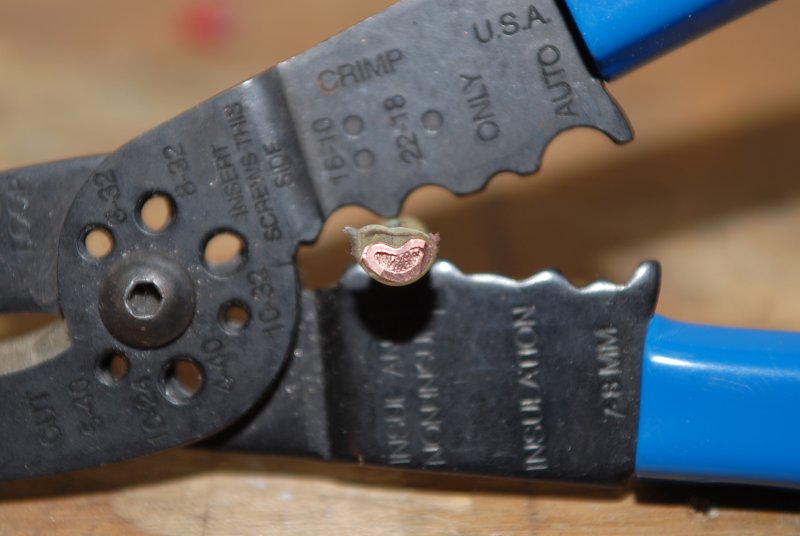
With a cheap crimper you may not get a true cold formed crimp. As you can see here the wire strands are still exposed and have not become one solid mass of copper.
109986557.jpg
 

Outlawmws

Well-known member
Joined
Aug 9, 2011
Messages
39,195
Location
The Badlands
Agree with the marine wire and heat shrink, but I will add one more recommendation that has changed my wiring from about as good as a factory job, to better.

Get a tube of dielectric grease, and it the end of the wire in before crimping. When you crimp it the grease gets squeezed out, and you still get the "hermetically sealed contact" the crimp is supposed to provide. After you heat shrink it the remaining grease is also sealed inside, and helps prevent any corrosion from forming inside the heat shrink.

Since switching to this technique I've NEVER had any corrosion issues with the connections whether they are on motorcycles, trailers, or 4X4's (can't say I recall doing a boat, but if I have it was before picking up the Dielectric grease trick...)
 

zkling

Well-known member
Joined
Jan 23, 2007
Messages
16,939
Using the right crimping tool will create a cold formed terminal. The wire strands and the terminal have become one solid mass and like the wall of a copper pipe water is not getting through..
flippin, will a manual dedicated crimper like the Klein 1005 or similar create a cold formed terminal? I see the second one was done with a sheet metal, behind the joint, universal type. How does a dedicated manual crimper compare? Is there a budget, general purpose ratchet crimper that you recommend?
 

flippin

Well-known member
Joined
May 24, 2010
Messages
740
Location
Montreal - Ottawa
flippin, will a manual dedicated crimper like the Klein 1005 or similar create a cold formed terminal? I see the second one was done with a sheet metal, behind the joint, universal type. How does a dedicated manual crimper compare? Is there a budget, general purpose ratchet crimper that you recommend?


Having researched this subject to death, the general consensus amongst both the aviation and marine engineers is that the dual pivot design of ratcheting crimping tools provides significantly more pressure. From this it was agreed that conventional plier designs would not create the required uniform pressure to achieve the perfect cold weld.

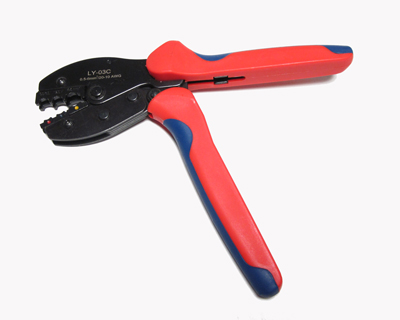
Though I have been using the Ancor ratcheting crimpers with huge success, many of my friends have purchased the following with excellent results as well. http://www.ebay.com/itm/PREMIUM-RATCHETING-CRIMPER-TOOL-ELECTRICAL-WIRE-CONNECTOR-TERMINALS-DOUBLE-CRIMP-/350892007340?pt=LH_DefaultDomain_0&hash=item51b2cb1fac At only $24 they're a good deal.

LY-03C_Open-NEW_SMALL.jpg
 

flippin

Well-known member
Joined
May 24, 2010
Messages
740
Location
Montreal - Ottawa
Agree with the marine wire and heat shrink, but I will add one more recommendation that has changed my wiring from about as good as a factory job, to better.

Get a tube of dielectric grease, and it the end of the wire in before crimping. When you crimp it the grease gets squeezed out, and you still get the "hermetically sealed contact" the crimp is supposed to provide. After you heat shrink it the remaining grease is also sealed inside, and helps prevent any corrosion from forming inside the heat shrink.

Since switching to this technique I've NEVER had any corrosion issues with the connections whether they are on motorcycles, trailers, or 4X4's (can't say I recall doing a boat, but if I have it was before picking up the Dielectric grease trick...)

With the utmost respect, I must disagree with this suggestion. Rarely will I ever publicly contradict a fellow member but given that the OP was preparing himself to completely re-wire his HD I felt compelled to pipe-up knowing he may follow your recommendation.

As someone who is forever seeking ways to improve upon the status quo, I too have contemplated the use of dielectric grease prior to crimping. However upon further thought and research I refrained from doing so. By definition, dielectric grease is an electrical insulator. Subsequently if dielectric grease is applied to the wire or terminal prior to crimping, the insulating properties of the grease may in fact negatively impact the electrical quality of the connection. Impedance may increase as a result.

Furthermore the waterproof barrier of the adhesive lined connector may also suffer from the presence of the dielectric grease. The silicone base of dielectric grease will prevent the thermally activated adhesive from flowing freely into all of the voids and adhering as intended.

Again my sincerest apologies Outlawmws, I mean no disrespect by my contradiction. The use of dielectric grease in this situation is not recommended despite the absence of corrosion in all of your experiences. The reduced electrical quality and the impact to adhesion negate the benefits of dielectric in this situation.
 

Outlawmws

Well-known member
Joined
Aug 9, 2011
Messages
39,195
Location
The Badlands
With the utmost respect, I must disagree with this suggestion. Rarely will I ever publicly contradict a fellow member but given that the OP was preparing himself to completely re-wire his HD I felt compelled to pipe-up knowing he may follow your recommendation.

As someone who is forever seeking ways to improve upon the status quo, I too have contemplated the use of dielectric grease prior to crimping. However upon further thought and research I refrained from doing so. By definition, dielectric grease is an electrical insulator. Subsequently if dielectric grease is applied to the wire or terminal prior to crimping, the insulating properties of the grease may in fact negatively impact the electrical quality of the connection. Impedance may increase as a result.

Furthermore the waterproof barrier of the adhesive lined connector may also suffer from the presence of the dielectric grease. The silicone base of dielectric grease will prevent the thermally activated adhesive from flowing freely into all of the voids and adhering as intended.

Again my sincerest apologies Outlawmws, I mean no disrespect by my contradiction. The use of dielectric grease in this situation is not recommended despite the absence of corrosion in all of your experiences. The reduced electrical quality and the impact to adhesion negate the benefits of dielectric in this situation.


No offence taken, you are entitled to your opinion, and I fully expected someone to disagree. However, I will also (respectfully) point out you did "further thought and research " and came to a "conclusion".

You don't mention any actual testing. I HAVE tested this pretty thoroughly both on the bench and on actual vehicles. It works and there is no down side as you have speculated.

First concern is the electrical connection. as you showed the correct connection is one mass when completed, the dielectric grease has minimal shear strength. And when the crimps are made it is squeezed out and it is still a copper to copper connection. Any "resistance" is immeasurable. Why? because the copper DOES make that critical connection. the grease, what little there is, is squeezed out.

Second there is only a small amount of grease involved, a thin coating on the wire itself. (unless you go crazy with it, which I did not say to do; just poke the wire into the end of the tube and pull it out.) so what little there is is not likely to interfere with the heat shrink at all.

Impedance does not enter into the equation at all Impedance is a signal artifact, and for 12V DC current matters not at all. Resistance is the enemy here, and there is none.

I suggest you do some actual experiments before pronouncing judgement.

:beer:
 
Last edited:

nanofrog

Well-known member
Joined
Mar 1, 2012
Messages
1,323
you don't mention any actual testing. I HAVE tested this pretty thoroughly both on the bench and on actual vehicles. It works and there is no down side as you have speculated.
What exactly did you do for your tests?
 

Outlawmws

Well-known member
Joined
Aug 9, 2011
Messages
39,195
Location
The Badlands
I don't have specific records, I wasn't not doing this for posterity, but basically I crimped multiple wires, both with and without the /dielectric, and tested for electrical resistance and pull tests, I was more concerned with the wires pulling loose easier, but they don't to any noticeable degree.

I've wired multiple vehicles with it, and as an example, my tent trailers original crimp connections done "the old fashioned way" with normal auto store connectors had corrosion issues after 5-10 years. (again I wasn't keeping specific records) twenty years alter the current wiring job, it is still good to go. Heck I use the damn stuff on the signal light sockets, and again no issues; and after say ten years most any bayonet light socket will often show signs of corrosion, if only from the dissimilar metals (Lead and brass)

If dielectric grease was such an insulator, they wouldn't use it in so many places where current needs to run. almost ANY level of pressure will shear through it and make connection. It's designed to do that.

For that matter anti-seize is not particularly conductive, but it's used on virtually every spark plug's ground connection today. Again, a low shear lube.
 
Last edited:

jeremy v

Banned
Joined
Jul 26, 2011
Messages
784
I have to agree with Outlawmws on this issue. I also have tested dielectric inside of crimps personally, but I did it more to see if it made the crimps let go of the wire any easier (which they didn't as long as the crimp was sound to begin with). An important part of any measurement for resistance to electric flow for a dielectric is the thickness of the dielectric. The thinner it is smashed, scraped, or spread the more easily electricity can still actually flow through it. If it is smashed thin enough between two pieces of material electricity can essentially just go right through it as if it wasn't even there and that is the situation you have with adding it inside crimps, etc. I use it on everything electrical and I have never had an issue, but I have had many benefits. If too much is used underneath adhesive heat shrink it can cause the adhesive to not stick when heated, so less is definitely more when using adhesive heat shrink, but it is still better than nothing in my opinion. If the adhesive heat shrink ever fails for any reason the dielectric grease is still there as a second defense to prevent corrosion if water gets in. Without it, any failure of the adhesive heat shrink seal (or a poor job sealing everything correctly to begin with) allows corrosion to start immediately with moisture exposure. With regular heat shrink and standard insulated terminal crimps the dielectric grease addition is better than having nothing for corrosion protection.

If anyone is worried about the dielectric grease blocking the flow of electricity, wipe some on the center terminal nub of a standard turn signal bulb and then pop it into the socket. It will work just fine at normal brightness and there will be no corrosion issues at the terminal connection over time. Better yet dip both leads of a multimeter into dielectric grease and then touch them together. Your ohm measurement will drop to zero as if nothing was there at all with minimal pressure, but if you instead stick both multimeter leads into the grease (without them physically touching each other) there will be no continuity or electrical flow at all. Crimping something together, tightening a lug, sliding a bullet connector together, etc. will apply a much higher point force load at the mating surface than twisting in a simple turn signal bulb will apply, so there is no problem establishing a great connection even with the dielectric grease.

Dielectric grease is called "dielectric" more so that an installer can know that slathering a bunch of it onto a trailer hitch wiring plug for example will not cause any electrical cross-talk or interaction between say your brake light circuit and turn signal circuit due to the same glob of grease physically touching multiple wiring harness pins at the same time. The voltage signal telling the brake lights to come on will still make it through the pressed together bullet type connection of the plug without any problem every time.
 
Last edited:

jeremy v

Banned
Joined
Jul 26, 2011
Messages
784
:lol::lol::lol::lol::lol:

I'm gonna go and look at the packaging. I highly doubt that there would be no country of origin on the package.

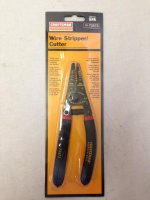
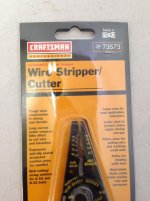
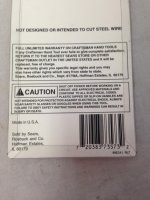
Here are a couple pictures of the packaging taken from an Ebay listing. It is clearly listed as made in the USA on the front and back of the packaging and it is also on the back of the strippers themselves as CWP1616L was referring to.
 

Attachments

  • 4.jpg
    4.jpg
    143.6 KB · Views: 10
  • 2.jpg
    2.jpg
    144.7 KB · Views: 10
  • 1.jpg
    1.jpg
    142 KB · Views: 10

Mohawk Dave

Well-known member
Joined
Oct 7, 2012
Messages
5,068
Location
SoCal
It's not an opinion, it is a fact.

Dielectric grease is an insulator, not a conductor.

Exactly. That's why its "Di", Greek for two. Meaning it allows "di"electric polarization of positive and negative charges.

More is better IMHO.

Read more here. http://en.wikipedia.org/wiki/Dielectric

P.S. There is a reason all mil-spec (delphi, cannon type) connections are overflowing with dielectric grease. Maybe not from the assembly line, but in the field we know what works.

P.S.S. EVERY time I detach a connection on something here on the property, it goes back together with the grease. And those connections have yet to fail. Rugged exposure on many of them as well.
 
Last edited:

CWP1616L

Banned
Joined
Aug 31, 2012
Messages
3,297
Location
USA
:lol::lol::lol::lol::lol:

I'm gonna go and look at the packaging. I highly doubt that there would be no country of origin on the package.

If you go to Sears, pull the staple out of the carded package and then slide the cover off. That'll allow you to inspect the tool. The U.S.A. stamp is on the back side of the pliers.
 

scaron

Well-known member
Joined
Aug 6, 2013
Messages
407
Location
ypsilanti, michigan
Here are a couple pictures of the packaging taken from an Ebay listing. It is clearly listed as made in the USA on the front and back of the packaging and it is also on the back of the strippers themselves as CWP1616L was referring to.

that looks a LOT like a rebadged klein kurve stripper; no doubt about it. if that's true, it would be a fine choice.
 
To avoid these ads, REGISTER NOW!
Top Bottom