What does a plug have to do with a valve stem replacement?
I was only referencing a flat repair because that’s what a valve stem replacement would be charged as.
A flat repair can be anything causing a flat which is repairable. A flat repair can be a leaking TPMS valve, rubber valve, bead leak, or puncture. The "approved" method by any shop, manufacturer, or legal entity is going to be removal of the tire. Even with OPs tool, no shop, tire manufacturer, or lawyer would accept not removing the tire. Half the point is to remove it to inspect for internal damage which is not always visible and could cause sudden failure. Tires with leaks are often run low, which is how we discover the leak, and thus may have internal damage.
For a leaking valve stem, at a bare minimum you will be breaking the outside bead unless you can use a contraption like OP is trying. You should be breaking both sides to check for corrosion, so you don't get a comeback from their rotted and corroded wheel. Which is why I said one should always be dismounting it. If the word "balance" is on the ticket with the flat repair, as a separate item or included with the repair, it needs balanced as it's a billed/included service. Normally you can just mark the tire and re-seat it where it was so it's no more or less balanced than it was when it came it.
For his specific service, which is a type of flat repair, one could break the bead to peak inside for crumbs, and swap the stem. Unless it's a 45 series or below in which case I doubt the mounting arm could crush the tire down enough to actually look inside. IMO stating that qualifies as a flat repair and there is no reason to dismount doesn't make sense. The way it reads it sounds like one does not need to dismount a tire to perform a flat repair. Which might be true in certain specific circumstances. But is certainly not the case in all circumstances.
Your post in #38 clears that all up.

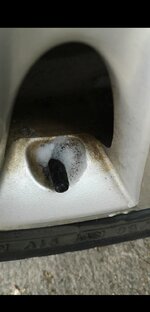


 I've seen new out of of the bag stems leak at their rubber base upon installation. It's like the rubber is too thin at the base.