BoostAddiction
Well-known member
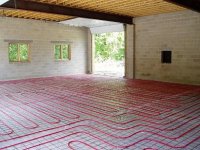
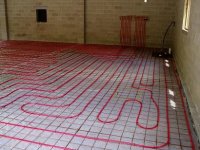
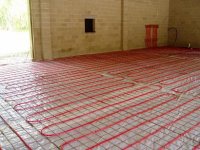
I've seen some garages here lately, and know of another really big one that will have radiant heat (for the newbies: heat is created by running hot water through tubing buried in the floor; the floor heats up and the heat rises to heat the rest of the room).
While I think radiant has some advantages (you can work in your bare feet, the floor feels warm if you have to sit or kneel on it), for a garage, it seems to me to be a relatively poor fit.
Why? Well, in my garage, most of the time it isn't heated or cooled (and so uses no power). I only need to heat or cool it when I actually work in it. If that is three nights a week and all day one day on the weekend, then I only heat or cool it then. The time it takes to get the temp right (heating or cooling) is pretty small in my case-- maybe only 20 minutes. This is in contrast to radiant heat which takes a very long time to heat the mass in a garage floor. The clear implication is that you have to run the radiant heating system all winter long, even if you only need it for a few hours each night. How can that be more efficient?
If you work in the garage 8 hours a day, maybe it makes sense. Or, if you want to have the garage heated even when you aren't there to keep your megadollar cars all cozy and stuff, then maybe I could see it. Otherwise, it just seems wasteful to me.
Of course, it doesn't do a thing for cooling, and as such, if you have a cooling load, you can't exactly piggyback on existing ducting, for example as you might with a regular heat pump.
Perhaps I'm missing something (it wouldn't be the first time...) but if there is a way that radiant can compete with a gas heater, or an efficient heat pump, I'd like to know about it.
Otherwise, I'm sticking with the original idea: radiant only makes sense in very cold climates where you want to keep the structure heated all the time (as in a home).
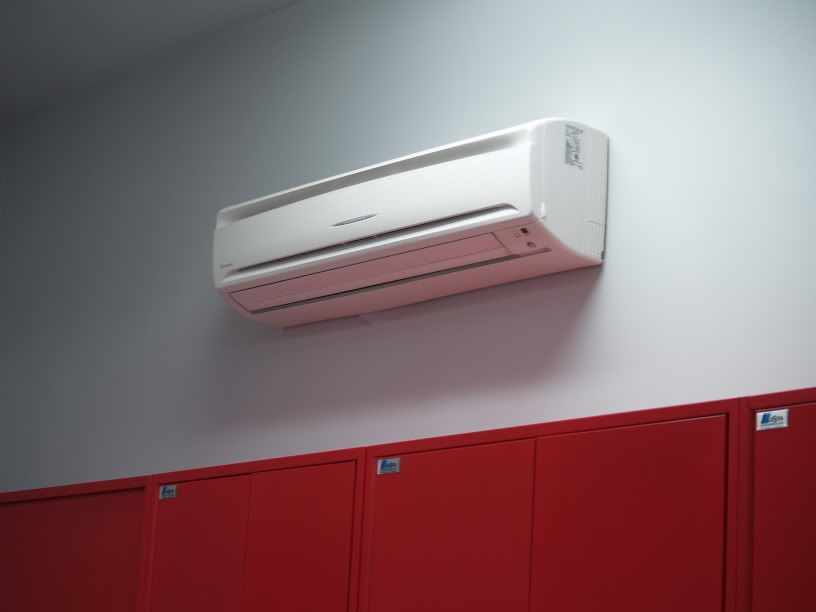
For reference, I live in the MidAtlantic and use a 2-ton minisplit with a 15 SEER. Works great all the time, whatever the season, cost very little ($<4000 installed) and is very economical to run (and it doesn't get run all that often anyway).
The obligatory pic:
-Will
While I think radiant has some advantages (you can work in your bare feet, the floor feels warm if you have to sit or kneel on it), for a garage, it seems to me to be a relatively poor fit.
Why? Well, in my garage, most of the time it isn't heated or cooled (and so uses no power). I only need to heat or cool it when I actually work in it. If that is three nights a week and all day one day on the weekend, then I only heat or cool it then. The time it takes to get the temp right (heating or cooling) is pretty small in my case-- maybe only 20 minutes. This is in contrast to radiant heat which takes a very long time to heat the mass in a garage floor. The clear implication is that you have to run the radiant heating system all winter long, even if you only need it for a few hours each night. How can that be more efficient?
If you work in the garage 8 hours a day, maybe it makes sense. Or, if you want to have the garage heated even when you aren't there to keep your megadollar cars all cozy and stuff, then maybe I could see it. Otherwise, it just seems wasteful to me.
Of course, it doesn't do a thing for cooling, and as such, if you have a cooling load, you can't exactly piggyback on existing ducting, for example as you might with a regular heat pump.
Perhaps I'm missing something (it wouldn't be the first time...) but if there is a way that radiant can compete with a gas heater, or an efficient heat pump, I'd like to know about it.
Otherwise, I'm sticking with the original idea: radiant only makes sense in very cold climates where you want to keep the structure heated all the time (as in a home).
For reference, I live in the MidAtlantic and use a 2-ton minisplit with a 15 SEER. Works great all the time, whatever the season, cost very little ($<4000 installed) and is very economical to run (and it doesn't get run all that often anyway).
The obligatory pic:
-Will