To avoid these ads, REGISTER NOW!

Rain water leaking from heater vent pipe... help!

kwoody51

Well-known member
Joined
Jan 19, 2010
Messages
215
Location
Twin Cities, MN
Been getting lots of rain here lately... and discovered my vertical vent pipe for my heater in the garage is leaking/ dripping. Water appears to dripping along the outer pipe. I suspect the caulking on the roof collar gave up the ghost and allowed for water to dribble down the pipe into the house ... what say you all?

We've been in the house ~3 years and this is the 1st time it's done this... making me think it's the exposed sealant.

I tried to caulk it in the rain but don't think it really held so will go back after it's dry and use some Vulkem sealant.

Appreciate any thoughts! Kind freaking out as I'm not wanting this leak to turn into a bigger water damage problem...

Here's some pics.
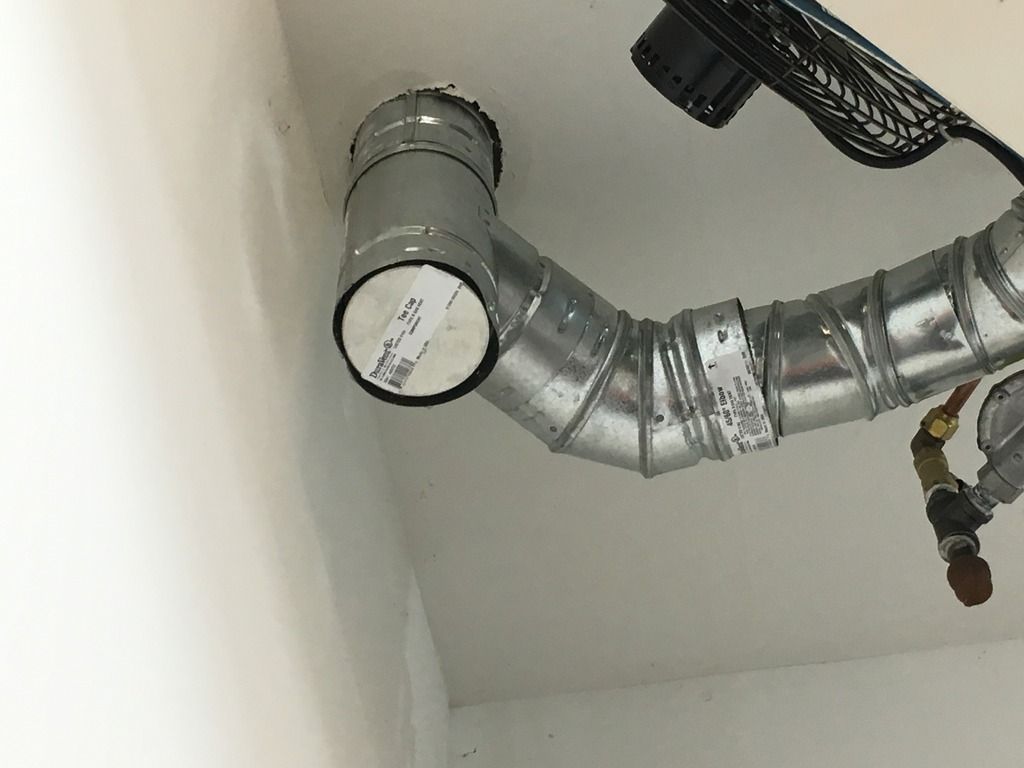
It's dripping along the outer pipe. If you look really close you can see one drip ready to drop at the 6 o'clock position. You can also see a faint outline on the drywall, behind the drywall is the flange of the 'outer insulated pipe' the pipe in the house slips into since it's through the roof.

So it appears some water dribbles onto the pipe and other water is redirected around the flange to the drywall... which would also explain the photo of the wet foundation wall.
2C376AA4-062B-405B-B522-4591D05BD448_zpsdqejqkc2.jpg


Wet foundation wall, this is directly 'in line' with where the vent pipe is. Suggesting that some of the water is finding it's way to the wall and thus trying to exit the bottom.
AF32B07A-1E65-4AB9-B455-2B70C9512800_zps03r2fdgo.jpg


Here's the view on the roof
863E95B1-E742-4D75-AF25-E8660EFF5ACA_zpsmjbozioo.jpg


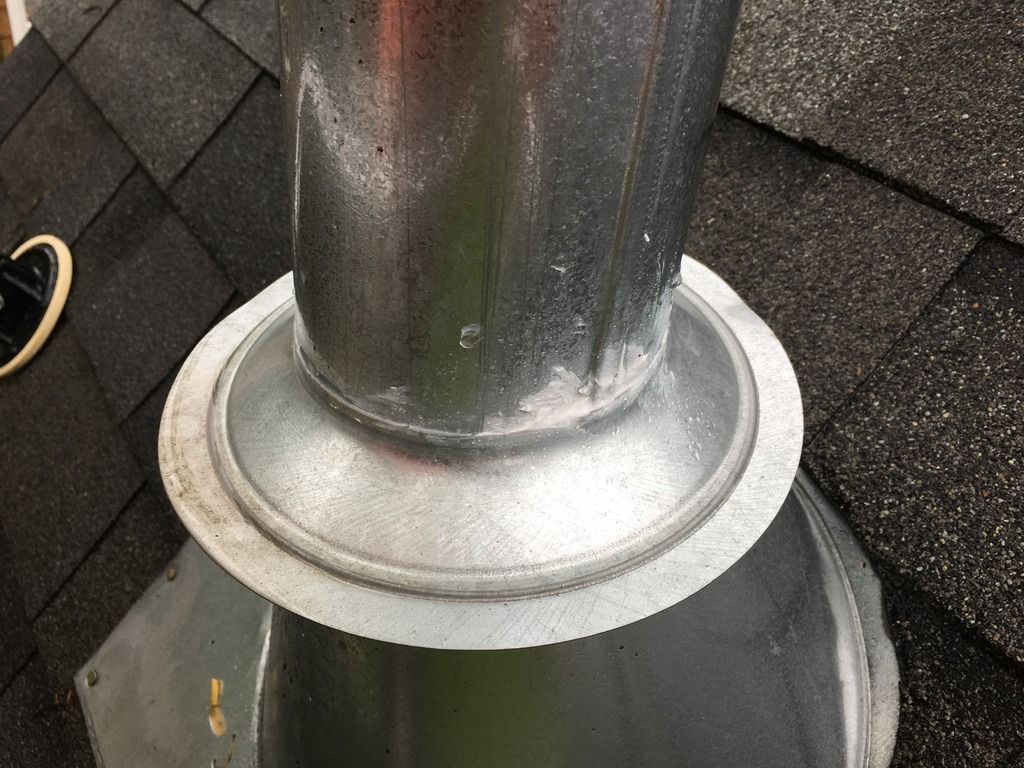
The area I suspect it's leaking from and what I tried to re-caulk... clearly not awesome job but on top of the ladder while raining I was going for function, not form.
E7699239-55E5-4B70-8CA5-57EE5D81933B_zpslyvhi5vj.jpg


I thought 'maybe' it could be leaking at this position as well but not sure where the collar meets the flat part.
F685E522-646C-4207-9007-31879BDFD9D7_zpsehfnno8j.jpg
 
Last edited:
To avoid these ads, REGISTER NOW!

larry4406

Well-known member
Joined
Jan 27, 2006
Messages
19,193
Location
Northern Virginia
I think I would seal all mechanical made joints, in particular, the joint down near the shingles where it is rolled into the nailing flange.
 

jbwilkins

Well-known member
Joined
Mar 16, 2016
Messages
310
Location
Nashville Tn
You need to get into the attic space and see what you can see.....water could be getting under the shingles somewhere else and it's just finding that vent stack as a place to drip from....
 

yeldogt

Well-known member
Joined
Jan 2, 2012
Messages
18,184
Clean off the hoop flange and reseal .. That's what seals the flue pipe. Water is running down the pipe past the poorly sealed hoop ring and straight to the bottom.

People don't understand how much water is actually flowing off that short length of pipe -- especially with any wind. Also -- the hoop should move with the flue .. if it's too tight to the roof flange when the flue moves the hoop will hang up on the roof flange and break the seal.

The hoop is like an umbrella -- the water on the roof is not going to come up the flange and get into the opening.. it's only sealed to the flue pipe
 

Jackfre

Well-known member
Joined
Dec 26, 2010
Messages
4,410
Location
N CA
That style cap, the Brider Cap, is about the best cap in the business from a performance standpoint. As YD says lift the storm collar caulk the hell out of the pipe below the SC and push it back down into the sealant. as well put a small bead of sealant on the seam and run your finger the length of the seam. You shouldn't need much there. Make sure the pipe is secure. If the wind can move it, the water can get in.
 
To avoid these ads, REGISTER NOW!

ForceFed70

Well-known member
Joined
Apr 27, 2010
Messages
3,441
Location
BC, Canada
To me the cap looks like it could be allowing wind-blown rain down into the pipe. But Jackfre says it's a good cap and I don't have any reason to disagree with him.

Are you sure the water is coming from rain?

There is a lot of water in gas heater exhaust. When a heater 1st turns on, the flue is cold. Until it warms up, water will condensate like crazy and can run down the pipe. That's why there's a T near the heater, so that the condensate exits at the T rather then drain into the heater.

My heater dumps a lot of water out of that T when it's -20* out and I fire it up. To the point where I'll often stick a bucket under it during the coldest month of the year. Tho the bucket never really "fills up".
 

CNGsaves

Well-known member
Joined
Sep 26, 2012
Messages
13,233
Location
KS and OK
Doubt that any tar was used UNDER the flange as it was put down on the shingles. :dunno:
Also, doubt there is tar under two exposed nails.

Take it apart. Do It Right with LOTS of tar on entire underside edge of the flange. Also put wide smear of tar on underside where those nail holes are at. When you nail through there should oooze out tar that seals that penetration.
 

EOC_Jason

Well-known member
Joined
Jun 25, 2012
Messages
11,388
Location
Bentonville, AR
For good measure too I would lift the shingles on the top-half just enough so you can fit the tip of the caulk gun in and put a bead of caulk down to seal the shingles to the flange.

Likewise I always see them put a dab of calk on top of the nails.

I think everyone else already covered the parts about what to do with the collar and such.
 

yeldogt

Well-known member
Joined
Jan 2, 2012
Messages
18,184
Actually -- you can put those roof flanges on without any tar. Your roofer should have come down over the flange with another row ...... sometimes they fall is a way that does not work out ideally. I use the gasket screws -- that hold metal roofing.

When you miss with the row -- a length of watershield is the ticket. Tar and caulk quickly dry out.

I'm an old house guy and when you work on old slate and wood roofs -- you understand all about how water works and whats needed ... and not needed.
 
OP
K

kwoody51

Well-known member
Joined
Jan 19, 2010
Messages
215
Location
Twin Cities, MN
Didn't see all this traffic on here, thanks for all the great info! Here's the latest...

The flange was directly caulked to the hood so clearly not allowed to move like it should - guessing it pulled apart and allowed water through. I pulled the cap and flange off and then scraped out the caulk from the flange and hood area. Also trimmed up the shingles at the top of the hood as it seems a little too close, all gummed up with tree droppings.

I've got some Vulkem 116 and will be sealing up the hood first, then have the flange about ~2" above the hood sealed from the top and the bottom. Too wet today so I wrapped up the whole thing with a garage bag and duct tape... looking a little redneck but it's on the back of the garage :)

As for the question about heater condensate - heater hasn't been on in ~2 months so it's definitely coming from the rain. Also all has been 'fine' with this heater setup for ~3 years leading me to believe that weather/ thermal cycles pulled the caulk apart. Everything else looked like I would expect it to.

Here's a photo of the hood which you can see had a bit of a gap, this was after I cleaned out my caulking from yesterday.

E6B09D55-CE4E-4DB6-BA6C-A71F75A69132_zpswq07jibh.jpg
 
Last edited:
To avoid these ads, REGISTER NOW!
Top Bottom