To avoid these ads, REGISTER NOW!

rear crank bush

polo2k

Well-known member
Joined
Mar 19, 2010
Messages
94
Location
UK (south)
Hi all,
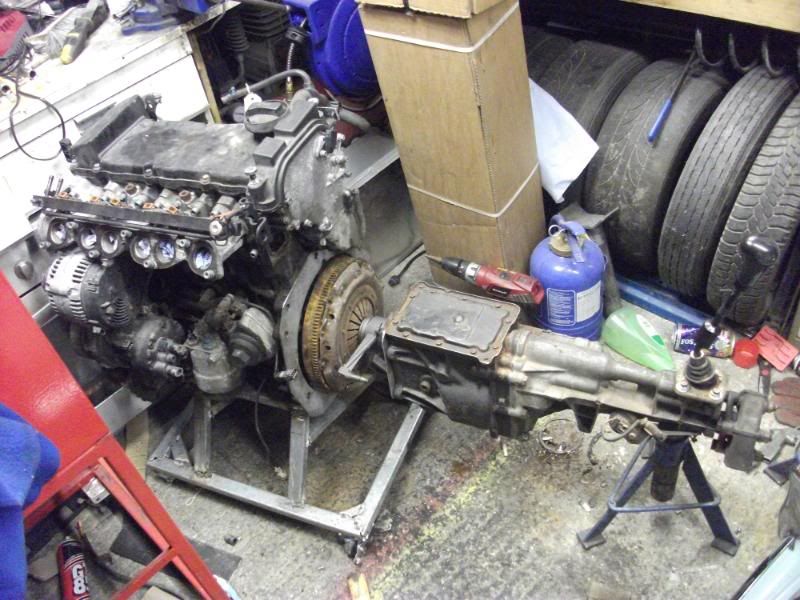
#i am assembling an engine and gearbox that were never designed to go together (VR6 and a ford box)
As I understand it there should be a bush in the tail of the crank that corresponds to the nose of the input shaft on the box.
Is this bush nessesary?
will it help line things up?
what materials should be used? (phosphor bronze?)
what clearance should I leave round the shafts? (.1mm?)

DSCF0519.jpg


TIA
 
To avoid these ads, REGISTER NOW!

APEowner

Well-known member
Joined
Oct 2, 2009
Messages
4,164
Location
Sunny, New Mexico
You need the bushing (commonly called a pilot bearing). It supports the end of the input shaft when the clutch is disengaged. The input bearing is not designed to keep the input shaft inline without out it. The material should be oil impregnated bronze commonly known as oilite (incidentally oilite was originally invented for this very application). Your looking for SAE 841 or SAE 863. I'm not sure on the clearance but I would think that somewhere between 0.05mm [0.002 in] and 0.10mm[0.004 in] would be good. Check a factory service manual for a vehicle that uses that transmission.
 
OP
P

polo2k

Well-known member
Joined
Mar 19, 2010
Messages
94
Location
UK (south)
I thought it was an important one to get right :D

should the part be an interference fit in the rear of the crand of do I need clearence on that surface too?
 

gorilla

Well-known member
Joined
Dec 13, 2007
Messages
1,652
The pilot bushing should be a lite press fit into the crankshaft. If you are making a adapter to the transmission the center of this bushing should be the center line of the adapter.
 

kbs2244

Well-known member
Joined
Nov 11, 2006
Messages
14,065
It has been a while since I split an engine/trans.
Do they still put that hole in the end of the crankshaft?
I understood they stopped doing it since automatics took over the world.
 

supertooljunkie

Well-known member
Joined
Oct 12, 2009
Messages
962
Location
Lilburn, GA
I have seen manufacturers use both bronze bushings and needle bearings in an adaptor for that application. But, yes, a bushing is necessary for proper operation.
 
OP
P

polo2k

Well-known member
Joined
Mar 19, 2010
Messages
94
Location
UK (south)
so would taper bearings be an option or am I better going for oilite?

[edit]I meant roller not taper in this post. [/edit]
 
Last edited:

coldfusion21

Well-known member
Joined
Jul 7, 2005
Messages
404
Location
portland, oregon
needle bearing is an option. You might get lucky and have the dimensions be a common bearing. Or you could use a common bearing with some sort of adapter on the id or od.
 
OP
P

polo2k

Well-known member
Joined
Mar 19, 2010
Messages
94
Location
UK (south)
I did a load of ringing round yesterday and managed to find somewhere that could supply a standard size that should work. they cost a massive £1.65 each so I got 3 or 4 :D
did some more odds and sodds yesterday:
DSCF0522.jpg


Once the bushes arrive I can get cracking on the bell housing. Ive got to get some bits machined off the flywheel (not much though) and then ive just got to get the shell into an "engineable position" for a test fit.
Once the engine is in I can start figuring out where the starter can go as in the engines original config the started in on the gearbox side of the clutch and I wont have the room so I need to find an alternative and make that work.

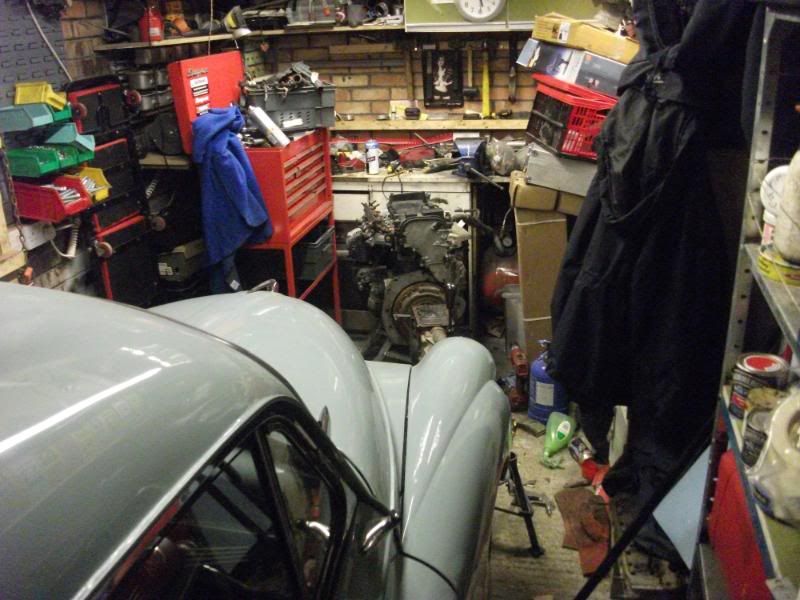
Oh btw I was thinking about how much I could do with a huge uncluttered spoace and thought I would take this pic. anyone with a big garage should be grateful!
DSCF0521.jpg
 
Last edited:
OP
P

polo2k

Well-known member
Joined
Mar 19, 2010
Messages
94
Location
UK (south)
by the way, when im building up the bell housing and there is no pressure in the slave cylinder, what should the clearence be between the release bearing and the clutch fingers?
 

larry_g

Well-known member
Joined
Apr 28, 2007
Messages
16,876
Location
oregon
This thread scares me. Asking such a basic question and then saying your going to frabricate a bell housing I have to ask do you understand the alignments and concentricities that you must maintain to have a working setup? Do you have the machines capable of machineing in the details necessary to do this. Or am I reading your post wrong and you have a bellhousing coming on the bus and will be modifying that?

Good luck with this adventure and keep us posted on the progress.

lg
no neat sig line
 

shadetree57

Member
Joined
Dec 16, 2009
Messages
8
Location
south georgia
This thread scares me. Asking such a basic question and then saying your going to frabricate a bell housing I have to ask do you understand the alignments and concentricities that you must maintain to have a working setup? Do you have the machines capable of machineing in the details necessary to do this. Or am I reading your post wrong and you have a bellhousing coming on the bus and will be modifying that?

Good luck with this adventure and keep us posted on the progress.

lg
no neat sig line

Exactly what I was thinking.
 
To avoid these ads, REGISTER NOW!

APEowner

Well-known member
Joined
Oct 2, 2009
Messages
4,164
Location
Sunny, New Mexico
I assume you found a bushing for that and not a bearing. You don't want to use a taper bearing because there's no way to provide the necessary pre-load. You could use a needle bearing if the input shaft is hardened for that purpose(ie. if the original application used them).
 

bobadame

Well-known member
Joined
Dec 26, 2007
Messages
1,124
I'm guessing that not more than a mm would be good clearance. You don't want the throw out bearing to drag and you don't want wasted motion either. What is this power train going into? Is that an old Morris Minor? What is the engine?
 
OP
P

polo2k

Well-known member
Joined
Mar 19, 2010
Messages
94
Location
UK (south)
This thread scares me. Asking such a basic question and then saying your going to frabricate a bell housing I have to ask do you understand the alignments and concentricities that you must maintain to have a working setup? Do you have the machines capable of machineing in the details necessary to do this. Or am I reading your post wrong and you have a bellhousing coming on the bus and will be modifying that?

Good luck with this adventure and keep us posted on the progress.

lg
no neat sig line

Ill hold my hands up, it is a basic question! I haven't dealt with this bush much in my past, the only time have been when changing clutches and gearboxes "like for like". In these cases I check that the clearences are sensible and that everything fits.
This is the first time im putting an engine and box together that were not designed for it!
I do understand the intracasies involved, tolerences and concentricness required, and unfortunately I dont have the machines I wish I had.
Thing is though that if I cant afford to get someone else to do the work and I cant afford the machines to do the work my self. I want to build this car so unfortunatly this is my only option and im going to do everything I can to make it a reality.
Aside from the ins and outs of the pilot bush im pretty clued up honest :beer:

With the release bearing clearences its the same story im afraid, ive only ever worked on standard setups where you can not see the bearing till the box is off :(

I assume you found a bushing for that and not a bearing. You don't want to use a taper bearing because there's no way to provide the necessary pre-load. You could use a needle bearing if the input shaft is hardened for that purpose(ie. if the original application used them).

I did manage to find a bushing in the end :) so no preload etc to worry about :D

I'm guessing that not more than a mm would be good clearance. You don't want the throw out bearing to drag and you don't want wasted motion either. What is this power train going into? Is that an old Morris Minor? What is the engine?

<1mm, OK. good job I checked as I was considering starting at 5mm and shimming 1mm at a time to ensure correct operation.

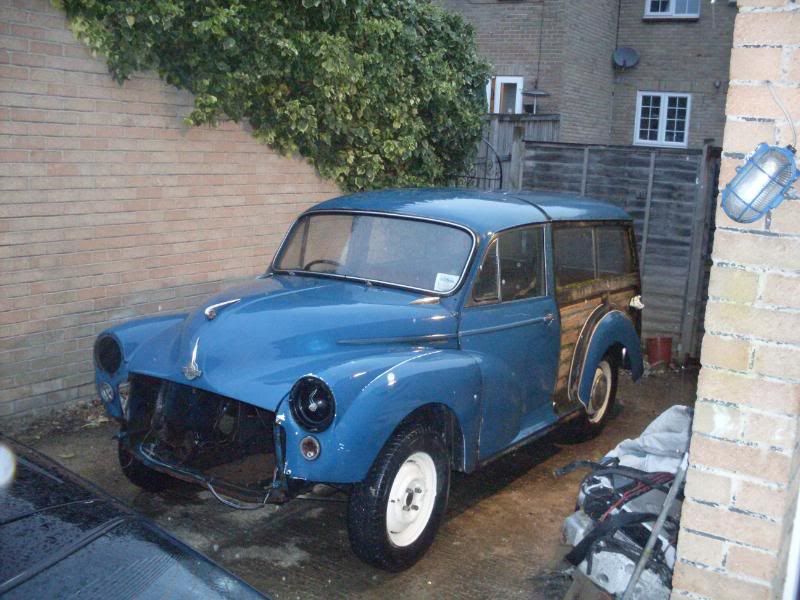
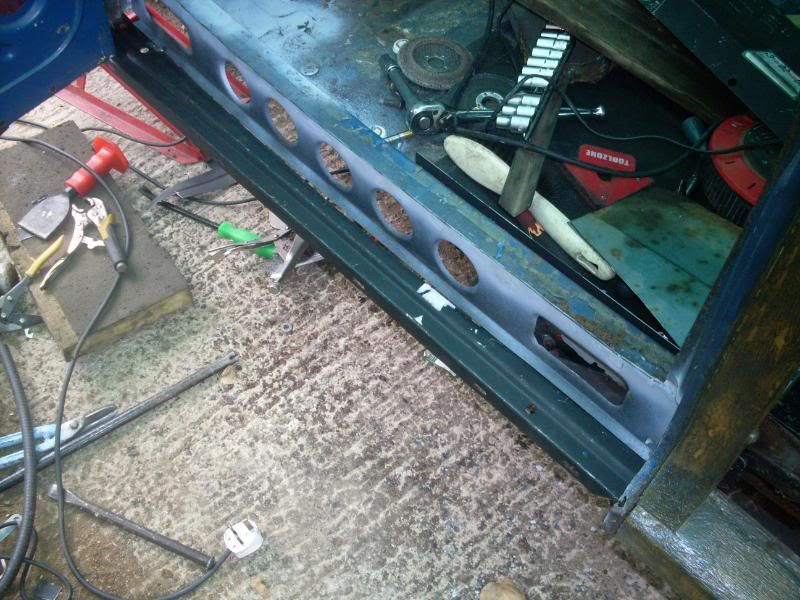
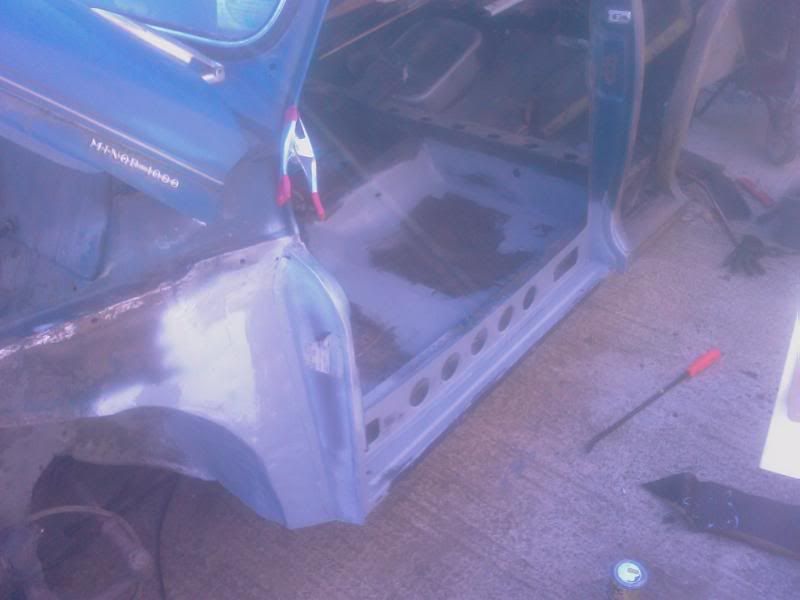
As for the car, it is indeed the old morris minor! and a rather grotty example at that!
SDC12579.jpg

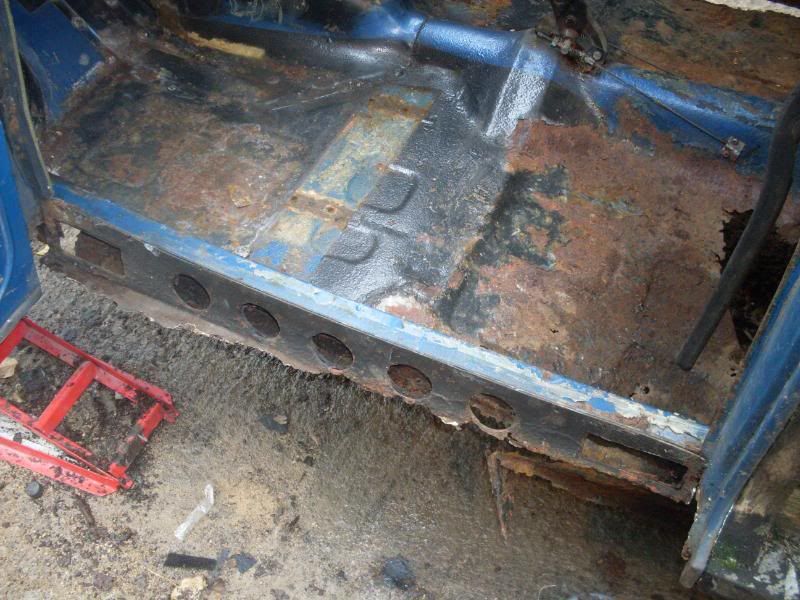
I have been a busy camper too!
SDC12600.jpg

SDC12654.jpg

IMAG0157.jpg


I've just read what I've written above and some of it comes across as "defensive", NOT intentional! hopefully I've cleared up any confusion.

I'm learning as I go in some respects on this one (and as far as I know it will be the first front engine RWD VR6 that's been done) so your help is appreciated.
 

Demian

Well-known member
Joined
Feb 25, 2010
Messages
62
Location
Cape Coral, FL
and as far as I know it will be the first front engine RWD VR6 that's been done) so your help is appreciated.

I believe the Eserini brothers had/have a front engined rear drive VR6 dragster.
So perhaps you'll be the first door slammer with that configuration. :)
Good luck with your project.
 

larry_g

Well-known member
Joined
Apr 28, 2007
Messages
16,876
Location
oregon
Ill hold my hands up, it is a basic question! I haven't dealt with this bush much in my past, the only time have been when changing clutches and gearboxes "like for like". In these cases I check that the clearences are sensible and that everything fits.
This is the first time im putting an engine and box together that were not designed for it!
I do understand the intracasies involved, tolerences and concentricness required, and unfortunately I dont have the machines I wish I had.
Thing is though that if I cant afford to get someone else to do the work and I cant afford the machines to do the work my self. I want to build this car so unfortunatly this is my only option and im going to do everything I can to make it a reality.
Aside from the ins and outs of the pilot bush im pretty clued up honest

With the release bearing clearences its the same story im afraid, ive only ever worked on standard setups where you can not see the bearing till the box is off

The pilot bearing only has relative motion when the clutch is depressed so it can be a bushing. When the clutch is engaged there is no relative motion, just support for the input shaft of the trans. What is iportant is to understand that the pilot beating in the crank, the front bearing in the trans, and the output bearing in the trans all have to be considered as there for supporting the shafts all in a straight line. For clearance on the TH bearing you only need a small amount but must leave room for adjustment as the fingers approch the TH bearing as the clutch wears. You might consider removing the clutch disk and replacing it with some shims that would approximate a well worn disk and then measure the clutch finger height and use that number for the max back position of the TH bearing.

I don't worry about offending the abilities of anyone on the net I do not know. For all I know you could be some 13yo kid in garage aspiring to be a race mechainc or a 40yo with a degree in mechanical engineering doing the next best car in the world. So don't be worried about being defensive. Be honest with you abilities and knowledge and the net community can give the answers that are approprite to you and your abilities.

lg
no neat sig line
 
Last edited:

gorilla

Well-known member
Joined
Dec 13, 2007
Messages
1,652
I don't know to post a link to this, but in the jalopy journal, H.A.M.B. in the tech archives their is a write up on building a bellhousing from scratch using some simple tools. It's listed as caveman tech-building a bellhousing for a flathead Cadillac. This may give you some ideas.
 
OP
P

polo2k

Well-known member
Joined
Mar 19, 2010
Messages
94
Location
UK (south)
I believe the Eserini brothers had/have a front engined rear drive VR6 dragster.
So perhaps you'll be the first door slammer with that configuration. :)
Good luck with your project.

Thats bit of a mental motor!!!
Besides ive always loved the sound of the VR and cant wait to get Igor running.
 

robertlynk

Well-known member
Joined
Jun 1, 2010
Messages
323
Location
California
by the way, when im building up the bell housing and there is no pressure in the slave cylinder, what should the clearence be between the release bearing and the clutch fingers?

I'm guessing that not more than a mm would be good clearance. You don't want the throw out bearing to drag and you don't want wasted motion either. What is this power train going into? Is that an old Morris Minor? What is the engine?

The clearance between the clutch release bearing and the finger of the pressure plate need to be calculated based on travel of the release bearing and the wear limits of the clutch disk. As the disk wears the friction plate of the pressure plate assembly move toward the engine. This causes the fingers of the pressure plate to move towards the release bearing reducing clearance until contact with the bearing. Eventually the clutch will start slipping. If you have the old engine set up you could measure the original gap and go from there. Other wise measure min/max disc thickness obtain wear limits. Bolt pressure plate on flywheel with disc installed then measure finger height then release bolt to obtain wear limit gap between pressure plate and fly wheel. then measure finger height this will get you close to the clearance needed there is more calculating to do based on release bearing travel also
 
OP
P

polo2k

Well-known member
Joined
Mar 19, 2010
Messages
94
Location
UK (south)
That's some really nice sheet metal work on the floor and side rails on the Minor. Have you checked out www.metalmeet.com ?

Thankyou, most of the sheet metal has been bought but there are some sections that I have made from scratch.
ive got a pic somewhere of all the new steel layed out and theres a LOT of it!
ill have to check out that site some time.


Thanks, ill check that out

The clearance between the clutch release bearing and the finger of the pressure plate need to be calculated based on travel of the release bearing and the wear limits of the clutch disk. As the disk wears the friction plate of the pressure plate assembly move toward the engine. This causes the fingers of the pressure plate to move towards the release bearing reducing clearance until contact with the bearing. Eventually the clutch will start slipping. If you have the old engine set up you could measure the original gap and go from there. Other wise measure min/max disc thickness obtain wear limits. Bolt pressure plate on flywheel with disc installed then measure finger height then release bolt to obtain wear limit gap between pressure plate and fly wheel. then measure finger height this will get you close to the clearance needed there is more calculating to do based on release bearing travel also

unfortunatly the combination of clutch components is so random there is no original to measure from, ive done some measuring and scrribbling to work out pivot points and movement. I think ive come to a suitable distance. Ill be mounting the clutch slave on a shimmed system incase I get it wrong!

Bit of an update for you all too :D
DSCF0584.jpg

Franken-clutch
modified Vr6 flywheel, ford friction disc, vr6 pressure plate, then used with a mk4 golf release bearing!

DSCF0586.jpg

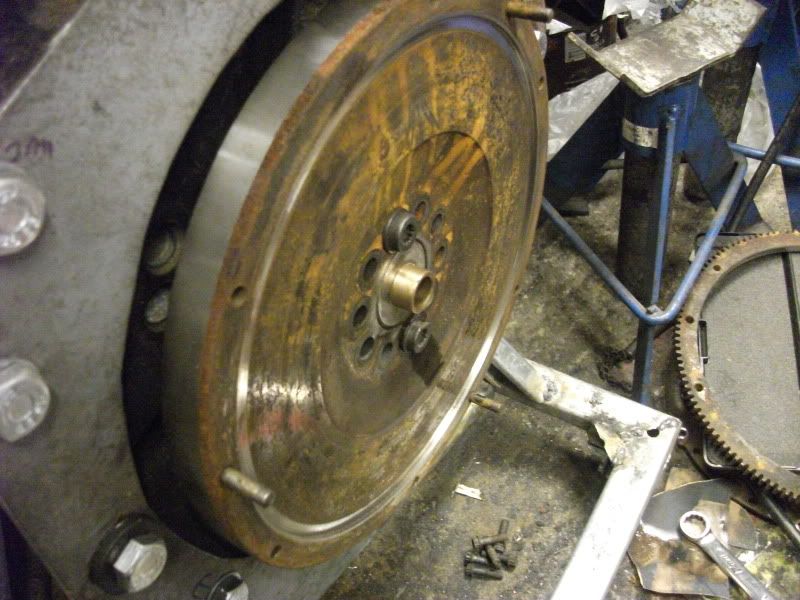
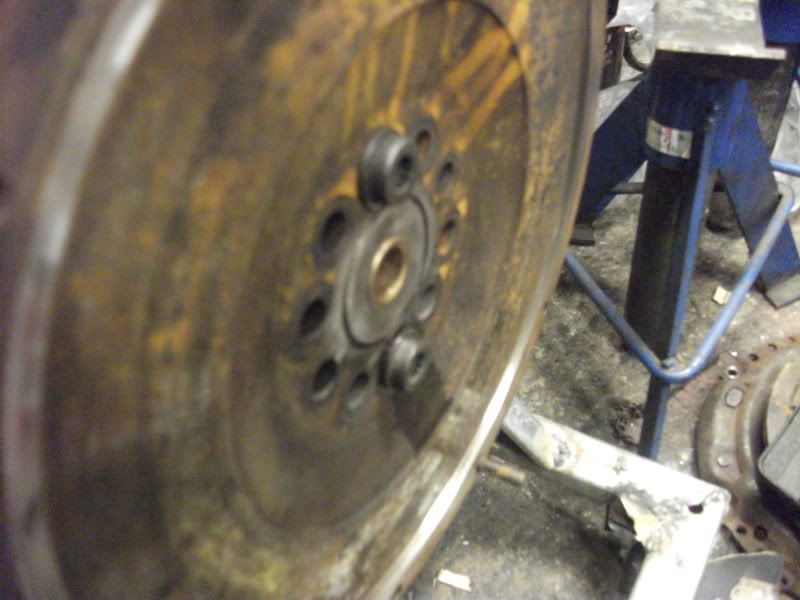
Flywheel back on the engine. I have had the innter surface "extended" to fit the friction disc (the starter ring came off mid machining and apparently nearly killed the engineer oops) and ive also had the lip removed from the outer edge so that the started ring can be accessed from the engine side of the flywheel. The reason for this is that I have no idea how much room there will be for a starter so il keeping my options pen on this one.
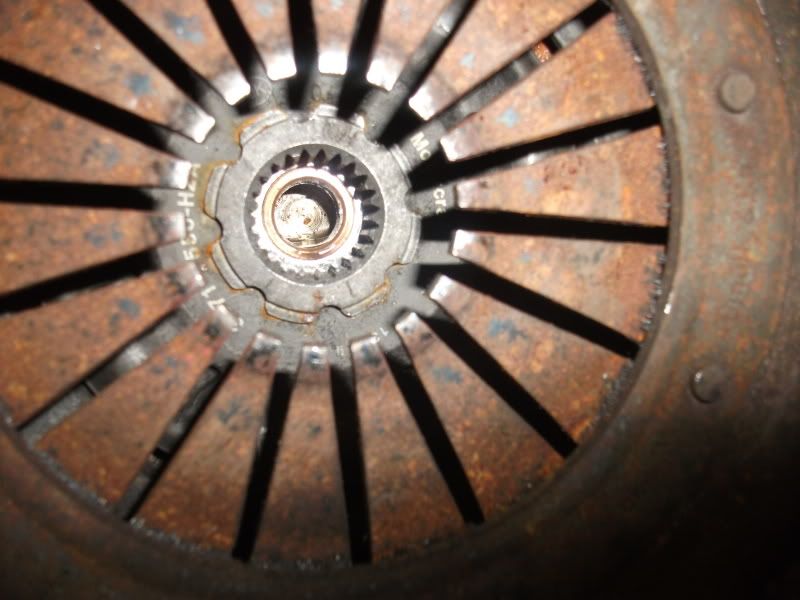
I had to "trim" the tail of the crank to give clearence for the splined reciever on the friction disc so it is now flush with the surface of the flywheel.
You can see the longer Oilite bush in the rear of the crank.
I then trimmed it to this:
DSCF0587.jpg

then once it was all on the back of the engine I built up the clutch assembly
DSCF0590.jpg

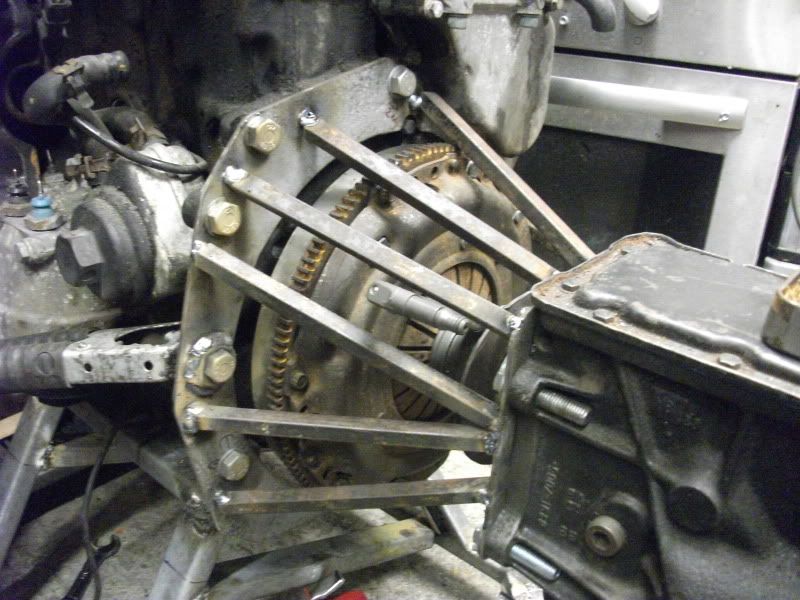
next job will be to get the release bearing support welded up, then pre assemble everything and place the release bearing, then start making up the bell housing!
GULP!
 
OP
P

polo2k

Well-known member
Joined
Mar 19, 2010
Messages
94
Location
UK (south)
by the way I fitted the "cut" end of the bush into the crank first in case I had missed any burs as I did not want to increase wear
 
To avoid these ads, REGISTER NOW!
Top Bottom