To avoid these ads, REGISTER NOW!

Receptacles/runs in shop

Bunchgrass

Well-known member
Joined
Dec 8, 2013
Messages
236
Location
North Idaho
I'm finishing up my shop --- and it's a multipurpose shop - woodwork to welding and vehicle/ag equip servicing. So what are your suggestions regarding the following:

1) 120V outlet placement ( every X ft; 4ft off ground?) etc

2) worth running any ceiling drop cords?

3) was going to put large(ish) compressor outside shop (covered) and pipe in. Trouble? Condensate freeze?

4) Service panel at one end of shop and need to have welder at other end (60 ft). Better to have long welding leads and short run to panel or long run to welder and shorter leads? Or no diff.

5) If I do run 60 ft to welder (240v) do I need to bump up wire size due to length of run?
 
To avoid these ads, REGISTER NOW!

ddawg16

Well-known member
Joined
Jul 11, 2008
Messages
21,005
Location
S. California
Bunch....this is a good example of why it helps to have your location in your profile....

1. Outlets....I would put them at about 50" + off the ground....you want to be able to lean a 4x8 sheet of plywood against the wall and not cover up the outlet. I have 240 going to my garage....so each alternating outlet is on opposing legs. I would go at about 6-8' spacing...I also used quad boxes...one duplex with the ground up...the other with the ground down.

2. Ceiling drops....YES. I have two outlets centered...but I use a short drop cord

3. This is why it's good to know where you are....I wouldn't worry too much about the freezing....if you have enough water to break things....you have bigger issues.

4. Run the wire....60' is not that far....if your more than 75% of load....then yes, upsize. But while your at it....put in two welder plugs...one at the panel and one at the other end.
 

jkwilson

Well-known member
Joined
Dec 5, 2012
Messages
758
Location
SW Indiana
I put outlets right where I knew I needed them and then filled in spaces. I have a dedicated outlet for my grinder, drill press, radio, cordless tool battery charger etc.

I put one at each end of my workbench under the front so I can use things without the cord dragging across the work and also have 4 across the back. I also put one at each door for using while I'm outside.

I put in two outlets that are on the switched side of the main lighting circuit for my bench lights and trouble lights and stand lights. That way I can flip the switch when I go inside to eat, and then when I come back out all the lights come on when I walk in. Easier than walking around and turning everything off in the middle of a job.

When I find myself stretching a cord or using an extension cord often, I add a new outlet right where it is needed. It's my shop, so I wired it for the way I use it.
 

DeadSock

Well-known member
Joined
Sep 17, 2006
Messages
161
Location
Sterling, AK
If you're going to have some electronics (computer, tv/monitor, etc), then plan for a dedicated breaker for that area alone.the height and spacing comments above I also agree with.
 

Charles (in GA)

Well-known member
Joined
Jan 11, 2006
Messages
12,489
Location
50 mi south of Atlanta
Welders are a very intermittent load that generally won't heat up even an undersized wire. As noted, 60 ft is not that great a distance, so I would not be concerned.

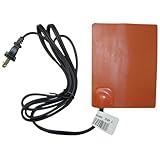
In your location, I would have serious concerns about the compressor exposed to the cold. It might be OK if you used synthetic oil, or had a thermostat controlled heat pad on the bottom or side of the crankcase, but otherwise, I'd want it in a warm shop.

Charles

THIS

319GQriRD1L._AA160_.jpg


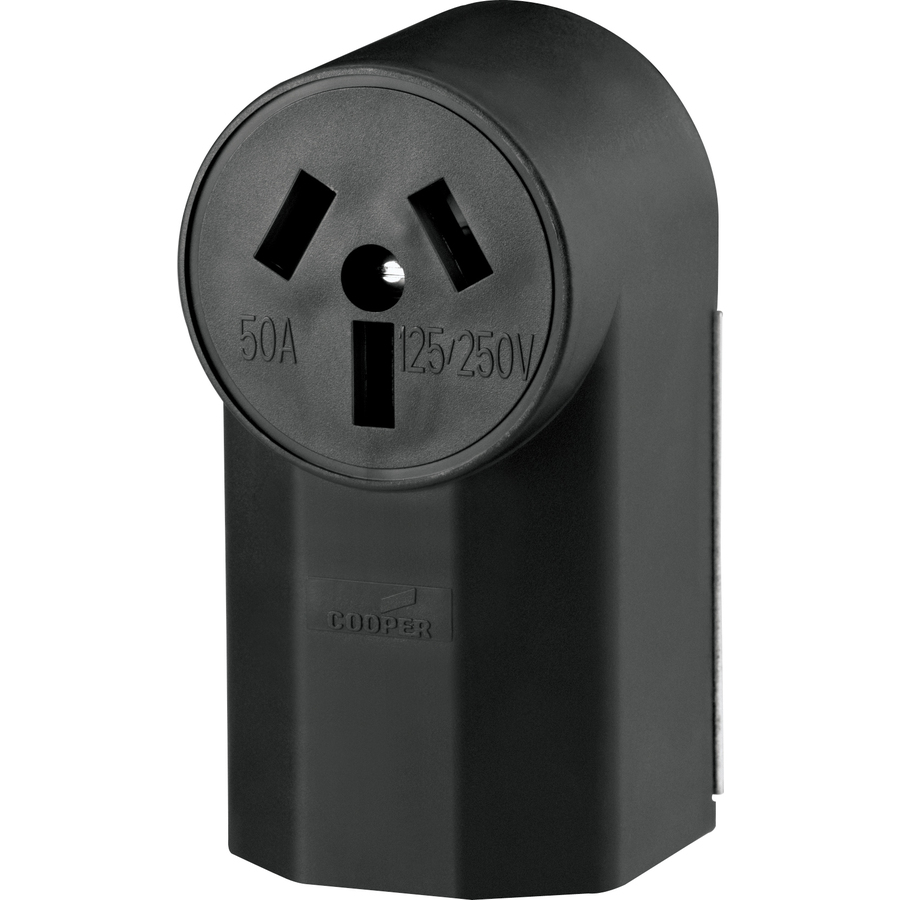
Coupled with THIS

41mNZZDyWbL._AA160_.jpg
 
Last edited:

Steevo

Well-known member
Joined
Aug 18, 2009
Messages
8,738
Location
43.49600, -112.04300
I went with 20A receptacles every 4' (50" off floor), and no more than five on a circuit.
Overkill? Maybe.
Peace of mind? Definitely!

I also have 4ea 30A 240v and 2ea 50A 230V receptacles/circuits for welders, shop machines, etc.
 

2ManyProjects

Well-known member
Joined
Jul 18, 2013
Messages
757
I'm finishing up my shop --- and it's a multipurpose shop - woodwork to welding and vehicle/ag equip servicing. So what are your suggestions regarding the following:

1) 120V outlet placement ( every X ft; 4ft off ground?) etc

My usual "recipe" for general-purpose 120V outlets is: Put one double-gang box every 6-8 feet around the entire perimeter of the space, with each of the two duplexes in that box fed from a different breaker than the other one. Keep the bottom of each box at least 49-50 inches above the floor. In small shops, two 20A circuits will normally handle the whole thing; in larger shops, split it up further as you see fit. Note that at least in anything which might be considered a "residential garage", NEC now requires that ALL 120V outlets be GFCI protected.

2) worth running any ceiling drop cords?

Near-certainly yes. And use some nice cord reels to keep things neat and tidy. "How many" depends on the size of the shop; in an automotive context, you want one adjacent to each service bay; so for a small two-bay garage (or a typical residential "two car garage", one (centrally placed) will do the trick. The same approach can be very handy for compressed air, as well.

3) was going to put large(ish) compressor outside shop (covered) and pipe in. Trouble? Condensate freeze?

Depends on your climate. In "North Idaho", I'd be very afraid of this, at least without it being fully enclosed/insulated and with SOME sort of heat source inside. With truly adequate insulation, the heat source probably doesn't need to be all that ambitious; but by the same token, in the Summer time the compressor will be MAKING enough heat that disspating it will be the main concern.

4) Service panel at one end of shop and need to have welder at other end (60 ft). Better to have long welding leads and short run to panel or long run to welder and shorter leads? Or no diff.

Better to put the outlet where the welder will be used. At least most of the time, the welder will step the output current UP, vis-a-vis the power line; so for equal lengths, voltage drop will be more of a concern in the leads than the supply wiring.

5) If I do run 60 ft to welder (240v) do I need to bump up wire size due to length of run?

As compared to what?

As others have stated, welders are something of a special case, and can actually get by with what would normally be considered "undersized" wiring. Whether it is a good idea to count on this is very much an open question; and I come down in the camp that says it is risky at best. So let's pretend this is a "normal" load...

Presuming a 50-Amp breaker, either AWG 6 or AWG 8 would "normally" be required, depending on such things as the temperature rating of wire's insulation, and whether or not it is "bundled" with other wires and/or buried in wall/ceiling insulation. In either case, that is more than sufficient to ensure that voltage drop would NOT be a concern over a 60-foot run.

 
To avoid these ads, REGISTER NOW!
OP
B

Bunchgrass

Well-known member
Joined
Dec 8, 2013
Messages
236
Location
North Idaho
Thanks for the feedback ......

I do have another "practical" question for you all ----- what's the "best" way to supply power to my cabinet tablesaw? It sits away from any walls to allow for large pieces to run through it so what are your thoughts on receptacle placement? On the floor leaves you with that dang trip wire/bump hazard. I tried a ceiling drop cord in the past but it can easily get in the way of while using the saw. Is this just pick the lesser of 2 evils?
 

R.Anderson

Well-known member
Joined
May 26, 2012
Messages
906
Location
Wisconsin
Thanks for the feedback ......

I do have another "practical" question for you all ----- what's the "best" way to supply power to my cabinet tablesaw? It sits away from any walls to allow for large pieces to run through it so what are your thoughts on receptacle placement? On the floor leaves you with that dang trip wire/bump hazard. I tried a ceiling drop cord in the past but it can easily get in the way of while using the saw. Is this just pick the lesser of 2 evils?

A little late for the best way, run conduit in the floor to where the saw will be.

There are these http://www.discountramps.com/floor-cable-protector.htm place it where you least walk.
 
Last edited:

2ManyProjects

Well-known member
Joined
Jul 18, 2013
Messages
757
Thanks for the feedback ......

I do have another "practical" question for you all ----- what's the "best" way to supply power to my cabinet tablesaw? It sits away from any walls to allow for large pieces to run through it so what are your thoughts on receptacle placement? On the floor leaves you with that dang trip wire/bump hazard. I tried a ceiling drop cord in the past but it can easily get in the way of while using the saw. Is this just pick the lesser of 2 evils?

Ideally, you would run the wire under the floor, and come up in some otherwise-unoccupied space under (or maybe JUST beside) the "footprint" of the saw's cabinet, using something like this:

http://www.lowes.com/pd_246881-1571-3884-CC6_4294722473__?productId=3235978
785007857153.jpg


or this:

http://www.lowes.com/pd_71240-334-112-L_?productId=1098671
032664196409.jpg


I have a similar setup for an island-mounted range in my shore house.

However, I suspect that your shop is built on a slab, and that slab is already poured. And that makes things MUCH more difficult.

Perhaps you could partially "trench" the slab to embed the wire? Not sure how this would stack up vis-a-vis code; but as long as the wire were somehow protected against the corrosive properties of the concrete (or maybe epoxy would be better) that you'd use to fill in that trench, I'd not lose sleep over it.


Thumper68

Well-known member
Joined
May 16, 2013
Messages
5,134
Location
Duluth MN
For the saw I would have run it under the slab in conduit, but I would guess that this is not an option at this point. In one of my old shops 26x30 I made a cut out for the box where the saw was going and then drove a conduit from out side the slab from the area of the panel to the location, came up the outside wall and in to the panel, honestly was a pain in the *** to do but better than having the cord running across the floor.

In the newest shop I have several runs under the floor for elec. table saw, jointer, vice post and where the jib crane will go once I get around to building it. I also ran dust collection under the floor for the table saw, router table and jointer, I forgot to make a run for the bandsaw.

My friends thought I was nuts making all those runs under the floor but now when they are using the vice and need a grinder or corded drill and can plug in right there and not have to run a cord they say I am brilliant.

I just wish I had thought a bit more and run some air lines under the floor as well.
 
OP
B

Bunchgrass

Well-known member
Joined
Dec 8, 2013
Messages
236
Location
North Idaho
Oh come on you guys!! I'd have to make a commitment to where my tablesaw would be located if I put a dedicated line in the concrete -----

AND "paper or plastic?" is too much for me some times :eyecrazy:
 

R.Anderson

Well-known member
Joined
May 26, 2012
Messages
906
Location
Wisconsin
Oh come on you guys!! I'd have to make a commitment to where my tablesaw would be located if I put a dedicated line in the concrete -----

AND "paper or plastic?" is too much for me some times :eyecrazy:

:dunno: You asked whats the best way, and it sounds like you thought of every thing else, so other than cord protector/ramp :dunno: more out there for an idea is put in a 2"-3" sub floor gridded with removable panels to run your cords through.
 

Norcal

Well-known member
Joined
Mar 16, 2008
Messages
13,767
Floorboxes are the answer.


BTW, the color was supposed to be brick red, came out as a salmon color.
 
To avoid these ads, REGISTER NOW!
Top Bottom