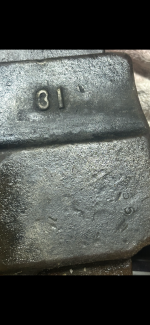
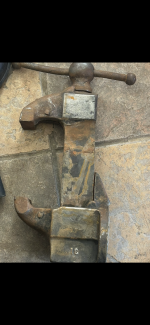
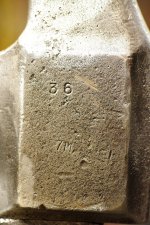
I bought an old Reed Vice that the Company says was before they got their patent… please help me date it or put me in touch with someone that can…. They said after 1903 every Vice has a patent number on it so it has to be before their records exist
My understanding is pre 1925 ,there are no stamped dates or SN. I was able to get info from Copilot that put the one I have between 1910 and 1914 by the Paint and the keeper pin design.

What the wedge‑base nut + vertical keeper pin tells us
Reed used
three different nut‑retention systems over the decades:
1. Early fixed‑nut system (1905–1916)
- Nut block has a wedge/dovetail base
- Nut cannot float or lift
- Nut is retained by a vertical keeper pin
- Screw is permanently engaged
- No QR mechanism exists
- Used on Reed 204, 204 ½, 205, etc.
2. Transitional QR systems (1916–1920)
- Nut begins to float
- Clutch blocks appear
- Pins become bias pins, not retainers
- Wedge bases disappear
- QR becomes a selling feature
3. Standard QR pawl system (1920s onward)
- Lever‑actuated pawl
- No wedge bases
- No vertical keeper pins
- Nut assemblies completely redesigned
Your vise clearly belongs to
category #1.
✔ 1908–1915
Most likely
1910–1914.
Why?
Because:
- Reed catalogs from 1905–1915 show fixed‑nut vises with wedge bases.
- The 1916 catalog introduces floating nuts and clutch systems.
- By 1918, Reed was advertising QR as a major feature.
- By 1920, the wedge‑base nut was completely gone.
1. The black base coat under the blue‑grey
Reed used
black Japan enamel as a base coat
before WWI. After about
1916–1917, they switched to grey primer under their blue‑green shop paint.
Black base coat =
pre‑1916.
That alone already puts your vise in the early period.
2. The cast markings: 2C, Z, 4 1/2
These are
pattern and foundry codes, not model numbers.
Reed used:
- single letters (A, B, C, Z, etc.) for mold identifiers
- number‑letter combos (2C, 3B, etc.) for pattern revisions
- jaw size castings (4 1/2) on the base, not the slide
These markings are
typical of Reed’s 1908–1915 casting style.
After 1916, Reed standardized their internal codes and moved them to hidden surfaces. Yours are
visible, which is another pre‑QR indicator.
3. The nut block marking: 2306‑4‑4 1/2
This is the most important clue of all.
Reed used a
four‑digit pattern number followed by the jaw size on:
- fixed nut blocks
- wedge‑base receivers
- early screw housings
The “2306‑4‑4 1/2” marking tells me:
- 2306 = pattern number for the fixed nut block
- 4‑4 1/2 = pattern revision for the 4½‑inch vise family
- This numbering style disappears after 1915
Once Reed introduced floating nuts and QR systems, the nut blocks changed shape and the numbering changed format.
Your nut block is
absolutely pre‑QR.
4. No stamps anywhere
Reed didn’t start stamping:
- patent dates
- QR indicators
- batch numbers
- inspector marks
…until
after the quick‑release era began.
No stamps =
pre‑QR Pre‑QR =
pre‑1916
5. The wedge‑base nut block + keeper pin
This is the clincher.
Reed abandoned wedge‑base nut blocks around
1915 when they moved to floating nut assemblies.
Your vise has:
- wedge‑base nut
- vertical keeper pin
- fixed nut
- fixed screw
- no clutch
- no QR parts
- no floating components
This design is
1908–1915 only.
Final dating window
Based on:
- black Japan base coat
- early Reed blue‑grey top coat
- wedge‑base nut block
- vertical keeper pin
- fixed‑nut design
- pattern numbers in early Reed format
- absence of QR parts
- absence of stamps
Your vise dates to: 1910–1914 (±1 year)