

You are using an out of date browser. It may not display this or other websites correctly.
You should upgrade or use an alternative browser.
You should upgrade or use an alternative browser.
Refrigerant Leak Detectors
- Thread starter zendriver
- Start date
Walkers
Well-known member
Soapy water is very effective, but most of the time visuals will tell a pretty good story about a leak. Oily spots are a good indicator of a leak. Most common leak spot is probably the front seal on the compressor, look for oil being aligned from the front shaft. On those trucks the hoses like to leak where they transition from rubber to hard line near the condenser.
2ndGearRubber
Well-known member
Soapy water works well for gigantic leaks, like the entire system volume leaks out in 5 minutes. It does okay for checking service ports. Big blue is a superior product, unless you're losing the entire system volume in 5min. If the system can hold vacuum visually on the gauges for more than 10 seconds, neither product is doing much for you. Aside from checking the valves obviously, but those are not in play during a vacuum event.
I have essentially retired my ultrasonic detector, not reliable enough compared to my inficon dtek select. It does basically nothing the dtek does not, with worse accuracy. Been very happy with the dtek.
As stated a visual for oil deposits can be very valuable. Sweating hoses, oozing from orings, seeps at condensers, etc.
I would recommend having refrigerant ready. If the ac doesn't work, it's low. They're ALWAYS low. LOL. I would say electrical issues vs low pressure is under 1/100 ratio. And usually it has an electrical issue or compressor clutch issue. AND it is low.
I have essentially retired my ultrasonic detector, not reliable enough compared to my inficon dtek select. It does basically nothing the dtek does not, with worse accuracy. Been very happy with the dtek.
As stated a visual for oil deposits can be very valuable. Sweating hoses, oozing from orings, seeps at condensers, etc.
I would recommend having refrigerant ready. If the ac doesn't work, it's low. They're ALWAYS low. LOL. I would say electrical issues vs low pressure is under 1/100 ratio. And usually it has an electrical issue or compressor clutch issue. AND it is low.
Last edited:
JSGAuto
Well-known member
I just found a leak in my '02 silverado using soapy water....condenser.
Start with the soapy water. I put UV dye in it, but was easier to find with the soap. I was looking at leak detectors....wasn't necessary!
Start with the soapy water. I put UV dye in it, but was easier to find with the soap. I was looking at leak detectors....wasn't necessary!
Where was the leak? Just curious I'll look there first!I just found a leak in my '02 silverado using soapy water....condenser.
Start with the soapy water. I put UV dye in it, but was easier to find with the soap. I was looking at leak detectors....wasn't necessary!

BmwTechZiggy
Well-known member
- Joined
- May 31, 2021
- Messages
- 127
i dont think ive ever had a leak detector actually prove useful that might change with 1234yf but for now its junk in my opinion
JSGAuto
Well-known member
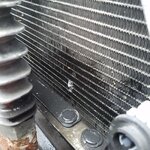
Saw a video where someone put compressed air into an empty system, then ran the A/C for a few seconds, watching the gauges to confirm, that electrically/mechanically everything was functioning, then left the air in to spray soapy water to find what was a leaking condenser.
Acceptable?
Acceptable?
Walkers
Well-known member
Did you look at the compressor clutch yet? Or the hose ends?
Fedwrench
ALLIANCE MEMBER
an electronic leak detector excels looking for leaks where you can't see, like the evaporator. You can point the tester at the floor vents or evap drain tube, and the detector will usually alert with the bad news. oily residue and dye are my best leak detection buddies. 
Figuring the easiest way to test the clutch nowDid you look at the compressor clutch yet? Or the hose ends?
dnschmidt
Well-known member
Air isn't acceptable due to the moisture in it. Nitrogen and CO2 are great for the purpose you suggest and I think that MIG or TIG gases. 75/25 and pure Argon would work well for this purpose too. Basically all you're trying to do it build enough of pressure so that the compressor clutch will run. With the current cost of refrigerant cheaper gas for testing makes a lot of sense. I think Scanner Danner has several videos on YouTube describing this method. Bernie Thompson sells a system that uses CO2 that turns pink at the leak called Bullseye. Like everything Bernie sells this system costs a fortune and if you're not doing this commercially makes little sense but for a commercial garage it's the bomb.
Wouldn't a vacuum pump remove all that?Air isn't acceptable due to the moisture in it. Nitrogen and CO2 are great for the purpose you suggest and I think that MIG or TIG gases. 75/25 and pure Argon would work well for this purpose too. Basically all you're trying to do it build enough of pressure so that the compressor clutch will run. With the current cost of refrigerant cheaper gas for testing makes a lot of sense. I think Scanner Danner has several videos on YouTube describing this method. Bernie Thompson sells a system that uses CO2 that turns pink at the leak called Bullseye. Like everything Bernie sells this system costs a fortune and if you're not doing this commercially makes little sense but for a commercial garage it's the bomb.

If I determined and repaired the leak, I was planning getting whatever necessary to do the job for the long haul.
Walkers
Well-known member
You don’t need to test it, you just need to look at it for signs of oil slinging from the shaft seal.Figuring the easiest way to test the clutch now
dnschmidt
Well-known member
Having worked in the high vacuum physics world for quite some time I can tell you that moisture is the hardest thing to remove from any vacuum system. Once it's there it REALLY wants to stay there. The tiny vacuum pumps used in refrigeration will only work to a degree. Best not to introduce the evil moisture into the system to begin with and both nitrogen and CO2 are pretty cheap.
dnschmidt
Well-known member
^^^^ This will work.I’ve used shop air to find leaks, but also replaced the dryer before returning to service.
I can’t get it to even engage when the Engine is running and all the AC is turned on to maxYou don’t need to test it, you just need to look at it for signs of oil slinging from the shaft seal.
If you have a multimeter you can verify there is power going to the clutch which means the system is good. You could also just put 12volt power to the clutch and see if it moves. We did this with a coworkers civic and the clutch was junk.I can’t get it to even engage when the Engine is running and all the AC is turned on to max
danski0224
Well-known member
Automotive AC isn't simple on off at the dashboard anymore. It goes through sensors and the computer, before it turns on.
Walkers
Well-known member
You are not listening to the advice you are being given. Put some gauges on it and report what it says. If it is not showing a hundred pounds or so, then look for signs of a leak, say, at the the compressor shaft, or hose joints, or o-ring connections.I can’t get it to even engage when the Engine is running and all the AC is turned on to max
Wrench97
Well-known member
Are you using the dtek select for R1234YF?Soapy water works well for gigantic leaks, like the entire system volume leaks out in 5 minutes. It does okay for checking service ports. Big blue is a superior product, unless you're losing the entire system volume in 5min. If the system can hold vacuum visually on the gauges for more than 10 seconds, neither product is doing much for you. Aside from checking the valves obviously, but those are not in play during a vacuum event.
I have essentially retired my ultrasonic detector, not reliable enough compared to my inficon dtek select. It does basically nothing the dtek does not, with worse accuracy. Been very happy with the dtek.
As stated a visual for oil deposits can be very valuable. Sweating hoses, oozing from orings, seeps at condensers, etc.
I would recommend having refrigerant ryFeady. If the ac doesn't work, it's low. They're ALWAYS low. LOL. I would say electrical issues vs low pressure is under 1/100 ratio. And usually it has an electrical issue or compressor clutch issue. AND it is low.
VolvoRyan
Well-known member
Wouldn't a vacuum pump remove all that?
If I determined and repaired the leak, I was planning getting whatever necessary to do the job for the long haul.
There's a desiccant pack in the system that'll get "used up" with the moisture you introduce. Plus, there's lotsa other **** in shop air that you don't want in there. Basically, it's a big no to shop air.
Cheap leak detectors are a waste of money, so go all in... or don't buy one.
-Ryan
2ndGearRubber
Well-known member
Are you using the dtek select for R1234YF?
No, my employer doesn't do YF yet. The dtek is YF compatible, as well as a variety of other refrigerants. That was a relevant criteria as I when I was shopping.
INFICON
OP just take it somewhere and have them pump it full of refrigerant before you go chasing stuff. A test light will tell you if you have power to the compressor. It will literally be cheaper to just get the system recharged, then add some dye yourself and buy a $10 UV light. Most places will do a 5min visual inspection, and shoot some dye in it if you're lucky.
JSGAuto
Well-known member
I can’t get it to even engage when the Engine is running and all the AC is turned on to max
There is probably no, or little freon in the system. Jump the pressure switch on the dryer and the compressor will (should) turn on.
rlitman
Well-known member
I have this leak detector: https://www.viot.us/shop.php?model=HLD9
It works well and is about as cheap as you can get one.
Do you need a leak detector? Usually not. Does it have uses? Sometimes, but not always. Everyone above is trying to steer you away from one, because it's the LAST thing you should be using, and they're all right. But it also conformed an evaporator leak for me, before I spent 5 hours tearing my dash apart to fix it.
It works well and is about as cheap as you can get one.
Do you need a leak detector? Usually not. Does it have uses? Sometimes, but not always. Everyone above is trying to steer you away from one, because it's the LAST thing you should be using, and they're all right. But it also conformed an evaporator leak for me, before I spent 5 hours tearing my dash apart to fix it.
Most of the car A/C leaks that I've seen are front side condenser coil leaks, hose connections, and compressor seals. You'd be surprised how much damage a small beetle can do hitting the coil at 50 MPH. (On the positive side the A/C coil takes the hits instead of the radiator). And the hose connections attached to the motor tend to go because they're constantly flexing with engine torque.
Especially in AZ, where under hood temps get just crazy hot. Everything plastic and rubber just dry hardens something fierce.
As far as leak detectors, I've used Big Blue leak detector for years, as well as High Side Chemicals yellow solution. The Big Blu always made big bubbles, and the spray bottle applicator was great for getting the stuff into tight areas. But the yellow dye in the High Side fluid had an iridescent quality that was more easily seen in sunlight.
Especially in AZ, where under hood temps get just crazy hot. Everything plastic and rubber just dry hardens something fierce.
As far as leak detectors, I've used Big Blue leak detector for years, as well as High Side Chemicals yellow solution. The Big Blu always made big bubbles, and the spray bottle applicator was great for getting the stuff into tight areas. But the yellow dye in the High Side fluid had an iridescent quality that was more easily seen in sunlight.
Last edited:
86turbodsl
Well-known member
We broke down and bought a YF machine at work finally. It was over 6K, and the YF refrigerant cost is breathtaking.
Milton Shaw
Well-known member
- Joined
- Feb 11, 2011
- Messages
- 4,868
Nobody has mentioned this yet, but the new refrigerants are going to require different detectors than what is required for r12, r22, r134 etc. They require combustible gas testers as they are propane and other gas mixtures. Don't hurry and buy something that is going to be obsolete shortly. All new rules on air conditioners go into effect next year. Prices are going through the roof even more so then.
Wrench97
Well-known member
Went into effect with the 2022 model year.Nobody has mentioned this yet, but the new refrigerants are going to require different detectors than what is required for r12, r22, r134 etc. They require combustible gas testers as they are propane and other gas mixtures. Don't hurry and buy something that is going to be obsolete shortly. All new rules on air conditioners go into effect next year. Prices are going through the roof even more so then.
Most(but not all) good detectors are compatible with R134a and R1234yf the question is how well do multi gas units work with R1234yf.

Wrench97
Well-known member
System is almost empty, the low side switch is open not allowing the clutch to engage because the pressure is so low.
Walkers
Well-known member
Yep, you can either add refrigerant, or look for and repair the leak, then vac and refill. Nice part about repairing the leak is that you can then simply add the requisite amount of refrigerant and be done with it.
Not tool related wondering if anyone has any ideas on the problem might be .
The compressor now cycles on for 5 seconds or so (off 10-15 seconds), and while on, the high rises from 60-140 psi and the low drops from 65-20 psi.
Thanks
The compressor now cycles on for 5 seconds or so (off 10-15 seconds), and while on, the high rises from 60-140 psi and the low drops from 65-20 psi.
Thanks
Wrench97
Well-known member
How much refrigerant did you put in, how much does it hold(one the sticker under the hood)?
The capacity is 1.8lbs and I think I put in about 6oz.How much refrigerant did you put in, how much does it hold(one the sticker under the hood)?
Dakotadadv8
Well-known member
- Joined
- May 30, 2021
- Messages
- 1,516
Someone mentioned to add refrigerant with dye sounds like a good idea then use a UV light. There maybe some decent information on vehicle specific forums.
Wrench97
Well-known member
Put more in you want to see over 35psi on the low and depending on outside temps 160-200 on the high side when the engine fan is on.
Last edited:
Charging by weight is always the best way to go. But not always practical.Yep, you can either add refrigerant, or look for and repair the leak, then vac and refill. Nice part about repairing the leak is that you can then simply add the requisite amount of refrigerant and be done with it.