To avoid these ads, REGISTER NOW!

Removing power outlet, is this safe?

Nessal

Well-known member
Joined
Oct 22, 2014
Messages
137
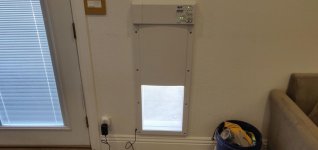
Hey everyone, to get to the point, I was trying to install an in-wall dog door and ran into this snag. After cutting the hole in the dry wall, I discovered an outlet that prevents the dog door from clearing. This outlet is for a power outlet that leads to the backyard.

I want to remove this outlet since we never use it. The outlet does not feed any other outlet. It appears to have one wire going in and is the end of circuit. I did a lot of research and this is what I'm gathering. I hope you guys can chime in here with what the safest practice is.

1. Remove the outlet, remove wires from outlet, and cap it off with wire nut. (big no no according to the code)

2. Remove the outlet, cap the wires with wire nuts, put it in a junction box. (still a big no no since the junction box is under the dry wall.

3. Unsecure the outlet, remove the staple on the wire, and then tuck the outlet out of the way. (another no no according to the code)

4. Remove the outlet, cut the wire flush. (is this ok?)

See pictures for what I'm dealing with. Any help is appreciated.
 

Attachments

  • IMG_20190620_110015.jpg
    IMG_20190620_110015.jpg
    81.7 KB · Views: 298
To avoid these ads, REGISTER NOW!

rlitman

Well-known member
Joined
Oct 18, 2010
Messages
24,580
Location
Long Island
code probably requires an outdoor outlet, can't you just locate it higher?
however, if you remove it, you need to disconnect the wire at the source.

Exactly. If you have another outdoor outlet, then this might be unnecessary.

Follow that wire up, and see if there's another outlet in that direction. Then you can disconnect the wire wherever it comes from.

Or just move it up. That does seem to be the easiest and most logical solution.
 

exranger06

Well-known member
Joined
Aug 9, 2015
Messages
1,686
Location
CT
Option 1: Figure out where the other end of the wire is. Disconnect it there AND pull it out of that box. THEN you can abandon the wire in place and leave it any which way in the wall.

Option 2: Move the outlet box a few inches up or a few inches over so it's not in the way of the dog-door. As others have said, the outlet may be required to be there by code.

Option 3: Install a junction box and stick the wire in that and cap off the wires inside. Install a blank cover on the box so it's ACCESSIBLE. DON'T bury it in the wall. Although if you're going to do that, you might as well just go with option #2 instead. You'll have some kind of removable cover on the wall either way. But with this option, you can have the j-box cover on the inside wall of the house instead of the outside.
 
OP
N

Nessal

Well-known member
Joined
Oct 22, 2014
Messages
137
I think the wiring coming down to it might be connected to another outlet and this outlet that I want to remove is the last in the series.

Didn't know that having an outdoor outlet was code. Good to know! I can relocate it higher but the other side is stucco and it really ***** cutting into it. I guess I will have to just man up and do it.

I'm planning to live and die in this house(hopefully not by electrical fire) but would temporarily tucking the outlet into the wall be ok for the short term? I plan to plug the outlet with those plastic child safe caps. I can access it within 2 minutes or less if required since the dog door is easily removable. I don't see any major issues since it's not acting any different than as if it was poking outside. And since I'm not planning to sell the house, there won't be a risk of anyone cutting into it not knowing that it is there.
 
OP
N

Nessal

Well-known member
Joined
Oct 22, 2014
Messages
137
Option 1: Figure out where the other end of the wire is. Disconnect it there AND pull it out of that box. THEN you can abandon the wire in place and leave it any which way in the wall.

Option 2: Move the outlet box a few inches up or a few inches over so it's not in the way of the dog-door. As others have said, the outlet may be required to be there by code.

Option 3: Install a junction box and stick the wire in that and cap off the wires inside. Install a blank cover on the box so it's ACCESSIBLE. DON'T bury it in the wall. Although if you're going to do that, you might as well just go with option #2 instead. You'll have some kind of removable cover on the wall either way. But with this option, you can have the j-box cover on the inside wall of the house instead of the outside.


So to be clear.

Option 1: Find the ends of the wire...which probably leads to another outlet and disconnect it there. Remove the wiring and outlet completely.

Option 2: Might have to seriously consider moving it upwards. I will have to cut a hole in the stucco.

Option 3: Essentially the same as option 2 but disconnecting all the wires, capping them off, putting them in a J box, cutting a hole in the stucco outside(or inside on the drywall), then blank it off.
 

rlitman

Well-known member
Joined
Oct 18, 2010
Messages
24,580
Location
Long Island
I think the wiring coming down to it might be connected to another outlet and this outlet that I want to remove is the last in the series...

That's how it appears, seeing that there's only one cable entering the box.

I'm not going to advocate burying the box, but if you do go down that path, then just disconnect the wires feeding it and cap them in that box. If you do that, don't cap the wires heading toward this box individually. Tie all three (including the ground) dead wires together under a single wire nut.

As for outdoor power, code, around here at least, requires a minimum of one exterior outlet on the property, as well as an outlet within a short distance of any air conditioning equipment (for ease of service). That service outlet could serve double duty.

Stucco is no fun to cut. Do you have an oscillating multi-tool. A carbide blade in one makes plunge cutting a rectangle in stucco relatively easy.
 

The Cobbler

Super Moderator
Staff member
Joined
Oct 24, 2013
Messages
25,821
Location
Niagara Region, Ontario, Canada
if you disconnect the outlet, you need to find where the feed comes from, it may be a separate circuit or it may be attached to another circuit somewhere. the wires for that plug have to be disconnected where ever they start from .

easiest way is to find the breaker for that plug & see if anything else is affected.
 

exranger06

Well-known member
Joined
Aug 9, 2015
Messages
1,686
Location
CT
So to be clear.

Option 1: Find the ends of the wire...which probably leads to another outlet and disconnect it there. Remove the wiring and outlet completely.

Correct, or if the wire is too difficult to remove completely, you can leave it in the wall AS LONG AS it's disconnected at both ends and pulled out of the boxes at both ends.


Option 2: Might have to seriously consider moving it upwards. I will have to cut a hole in the stucco.

Option 3: Essentially the same as option 2 but disconnecting all the wires, capping them off, putting them in a J box, cutting a hole in the stucco outside(or inside on the drywall), then blank it off.
Correct. Disconnecting the wires on the other end is optional (but a good idea), in this scenario. You'd just have to cap off each wire individually.
My comments in red above.
 
OP
N

Nessal

Well-known member
Joined
Oct 22, 2014
Messages
137
That's how it appears, seeing that there's only one cable entering the box.

I'm not going to advocate burying the box, but if you do go down that path, then just disconnect the wires feeding it and cap them in that box. If you do that, don't cap the wires heading toward this box individually. Tie all three (including the ground) dead wires together under a single wire nut.

As for outdoor power, code, around here at least, requires a minimum of one exterior outlet on the property, as well as an outlet within a short distance of any air conditioning equipment (for ease of service). That service outlet could serve double duty.

Stucco is no fun to cut. Do you have an oscillating multi-tool. A carbide blade in one makes plunge cutting a rectangle in stucco relatively easy.

Thanks for the advice. So to be clear, I would wire nut all of the wires (power, ground, etc) all together in one wire nut and stick it back into the box after.

I have a 4.5" grinder with a diamond disk that should work pretty well but did not consider a oscillating tool. I was told that it would be a very slow and tedious task with one. Sounds like what I heard may be wrong.
 
OP
N

Nessal

Well-known member
Joined
Oct 22, 2014
Messages
137
if you disconnect the outlet, you need to find where the feed comes from, it may be a separate circuit or it may be attached to another circuit somewhere. the wires for that plug have to be disconnected where ever they start from .

easiest way is to find the breaker for that plug & see if anything else is affected.


Thanks. I actually was planning to do a thorough test to see if this one outlet is powered directly by one breaker(highly doubtful). If it is, then I can just remove the breaker completely and be good.
 

rlitman

Well-known member
Joined
Oct 18, 2010
Messages
24,580
Location
Long Island
Thanks for the advice. So to be clear, I would wire nut all of the wires (power, ground, etc) all together in one wire nut and stick it back into the box after.

I have a 4.5" grinder with a diamond disk that should work pretty well but did not consider a oscillating tool. I was told that it would be a very slow and tedious task with one. Sounds like what I heard may be wrong.

Right. If you cap each wire individually, there's the chance that someone looking through the box will reconnect them. If you ground them all, that's a different story.

With a diamond disc, you can't finish the corners, or even cut the short legs to full depth. It could cut the oscillating tool's work in half though, if you go that route.
 
OP
N

Nessal

Well-known member
Joined
Oct 22, 2014
Messages
137
Ok guys. After much consideration, I'm going to do it by the book and relocate the outlet up the stud and cut the stucco for it. Thanks for all of the advice.
 
To avoid these ads, REGISTER NOW!

checkthisout

Well-known member
Joined
Sep 5, 2008
Messages
5,232
Grout removal blade on the Oscillating will blast right through stucco.

If you remove that outlet, you're gonna be pissed that you don't have an outlet on the outside where you can easily plug in tools to finish the trim around the dog door.
 

rlitman

Well-known member
Joined
Oct 18, 2010
Messages
24,580
Location
Long Island
Grout removal blade on the Oscillating will blast right through stucco...

Modern stucco, yes. If it's the inch thick metal mesh and aggregate embedded beast that my house is made from, not so much, though it would work great to connect the dots made by the grinding disc. For a one-step job, I much prefer a carbide blade to a diamond one. It's quite a bit more aggressive.
 

pbon

Well-known member
Joined
May 14, 2017
Messages
3,498
Does code allows hiding a box in a wall?

How about relocating the outlet next to the door, assuming there is enough cable?

If deleting it, can you find where the feed comes from and disconnect it there? If the feed is disconnected you can bury it in the wall since it is dead.
 

Git

Well-known member
Joined
May 18, 2008
Messages
6,894
Location
S Cal
another option

You can add a piece of romex with this splice kit and move the box to the stud bay to the left or right of the bay it is currently in (that way you could keep the same height)

https://www.lowes.com/pd/TE-Connectivity-20-Amp-Volt-White-2-Wire-Connector/50205339

attachment.php
 

Attachments

  • GR8II-149.jpg
    GR8II-149.jpg
    78.2 KB · Views: 594

checkthisout

Well-known member
Joined
Sep 5, 2008
Messages
5,232
Modern stucco, yes. If it's the inch thick metal mesh and aggregate embedded beast that my house is made from, not so much, though it would work great to connect the dots made by the grinding disc. For a one-step job, I much prefer a carbide blade to a diamond one. It's quite a bit more aggressive.

Yup. Different grinding bits for expensive tools, whacking holes in the side of the house, moving outlets...

All so a dog can bring something dead it found out in the yard without anyone knowing about it.
 

larry_g

Well-known member
Joined
Apr 28, 2007
Messages
16,872
Location
oregon
Have you considered moving it up the wall and turning it so that it faces into the house?

lg
no neat sig line
 
OP
N

Nessal

Well-known member
Joined
Oct 22, 2014
Messages
137
Modern stucco, yes. If it's the inch thick metal mesh and aggregate embedded beast that my house is made from, not so much, though it would work great to connect the dots made by the grinding disc. For a one-step job, I much prefer a carbide blade to a diamond one. It's quite a bit more aggressive.


It's the old stuff unfortunately. The house was built in the mid 70's. I plan to hit it with a grinder with a diamond blade and finish it off to the corners with the oscillating tool.
 
OP
N

Nessal

Well-known member
Joined
Oct 22, 2014
Messages
137
Have you considered moving it up the wall and turning it so that it faces into the house?

lg
no neat sig line


Since code requires one on the outside, I'll just do that so that I don't have any issues with the insurance company.
 

Radix2

Well-known member
Joined
May 28, 2014
Messages
1,853
Location
the thumb!, MI
I'm pretty sure in the jetsons future to come that every dog door will require electrical service... it's good you are already set up.
 
OP
N

Nessal

Well-known member
Joined
Oct 22, 2014
Messages
137
Success! 95% complete, I just need to seal everything up to be 100% water tight. Here is some preliminary pictures before it's all complete.

The outlet is relocated upwards and onto the other side to stay within code. It is also resealed with foam so that it is water tight.

Some lessons learned from this. Oscillating tools with carbide blades are ineffective against stucco unless you want to grind away for 50 hours and go through 20 blades. It was no match for inch thick stucco with wire mesh. The blades would wear out within minutes.

I busted out the 4" grinder with a diamond wheel and it cut through stucco FASTER than a hot knife on butter. In fact, it cut so fast that I had to really control the grinder from accidentally overcutting. I then finished it off with a diamond blade on the oscillating tool.

In order to reinforce the door, I had to reframe it so that the wood screws had something to secure to besides just draw wall. Measure twice and cut once was the motto and it came out perfect. Thanks everyone for the advice!
 

Attachments

  • IMG_20190622_163929.jpg
    IMG_20190622_163929.jpg
    85.9 KB · Views: 85
  • IMG_20190622_163956.jpg
    IMG_20190622_163956.jpg
    98.3 KB · Views: 88
Last edited:
To avoid these ads, REGISTER NOW!
Top Bottom