To avoid these ads, REGISTER NOW!

Repairing Butcher Block Work Table Cracks

Crow Horse

Well-known member
Joined
Dec 22, 2011
Messages
312
Location
Southern Tier, NY
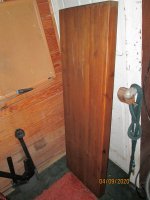
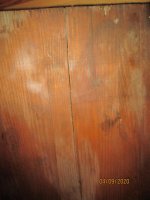
I just discovered this butcher block top (app. 18" x 60") and plan to use it as a work table. It does have some cracks that I would like to repair. Being that this isn't destined to be a piece of fine furniture, what would be the most inexpensive yet best method to repair it?
 

Attachments

  • IMG_3868.jpg
    IMG_3868.jpg
    88.8 KB · Views: 172
  • IMG_3869.jpg
    IMG_3869.jpg
    71.7 KB · Views: 193
To avoid these ads, REGISTER NOW!

Hammer1963

Well-known member
Joined
Jan 2, 2011
Messages
2,048
Location
Kentucky
I use two part clear epoxy. Tough as nails and you can choose various rates of cure time, For small areas, Devcon and Harbor Freight epoxy adhesive works very well
 

RTM

Well-known member
Joined
May 13, 2019
Messages
13,142
Location
SF Bay Area
Plan on cleaning the grooves well prior to filling, will improve your holding power
 

toolmiser

Well-known member
Joined
Sep 1, 2009
Messages
1,656
Location
La Crosse, WI
Is the crack stabil? Meaning is there movement between the two sides? If not I would go with epoxy also. You could make a nice cut right down the crack and glue and clamp it back together.
 

Legion Prime

Well-known member
Joined
Sep 5, 2018
Messages
740
Location
Leelenau County MI
Is the crack stabil? Meaning is there movement between the two sides? If not I would go with epoxy also. You could make a nice cut right down the crack and glue and clamp it back together.

Yeah, as long as it's a straight crack I'd say cutting it down and jointing the two surfaces and regluing is probably going to be your best bet if it's a deep crack. Maybe throw in a couple dowels. Also maybe take advantage of the reduced size to run them through a planer/jointer/surface sander to really get a nice surface to refinish.
 

tarbellb

Well-known member
Joined
Apr 17, 2011
Messages
5,754
Location
Oregon
Flood coat of 2 part epoxy will give you a bomber top, but it gets kinda expensive.

As others stated, you can fill just the void (clean first) and sand smooth with epoxy as well.

Ripping and regluing is a interesting solution.
 

rsanter

Well-known member
Joined
Dec 22, 2007
Messages
18,510
Location
visalia ca
How deep is that separation. It does not appear to be a crack as much as a separation of the wood joint.
1). Put it on a table saw and cut all the way through. Reglue that joint.
2) put it on a table saw and cut a slot the depth of the separation. If still stable then make a wood insert for that slot and glue or wood epoxy in place.
3) don't want to do the above? Then dig all the **** out and get it as clean as you can. Mix up some wood epoxy with some sawdust in it and shove it in.
4) still too much work? Fill with basic wood filler
 

Bacon!

Well-known member
Joined
Jul 16, 2016
Messages
402
For a work top, plain old slow set epoxy (1 hour or longer set time) Seal the bottom with tape so it doesn't leak out. If you are careful, you can just fill it to the height you want and will not need to sand it, if you have it supported so that it is completely level... which might be impossible since it's old wood, but I would shoot for that goal then if you find that there is a low side, you can put tape over that side to create a top barrier and fill from the high side, but you may need to mostly fill the low spotst before putting the tape on top so it doesn't get air trapped in it. Standard scotch tape, packing tape, etc, will easily peel off the epoxy after it has set.

Then again, sanding is no biggie either, maybe easier if you don't feel the need to refinish the wood after.
 
Last edited:

Bad Ronald

Active member
Joined
Sep 1, 2018
Messages
26
Location
Ohio
Speaking of butcher blocks, I have an older one that I would like to clean up and use for bread making.What should I use to clean and seal it with?
 

gte718p

Well-known member
Joined
Mar 12, 2009
Messages
3,972
Speaking of butcher blocks, I have an older one that I would like to clean up and use for bread making.What should I use to clean and seal it with?

Sand, clean with soap and water, dry, seal with food grade mineral oil.
 

Voi

Well-known member
Joined
Oct 10, 2010
Messages
5,142
Location
Western South Dakota
The thinnest epoxy I've used for filling cracks in wood is West Systems with their 207 hardener. If you get the resin and hardener warm before mixing it gets really thin.

I probably wouldn't buy that product specifically for this task, however. If you have regular general purpose epoxy there are ways to thin it and I would recommend looking into that.

The best tape I've found for closing off the cracks on the underside is that aluminum HVAC tape.

For the end grain checks I start with the foil tape wrapped around to the underside. Then I layer until about an inch is sticking above the face of the wood and fold it over on itself.
 
To avoid these ads, REGISTER NOW!

bpjr

Well-known member
Joined
Sep 2, 2013
Messages
554
Location
Florida east coast
Fill it with any epoxy glue you can find. I've been filling holes, gouges, cuts and deep scratches in my work benches for yrs with whatever I have on hand...for the last couple yrs it's been the HF brand. In the past I used WEST and T88 and really see no difference.
 

1cargarage

Well-known member
Joined
Feb 16, 2014
Messages
409
Location
San Diego
How deep is that separation. It does not appear to be a crack as much as a separation of the wood joint.
1). Put it on a table saw and cut all the way through. Reglue that joint.
2) put it on a table saw and cut a slot the depth of the separation. If still stable then make a wood insert for that slot and glue or wood epoxy in place.
3) don't want to do the above? Then dig all the **** out and get it as clean as you can. Mix up some wood epoxy with some sawdust in it and shove it in.
4) still too much work? Fill with basic wood filler

This ^^^

The only thing I'd add to this would be Bondo body filler.

If it's going to be a purely utilitarian work surface, decide which side is going to be the top and identify which cracks/voids need to be filled/repaired, perform the necessaries (outlined above).

The nice parts about cutting/grooving/routing out voids are:
1- Epoxy, glue, Bondo, putty, etc work best when they have a clean and fresh surface to bond to
2- The grooves you create will consequently create dams along the sides for the epoxy (should you decide to go that route) and minimize the eventual leveling you will have to do.

My HS woodshop was outfitted with six 8' x 8' maple butcher block work tables which had been in service for ~20+ years. Being in a HS shop, they took quite a constant beating. Once a semester my teacher would level out the drill holes, saw marks, dents, and anything else out with Bondo body filler. It's quick, cheap, sands/levels easily, durable enough for woodwork, and about as easy as it gets to apply and reapply. All the benches had a really cool scattering of varied size and shape pink features that couldn't even be felt if you closed your eyes.
 

Bacon!

Well-known member
Joined
Jul 16, 2016
Messages
402
One difference in the choice of epoxies is the extremely slow set type, usually marketed for making countertops, tends to set clearer and resist yellowing from UV more. They're also usually sold in much larger quantities than the few oz it looks like you need. Many of the others either start out amber or turn amber as they age, but I don't think that would look bad in this application.
 

Voi

Well-known member
Joined
Oct 10, 2010
Messages
5,142
Location
Western South Dakota
One difference in the choice of epoxies is the extremely slow set type, usually marketed for making countertops, tends to set clearer and resist yellowing from UV more. They're also usually sold in much larger quantities than the few oz it looks like you need. Many of the others either start out amber or turn amber as they age, but I don't think that would look bad in this application.

There are a few of those available in four ounce kits.

I've poured gallons of the stuff. It wouldn't be my first choice for this repair unless all of the cracks were fairly wide or if they were going to be ground out, which isn't a bad idea.
 

dffay

Well-known member
Joined
Jul 9, 2015
Messages
433
I had precisely the same issue from an abused restaurant prep table. I ripped it to two new edges and biscuit/glue joined them. Since the 3x5 foot table sat on four upright stainless steel (1.5 inch diameter) legs at the outside corners I didn’t want to risk it folding someday at the new joint so I added maple 2 inch “breadboards”——-perpendicular to the long sides. Those were biscuit/glued to the short sides. It’s massively solid. It’s my pub table height dining/laptop bourbon swilling nerve center aside the kitchen. 15 years now.
 

RTM

Well-known member
Joined
May 13, 2019
Messages
13,142
Location
SF Bay Area
If you are going to rip it, beware that there are some with threaded rod embedded. Look for circle plugs on the long edges, or check with a metal detector.
 
OP
C

Crow Horse

Well-known member
Joined
Dec 22, 2011
Messages
312
Location
Southern Tier, NY
Thanks for all the great tips!
Upon a closer inspection, it appears that this table top was made from 2x4's glues together. It's make a dandy work/assembly table but nothing heavy duty. I filled the cracks with epoxy and when it was fully cured I gave it a good sanding followed up with boiled linseed oil. For my purposes, it looks fine and I'm sure it'll serve me well. I secured the top to a fish tank stand in the mean time.....
 
To avoid these ads, REGISTER NOW!
Top Bottom