
You are using an out of date browser. It may not display this or other websites correctly.
You should upgrade or use an alternative browser.
You should upgrade or use an alternative browser.
Residential electrical switch box covers: why not Phillips?
- Thread starter vavet
- Start date
cmandp
Well-known member
400000679
I've clearly over analyzed this.
Most of the time the cover take up the variation in the dimension of the box to finished surface. So the cover acts like a big spring essentially and you cannot tighten the screw enough for there to be enough friction on the threads to keep them from rotating. Of course traditional 2 hole outlet covers only have one screw and the cover has enough clearance to be able to rotate a little bit. Touching the switch or plugging and unplugging things (vibrations) plus the material around the box growing and shrinking from seasonal humidity changes and the plastic creeping under the load will cause or allow the slow rotation. I also have a box the is right near a door in a 2x3 framed wall which moves quite a lot from slamming the door shut. That one moves the most.I swear upon all that is holy that I oriented all the screws vertically about six years ago when I replaced every last outlet and switch in my house. (They were all backstabbed by the lazy a-holes who wired this place, and several were arcing, overheating and generally trying to kill us in our sleep.)
Anyway, I have no idea what slow force might be acting on the screws, but several are... moving. Some are now up to 15 degrees off kilter. I suppose I'll have to go around with a screwdriver soon, and meddle with the will of unseen forces I do not understand...
I've clearly over analyzed this.
whateg01
Well-known member
What is the receptacle is mounted horizontally?Codyboy said: Switch plates get vertical while receptacles get horizontal.
this is non negotiable.
Great…another thing to keep me up at night.
I’m a vertical fan myself, but on the outlets, if they’re mounted vertically, they follow my preference for the slot vertical. I’ve got a few double outlets mounted horizontally; I’ll have to check how the screws are. Ditto the Christmas tree floor outlet. So parallel or opposed to the axis of the outlet slots?
Why not Torx?Why do residential switch plate cover plates use straight slot screws instead of Phillips? Is it to avoid overtorqueing?
tradition?
Meursault74
Well-known member

sparky 1971
Well-known member
I had a call back on a house I wired to flip either a fridge or freezer outlet to ground pin up so the right angle cord would plug in. That's the one and only time I've seen it, but it happens.Ground pin down.
It acts like a stiff leg to support the cord.
Also look at how a refrigerator cord is made.
Metal-Marc
Well-known member

dcg9381
Well-known member
As a home owner, I'm pretty sure that the electricians that orient their flat-head screws the same way on the switch plates do better work in general... Unproven theory, but I'm willing to wager.I’ve had customers congratulate me for the screw orientation horizontal. Aka as left to right
Electricians are special
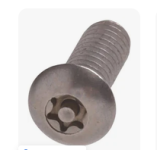
Now that NEC Article 406.12, requires tamper-resistant receptacles how long until they require security screws on face-plates?
TRWham
Well-known member
Where does JIS go?
TRWham
Well-known member
This how we see it as a GC. It's both evidence of attention to detail and a signal that a particular box has been buttoned up.As a home owner, I'm pretty sure that the electricians that orient their flat-head screws the same way on the switch plates do better work in general... Unproven theory, but I'm willing to wager.
Now that NEC Article 406.12, requires tamper-resistant receptacles how long until they require security screws on face-plates?
Metal-Marc
Well-known member
Where does JIS go?
