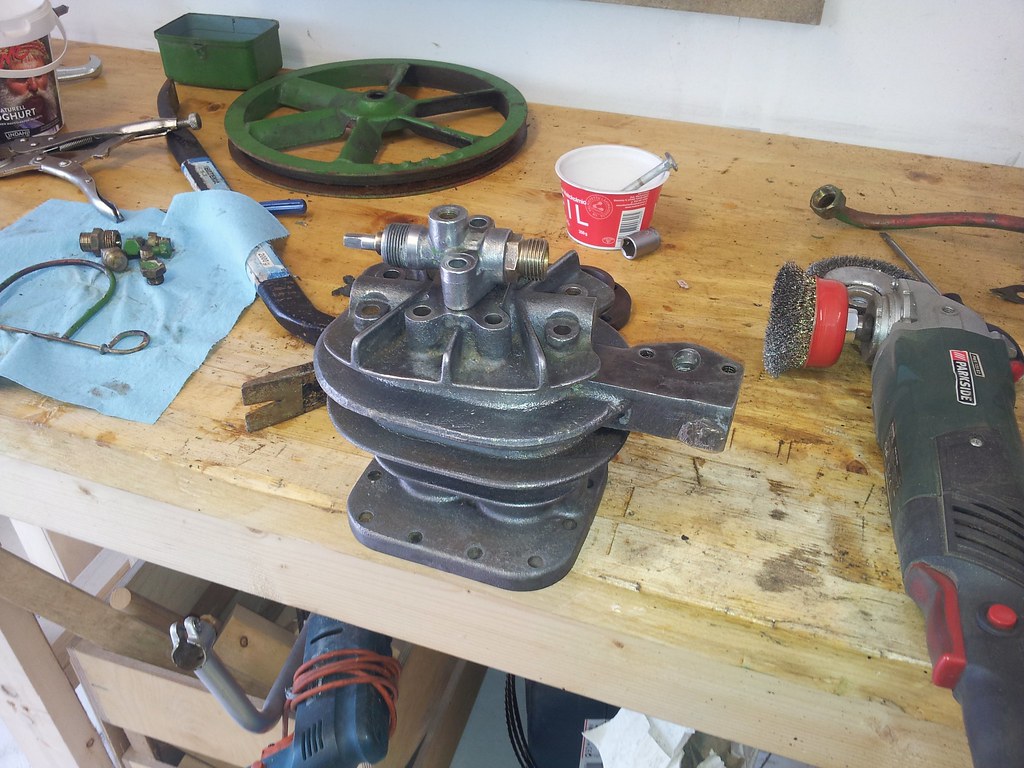
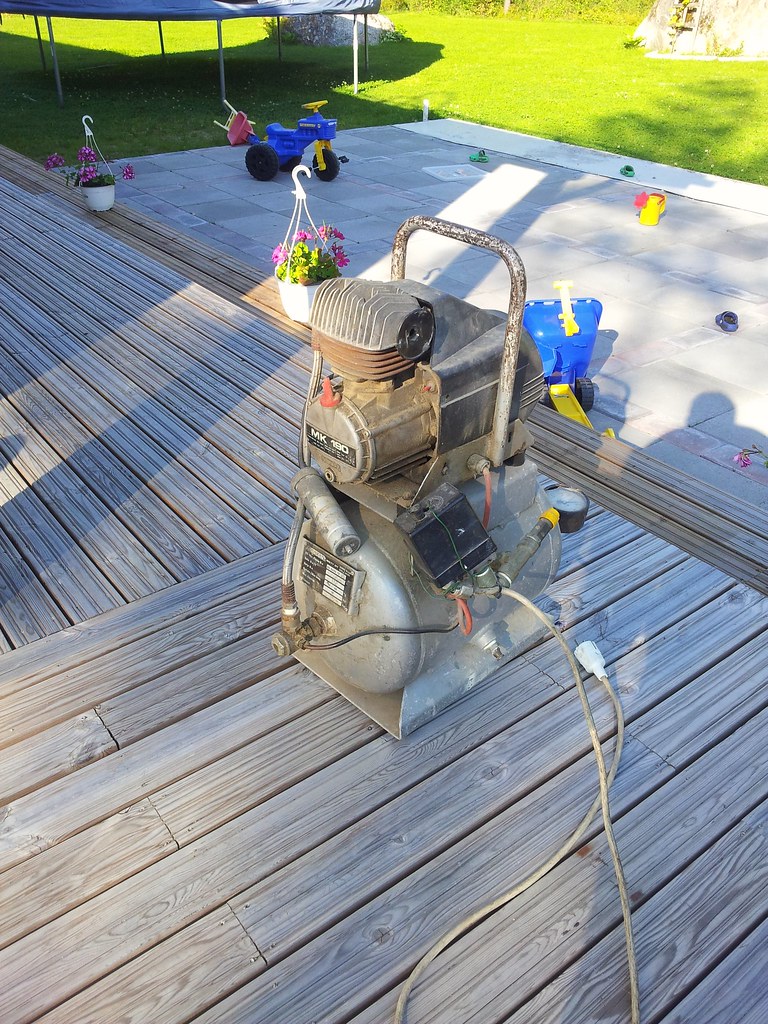
Hi, first post and all that, let's just dive straight into the relevant stuff. I found this old compressor for 30 euros, 2.2kw 6-pole motor (920rpms), I figured that was worth a lot more than 30 euros:
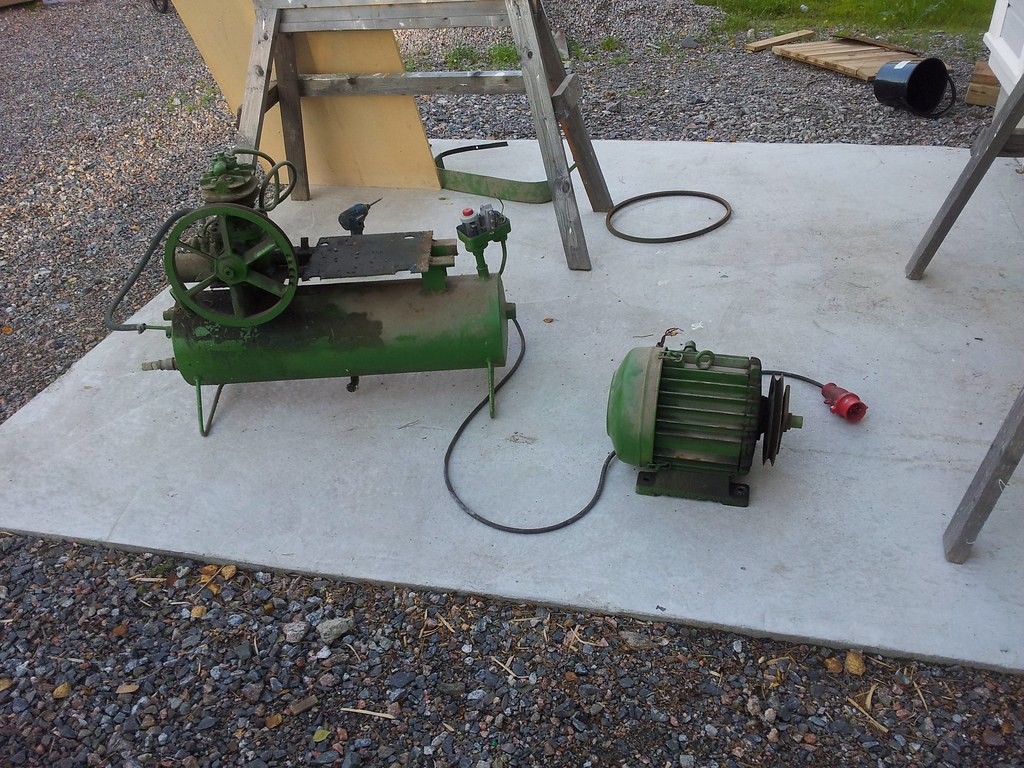
I was thinking of restoring it and hooking it up to my current compressor, setting up the pressure switches so that the old quiet one would initiate first, and if the pressure kept dropping even more, I have this newer and noisier 80s era compressor that would then kick in to aid this one. I'm always going for old junk and trying to rebuild it rather than buying new. Kinda allergic to new stuff, it just doesn't seem to be as good. Cordless tools excepted.
Whatever this thing is it came from the US originally, it has like 3 layers of paint over it, the original seems to be gray, then a red layer, then a green one.
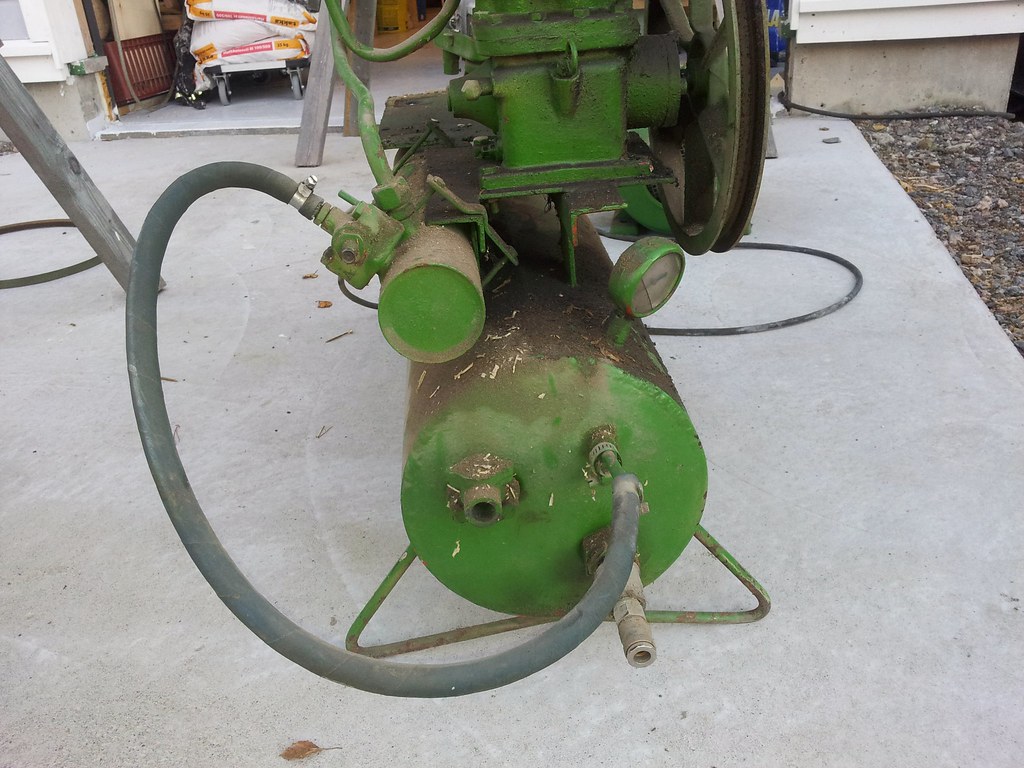
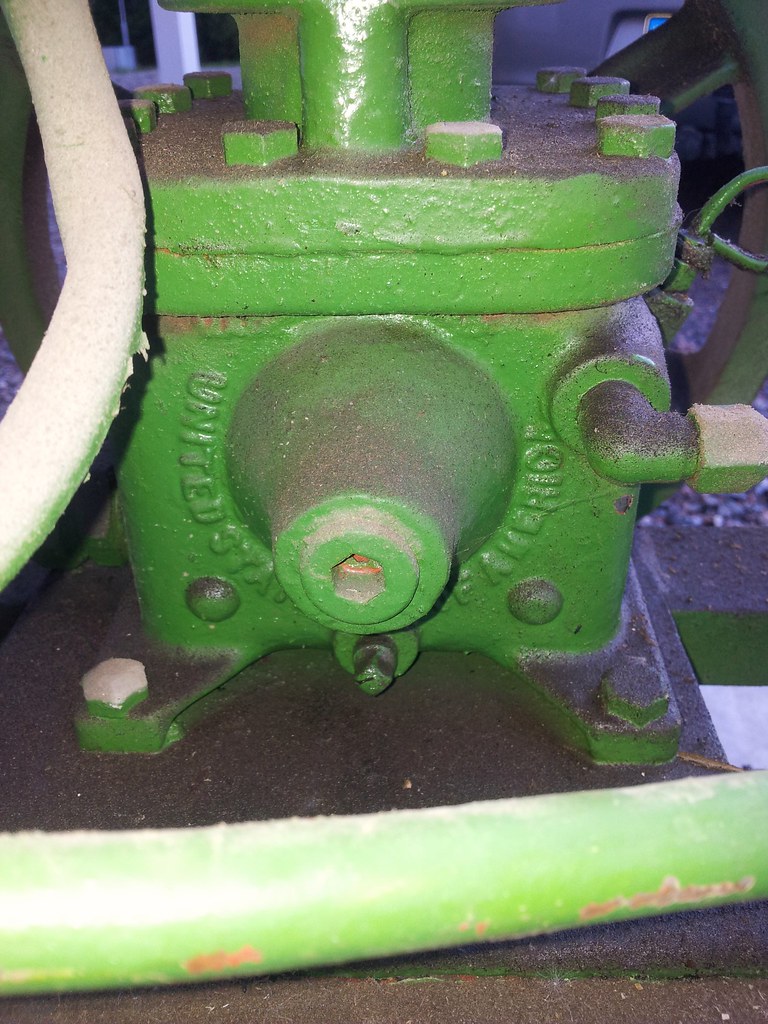
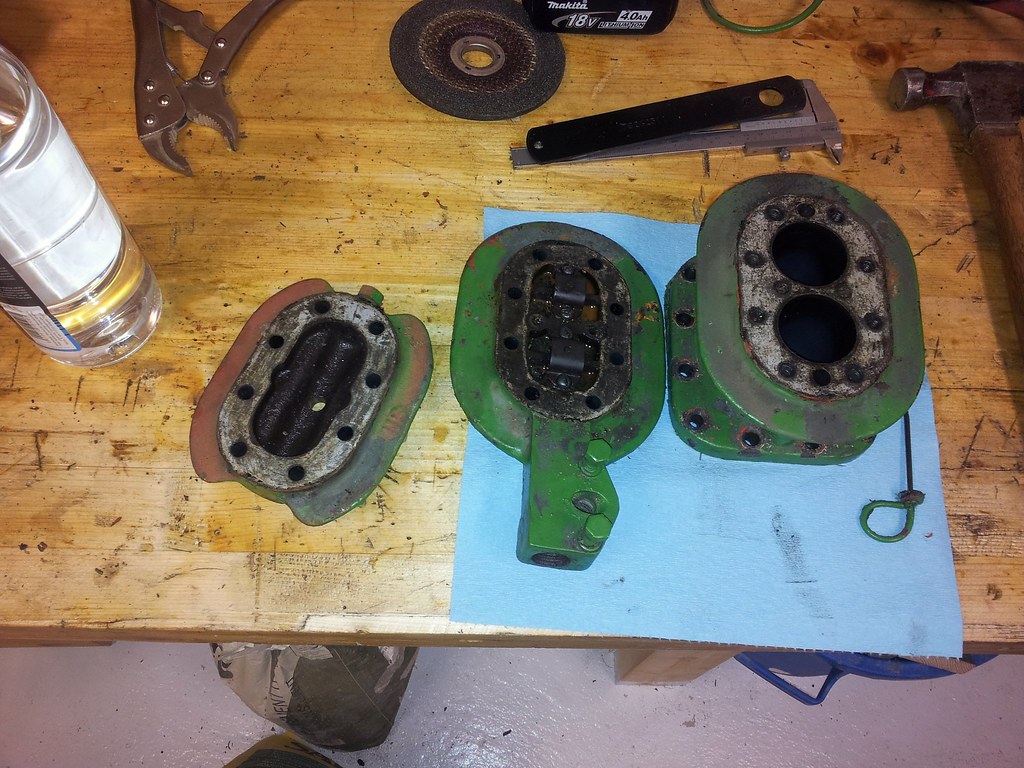
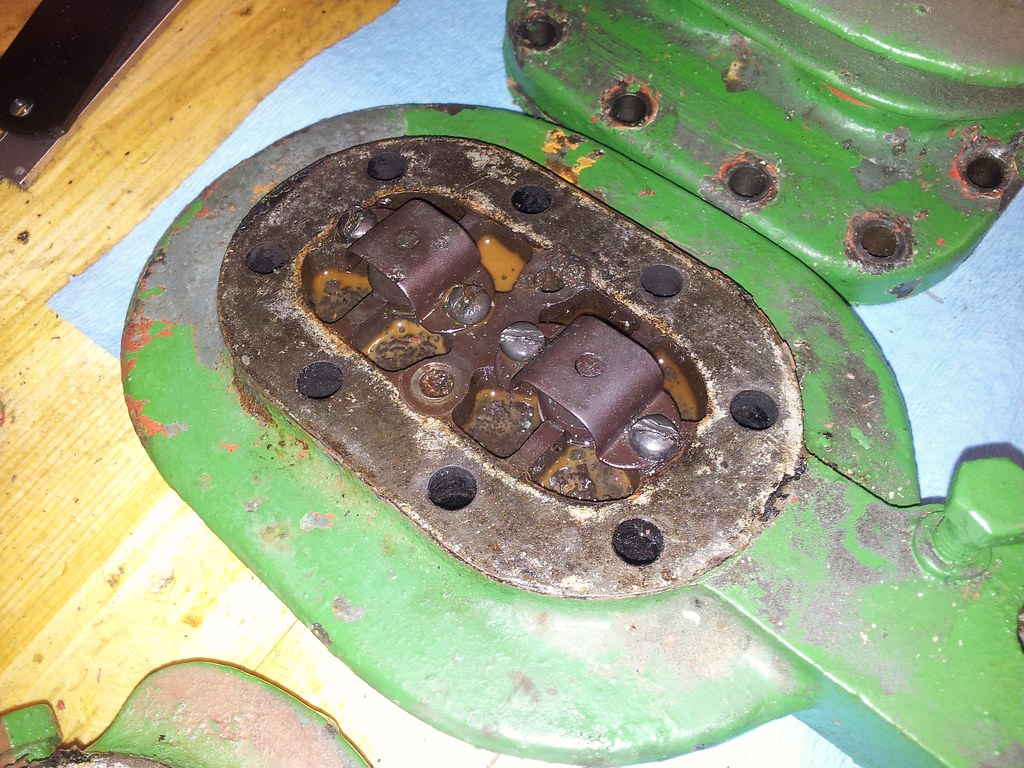
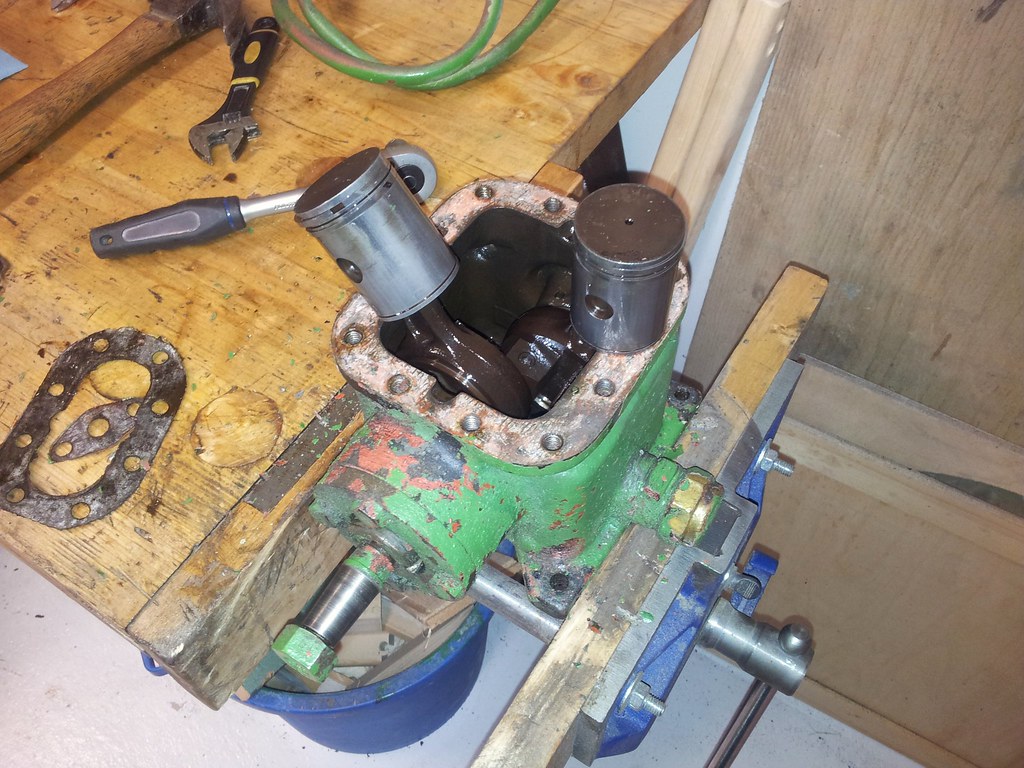
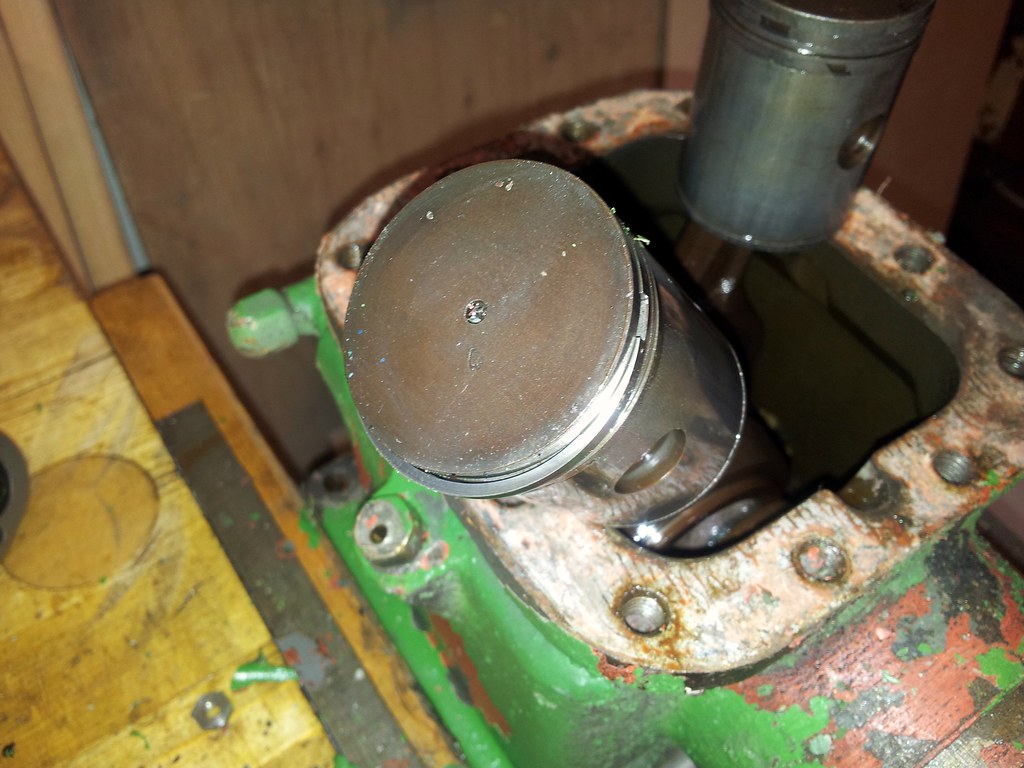
I've had apart the compressor block and it looks sound on the inside, get rid of all the paint and crud, new gaskets, oil and paint and it should be good to go for another 50 years or however old this one is:
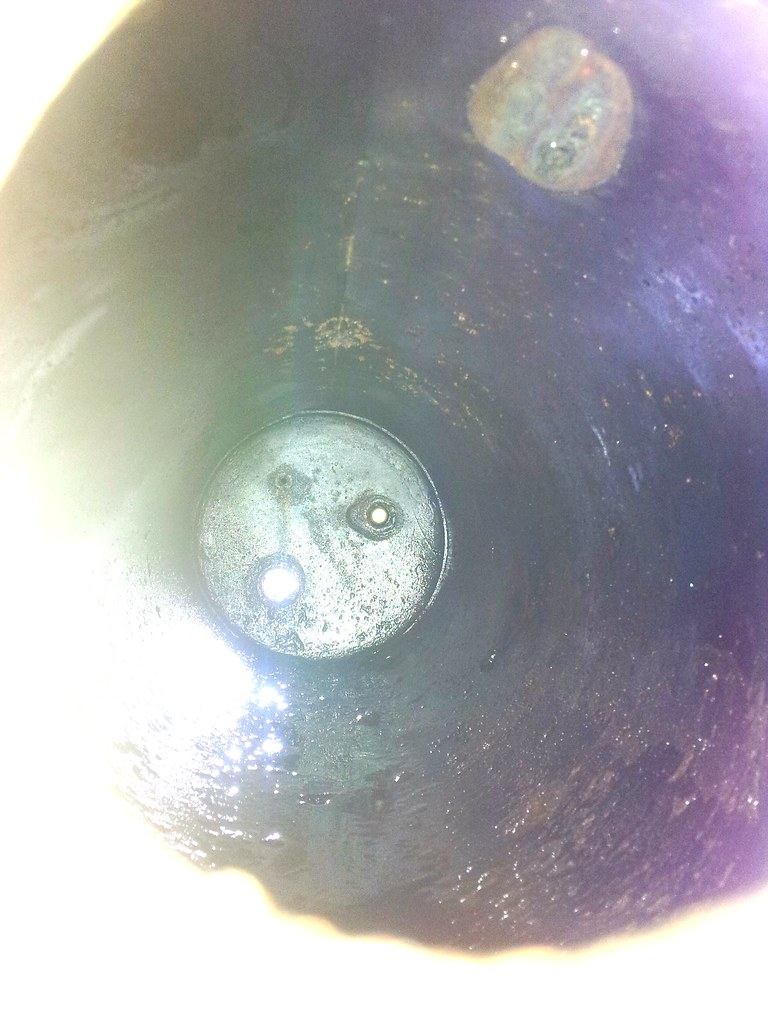
I can't see any plates anywhere on the tank indicating operating pressure, perhaps there might be some hidden under the paint, still haven't found it though. The tank was half full of water and oily sludge and I managed to get a shot of the inside, it's just a 40 liter tank, which comes to like 10 gallons, any opinions on this, does it look safe to you? I can't see any pitting, only some light rust, but it might be covered under all that oily residue in the tank, or all that residue kept it from rusting apart.
Who knows, perhaps I need a way to de-grease and clean the inside. Pressure washer perhaps.
I'm a bit paranoid right now about compressor tanks, guess I read too many horror stories about them bursting, also looked into the italian one (finnish made tank though, 10 bars operating pressure) I got and it seems to be stainless as it's all shiny inside, but there's also dark pitted spots. So now I am afraid of that one too.
I dunno what to think, I've considered pressure testing them with water but I don't know the operating pressure of the old tank and real hydrostatic testing is a bit more complex than what you can do at home, though better than nothing. I've managed to track a much newer (mfg 1999) vertical tank that's 96 liters or 25 gallons, rated at 26 bars, that feels like it could be a safe alternative to hook both compressor blocks to instead, since I won't need more than 8 bars or so.
I've been pretty lax with draining the tank to be honest, I drained it monthly perhaps but my dad maybe only did it in autumns... Investing in auto-draining valves would definitely be an idea.
I was thinking of restoring it and hooking it up to my current compressor, setting up the pressure switches so that the old quiet one would initiate first, and if the pressure kept dropping even more, I have this newer and noisier 80s era compressor that would then kick in to aid this one. I'm always going for old junk and trying to rebuild it rather than buying new. Kinda allergic to new stuff, it just doesn't seem to be as good. Cordless tools excepted.
Whatever this thing is it came from the US originally, it has like 3 layers of paint over it, the original seems to be gray, then a red layer, then a green one.
I've had apart the compressor block and it looks sound on the inside, get rid of all the paint and crud, new gaskets, oil and paint and it should be good to go for another 50 years or however old this one is:
I can't see any plates anywhere on the tank indicating operating pressure, perhaps there might be some hidden under the paint, still haven't found it though. The tank was half full of water and oily sludge and I managed to get a shot of the inside, it's just a 40 liter tank, which comes to like 10 gallons, any opinions on this, does it look safe to you? I can't see any pitting, only some light rust, but it might be covered under all that oily residue in the tank, or all that residue kept it from rusting apart.
Who knows, perhaps I need a way to de-grease and clean the inside. Pressure washer perhaps.
I'm a bit paranoid right now about compressor tanks, guess I read too many horror stories about them bursting, also looked into the italian one (finnish made tank though, 10 bars operating pressure) I got and it seems to be stainless as it's all shiny inside, but there's also dark pitted spots. So now I am afraid of that one too.
I dunno what to think, I've considered pressure testing them with water but I don't know the operating pressure of the old tank and real hydrostatic testing is a bit more complex than what you can do at home, though better than nothing. I've managed to track a much newer (mfg 1999) vertical tank that's 96 liters or 25 gallons, rated at 26 bars, that feels like it could be a safe alternative to hook both compressor blocks to instead, since I won't need more than 8 bars or so.
I've been pretty lax with draining the tank to be honest, I drained it monthly perhaps but my dad maybe only did it in autumns... Investing in auto-draining valves would definitely be an idea.