Does anyone have a snap on road box and can I see pictures of how things are organized and if you have any other road box leave pictures. I do a lot of side work and would like to be able to put all my most used tools in and be able to truck it back and forth from home


You are using an out of date browser. It may not display this or other websites correctly.
You should upgrade or use an alternative browser.
You should upgrade or use an alternative browser.
Road boxes
- Thread starter Dodge2500
- Start date
I HIGHLY recommend a Montezuma tool box. I've got one for my roadtrip, junkyarding, race day box, and keep it in my shop the rest of the time and work out of it frequently.
Sturdy, water proof, well-organized, and it swallows a LOT of tools.
-Brad
Sturdy, water proof, well-organized, and it swallows a LOT of tools.
-Brad
bobcatdan
Well-known member
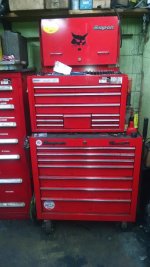
I have a SO kra62c. I don't have any useful drawer pictures since it is used as a normal shop top box. When I did have set road service, I had it organized as such. Top was sockets. First drawer was wrenches. Second drawer was hammers, pry bars, adjustable and angle wrench set. Third drawer was electrical tools. Small drawers held pilers, screwdrivers, punch/chisels sets, and other assorted tools that fit well. Middle deep drawer was and still is loctite, RTV, dielectric, ect.
Attachments
Aztecaloco707
Active member
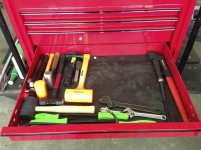
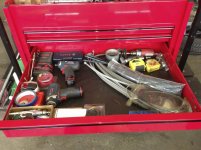
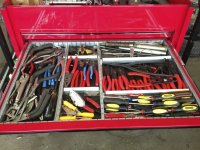
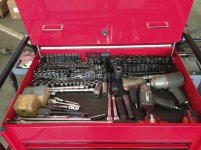
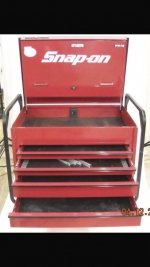
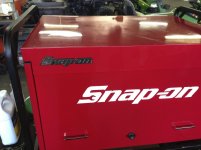
This is my snap on road chest I keep in my service truck at work. These pictures are from 2 years ago, I've since added quite a few more tools and organized each drawer better. The drawer layouts has stayed the same as its what I found works best for me. Sockets and ratchets top, wrenches top drawer, pliers screwdrivers 2nd drawer, electrical and misc. 3rd drawer, hammers punches and other persuasion tools in the bottom  . If I get a chance I'll snap updated pics of it tomorrow.
. If I get a chance I'll snap updated pics of it tomorrow.Attachments

crewchief888
Well-known member
should i? 

bcradio
Well-known member

John in OH
Well-known member
should i?
Sure!! Why not? Maybe not everyone is aware!
cliftonbros89
Well-known member
It's an older SO box. I'm not even sure of the model number. I posted it on the toolbox thread. I had a 30 inch Montezuma stadium style box. I had everything I have in this box, minus a few things. It was full. I had a lot of room left over with this. I just added more sockets to it yesterday. But I don't have pics yet.


owenst7
Well-known member
I HIGHLY recommend a Montezuma tool box. I've got one for my roadtrip, junkyarding, race day box, and keep it in my shop the rest of the time and work out of it frequently.
Sturdy, water proof, well-organized, and it swallows a LOT of tools.
-Brad
My local Home Depot is selling them for $325. I feel like that is stupid cheap considering how heavy they are.
owenst7
Well-known member
They're on the shelf. I talked my friend in to taking one home a few weeks ago.
rockinacummins
Well-known member
Another vote for montezuma. I have the 36"


My local Home Depot is selling them for $325. I feel like that is stupid cheap considering how heavy they are.
For that price, I'd consider buying a second one!
Seriously, it is the best tool box I have ever used or worked out of.
Dang... that's got me rethinking the tool kit for the running board of the '61 Chevy 4x4 long-bed step-side I'm about to start.
-Brad
bobcatdan
Well-known member
Question about a Montezuma, how do I neatly store angle wrenches, punches and chisels, Allen wrenches and sockets, torx sockets, feeler gauges, multimeters, test lights, jumper cables, big prybars and drifts and pliers without a being a big pile in the bottom?
cliftonbros89
Well-known member
Question about a Montezuma, how do I neatly store angle wrenches, punches and chisels, Allen wrenches and sockets, torx sockets, feeler gauges, multimeters, test lights, jumper cables, big prybars and drifts and pliers without a being a big pile in the bottom?
That was some what my problem. Reason why I switched.
John in OH
Well-known member
Question about a Montezuma, how do I neatly store angle wrenches, punches and chisels, Allen wrenches and sockets, torx sockets, feeler gauges, multimeters, test lights, jumper cables, big prybars and drifts and pliers without a being a big pile in the bottom?
Yeah. That's always been my question too. I've never used the Montezuma style box, but they sure don't look very practical or functional for anything other than sockets and combo wrenches.
owenst7
Well-known member
Yeah. That's always been my question too. I've never used the Montezuma style box, but they sure don't look very practical or functional for anything other than sockets and combo wrenches.
If I used one, that's what I'd use the bottom box it sat on for.
Most contractors and mobile service guys aren't going to carry much more than sockets and combos. I usually carried an sae set of Allen's, but they had a nice plastic organizer. I think that Montezuma is awesome for a service truck, but I didn't buy one because it really isn't the best way for inside my shop. I have a big stationary chest where my organizational system kind of requires drawers.
I wish I had a race trailer to put that in. Would be great to have it on a fold down shelf with jackstands and a floor jack underneath.
crewchief888
Well-known member
If I used one, that's what I'd use the bottom box it sat on for.
Most contractors and mobile service guys aren't going to carry much more than sockets and combos. I usually carried an sae set of Allen's, but they had a nice plastic organizer. I think that Montezuma is awesome for a service truck, but I didn't buy one because it really isn't the best way for inside my shop. I have a big stationary chest where my organizational system kind of requires drawers.
mobile service guys aren't going to carry much more than sockets or combo's ?
i need to get a gig like that.....
i dont mean to sound like an ***, but i dont think you've ever been out in a service truck....
crewchief888
Well-known member
Sure!! Why not? Maybe not everyone is aware!
as requested....
whats left of a CM top box i bought new in '99, it's now in it's 4th service truck in 11 years.

the bottom drawer and frame are now missing, due to the frame tearing and breaking several times. sitting on top of an old lyons 3 drawer mid box i've had laying around for 20 years.
the MAC side cab holds air tools, next compartment back is full of blow molded cases.
just noticed these pics were taken when the boxes were still in my last truck....
Attachments


rockinacummins
Well-known member
Question about a Montezuma, how do I neatly store angle wrenches, punches and chisels, Allen wrenches and sockets, torx sockets, feeler gauges, multimeters, test lights, jumper cables, big prybars and drifts and pliers without a being a big pile in the bottom?
You do have a very good point there. I don't have any angle wrenches but my Allen wrenches and torx sockets and such are in the clear plastic fishing lure box. Multimeter and test light are in the door of the truck. Pry bars are laying in the bottom, jumper cables laying in the bed of the truck. Pliers In the red tray.
It's not exactly organized but for my purposes it works well for me. However if a person needed it to be better organized due to space more tools than what I carry then a montezuma may not be the best choice!

bobcatdan
Well-known member
mobile service guys aren't going to carry much more than sockets or combo's ?
i need to get a gig like that.....
i dont mean to sound like an ***, but i dont think you've ever been out in a service truck....
I thought the same thing. How many wrenches are going to help me find an electrical short in the main frame harness of a S185 Sunday?
bobcatdan
Well-known member
You do have a very good point there. I don't have any angle wrenches but my Allen wrenches and torx sockets and such are in the clear plastic fishing lure box. Multimeter and test light are in the door of the truck. Pry bars are laying in the bottom, jumper cables laying in the bed of the truck. Pliers In the red tray.
It's not exactly organized but for my purposes it works well for me. However if a person needed it to be better organized due to space more tools than what I carry then a montezuma may not be the best choice!
I don't want to sound like an anti Montezuma guy, I'm not. The box design intrigues me, but I can't see it working for me personally. 99% of anything I need on the road I carry in a 8 drawer top chest, pictured next to the box it replaced. When I was a dealer tech, in my service truck was a 8 drawer craftsman chest and a 3 drawer middle in one compartment. A 5 drawer roll cab in the enclosed box of the truck and common used stuff in cases in the side compartment next to the tool box compartment.
Attachments

That's my main complaint about my LA400, all my punches, chisels, line wrenches and stuff like that are all down in the 2 compartments at the front under the 1/2" drive tray.
I wish is had a drawer underneath it with dividers for stuff like that.
I wish is had a drawer underneath it with dividers for stuff like that.
crewchief888
Well-known member
I thought the same thing. How many wrenches are going to help me find an electrical short in the main frame harness of a S185 Sunday?
just a small one,
if you jam it in the fuse block, and wait for the wire to start smoldering...

Zeke
Well-known member
I've been a general and repair contractor for 45 years. Other than some specialized tools for plumbing, flooring, plastering and concrete, etc., I find that the number of mechanic's tools needed can be limited to one of those sets in a blow molded box plus a few big wrenches, pliers and screwdrivers.
So many tools are crossovers that you if you have those basics you are prepared for many tasks, even plumbing and electrical. Some of the necessary tools for any repair/service truck that is not just a truck for mechanical repair:
Options include a chop saw with a variety of blades, nail guns, router with accessories
Now that having been listed, I have two Bucket Bosses full of hand tools, too many to list, another full of drill/driver bits and accessories, plus screws of many kinds and anchors. I have another box full of small carpentry tools plus files, stones, clamps, staplers and on and on. Then there's the box full nails and every other piece of hardware you will need on a typical day. I typically carry at least a couple of paint brushes and some filler materials along with a mud pan with some putty knives should I have to pick up some patching material. Maybe some spray cans of whatever, too. You can always use some WD40 and a bottle of glue.
But when it comes to end wrenches and sockets I have always gotten by with the kit plus a set of 3/4 drive and a couple of big adjustable wrenches. Whether it's a bolt on the patio cover or a 1 inch lug nut, I've got a tool.
However, I work on homes and offices, not Peterbuilts.
So many tools are crossovers that you if you have those basics you are prepared for many tasks, even plumbing and electrical. Some of the necessary tools for any repair/service truck that is not just a truck for mechanical repair:
- Drill motor, whatever your choice is
- Circular saw with a wide variety of blades
- Sawzall and jigsaw
- Vacuum
- Multi oscillating tool and a variety of blades
- Angle grinder with a variety of discs
- Sander, preferably some kind of shaker and a belt sander
- Extension cords and a small amount of electrical gear like tester and wire fittings.
- A small air compressor with enough capacity for short bursts on a bigger tool
Options include a chop saw with a variety of blades, nail guns, router with accessories
Now that having been listed, I have two Bucket Bosses full of hand tools, too many to list, another full of drill/driver bits and accessories, plus screws of many kinds and anchors. I have another box full of small carpentry tools plus files, stones, clamps, staplers and on and on. Then there's the box full nails and every other piece of hardware you will need on a typical day. I typically carry at least a couple of paint brushes and some filler materials along with a mud pan with some putty knives should I have to pick up some patching material. Maybe some spray cans of whatever, too. You can always use some WD40 and a bottle of glue.
But when it comes to end wrenches and sockets I have always gotten by with the kit plus a set of 3/4 drive and a couple of big adjustable wrenches. Whether it's a bolt on the patio cover or a 1 inch lug nut, I've got a tool.
However, I work on homes and offices, not Peterbuilts.
bobcatdan
Well-known member
I have used just about every tool a mechanic would own on the road. I have done turbo and injector pumps. Everything from radiators to water pumps. Head gasket jobs. R and R engines. Rebuild control vavles. Rebuilt chaincases. Replaced entire wiring harness. Put duals and weights on articulated tractors. Rebuild track undercarriages. Put points and condensers in. Rebuild LPG regulators. All while enjoying every temperature between -20 and 100°. Really fun at midnight changing blown drive motor hoses in a snowstorm too after you've been all over creation since 5 am.
owenst7
Well-known member
mobile service guys aren't going to carry much more than sockets or combo's ?
i need to get a gig like that.....
i dont mean to sound like an ***, but i dont think you've ever been out in a service truck....
Depends on your field. I was a fleet mechanic for a general contractor for years. Didn't need to carry specialty tools to a job site because I would have to make a trip for parts for anything really complicated anyway. Carrying everything and the kitchen sink to replace a dump ram or an alternator is dumb and a good way to get stuff lost or stolen, not to mention break your back trying to move it to a different truck.
I build race vehicles now and work pit for certain races. Same story. Friend who maintains a large trucking company fleet will tell you about the same.
At home in my shop, I have tons of specialty tools. Like I said, depends on your field. I probably shouldn't have made the generalization by using the word "most". "Many" would be better. Considering I'm seeing these boxes at home depot, I'm guessing their target market is construction and not specialty guys.
These are a good box to send up on a roof to work on an air handler or have on a large job site in case you have to do a quick repair on equipment. They aren't intended to replace a whole utility bed on a truck.
The other half to these boxes is that they look a lot better suited to the bouncing that you'd get in a mobile box. Sockets and wrenches are heavy and tear up drawers and get tossed all over.
Last edited:
bobcatdan
Well-known member
I agree with the post above. My road box is minimalistic, yet varied to have a sample of all the common tool groups. I keep sockets and wrenches to real core needs to provide room for other tools. Over the coarse of time I was on the road, I took more stuff out of the truck I never used then I ever added.
pdizzleinmt
Well-known member
I have a kra62d. Had the bigger road chest, it was just to big. All of our service trucks are made to fit the kra62. All of my sockets are in the top, long ratchets, pry bars and bigger pliers in the first drawer. Wrenches of different kinds in the next 2 drawers. Screwdrivers and misc in the rest of the drawers. Carry some punches and chisels. Rest of what I need goes into the side boxes on the truck.
bobcatdan
Well-known member
Kinda foolish I guess, but I was mad I couldn't use my KRA 62c in my service truck since it wouldn't fit the side compartment. Missed every measurement by an inch. Could have carried it in the back of the truck which was enclosed, but it would have been way too much in the way. Instead I used the company provided craftsman box. Looking back on glad I was able to keep it in the shop nice and pretty.
MaineGuide
Well-known member
I've always wanted one of those Snap-on boxes with the external frame but have no practical use for one. Maybe someday I can use one as a top chest...
ckblum
Well-known member
I was just gonna use an older Craftsman or Beach drop front box with friction slides and just reinforce it with a square tube cage.
I'm glad someone brought up Beach toolboxes...they are about to release a few drop front boxes. I've been talking to them for a bit and I'm glad to know there's an alternative that's made around here that will be affordable. @ BobCatDan...I'm thinking a box around the size of your top box (5000 cu in.) approx. should handle my needs. I'm going to fabricate a frame similar to the one S.O. uses and then use an engine hoist to move it from the back of my P.U. to the inside of the shop. I have to admit I want something 19" or less that way I can close my rolling bed cover and lock everything. I've been talking with Landon Hicks @ Beach and they are going to offer some COOL stuff in the future before Xmas...I'm looking forward to it  Every body should keep up with Beach in the future!
Every body should keep up with Beach in the future!bobcatdan
Well-known member
The side handles on a KRA 62 are more then strong enough to pick the fully loaded box up with a hoist. I can understand the point of a cage to protect the box, but just letting you know the handles are strong. Also, my box will easily fit under the hard cover on my F150. Granted, the box on a '04 and newer F150 is about 2" deeper then a standard box ( not sure if anybody eles has done that on newer trucks), but even without the added clearance, I think it would still fit. I too am curious to see what Beach comes out with.
pdizzleinmt
Well-known member
We have a sling made just for the kra 62. Not sure where it came from but it works pretty slick with the overhead hoists.
It's an older SO box. I'm not even sure of the model number. I posted it on the toolbox thread. I had a 30 inch Montezuma stadium style box. I had everything I have in this box, minus a few things. It was full. I had a lot of room left over with this. I just added more sockets to it yesterday. But I don't have pics yet. ]
That's a 60's kra59a, you are going to destroy it using it for a road box.
cliftonbros89
Well-known member
That's a 60's kra59a, you are going to destroy it using it for a road box.
Been using it for 2 years. No problems.