To avoid these ads, REGISTER NOW!

Rust Removal

xnology

Well-known member
Joined
Nov 5, 2021
Messages
97
I came across this video on youtube. Looked interesting enough to give it a try. I was pretty surprised at the results for common household stuff - and I was quite skeptical dropping the first part in.


Beyond Ballistics did a fantastic job here!
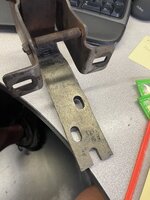
1.JPG2.JPG3.JPG

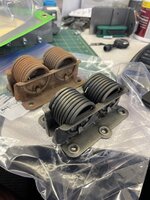
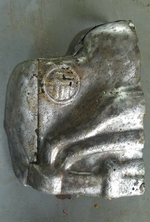
The '57 Chevy truck door hinge was in the solution for basically 24 hours.
The rocking chair spring was in for 15-16 hours and is next to the control group "twin".

I think all in the cost of the supplies is less than a couple of bucks per mixture.

1 liter distilled H2O
63 grams baking soda
100 grams citric acid powder (canning aisle @ Walmart)
Squirt or two of dish soap

Enjoy!
Edit to correct baking soda amount. 100g still works, but maybe not optimally…
 
Last edited:
To avoid these ads, REGISTER NOW!

Snip's

Well-known member
Joined
Apr 29, 2017
Messages
1,847
Location
Ohio
Nice results... How did you prevent flash rust post process?
I've used a warm oven to drive off the moisture but still get flash rust...
 
OP
X

xnology

Well-known member
Joined
Nov 5, 2021
Messages
97
I wiped it off with a clean towel and lightly sprayed WD40 on it and wiped that off. I will clean the WD40 off before priming and painting.
 

ching0n

Well-known member
Joined
Jul 21, 2016
Messages
1,496
I came across this video on youtube. Looked interesting enough to give it a try. I was pretty surprised at the results for common household stuff - and I was quite skeptical dropping the first part in.


Beyond Ballistics did a fantastic job here!
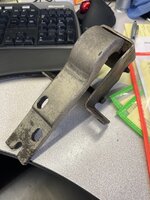
1.JPG2.JPG3.JPG

The '57 Chevy truck door hinge was in the solution for basically 24 hours.
The rocking chair spring was in for 15-16 hours and is next to the control group "twin".

I think all in the cost of the supplies is less than a couple of bucks per mixture.

1 liter distilled H2O
100 grams baking soda
100 grams citric acid powder (canning aisle @ Walmart)
Squirt or two of dish soap

Enjoy!
That guy's videos are pretty good.

Funny, it's not uncommon to see people from Latin America use a Lime(the fruit)/baking soda mix to clean battery terminals. I always thought it was dumb to neutralize the acid w/a base but never considered 'chelation' as it's not really something I learned.
 

ching0n

Well-known member
Joined
Jul 21, 2016
Messages
1,496
Nice results... How did you prevent flash rust post process?
I've used a warm oven to drive off the moisture but still get flash rust...
My go to is HCL but post pickling is always a pain. I typically rinse w/clean water and quickly air dry w/compressed air/leaf blower and bake it in the sun if it's out. Even then it'll flash rust if I don't oil/grease it but i hate oily steel. I guess I could wax it but that's a chore.
 

Snip's

Well-known member
Joined
Apr 29, 2017
Messages
1,847
Location
Ohio
My go to is HCL but post pickling is always a pain. I typically rinse w/clean water and quickly air dry w/compressed air/leaf blower and bake it in the sun if it's out. Even then it'll flash rust if I don't oil/grease it but i hate oily steel. I guess I could wax it but that's a chore.
OK... Thanks!
I've stayed away from adding any form of oil and schedule the painting step immediately after I've sufficiently dried the item...
I've used "etching primer" as one of my coatings but mostly use Rust-Oleum Rusty Metal primer and then a finish coat...

In my shop I would use Phosphoric acid which did a great job of attacking rust with a water rinse...
 

Mintgrun

Well-known member
Joined
Oct 7, 2015
Messages
2,098
Location
Kingston, Wa.
I have not watched the video, but have been using electrolysis for years. My mixture is simply soda and water. No acid. Very little foaming. I'm amazed at how quickly it works with only two amps of 12v DC. I am satisfied with the way a lot of tools come out after less than an hour in the bucket.

I keep my setup on casters, so I can just roll it under the bench and plug it in when I bring something rusty home.

Page four of Lugz' sticky has links to other threads on the topic.

Tom
 
OP
X

xnology

Well-known member
Joined
Nov 5, 2021
Messages
97
I have not watched the video, but have been using electrolysis for years. My mixture is simply soda and water. No acid. Very little foaming. I'm amazed at how quickly it works with only two amps of 12v DC. I am satisfied with the way a lot of tools come out after less than an hour in the bucket.

I keep my setup on casters, so I can just roll it under the bench and plug it in when I bring something rusty home.

Page four of Lugz' sticky has links to other threads on the topic.

Tom
I have also used electrolysis for years. The electrodes I have used were clean scrap pieces of sheet metal I got from work. The experience I have had with it is that when done, my parts had an oxide coating that took a bit of scrubbing to knock off. Using this stuff, I hit the surface with a toothbrush and its pretty well clean.

I have "de-rusted" engine blocks, heads, vices and some shop tools using electrolysis and I may continue doing so with the larger pieces but for the small stuff, I don't have to connect anything. Toss them into a plastic colander and put it in the solution. I am still quite pleased with the results so far.
 

ching0n

Well-known member
Joined
Jul 21, 2016
Messages
1,496
I use nitric acid to remove rust. On stainless, it works wonders. On ferromagnetic steels and iron, it works even better. Never worry about flash rust again--no metal, no rust!
I'm not sure I follow? citric acid should leave bare steel exposed to attack by oxygen in the air. What do you mean by 'no metal'?
 

ching0n

Well-known member
Joined
Jul 21, 2016
Messages
1,496
I have not watched the video, but have been using electrolysis for years. My mixture is simply soda and water. No acid. Very little foaming. I'm amazed at how quickly it works with only two amps of 12v DC. I am satisfied with the way a lot of tools come out after less than an hour in the bucket.

I keep my setup on casters, so I can just roll it under the bench and plug it in when I bring something rusty home.

Page four of Lugz' sticky has links to other threads on the topic.

Tom
it's worth a watch. Electrolysis can be a pain if you don't have a dedicated setup, clean steel, etc... This is like evaporust but better and cheaper. HCL works in seconds so you have to baby it, you can probably leave your steel sitting in a tub for a month and nothing will happen w/this stuff.
 

Mike'smeatshop

Well-known member
Joined
Apr 1, 2023
Messages
1,273
I read to use distilled water rinsing years ago after a vinegar bath on my fur traps. And I have never had to worry about flash rusting.
 

Beerhippie

Well-known member
Joined
Oct 13, 2023
Messages
9,644
Location
Far NE Oregon
I'm not sure I follow? citric acid should leave bare steel exposed to attack by oxygen in the air. What do you mean by 'no metal'?
If you use nitric to clean non-stainless steels, they aren't there anymore. No metal, no rust. For that matter, get it on your flesh--no flesh, no problem.

Citric is fine and pretty hard to screw up in any way. I also use oxalic acid when I want to try to preserve paint. Sometimes the magic works, sometimes it doesn't. Phos acid and electrolysis with lye are my go-to rust solutions.
 

ching0n

Well-known member
Joined
Jul 21, 2016
Messages
1,496
If you use nitric to clean non-stainless steels, they aren't there anymore. No metal, no rust. For that matter, get it on your flesh--no flesh, no problem.

Citric is fine and pretty hard to screw up in any way. I also use oxalic acid when I want to try to preserve paint. Sometimes the magic works, sometimes it doesn't. Phos acid and electrolysis with lye are my go-to rust solutions.
oh, I read that as citric, not nitric, my bad....yeah, nasty stuff.
 

ching0n

Well-known member
Joined
Jul 21, 2016
Messages
1,496
I read to use distilled water rinsing years ago after a vinegar bath on my fur traps. And I have never had to worry about flash rusting.
I was going to suggest distilled rinse but couldn't remember if I had my chemistry right. Technically the 'O' in H20 is still there but I do recall something about lack of ions making the oxidation not work (basically minerals in water making things + charged)? Same reason distilled/deionized doesn't conduct electricity very well & why it's recommended when doing a coolant change in your car, also why salt water is the pits. De-ionized water (like fancy distilled) might be even better.

Deionized water
Made by using ion-exchange resins to remove dissolved mineral ions from water. This process is quicker and cheaper than distillation, and deionized water is often used in industrial settings where low conductivity is important. However, deionized water doesn't remove most bacteria or viruses, and it can be corrosive and damage soft tissues and tooth enamel. Because of this, it's not recommended for drinking and may need to be used with other treatments to remove all contaminants. Deionized water is used in many applications, including pharmaceutical, food, and industrial cleaning, as well as in cooling systems and medical equipment.

Distilled water
Made by boiling water until it turns into steam, then condensing the steam back into a liquid. This process removes most impurities, including bacteria and viruses, but it also removes some minerals. Distilled water is often used for drinking, in car batteries, humidifiers, and aquariums, and for tempering hydroponic plants. However, because it lacks the minerals found in natural water, distilled water doesn't offer any health benefits a
nd can taste bland.
 

Mike'smeatshop

Well-known member
Joined
Apr 1, 2023
Messages
1,273
I was going to suggest distilled rinse but couldn't remember if I had my chemistry right. Technically the 'O' in H20 is still there but I do recall something about lack of ions making the oxidation not work (basically minerals in water making things + charged)? Same reason distilled/deionized doesn't conduct electricity very well & why it's recommended when doing a coolant change in your car, also why salt water is the pits. De-ionized water (like fancy distilled) might be even better.

Deionized water
Made by using ion-exchange resins to remove dissolved mineral ions from water. This process is quicker and cheaper than distillation, and deionized water is often used in industrial settings where low conductivity is important. However, deionized water doesn't remove most bacteria or viruses, and it can be corrosive and damage soft tissues and tooth enamel. Because of this, it's not recommended for drinking and may need to be used with other treatments to remove all contaminants. Deionized water is used in many applications, including pharmaceutical, food, and industrial cleaning, as well as in cooling systems and medical equipment.

Distilled water
Made by boiling water until it turns into steam, then condensing the steam back into a liquid. This process removes most impurities, including bacteria and viruses, but it also removes some minerals. Distilled water is often used for drinking, in car batteries, humidifiers, and aquariums, and for tempering hydroponic plants. However, because it lacks the minerals found in natural water, distilled water doesn't offer any health benefits a
nd can taste bland.
I went there years ago. Back in my college days. Works for me.
 

ching0n

Well-known member
Joined
Jul 21, 2016
Messages
1,496
I went there years ago. Back in my college days. Works for me.
cheap source of distilled :D? Walmart wants a 1.20 a gallon now. I suppose rain water should count except it likely picks up ions as it falls & drinking water 5 gallon jug may be distilled enough (they might use reverse osmosis & inject minerals for taste, dunno).
 
To avoid these ads, REGISTER NOW!

Mike'smeatshop

Well-known member
Joined
Apr 1, 2023
Messages
1,273
cheap source of distilled :D? Walmart wants a 1.20 a gallon now. I suppose rain water should count except it likely picks up ions as it falls & drinking water 5 gallon jug may be distilled enough (they might use reverse osmosis & inject minerals for taste, dunno).
I didn't mean you. I hope you didn't take it that way. You are just stating facts.
 
OP
X

xnology

Well-known member
Joined
Nov 5, 2021
Messages
97
I know harsher stuff cuts rust quicker, but I don’t want anything my grands can get into and cause trouble in the shop. That gets me into trouble with their mom…

This mix is pretty mellow and does a good job so for now it’s probably going to be at the top of my list. I’ll post more photos as I am continually amazed at how good a job this stuff does. Maybe even get the grands to help.
 

Beerhippie

Well-known member
Joined
Oct 13, 2023
Messages
9,644
Location
Far NE Oregon
cheap source of distilled :D? Walmart wants a 1.20 a gallon now. I suppose rain water should count except it likely picks up ions as it falls & drinking water 5 gallon jug may be distilled enough (they might use reverse osmosis & inject minerals for taste, dunno).
Cheap, distilled water? Try the condensate from your AC unit! My Caswell plating guide actually recommends it. I have a giant--1,200 gallon--atmospheric-pressure water heater in the brewery shop. It's vented and I collect about five gallons a week of condensate that's touched nothing but 316L stainless steel. I use it for radiator, battery, plating, etc. It's great for a final rinse when cleaning/de-rusting with chems, but I don't have the obsession that some do with "flash rust". Flash rust is like a couple of molecules thick, and I'm always finishing the job with 4-0 steel wool anyway, so it hasn't a chance to get any thicker. For a few things, like the inside of Coleman fount, I'll just use extremely hot water for the final rinse and put the work directly into a 250F oven.
 

ching0n

Well-known member
Joined
Jul 21, 2016
Messages
1,496
I didn't mean you. I hope you didn't take it that way. You are just stating facts.
not at all, I just want to know if there's a cheap way since I often do big parts and like to use the pressure washer.

Cheap, distilled water? Try the condensate from your AC unit! My Caswell plating guide actually recommends it. I have a giant--1,200 gallon--atmospheric-pressure water heater in the brewery shop. It's vented and I collect about five gallons a week of condensate that's touched nothing but 316L stainless steel. I use it for radiator, battery, plating, etc. It's great for a final rinse when cleaning/de-rusting with chems, but I don't have the obsession that some do with "flash rust". Flash rust is like a couple of molecules thick, and I'm always finishing the job with 4-0 steel wool anyway, so it hasn't a chance to get any thicker. For a few things, like the inside of Coleman fount, I'll just use extremely hot water for the final rinse and put the work directly into a 250F oven.
genius, I have two mini splits just dumping water right now. Problem is the condenser/evaporator do collect a bunch of dust and water's technically in contact w/those metals.
 
OP
X

xnology

Well-known member
Joined
Nov 5, 2021
Messages
97
I updated the soda amount in the recipe in my original post. An old Proto and the original
Mix is still working fine even with my mistaken 100g of baking soda…
 

Attachments

  • IMG_2802.jpeg
    IMG_2802.jpeg
    473.3 KB · Views: 85
  • IMG_2810.jpeg
    IMG_2810.jpeg
    796.9 KB · Views: 88

ALinCarolina

Well-known member
Joined
Dec 29, 2014
Messages
757
Location
NC Piedmont
I actually used this guys solution last weekend on six metal chairs the wife drug home. I think it would work well if soaked as directed but the chairs were of course too big for that. I used a pump sprayer which didn't work all that well since they dried so fast. The other caution I would add is the foaming up when mixed. I mixed the solution in a 2.5 gallon jug and it spewed foam out the top forever. I mean the whole time I was spraying it poured out like a volcano and all down the driveway. It was an impressive production.
 

rsanter

Well-known member
Joined
Dec 22, 2007
Messages
18,489
Location
visalia ca
I actually used this guys solution last weekend on six metal chairs the wife drug home. I think it would work well if soaked as directed but the chairs were of course too big for that. I used a pump sprayer which didn't work all that well since they dried so fast. The other caution I would add is the foaming up when mixed. I mixed the solution in a 2.5 gallon jug and it spewed foam out the top forever. I mean the whole time I was spraying it poured out like a volcano and all down the driveway. It was an impressive production.
Large items use a kids swimming pool
 

pelletman

Well-known member
Joined
Apr 5, 2016
Messages
1,264
Location
Worcester, People's Republic of Massachusetts
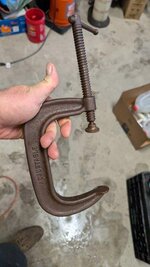
I have used just about everything under the sun to be lazy and derust stuff. Molasses, Oxalic Acid, Evaporust, Metal Rescue, Electrolysis, sandblasting, wire brush, vinegar etc . I have lost some parts that I shouldn't have leaving stuff in too long. I made a batch of this and it works great!
 

Attachments

  • C Clamp Cleaned.jpg
    C Clamp Cleaned.jpg
    51.6 KB · Views: 98
  • Rusty C Clamp.jpg
    Rusty C Clamp.jpg
    45.9 KB · Views: 103

milkovich

Well-known member
Joined
Oct 15, 2007
Messages
679
Location
Akron Ohio
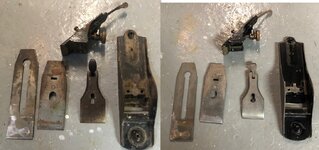
Well... was very skeptical because I've been a loyal Evaporust customer for decades, but this stuff definitely works. I made a gallon and dropped this old sargent type 3 409 plane in. Left it about 7 hours. Pulled it out and washed the parts with a rag in water. That's it. No brass brush, no abrasives, absolutely nothing but the solution and a wash. You can see the white paint on side of the plane is still there. Best of all, the japaning is still intact and untouched.sargent2.jpgsargent1.jpg
 

ching0n

Well-known member
Joined
Jul 21, 2016
Messages
1,496
IMG_2804.jpegIMG_2831.jpeg
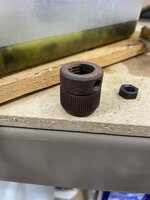
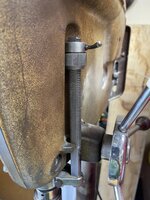
Got the nuts out of the solution. A quick scrub and reassembly - and now I feel like I’m going to have to do more on the old drill…

Parts are waxed. Never thought they’d look this good
I have the same drill and depth gage and have yet to figure it out. How are those nuts supposed to work? One seems to thread fine while the other jams.
 
OP
X

xnology

Well-known member
Joined
Nov 5, 2021
Messages
97
I have the same drill and depth gage and have yet to figure it out. How are those nuts supposed to work? One seems to thread fine while the other jams.
If the one jams, they may not be threaded together all the way. There’s a spring between the nuts as well. It might not be right. The only thing that should jam is the little bent lever bolt.
 

Bubba Fett

Well-known member
Joined
Jun 11, 2018
Messages
1,516
Location
Eastern NC
I suppose adding the baking soda reduces the acidity, to keep it from being too powerful. I might make a batch, but I've been very pleased with Evaporust. I used to use white vinegar, which does work, but you need to be careful with it.
 
Last edited:
To avoid these ads, REGISTER NOW!
Top Bottom