To avoid these ads, REGISTER NOW!

Rust Removal

ching0n

Well-known member
Joined
Jul 21, 2016
Messages
1,496
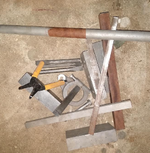
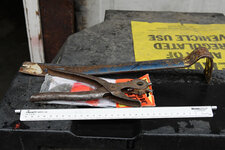
this is what I managed to de-rust w/"my" ph neutral solution, (about 2 qrts worth). before it lost effectiveness (strippers for reference). I will prepare a new batch w/the original slightly acidic formula as I believe the acidity may quicken the results and potentially lengthen the effectiveness (going by original video).
1741374380587.png
 
To avoid these ads, REGISTER NOW!

ching0n

Well-known member
Joined
Jul 21, 2016
Messages
1,496
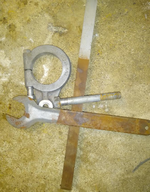
These parts had flash rust to "above flash rust". I wiped them down before putting them in the solution, ensuring nothing lose was just getting washed off. I can't remember if the wrench had that pattern (parts are dry) or if it's getting dark from the solution. This is after 4 hr soak. The longer pieces were only partially submerged.

I'm attaching my inexpensive "parts list" in case you feel like trying:


1740942895903.png1740942655998.png

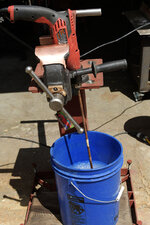
My chuck it bucket setup, PH test strip in the background. My solution is PH neutral to slightly basic so more than likely will not attack the steel like the youtuber's in case you forget (youtuber's was mildly acidic so probably would take forever to do any damage too):

1740942805271.png
I made 2 gallons of the "original formula". Here's a table in imperial for those that need it. If making this much, mix outside as it produces carbon dioxide which can get dangerous in enclosed spaces. Per video, caustic soda doesn't (??):

citric acid (oz) [and]carbonate (laundry soda) (oz) [or]bicarbonate (baking soda) (oz) [or]caustic soda (oz)(lye)
1 gallon13.35.38.43.9
2.4 gallons2#/32oz bag from link12.720.169.36

also, squirt some dish soap AFTER it stops fizzing or you'll end up w/a foamy mess.
 
Last edited:

Beerhippie

Well-known member
Joined
Oct 13, 2023
Messages
9,621
Location
Far NE Oregon
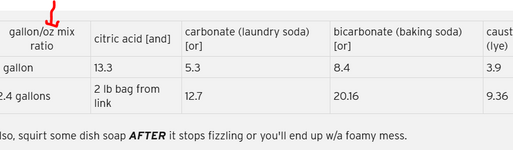
I made 2 gallons of the "original formula". Here's a table in imperial for those that need it. If making this much, mix outside as it produces carbon dioxide and can get dangerous in enclosed spaces. Per video, caustic soda doesn't (??):

gallon/oz mix ratio​
citric acid [and]carbonate (laundry soda) [or]bicarbonate (baking soda) [or]caustic soda (lye)
1 gallon13.35.38.43.9
2.4 gallons2 lb bag from link12.720.169.36

also, squirt some dish soap AFTER it stops fizzling or you'll end up w/a foamy mess.
Y'know, when giving a recipe, sometimes units are handy. Sure, a smart fellow can work from the ratios, but....
 

ching0n

Well-known member
Joined
Jul 21, 2016
Messages
1,496
I just found this video today, making a gel with the citric solution and cornstarch.
You could store this in a jar, when it’s hot, put the sealed lid on. When it’s cooled it will be in a slight vacuum like a canning jar. It will stay fresh until it’s opened.
I had tried making a cornstarch gel using vinegar, but I wasn’t quite happy with it. It smelled bad and the steel sort of flash rusted in dryer areas where the gel was thin.
I will have to give this one a try.
adding another potential gelling additive video (in this case it's for phosphoric acid but the silica may play nice w/this stuff too):
 

1930artdeco

Well-known member
Joined
Dec 28, 2010
Messages
1,099
Location
Lynden, Wa
I am going to try this on my gas tank this weekend. Do you think it will eat through the shellac on the inside? Or should I tumble it first to knock as much rust and shellac off first? Also, best way to dispose of this stuff?
 
OP
X

xnology

Well-known member
Joined
Nov 5, 2021
Messages
97
I don’t know if it will do anything to the varnish. I would tumble it first just to be safe.
 

yhprum

Well-known member
Joined
Jul 27, 2006
Messages
1,379
Location
Brisbane Australia
I don’t think tumbling it to break up the varnish is a bad idea. Since this mixture doesn’t eat paint I think old tank varnish might react in a similar way
I also don’t think there is any problems sending it down the drain once done. Maybe filter out the chunky stuff first.
Let us know how it turns out too :)
 

ching0n

Well-known member
Joined
Jul 21, 2016
Messages
1,496
I am going to try this on my gas tank this weekend. Do you think it will eat through the shellac on the inside? Or should I tumble it first to knock as much rust and shellac off first? Also, best way to dispose of this stuff?
I don't know honestly. I've thrown oiled parts into it w/ok results so maybe it works. Maybe drop some into it, prop the tank so it sits in a corner and check back after a day?

The ingredients are food grade and rust is rust so I think the mix is safe to drop into the drain.
 

Beerhippie

Well-known member
Joined
Oct 13, 2023
Messages
9,621
Location
Far NE Oregon
I am going to try this on my gas tank this weekend. Do you think it will eat through the shellac on the inside? Or should I tumble it first to knock as much rust and shellac off first? Also, best way to dispose of this stuff?
I'd worry more about the shellac in the tank continuing to flake off, clogging your fuel filter/screen.
 

ching0n

Well-known member
Joined
Jul 21, 2016
Messages
1,496
I made 2 gallons of the "original formula". Here's a table in imperial for those that need it. If making this much, mix outside as it produces carbon dioxide which can get dangerous in enclosed spaces. Per video, caustic soda doesn't (??):

citric acid (oz) [and]carbonate (laundry soda) (oz) [or]bicarbonate (baking soda) (oz) [or]caustic soda (oz)(lye)
1 gallon13.35.38.43.9
2.4 gallons2#/32oz bag from link12.720.169.36

also, squirt some dish soap AFTER it stops fizzing or you'll end up w/a foamy mess.
I forgot a steel machine handle/crank & a screw that went with it in the bath for maybe a week or so, it ate at the threads enough to not make the part thread anymore. There was quite a bit of pickling of the surface too I don't recall much rust pitting being there. I checked the PH thinking maybe I messed up the mix ratio and it was maybe at a 5-6 (about as strong as coffee) so who knows if this is an issue with alloy being weak to it or if the acidity is stratified in the bucket (maybe more acidic at the bottom?). The screw was fairly rusty but I did get it off the threads eventually before putting it in the bucket.

I may try throwing good steel in there and check back in a week to see what's up.
 

Tom Graham

Well-known member
Joined
Apr 14, 2025
Messages
126
Location
Oklahoma
Trigger warning: These photos will be alarming.


When we use words like miracle or magic, we should ask whether there is an unknown trade-off. In the context of rust removal, most all of us know about pitting and being careful not to leave parts in any form of acid for too long, but I haven’t seen anyone yet mention “hydrogen embrittlement” in this thread.

I’ve only just learned of this risk myself, but I will think twice before leaving any hardened steel in a de-rust solution unattended. (Whether a chisel, a hand plane blade, hand files, bits or anything with a cutting edge — even vise jaws.)

“hydrogen embrittlement” (aka stress corrosion cracking) is a real thing. Start here and then Google it to find your favorite source.


Attachments

  • IMG_7032.jpeg
    IMG_7032.jpeg
    471.6 KB · Views: 29
  • IMG_7033.jpeg
    IMG_7033.jpeg
    738 KB · Views: 29
Last edited:
To avoid these ads, REGISTER NOW!

Beerhippie

Well-known member
Joined
Oct 13, 2023
Messages
9,621
Location
Far NE Oregon
Trigger warning: These photos will be alarming.


When we use words like miracle or magic, we should ask whether there is an unknown trade-off. In the context of rust removal, most all of us know about pitting and being careful not to leave parts in any form of acid for too long, but I haven’t seen anyone yet mention “hydrogen embrittlement” in this thread.

I’ve only just learned of this risk myself, but I will think twice before leaving any hardened steel in a de-rust solution unattended. (Whether a chisel, a hand plane blade, hand files, bits or anything with a cutting edge — even vise jaws.)

“hydrogen embrittlement” (aka stress corrosion cracking) is a real thing. Start here and then Google it to find your favorite source.

I only really worry about hydrogen embrittlement when using electrolysis to remove rust, as it's atomic hydrogen that does the work--and, even then, only on hardened steels.

I seem to be getting a bit embrittled myself lately--I wonder if it's from hydrogen exposure?
 

Beerhippie

Well-known member
Joined
Oct 13, 2023
Messages
9,621
Location
Far NE Oregon
I purchased a $5 seven-gallon pail of what I was assured was citric acid at a yard sale a while back. Today, I went to mix up some homebrew sodium citrate.

The pail was filled with corn starch.

Trust, but verify.

OTOH, I did compare the prices of sodium citrate and citric acid. Since the amounts used are the same--1 lb/gal--it's a direct comparison.

Sodium citrate, 2 lb: $20.

Citric acid, 2 lb: $10.

I guess I'll be brewing my own from now on.
 

Tom Graham

Well-known member
Joined
Apr 14, 2025
Messages
126
Location
Oklahoma
Those of you that are more familiar with the chemistry behind this, please explain why the video author (or anyone) would advocate introducing sodium bicarbonate (or sodium carbonate or sodium hydroxide) into the citric acid solution bath before the de-rusting process has concluded.

(I do already understand why it is introduced after to balance the pH before disposal.)

Doesn’t mixing citric acid with sodium bicarbonate defeat the purpose - neutralizing the very property that makes citric acid effective at rust removal? (Why wouldn’t you simply reduce the citric acid concentration?)

BTW: For my first three de-rusting projects within the last 6-8 weeks, I have used 1) Simple Green (100% concentration), 2) Citric Acid dissolved in warm water, and 3) Super Clean (100% concentration) — and was (unscientifically) equally pleased with the results of all three.
 

Beerhippie

Well-known member
Joined
Oct 13, 2023
Messages
9,621
Location
Far NE Oregon
Those of you that are more familiar with the chemistry behind this, please explain why the video author (or anyone) would advocate introducing sodium bicarbonate (or sodium carbonate or sodium hydroxide) into the citric acid solution bath before the de-rusting process has concluded.

(I do already understand why it is introduced after to balance the pH before disposal.)

Doesn’t mixing citric acid with sodium bicarbonate defeat the purpose - neutralizing the very property that makes citric acid effective at rust removal? (Why wouldn’t you simply reduce the citric acid concentration?)

BTW: For my first three de-rusting projects within the last 6-8 weeks, I have used 1) Simple Green (100% concentration), 2) Citric Acid dissolved in warm water, and 3) Super Clean (100% concentration) — and was (unscientifically) equally pleased with the results of all three.
Mixing (reacting) citric acid with sodium carbonate (washing soda), bicarbonate (baking soda) or hydroxide (lye) yields sodium citrate (of various forms) and some gas--in the case of the carbonates, CO2 and lye produces oxygen and hydrogen (don't smoke nearby). Sodium citrate is actually what you want. It's pH neutral and does an amazing job of not only removing rust, but corrosion from brass, copper, etc and doesn't damage the metal. Leaving metal too long in acids has it's downsides.
 

Tom Graham

Well-known member
Joined
Apr 14, 2025
Messages
126
Location
Oklahoma
…Sodium citrate is actually what you want…
I will be very eager to hear your results using sodium citrate.

Your reference to sodium citrate has kept me digging. Now, I better understand the chelation and buffering benefit beyond a simple citric acid solution.

From additional reading, it appears that a sweet spot is obtained by aqueous solution of both citric acid and (tri-)sodium citrate of approximately a 3:1 to 4:1 ratio by weight. And using both can be even more effective than only one or the other.

Granted, this hybrid recipe will add incrementally to the cost of the BB recipe (25+30%) and sodium citrate won’t be quite as easy to source as baking soda.

Primary source:

as referenced from:
 

Beerhippie

Well-known member
Joined
Oct 13, 2023
Messages
9,621
Location
Far NE Oregon
I will be very eager to hear your results using sodium citrate.

Your reference to sodium citrate has kept me digging. Now, I better understand the chelation and buffering benefit beyond a simple citric acid solution.

From additional reading, it appears that a sweet spot is obtained by aqueous solution of both citric acid and (tri-)sodium citrate of approximately a 3:1 to 4:1 ratio by weight. And using both can be even more effective than only one or the other.

Granted, this hybrid recipe will add incrementally to the cost of the BB recipe (25+30%) and sodium citrate won’t be quite as easy to source as baking soda.

Primary source:

as referenced from:
What you're MAKING when you react citric acid and a base containing sodium is sodium citrate--tri, penta, whatever.

I prefer to have mine just the base (alkaline) side of pH 7.0--maybe 8. Helps deal with grime that would interfere with and acidic solution.

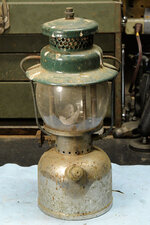
Here's a recent clean-up, using a lye bath followed by straight sodium citrate (and some Dawn soap) in the USC:

Before:

54602981318_5041c9729e_o.jpg

54602769231_02912c633a_o.jpg

After, no mechanical cleaning:

54603226814_244c5030e3_o.jpg

54603348085_7e89b14d5b_o.jpg

You can see where an air bubble was trapped under the rim of that lantern fount.

54612423689_d3074b9d2e_o.jpg

Best of all, the sodium citrate even cured the broken mantle! ;)

Back to the subject--everything in that third picture went through the lye and the citrate--glass, brass, porcelain enameled steel--and came out gleaming. The citrate removes rust and brass/copper corrosion without leaching zinc and causing "pinking". it doesn't damage the porcelain enamel, like even mild acids.

It does trash most paints, including Japanning. :(
 

RTM

Well-known member
Joined
May 13, 2019
Messages
13,058
Location
SF Bay Area
hydrogen embrittlement” (aka stress corrosion cracking) is a real thing.
only really worry about hydrogen embrittlement when using electrolysis to remove rust, as it's atomic hydrogen that does the work--and, even then, only on hardened steels.
In my scope of knowledge, I've only heard of it being an issue with electrolysis, as @Beerhippie noted, and only with handsaw blades. Internet acquaintance reportedly broke a blade when it jammed in a cut, where a normal blade would have just twanged.

Supposedly Henry Disston would bend one of his saw tips to the handle, and watch it spring back. He would offer to do it with a competitive saw, and supposedly they wouldn't survive. (I was not there to witness this, so this is possibly a 18th hand story, just for the doubters). Another acquaintance tried this with a electrolysis treated Disston, and it did not survive.
 

Tom Graham

Well-known member
Joined
Apr 14, 2025
Messages
126
Location
Oklahoma
from a chemistry POV, what you get when you mix baking soda (sodium bicarbonate) and citric acid is sodium citrate and a hell of a foaming mess.

What you're MAKING when you react citric acid and a base containing sodium is sodium citrate
I certainly trusted you when I read your earlier comment (from September 2024)…and it was your earlier comment that interested me most about the Backyard Balistics’ recipe.

I mistakenly assumed that BB was introducing baking soda only to adjust the pH or further reduce the aggressiveness of the citric acid — but that seemed unlikely.

From your reference to their combination creating sodium citrate, my deep dive confirmed that while — either citric acid or sodium citrate alone — can be an effective de-rust solution…

using both citric acid and sodium citrate in combination creates a synergistic solution better than the sum of the parts.

(And yes, BB likely knows that mixing citric acid and baking soda creates sodium citrate,)

I learned that if you already have access to sodium citrate, you can use it (in combination with citric acid to) create a solution that may be even superior to that created by BB. (I was mistaken in that I assumed you had planned to experiment with the combination and ratio of citric acid and sodium citrate)

Bottom line, your lantern project looks amazing…and the recipe by Backyard Ballistics in the video has proven effective and very simple and accessible. I’ll be using it…

p.s., I can also personally relate to your joke about embrittlement. I run a greater risk of breaking a bone that cracking a bench vise while de-rusting.
 

Beerhippie

Well-known member
Joined
Oct 13, 2023
Messages
9,621
Location
Far NE Oregon
I tried making up my own batch today:

54629590404_b20120f278_o.jpg

It's too hot out to stir.

I used 2 lb of citric acid and the liquid lye we use for a brewery cleaner. Unfortunately, I don't know the actual concentration of lye in the solution, so I stated with ten floz, checked pH with a test strip, found it was still under pH 6.0 (lowest the strip reads). I then added more lye solution, a little at a time, until... suddenly, between 25 and 30 floz, the pH shot up to 11!

I'll go ahead and use this--should be good for both cleaning and rust removal--but I've ordered another 2 lb bag of citric acid for another try. This time, I'll buy some lye crystals from ACE so I'm working from a known concentration.
 

yhprum

Well-known member
Joined
Jul 27, 2006
Messages
1,379
Location
Brisbane Australia
Not to beat the hydrogen embrittlement thing to death but a cook in the oven after coming out of the electrolytic bath. Mild steel generally doesn’t have this issue like high carbon steel does.

Post-plating baking: Baking the part immediately after plating can reverse the effects of hydrogen embrittlement in most cases. General guidelines call for baking the part for four hours at a temperature of 375º F within one hour of plating. Most steels typically require a lower temperature in the range of 200-300º F.
 

RTM

Well-known member
Joined
May 13, 2019
Messages
13,058
Location
SF Bay Area
Not to beat the hydrogen embrittlement thing to death but a cook in the oven after coming out of the electrolytic bath. Mild steel generally doesn’t have this issue like high carbon steel does
My sources agree with this statement. Same source also noted that springs are susceptible to breaking after electrolysis.
 

Shiftless

Well-known member
Joined
Mar 9, 2014
Messages
14,454
Location
East Bay SFO
I purchased a $5 seven-gallon pail of what I was assured was citric acid at a yard sale a while back. Today, I went to mix up some homebrew sodium citrate.

The pail was filled with corn starch.
Look on the bright side… you got a nice big plastic pail for only $5.00 and a years long supply of cornstarch as well !!!!

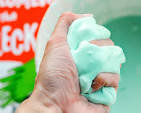
You might never again have to buy a little box of cornstarch for thickening your sauces in the kitchen. OR... you could make up a huge batch of oobleck. 😎

AI Overview

2-Ingredient Oobleck Recipe (How To Make Oobleck)
Oobleck is a non-Newtonian fluid made from a mixture of cornstarch and water. It's called a non-Newtonian fluid because it doesn't behave like a normal liquid; its viscosity changes depending on the amount of stress applied. When you gently stir or pour oobleck, it acts like a liquid. However, when you apply a sudden force, like poking or squeezing it, it becomes solid. This unique property makes it a fun and fascinating substance for science experiments.
 

472scout

Well-known member
Joined
Sep 18, 2010
Messages
1,276
Location
back 40
Follow-up on my highly alkaline sodium citrate solution:

It works--very well!

I threw this pair of leather punch pliers into it yesterday

54633453745_b9027d3ef9_o.jpg

and today I pulled this out:

54635806235_38e02d9ce9_o.jpg

I didn't bother removing the oil and grease beforehand. I also didn't add any soap to the solution.

I might try that on some old cast iron cookware.
 

Firstram

Well-known member
Joined
May 16, 2017
Messages
1,390
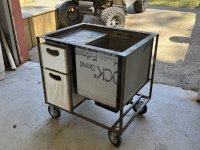
I recently built a hot tank for cleaning and derusting. I wanted to clean up a vise and some random stuff last week. I started by cleaning off most of the old grease.

I added enough tapwater to cover the static half of the vise which took approximately 10 gallons. To that I added 10 ounces of lye and the rest of the disassembled vise. I lit the propane heater and brought the temperature up until it was just starting to steam and covered it for the night.

The next morning I pulled out the paint free parts with the attached bailing wire and hosed them down. They didn’t need much attention but I wanted an empty tank to keep mixing.

I added 1kg of citric acid which gave me a 1/4 strength mixture and fired up the heat again while putting the parts back in. I didn’t want to pay for enough product to make 10 gallons if it was just going to sit around.

Much to my surprise everything was completely rust free in 6 hours!

IMG_0622.jpeg


IMG_0764.jpeg
 
To avoid these ads, REGISTER NOW!
Top Bottom