To avoid these ads, REGISTER NOW!

Rust & water based parts solvents

kendogg

Well-known member
Joined
Jan 22, 2013
Messages
203
Location
Auburn, GA
So, I understand rust is a major concern for the water-based parts solvents. I know parts solvents have been beaten to death here (yes, I've searched for about the past hour and a half). However, I've seen a couple people post about adding a rust inhibitor to the water-based fluid. Any thoughts on this?

I'm considering building my own parts washer, and am also considering figuring out an efficient way to heat the fluid. An old water heater does come to mind, but we'll see. My plan is to store the fluid externally to the washer, and pump it in, and obviously drain out the bottom into whatever container is holding & heating the fluid. This is for use in an attached home garage (bedrooms are directly above the garage) so I can't have petroleum smells or harmful vapors. Thoughts?
 
To avoid these ads, REGISTER NOW!
OP
K

kendogg

Well-known member
Joined
Jan 22, 2013
Messages
203
Location
Auburn, GA
I also had the thought of building a PLASTIC parts washer - either out of a plastic shop sink, or a plastic 50 gallon barrel. Can I safely use a plastic 20 gallon barrel to heat with, or is that too much risk of melting it and creating a huge mess???
 

devoncoolman

Well-known member
Joined
Mar 17, 2013
Messages
2,096
Location
quakertown pa
I have my solvent based parts washer in my garage below my living/dining room and kitchen. I keep the lid closed when not in use and i own a high quality snap-on unit. Never had smells creep into my home. Heating the fluid would deffinatly make it work better
 

CWP1616L

Banned
Joined
Aug 31, 2012
Messages
3,297
Location
USA
I got two questions for the OP:

1. Are you going to be leaving the parts soaking for a long time?

2. Why does the solution have to be heated?
 
OP
K

kendogg

Well-known member
Joined
Jan 22, 2013
Messages
203
Location
Auburn, GA
Part of the reason I've considered building one from a plastic barrel is because of A: the water-based solutions, and B: it's long enough I can fit bigger items in it, like say, a 6 cylinder valve cover or oilpan, that I can't fit in most of the traditional steel units. Also considering the lid would be the other half of the barrel, so I could close the lid on large-ish objects, design it so that it has a valve too divert fluid to a couple bars with spray nozzles in them to pressure-spray some nasty parts. I'm resourceful - I'd try using oil spray bars from BMW M30 engines first :D
 
OP
K

kendogg

Well-known member
Joined
Jan 22, 2013
Messages
203
Location
Auburn, GA
I got two questions for the OP:

1. Are you going to be leaving the parts soaking for a long time?

2. Why does the solution have to be heated?


Sometimes, I would like the ability to soak parts for extended periods if necessary. And I would want to heat the solution IF I'm using a water-based solution, as thats apparently the only way to make them work effectively to their potential.
 

CWP1616L

Banned
Joined
Aug 31, 2012
Messages
3,297
Location
USA
Sometimes, I would like the ability to soak parts for extended periods if necessary. And I would want to heat the solution IF I'm using a water-based solution, as thats apparently the only way to make them work effectively to their potential.

The problem with water-based parts cleaners is they're corrosive when in contact with the parts for too long. That's because they normally use citric acid or some other type of acid. That's why I asked you if you wanted to leave them soaking.

When I clean parts with a water-based cleaner like Purple Power, I spray it on there, agitate it with a brush, and then rinse it off as soon as possible.

If I was using a petroleum based cleaner, I could leave put them in the tank for a week and not worry about them getting corroded.

So I don't know how you're going to be able to leave parts soaking in a water-based cleaner without the parts getting corroded to some extent.
 
Last edited:
OP
K

kendogg

Well-known member
Joined
Jan 22, 2013
Messages
203
Location
Auburn, GA
The problem with water-based parts cleaners is they're corrosive when in contact with the parts for too long. That's because they normally use citric acid or some other type of acid. That's why I asked you if you wanted to leave them soaking.

When I clean parts with a water-based cleaner like Purple Power, I spray it on there, agitate it with a brush, and then rinse it off as soon as possible.

If I was using a petroleum based cleaner, I could leave put them in the tank for a week and not worry about them getting corroded.

So I don't know how you're going to be able to leave parts soaking in a water-based cleaner without the parts getting corroded to some extent.


Well, this is what I was considering starting off with, as I've read a few good reviews on here, and it's dirt cheap:

http://www.dollartree.com/household...r-Refill-64-oz-/500c501c502p300084/index.pro#
 

CWP1616L

Banned
Joined
Aug 31, 2012
Messages
3,297
Location
USA
OP
K

kendogg

Well-known member
Joined
Jan 22, 2013
Messages
203
Location
Auburn, GA
That orange cleaner definitely has citric acid in it. They make it out of ground up orange peelings. You ever wonder what they do with all the orange peelings after making orange juice? They sell it to the parts cleaner people.


OK. So no soaking then. Thats not the end of the world
 

CWP1616L

Banned
Joined
Aug 31, 2012
Messages
3,297
Location
USA
OK. So no soaking then. Thats not the end of the world

I havent found any grease or dirt I couldn't get off with Purple Power and an acid brush. And like I said, you gotta rinse it off within 5 or 10 minutes.
 

shanker

Well-known member
Joined
Jun 27, 2005
Messages
1,259
Location
Portland, TX
I've made two types of water based cleaners (for pressure washing drilling rigs that have been drilling with Oil-Based Mud (Diesel + Brine Water + Emulsifiers/Wetting Agents).

I've taken a bag of SAPP (sodium acid pyrophosphate) a mixed it with water in a 55g drum that was then used to scrub & pressurewash with..it works, but it leaves a film

I've also taken Water + Soap + ever so slight amounts of Caustic Soda & Lime to make it *hot*(Increase PH to ~12-13)....worked GREAT...but not exactly something that you'd want getting on your skin.
 
OP
K

kendogg

Well-known member
Joined
Jan 22, 2013
Messages
203
Location
Auburn, GA
I havent found any grease or dirt I couldn't get off with Purple Power and an acid brush. And like I said, you gotta rinse it off within 5 or 10 minutes.


OK - if I'm using Purple Power in my tank, then thats going to be a water-based solution - unless I'm using straight PP, and screw that, that stuff is horrible for you, especially your lungs, I'd rather have kero or something - how do I keep it from rusting a metal parts washer?
 
To avoid these ads, REGISTER NOW!

CWP1616L

Banned
Joined
Aug 31, 2012
Messages
3,297
Location
USA
OK - if I'm using Purple Power in my tank, then thats going to be a water-based solution - unless I'm using straight PP, and screw that, that stuff is horrible for you, especially your lungs, I'd rather have kero or something - how do I keep it from rusting a metal parts washer?

Metal parts washer? Forget that. I've had it remove the galvanized coating right off an oil drain pan. The only place I store that stuff is in a plastic spray bottle, and even then it'll eat up the pump seals in the spray bottle sprayer if I forget to spray water through it afterwards.
 
OP
K

kendogg

Well-known member
Joined
Jan 22, 2013
Messages
203
Location
Auburn, GA
So, I understand rust is a major concern for the water-based parts solvents. I know parts solvents have been beaten to death here (yes, I've searched for about the past hour and a half). However, I've seen a couple people post about adding a rust inhibitor to the water-based fluid. Any thoughts on this?

I'm considering building my own parts washer, and am also considering figuring out an efficient way to heat the fluid. An old water heater does come to mind, but we'll see. My plan is to store the fluid externally to the washer, and pump it in, and obviously drain out the bottom into whatever container is holding & heating the fluid. This is for use in an attached home garage (bedrooms are directly above the garage) so I can't have petroleum smells or harmful vapors. Thoughts?

Metal parts washer? Forget that. I've had it remove the galvanized coating right off an oil drain pan. The only place I store that stuff is in a plastic spray bottle, and even then it'll eat up the pump seals in the spray bottle sprayer if I forget to spray water through it afterwards.


I've bolded the parts in the OP that I think you might've missed.
 

CWP1616L

Banned
Joined
Aug 31, 2012
Messages
3,297
Location
USA
I've bolded the parts in the OP that I think you might've missed.

The only way for a rust inhibiter to work is to de-alkaline the acid in the cleaner, and if you did that, the cleaner wouldn't work anymore.
 
OP
K

kendogg

Well-known member
Joined
Jan 22, 2013
Messages
203
Location
Auburn, GA
The only way for a rust inhibiter to work is to de-alkaline the acid in the cleaner, and if you did that, the cleaner wouldn't work anymore.


Thanks. Chemistry hasn't always been my strong suit :) So, IF I make the decision to use a water-based cleaner - must use plastic. That settles that then. Thank you!


On the other part - so, if I were to get say, a 20-30 gallon plastic container, obviously depending on the type of plastic and the thickness - I should be able to use that to heat the solvent/degreaser? Or should I stick to metal there no matter what? I've seen a couple agricultural-use 'barrel heaters', but they only advertise about 110*F. I'm thinking 140*F-150*F would be much more powerful.
 
Last edited:

CWP1616L

Banned
Joined
Aug 31, 2012
Messages
3,297
Location
USA
On the other part - so, if I were to get say, a 20-30 gallon plastic container, obviously depending on the type of plastic and the thickness - I should be able to use that to heat the solvent/degreaser? Or should I stick to metal there no matter what? I've seen a couple agricultural-use 'barrel heaters', but they only advertise about 110*F. I'm thinking 140*F-150*F would be much more powerful.


I've never had to heat up the solvents, so......I guess I can't help you on that one. You might want to contact the solvent manufacturer for advice on that.
 
Last edited:
OP
K

kendogg

Well-known member
Joined
Jan 22, 2013
Messages
203
Location
Auburn, GA
Well, I got a gallon and a half of the LA'S Totally Awesome Orange cleaner. Going to test it out in a bucket with some nasty metal parts I have, first at room temperature agitating coassionally, and then heated, also agitating ocassionally.
 

928'er

Well-known member
Joined
Jul 26, 2012
Messages
756
Location
Wine Country, CA
Years ago I bought a cheap Grizzly parts washer with a metal tub and an electric circulation pump.

I used some kind of water based degreaser (can't remember what). Not knowing any better, I left the solution in the tank and the paint on the inside of the tub came off in sheets and clogged everything up.
 
OP
K

kendogg

Well-known member
Joined
Jan 22, 2013
Messages
203
Location
Auburn, GA
Years ago I bought a cheap Grizzly parts washer with a metal tub and an electric circulation pump.

I used some kind of water based degreaser (can't remember what). Not knowing any better, I left the solution in the tank and the paint on the inside of the tub came off in sheets and clogged everything up.


This is the story I keep hearing. I guess the first thing I don't understand is why are they painted in the first place on the INSIDE, where the chemicals/scraping/banging goes? I think I'm either going to build a plastic parts washer from a plastic drum, or find a stainless steel prep sink and use that, and then I can use any chemical or cleaner I want without fear of corrosion.


Any recommendations other than craigslist to try and find a stainless prep sink thats more than a couple feet wide? Prep sinks are also nice and deep too.
 
OP
K

kendogg

Well-known member
Joined
Jan 22, 2013
Messages
203
Location
Auburn, GA
That orange cleaner definitely has citric acid in it. They make it out of ground up orange peelings. You ever wonder what they do with all the orange peelings after making orange juice? They sell it to the parts cleaner people.


You've been a HUGE help with this stuff, so I have 1 more question. I know about purple power taking off the zinc coating you mentioned earlier. I don't like Purple Power except for the hardest to clean stuff (I use it in a spray bottle of an engine bay after I've pulled a motor, and hit the bay with the power washer in less than 10 minutes time, everything is usually spotlessly clean - pics below, nothing but purple power sprayed, and then power washer no scrubbing whatsoever).

However - How are some of these citric cleaners on aluminum?? You mentioned not being able to soak them. What does it do to aluminum? I know simple green took the paint off my hvac register covers after soaking for a week. But I mean, can we assume that an afternoon of soaking will probably be fine? Where are our limits here?


dirty-engine-bay-4.jpg


clean-engine-bay-9.jpg
 
OP
K

kendogg

Well-known member
Joined
Jan 22, 2013
Messages
203
Location
Auburn, GA
If there's anybody interested, I gave this stuff a quick test-drive:


http://www.lastotallyawesome.com/html/Products_Household_Orange.html


I used it in a plastic cup, and tossed in a handful of really, really greasy bolts from the junkyard. I swear, not 5 minutes, barely agitated it, the bolts looked like brand new, and what was a clear fluid was black. I for sure give it a 3-thumbs up for you homeowners that might not want flammable chemicals in your garages!
 

CWP1616L

Banned
Joined
Aug 31, 2012
Messages
3,297
Location
USA
However - How are some of these citric cleaners on aluminum?? You mentioned not being able to soak them. What does it do to aluminum?

When I went to replace the A/C compressor on my GM car, I decided to clean up the old compressor. I figured there was a slight chance I might be able to rebuild it someday. So I took the plastic plug for the hose line port out of the new compressor and installed it in the old compressor. I then lathered up the old compressor real good with Permatex Fast Orange and an acid brush. Rinsed the compressor thoroughly with water afterwards.

Man that old compressor now looked every bit as good as the new compressor. I let it stand up on its pulley overnight to drip dry. Well the next day, you remember that plastic plug I put in the hose line port to keep the water out? Well, some of that citrus cleaner got trapped under the flange of the plug and didn't get rinsed off all the way. When I pulled the plug out, there was a little bit of water underneath and a faint smell of Fast Orange.

Where the plug flange made contact with the compressor, that area was now pitted with corrosion. That same area is where a seal needs to go for the A/C hose. There is no way in heck it's gonna seal now with that pitting in there. The whole compressor was now junk. I probably would have never gotten around to rebuilding it, but it taught me a valuable lesson about citrus based cleaners and aluminum.
 
Last edited:
OP
K

kendogg

Well-known member
Joined
Jan 22, 2013
Messages
203
Location
Auburn, GA
When I went to replace the A/C compressor on my GM car, I decided to clean up the old compressor. I figured there was a slight chance I might be able to rebuild it someday. So I took the plastic plugs out of the new compressor and installed them in the old compressor. I then lathered the old compressor up real good with Permatex Fast Orange and an acid brush. Rinsed the compressor thoroughly with water afterwards. Man that old compressor now looked every bit as good as the new compressor. Well, you remember those plastic plugs I put in the hose line ports to keep the water out? Well, some of that citrus cleaner got trapped under the flange of the plugs and didn't get rinsed off all the way. When I pulled the plug out, there was a little bit of water underneath and a faint smell of Fast Orange. Where the plug flange made contact with the compressor, that area was now pitted with corrosion. That same area is where a seal needs to go. There is no way in heck it's going to seal now with that pitting in there. The whole compressor was now junk. I probably would have never got around to rebuilding it, but it taught me a valuable lesson about citrus based cleaners.


Still haven't answered my question though. Timeframe. How long was it from the time you rinsed it off, until the time you pulled those plugs and saw the pitting?
 

CWP1616L

Banned
Joined
Aug 31, 2012
Messages
3,297
Location
USA
Still haven't answered my question though. Timeframe. How long was it from the time you rinsed it off, until the time you pulled those plugs and saw the pitting?

I went back and edited the post. It was overnight or less than 24 hours that the damage from corrosion was done.
 

Mohawk Dave

Well-known member
Joined
Oct 7, 2012
Messages
5,068
Location
SoCal
I have the HF type parts washer and run old diesel fuel in it. It's outside and the temp drops quite a bit in winter.

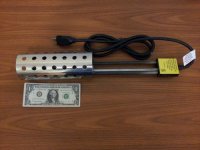
Diesel fuel autoignites at minimum 410 degrees F. This will heat from 150-212 F.

Do you guys see any problems heating it with something like this? http://www.amazon.com/dp/B000BDB4UG/?tag=atomicindus08-20

Or are we playing with fire here?:willy_nil
 

Attachments

  • 61+kclohMhL.jpg
    61+kclohMhL.jpg
    76.4 KB · Views: 7
OP
K

kendogg

Well-known member
Joined
Jan 22, 2013
Messages
203
Location
Auburn, GA

krhoover

Member
Joined
Dec 8, 2023
Messages
8
Aqueous spray type parts washers are made of steel. Some of the better known manufacturers are Better Engineering, Cuda, Landa, Proceco, and many others. I sold Better Engineering and Landa. The water was heated and held in bottom of the equipment and sprayed on the parts with a high volume pump. A detergent was added to the tank. The detergent had a rust inhibitor to protect the machine and the cleaned parts. Some of the rust inhibitor packages would give the cleaned parts a shelf life of a few day to a couple of weeks.
 
To avoid these ads, REGISTER NOW!
Top Bottom