To avoid these ads, REGISTER NOW!

sae vs. metric

chipper

Well-known member
Joined
Feb 1, 2013
Messages
1,137
Location
Williamsburg, va
It seems like everything is metric these days how much sae stuff do mechanics keep in their box other then working on classics do they ever get used
 
To avoid these ads, REGISTER NOW!

mypov

Well-known member
Joined
Aug 1, 2011
Messages
557
depends on their trade - working in heavy equipment we use a lot of SAE, but just enough metric that we must carry those as well. Have 3/8 - 1&1/4 in half inch and wrenches, 5/16-1" in 3/8 and drive 9/32-9/16 in 1/4 drive.
 

G_P

Well-known member
Joined
Jul 11, 2010
Messages
7,135
Location
Central CT
For automotive work I rarely ever use SAE. For fixing older tools and machines its almost all SAE.
I do more with older stuff so my SAE tools get used quite often. If I was a mechanic I imagine SAE would be rarely used.

Sent from my C5120 using Tapatalk 2
 

Armstrong1720

Well-known member
Joined
Dec 25, 2012
Messages
197
Location
In the arm pit of TEXAS
I work on trucks and its a pain ! Example a 1989 kenworth all sae.even the lug nuts are sae but a 1999 freightliner with a detroit is mostly metric and lug nuts freakin metric. So i have to have everything I hate metric ****
 

sk farmer

Well-known member
Joined
Mar 4, 2009
Messages
5,556
Location
nd
depends on their trade - working in heavy equipment we use a lot of SAE, but just enough metric that we must carry those as well. Have 3/8 - 1&1/4 in half inch and wrenches, 5/16-1" in 3/8 and drive 9/32-9/16 in 1/4 drive.

this is kind of the standard stuff to have. you may be able to skip the 1/4 or 1/2 drive sizes but the 3/8 is a must. even if you claim to only work on things that are metric, sae sizes will show up on occasion. someone may have replaced a fastener or a puller may use sae hardware. who knows?

sooner or later something sae will show up.
 

jerryd68

Well-known member
Joined
May 3, 2013
Messages
274
Location
Idaho
I agree that you have to have both, working on compressors and boilers it just depends on brand and the age of the machine.
 

larry_g

Well-known member
Joined
Apr 28, 2007
Messages
16,872
Location
oregon
There is a whole world of tool users that are not under a car. Industry uses a lot of SAE fasteners. Some metric also. Depends where in the world you are and what the machine is that your applying the tool to.

lg
no neat sig line
 

ed_v

Well-known member
Joined
Sep 15, 2007
Messages
1,418
Location
Kentucky
I'm fully loaded with SAE and Metric for sockets, impacts, combination wrenches, ratcheting/box end wrenches, and flare nut wrenches. I work on a variety of stuff though. Modern autos are mostly metric, but will occasionally have some SAE thrown in. I work on a lot of old (mostly pre-'65) cars which is all SAE. Tractors and any heavy equipment will be mostly SAE as well. It really all depends on what you intend to wrench on.

Ed
 

blackz26

Banned
Joined
Mar 26, 2013
Messages
1,310
Location
Byesville, Ohio
I'm a diyer. I use metric when possible. Even with socket trays to see the next size up or down I like metric better. But have full sae and metric of everything I have.
 

Tre900

Well-known member
Joined
Dec 18, 2012
Messages
131
Location
Wooster
For me it is BOTH at the very least. I also need sockets and wrenches that are neither (Witworth - British).

I can't see how you can say one over the other. I would say the order would be:

1: metric
2: SAE
3: Specialty
4: Miller High life Light

Good luck
 

Cervidae

Well-known member
Joined
Jan 18, 2013
Messages
90
I own both sets, its just the way things are. It keep you spending money. I am a ******** diy guy and the most things I see that are SAE are my small engines. Like my riding mower, snowblower and trimmer. I use SAE the most on those things. On vehicles 98% of the time its metric.
 

Kracin

Well-known member
Joined
Mar 25, 2013
Messages
1,666
Location
Omaha, NE
have to deal with both, it really depends on where and what you work with.

automotive is getting easier because they are all going to metric for the most part.

factory however is a bit different. anything that was built or repaired in house is going to be sae (where i am), however, any machine bought recently is all metric. and then you get the fun of having repairs done by people who don't keep it the same. and then mix in sae with metric, really throwing you off sometimes.
 

Kracin

Well-known member
Joined
Mar 25, 2013
Messages
1,666
Location
Omaha, NE
fractional numbers are pain in my ***

they are much easier when you use them every day, it is a pain if you haven't dealt with them much. you ask the average joe what what the fractional sizes are for standard use and he probably couldn't list all of them, just the basics.

but when it comes to metric, its a matter of moving up 1-2 mm each. personally i would prefer metric standard over the rest, just because dealing with mm vs fractional inches is a little easier to run around. ie, not having to memorize all of the sizes in between .125-.250-.375-.5-.625-.750-.875-1 and so on. at least bearings are standardized for the most part.
 
Last edited:

jerryd68

Well-known member
Joined
May 3, 2013
Messages
274
Location
Idaho
isnt that what adjustable wrenches are for or maybe channelocks! how about leatherman's.
 

markduncan93

Well-known member
Joined
May 2, 2012
Messages
168
Location
CA Central Valley
I'm no pro but I have both. Metric mainly for my Yamaha and import small engines. Standard for the older stuff from the older Briggs and Strattons to the Chevy 292 and SM420 I'm getting together to put into a 1966 Hyster.

Having a mix of both comes in handy even if it isn't being used all the time.
 

gagreen

Well-known member
Joined
Mar 22, 2013
Messages
779
Location
Colorado
Aviation is close to exclusively ase. I have personally never ran into a metric fastener on an airplane, although I've heard rumors of them on some newer smaller euro birds.
 

NHBandit

Well-known member
Joined
Jan 11, 2012
Messages
2,757
Location
East Tennessee
I got into wrenching on cars 40 years ago so I have ALOT of SAE tools. I was pissed when I had to buy Metric stuff to allow me to work on all the import stuff popping up in the 70s... I also got interested in British motorcycles (mainly Triumphs) and once I got heavily involved with those I found that I needed British Whitworth tools as well.. Then some jerk invented Torx and as soon as I got all of those they came out with inverted Torx & tamperproof torx, & WTF.... and so it goes. lol
 

spongerich

Well-known member
Joined
Apr 17, 2010
Messages
2,339
Location
Monroe, NY
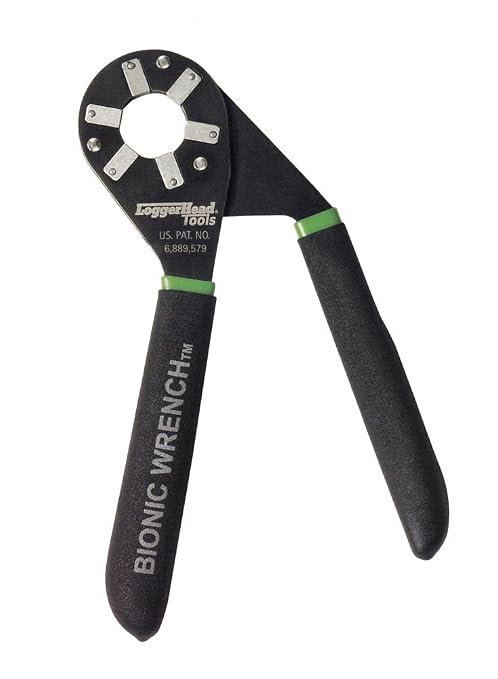
I don't understand why you guys waste so much money on all those "special" tools.
I work on metric, SAE, and Whitworth and these are the only 2 tools I own.

supergrip.jpg
.
smart-wrenches3.jpg
 
To avoid these ads, REGISTER NOW!

cryan

Well-known member
Joined
Mar 13, 2013
Messages
158
Location
Kirkcaldy, Fife
I was brought up on metric at school but when I went to work a lot of the older stuff was imperial. In the UK now most stuff is metric. There are certain things that remain imperial. CAT machinery is SAE, some plumbing fittings are BSP and older machinery can be Whit, BS, SAE etc. Outside of Engineering the UK has several quirks. Roads are ALL in miles as are car speedos. People are weighed in stones. Beer is always sold in pints and meat/vegetables are still often listed in both lbs and Kg. The rest of the world except the US is metric.

Metric is much easier to work in, especially when measuring material for manufacturing.
 

AmericanPreferred

Well-known member
Joined
May 8, 2013
Messages
159
isnt that what adjustable wrenches are for or maybe channelocks! how about leatherman's.

Irwin now makes metric, and sae adjustable wrenchs. they do not interchange. I will have to stop telling the story of my friend who was errecting a building out of town with a temp crew. He gave em all a Cresent wrench to tighten bolts, one of the "crew" soon came back "it not fit". This was years before the adjustable wrench went sae or metric.
 
Last edited:

Toolman12

Well-known member
Joined
Aug 31, 2011
Messages
2,425
Location
A thousand miles from erehwon
I install radio communication equipment in law enforcement vehicles. The vehicles are metric sizes but the hardware from the equipment is all SAE so i have to have both and all the sizes necessary to do the job. And that includes wrenches and sockets.
 

Roverbo

Well-known member
Joined
Oct 25, 2012
Messages
289
Location
Denmark
this is kind of the standard stuff to have. you may be able to skip the 1/4 or 1/2 drive sizes but the 3/8 is a must. even if you claim to only work on things that are metric, sae sizes will show up on occasion. someone may have replaced a fastener or a puller may use sae hardware. who knows?

sooner or later something sae will show up.

I feel a little different - why collect 3/8" when i can handle 98% of all jobs with my ½" sockets - and the remaining 2% with the 1/4"?
3/8" feels a little weak, when you´re working on rusty, old Land Rovers...:evil:
From the selection in the toolshops here, i guess most europeans tend to choose ½" or 1/4". Maybe 3/8" is an distinctly american thing?

But back to the topic - yes, you need both metric and SAE :willy_nil
 

rob0781

Well-known member
Joined
Feb 13, 2011
Messages
337
Location
Canada
I feel a little different - why collect 3/8" when i can handle 98% of all jobs with my ½" sockets - and the remaining 2% with the 1/4"?
3/8" feels a little weak, when you´re working on rusty, old Land Rovers...:evil:
From the selection in the toolshops here, i guess most europeans tend to choose ½" or 1/4". Maybe 3/8" is an distinctly american thing?

But back to the topic - yes, you need both metric and SAE :willy_nil

I actually prefer 3/8" the most, i always grab that drive size first.
 

monkeyspanners

Well-known member
Joined
May 28, 2013
Messages
419
Location
Oxford, UK
I work mostly on refrigeration systems, they used to be all sae but metric is probably more common now, plus we get say a flare nut for 1/2" pipe thats metric on the outside.

So i have a mix of both plus a few whitworth as its still popular on dairy stuff (and on my old 1974 truck)

Used to prefer 1/2 drive sockets but have moved over to 3/8 as the equipment has gotten more compact.
 

BK13

Well-known member
Joined
Mar 1, 2013
Messages
2,692
Location
PDX, OR
I'm just a DIY'r, so on my Jeep I mainly have SAE (or Torx), but when I did the brakes on my F150, I had a little bit of everything out of my box...
 

volaredon

Well-known member
Joined
Oct 7, 2012
Messages
1,617
Location
IL
when I run into metric it still pisses me off. Working on an 05 Chev 1/2 ton 4WD today... 350 engine, no less.... went to pull valve covers for new gaskets; I grabbed a 7/16, center bolt style VC's. no,10 mm//S O B... last week I had a 99 Dodge van w/a 318 "Magnum" that I did an intake and plenum; also ball joints. the only metric fasteners were the 2 brake caliper bracket bolts on each side those were 18 MM the rest was 1/2, 9/16, 3/4, etc... my kind of wrenchin....
 

basspro

Well-known member
Joined
Mar 20, 2013
Messages
327
Location
In the sticks, WI
I have and use both. 1/4, 3/8, and 1/2 drive 4mm-36mm, 1/4-1 1/4. Also have 3/4 drive 12pt shallow sockets from 1 5/16-2". Got a real mix of 12 pt and 6pt sockets. Also have some odds and ends wittworth and bsp stuff. Run across that all the time on German veneer presses. I use alot of SAE, its my favorite anyway.
 

Dan5speight

Active member
Joined
Oct 16, 2012
Messages
35
Location
Leeds, West Yorkshire, England
the factory I work I is 150 yrs old so there is every type of fastening under the sun for me I carry only metric 10, 13, 17, 19, 22, 24 all the rest I either a 18" adjustable or have to carry my sorry *** down 7 floors to get the correct sized spanner. for me the worst part of all the different threads is repairing them I probably have nearly £800 in taps and dies alone
 

0.511MeV

Well-known member
Joined
May 25, 2011
Messages
421
I feel a little different - why collect 3/8" when i can handle 98% of all jobs with my ½" sockets - and the remaining 2% with the 1/4"?
3/8" feels a little weak, when you´re working on rusty, old Land Rovers...:evil:
From the selection in the toolshops here, i guess most europeans tend to choose ½" or 1/4". Maybe 3/8" is an distinctly american thing?

But back to the topic - yes, you need both metric and SAE :willy_nil
I prefer 1/4" and 1/2" drives. I really don't buy many 3/8" tools.
 

0.511MeV

Well-known member
Joined
May 25, 2011
Messages
421
I only buy SAE if I have a need. So I have a very random selection of SAE tools.

Everything I design has metric thread fasteners. I also like Torx and hex the most. Phillips head fasteners are just wrong. Actually, so are flat head fasteners.
 

JonnFX

Well-known member
Joined
Apr 23, 2013
Messages
127
Location
Arizona
I have probably equal amounts of both.

I think the engineers screwed up on my '06 Dodge Magnum SRT8. To bolt the motor to the ******, there are two 7/16" bolts, four 3/8" bolts and the rest are metric. The ****** is basically a Mercedes transmission and the motor was a brand new platform in '05.

Also, two of the 3/8" bolts are double ended with 8mm on the other end, to attach other accesories. Figure that one out.
 
Last edited:

86k10

Well-known member
Joined
Jan 29, 2012
Messages
1,045
Location
Colorado
I feel a little different - why collect 3/8" when i can handle 98% of all jobs with my ½" sockets - and the remaining 2% with the 1/4"?
3/8" feels a little weak, when you´re working on rusty, old Land Rovers...:evil:
From the selection in the toolshops here, i guess most europeans tend to choose ½" or 1/4". Maybe 3/8" is an distinctly american thing?

But back to the topic - yes, you need both metric and SAE :willy_nil

I have to agree with rob0781. 3/8" drive is my first to grab tools. I don't really use 1/2" unless it is on a impact wrench.
 
To avoid these ads, REGISTER NOW!
Top Bottom