
To avoid these ads, REGISTER NOW!

Sawzall Safety

minke

Well-known member
Joined
Dec 1, 2018
Messages
478
Location
fly over country
I was holding my battery powered sawzall above my head obviously without enough control and bent a blade. I need help thinking about safety. First about using a bent blade. Then anything else.

Thursday the temperature was 87°F, Friday it was snowing and Saturday morning we had 15" of wet snow. Since the gambel oaks had already leaved (leafed?) we have lots of broken limbs. I was cutting broken limbs off the trees and trying to minimize ladder use.

thanks,,,
 
To avoid these ads, REGISTER NOW!

ATC

Well-known member
Joined
May 12, 2012
Messages
8,352
Location
VA
If you are bending blades, that usually means you are getting them pinched in the work (or tree branch in your case), and not holding the sawzall all the way against the work. You want the metal guard on the sawzall to be against what you are cutting. You want to push against this to counteract the sawzall trying to push back as it extends the blade.
You also need to learn how to read the wood and where the tension and compression points are. Just like cutting with a chainsaw, you don't want to cut into a compression point and pinch the blade.

A sawzall takes some muscle to use properly....manhandle that thing
 

Robinson1

Well-known member
Joined
Jun 22, 2015
Messages
834
Location
Kentucky
Take a couple pairs of pliers and straighten the blade back out and keep cutting. Ive done it hundreds of times. Its almost impossible to not bend a blade when doing akward out of position cuts
 
To avoid these ads, REGISTER NOW!

KnurledNut

Well-known member
Joined
Jan 28, 2011
Messages
8,198
Location
n/a
@minke
1. "Sawzall Safety" is an oxymoron.
2. Bent blades are proof you did something. You should reward yourself.
3. I use a sawzall all the time and I fried a knockoff Makita battery and bent some blades cutting a tree. So i might have one up on you.
4a. Someone will eventually point out that if you were using Diablo blades, they wouldnt have bent. Or Milwaukee. Or Lenox. Or Hart...
4b. I didnt know we had so many Recip-Arborist on here. Im impressed. You should listen to every word of advice on here. Seriously. (Not serious.)
 

Jeff C

Well-known member
Joined
May 22, 2021
Messages
638
Location
Durham, NC
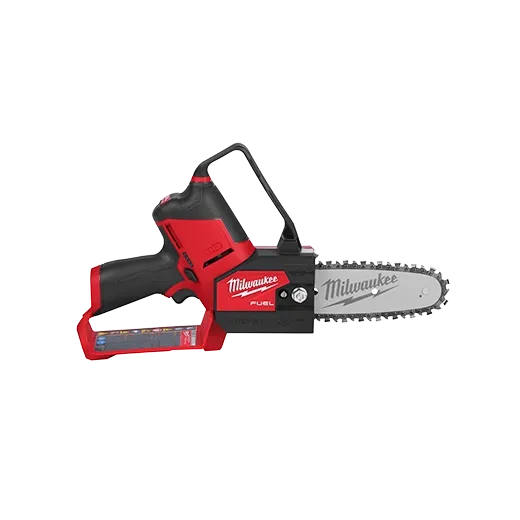
I trim a lot of branches around my property. Both of these tools have been invaluable and I find both much easier to use than a sawzall.

Not trying to start a brand war… I’m sure other varieties of these would be equally useful as well.


mrvm

Well-known member
Joined
Feb 12, 2014
Messages
3,854
Location
PA
I trim a lot of branches around my property. Both of these tools have been invaluable and I find both much easier to use than a sawzall.

Not trying to start a brand war… I’m sure other varieties of these would be equally useful as well.
Agree… using the right tool for the job should make it safer but chain saws can be less forgiving when misused by the novice operator.
 
OP
M

minke

Well-known member
Joined
Dec 1, 2018
Messages
478
Location
fly over country
If you are bending blades, that usually means you are getting them pinched in the work (or tree branch in your case), and not holding the sawzall all the way against the work. You want the metal guard on the sawzall to be against what you are cutting. You want to push against this to counteract the sawzall trying to push back as it extends the blade.
You also need to learn how to read the wood and where the tension and compression points are. Just like cutting with a chainsaw, you don't want to cut into a compression point and pinch the blade.

A sawzall takes some muscle to use properly....manhandle that thing
This is what I needed (I think!) I had a modest amount of metalwork training in HS and almost no woodwork training. I thought, from that little woodwork training, that I should use the whole blade and not just the blade near the attachment point. Now I know 1) use the right length blade and 2) keep the work right at the guard.

I think remember you from the Superduty messageboard. Thanks.
 
  • Like
Reactions: ATC

Bessy

Well-known member
Joined
Dec 18, 2012
Messages
995
Location
Ontario, Canada
I was just going to add in, use the right blade length for what you're cutting. It's going to wear more evenly in doing so and especially when pruning, it will be more forgiving should something go wrong.

As far as safety is concerned, safety glasses are a must, gloves and a face shield are highly encouraged. Pay attention to the saw as well as what you are cutting. Is it vibrating more or less? Is it shaking the ever living sh*t out of your arms? If limbing a tree, cut a relief notch about 1/3 through the branch, where you want the cut, even out a foot or so from the trunk. Then cut from the top so as not to bind the blade. Take care to notice if it's a wide branch with many offshoot limbs and twigs that it may twist as you cut it, due to the distribution of weight. Revise your cut position as necessary to compensate and avoid falling off your ladder/platform. Lastly. Do not cut directly over your head. If you can't reach it, don't cut it.
 

RTM

Well-known member
Joined
May 13, 2019
Messages
13,253
Location
SF Bay Area
If you keep the sawzall shoe against the work, your cutting will be very inefficient, as you only have 3/4” or 1-1/8 stroke on the sawblade. The blade will clog with sawdust and stop cutting quickly. A green wood blade with huge gullets will help, little. If you are following the info posted above, cutting from the GP top, relief cut, etc, you can use a bit of a sawing motion to keep clearing the cut.

But a monster pruning saw will probably be faster, but more work. A pole saw with a good blade is a Second option. A chainsaw is for my arborist to use.
 

rlitman

Well-known member
Joined
Oct 18, 2010
Messages
24,665
Location
Long Island
If you keep the sawzall shoe against the work, your cutting will be very inefficient, as you only have 3/4” or 1-1/8 stroke on the sawblade. The blade will clog with sawdust and stop cutting quickly. A green wood blade with huge gullets will help, little. If you are following the info posted above, cutting from the GP top, relief cut, etc, you can use a bit of a sawing motion to keep clearing the cut.

But a monster pruning saw will probably be faster, but more work. A pole saw with a good blade is a Second option. A chainsaw is for my arborist to use.
This topic has been covered well on youtube. Reciprocating saws cut very inefficiently when cutting through things thicker than twice their stoke length in diameter, AND more importantly, "hand sawing" with your sawzall really doesn't help all that much.

The correct answer is to either use a chainsaw, or get a real handsaw. A Silky will make the same cut faster than hand sawing with a sawzall, and a pocket sized Silky is far easier to saw with than the weight of an entire sawzall.
 
  • Like
Reactions: RTM

MongoTA

Well-known member
Joined
Mar 10, 2018
Messages
1,017
Location
CT
As far as using all the teeth on the blade, if the shoe is adjustable on the sawzall you can extend or retract the shoe. It'll allow you to keep the work against the shoe and use different teeth along the length of the blade for cutting. To me that's more of a factor when cutting metal but it also helps with wood blades.

For cutting branches yes, keep compression and tension in mind. Tension will be on the top surface of the branch, compression on the bottom. Start the cut on the bottom working up, cut maybe 1/3rd the thickness of the branch. Then switch to top-down. I'll almost always rock the saw up and down when cutting, it puts fewer teeth on the cut and can help clearing sawdust debris from the kerf. Blade choice is important. Fewer TPI with a large gullet will clear the kerf and minimize friction overheating.

If you ever get a blade jammed in a kerf and can't get it free? Just undo the blade clamp and leave the stuck blade where it is. Clamp another blade in the sawzall, complete the cut, and reclaim the stuck blade.

The blade can also be put in the sawzall upside-down, or teeth facing up. That can be helpful with some cuts.
 
OP
M

minke

Well-known member
Joined
Dec 1, 2018
Messages
478
Location
fly over country
As far as using all the teeth on the blade, if the shoe is adjustable on the sawzall you can extend or retract the shoe. It'll allow you to keep the work against the shoe and use different teeth along the length of the blade for cutting. To me that's more of a factor when cutting metal but it also helps with wood blades.

For cutting branches yes, keep compression and tension in mind. Tension will be on the top surface of the branch, compression on the bottom. Start the cut on the bottom working up, cut maybe 1/3rd the thickness of the branch. Then switch to top-down. I'll almost always rock the saw up and down when cutting, it puts fewer teeth on the cut and can help clearing sawdust debris from the kerf. Blade choice is important. Fewer TPI with a large gullet will clear the kerf and minimize friction overheating.

If you ever get a blade jammed in a kerf and can't get it free? Just undo the blade clamp and leave the stuck blade where it is. Clamp another blade in the sawzall, complete the cut, and reclaim the stuck blade.

The blade can also be put in the sawzall upside-down, or teeth facing up. That can be helpful with some cuts.
Thank you! (for more than what I made bold).
 
To avoid these ads, REGISTER NOW!
Top Bottom