To avoid these ads, REGISTER NOW!

School me on connectors

ajchien

Well-known member
Joined
Sep 3, 2010
Messages
2,649
Location
Los Angeles, stuck on the 60 freeway.
Ok, I admit I still know nothing about electrical ...

When is it better to use wire nuts vs. **** connectors?

I've always seen wire nuts in homes and **** connectors in cars/audio. But I'm not sure why. Is there any problem using a **** connector for house electrical and vise versa?
 
Last edited:
To avoid these ads, REGISTER NOW!

Alchymist

Well-known member
Joined
Mar 1, 2009
Messages
4,423
Location
Central PA
Wire nuts in mobile applications have a tendency to vibrate loose. Ccrimp style connectors work better in mobile applications, especially when glue type heat shrink is applied over the splice. Wire nuts are the approved connector for ac wiring. There are **** splices, but they are restricted to large wire sizes, and are installed with a very expensive set of crimpers.
 

greaseyjockey

Well-known member
Joined
Feb 28, 2011
Messages
89
Location
sc
I always assumed it was because most ac home wiring is solid wire and wont squish into a **** splice while most dc mobile wiring is multistrand and will hold a crimp better.
 

Alchymist

Well-known member
Joined
Mar 1, 2009
Messages
4,423
Location
Central PA
I always assumed it was because most ac home wiring is solid wire and wont squish into a **** splice while most dc mobile wiring is multistrand and will hold a crimp better.

True to some extent; there are a number of solid & stranded connections in AC wiring - lights, fans, etc are stranded in most cases.
 
To avoid these ads, REGISTER NOW!

Mmfh

MEMBER EMERITUS
Joined
Oct 8, 2011
Messages
1,423
Location
Portland Oregon
If you use a wire nut the wires are actually touching each other, twisted together. With a **** connector the wires are only touching the connector.

With high amp A/C stuff it would seem safer to have the wires twisted together.
 

ddawg16

Well-known member
Joined
Jul 11, 2008
Messages
21,005
Location
S. California
I always assumed it was because most ac home wiring is solid wire and wont squish into a **** splice while most dc mobile wiring is multistrand and will hold a crimp better.

True to some extent; there are a number of solid & stranded connections in AC wiring - lights, fans, etc are stranded in most cases.

As noted, 'most' wiring in a house is solid...solid wire does not work well with crimp connectors. Additionally, you don't have a lot of vibration and movemement in a house. Wire nuts have proven to be a very good connection system.

In cars you have a lot of vibration and flexing....solid wire would not last long. If you look at wire for automotive use, you will notice that the insulation tends to be a bit thicker.

There is also a significant difference in how houses are wired vs cars. In a house, it's more of a power distribution scheme....in a car, it's point to point. There are not too many points in a car where you have the same wire going to multiple places. Additionally, you need a practicle method to connect/disconnect devices....hence, most wiring goes to plug in connectors where the wire is crimped to a pin.
 

Alchymist

Well-known member
Joined
Mar 1, 2009
Messages
4,423
Location
Central PA
As noted, 'most' wiring in a house is solid...solid wire does not work well with crimp connectors. Additionally, you don't have a lot of vibration and movemement in a house. Wire nuts have proven to be a very good connection system.

In cars you have a lot of vibration and flexing....solid wire would not last long. If you look at wire for automotive use, you will notice that the insulation tends to be a bit thicker.

There is also a significant difference in how houses are wired vs cars. In a house, it's more of a power distribution scheme....in a car, it's point to point. There are not too many points in a car where you have the same wire going to multiple places. Additionally, you need a practicle method to connect/disconnect devices....hence, most wiring goes to plug in connectors where the wire is crimped to a pin.
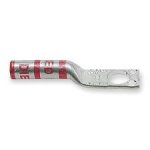
A lot of the distribution wire is stranded, especially above #8. Crimp style connectors like these are used, and require a crimper like the one shown.
 

Attachments

  • alumlug.jpg
    alumlug.jpg
    2.9 KB · Views: 16
  • alumcrimper.jpg
    alumcrimper.jpg
    14.5 KB · Views: 23

Oyvind Ryeng

Member
Joined
May 4, 2010
Messages
5
Location
Norway
These are becoming a lot more popular in residential wiring. I don't like them but some do.

http://www.idealindustries.com/prodDetail.do?prodId=in-sure&div=0&l1=push-in
They're very popular here in Norway, but I'm only familiar with the ones made by WAGO, as I've used them in my course as an apprentice electrician. They are very compact, and the standard series 771 we install on our solid or coarse stranded 2.5 mm² (~13 AWG) wire is good for up to 24 amps, I believe. Wire nuts (Torix) used to be common in the olden days, but today we only use WAGO. These are the kinds we usually install:

Series 222 (for fine stranded wire):
http://www.wago.us/products/2631.htm

Series 771:
http://www.wago.us/products/2635.htm
 
To avoid these ads, REGISTER NOW!
Top Bottom