Dumber than lumber
Well-known member
- Joined
- Dec 19, 2015
- Messages
- 1,950
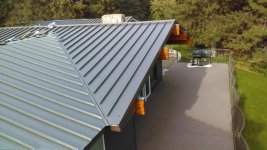
What are the pros and cons of switching to metal when the asphalt shingles wear out? Again.

Pro- goes up fast.
Con- it's very noisy compared to shingles when it rains, but since we don't know your location, this may not be a problem.
Is the attic insulated?
If you have long length-wise runs that require more than a single panel in length then you will have an end joint. These usually get a direct "stitch" screw connection.
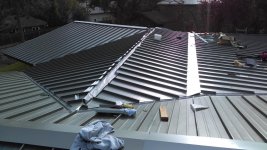
Must pay micro attention to changes in planes and how you detail/flash them for proper water tightness. Most manufacturers will have their details that address most situations.
I respectfully disagree here. My roof is no more noisier than the shingle roof it replaced.
That's why I asked if its insulated, might make a big difference.
I have an open screened in porch with shingles, walk from there to shop with metal roof and ceiling, you can definitely hear the difference.
I know two people that switched to metal on their house, first thing they said, its louder.
A metal roof on a solid roof deck like plywood or OSB really isn't that much louder, inside a finished house you won't notice a difference. With open framing or a lathe system with no insulation like a shop or porch the difference is much more noticeable.
We changed the roof on our old 1929 house from the original Asbestos shingles to a snap lock, hidden fastener metal roof and didn't notice a difference. Although it did lower our electric bill in the summers a bit.

Q for the experts. I have heard that metal roofing should never be applied directly to plywood/OSB decking. The decking should be cover with tar paper (or better yet, ice and water shield), furring strip applied (spacing ?) and the the roofing attached to the furring strip.
The idea is, it lets the decking "breathe".
Q for the experts. I have heard that metal roofing should never be applied directly to plywood/OSB decking. The decking should be cover with tar paper (or better yet, ice and water shield), furring strip applied (spacing ?) and the the roofing attached to the furring strip.
The idea is, it lets the decking "breathe".