To avoid these ads, REGISTER NOW!

Septic drain field setback question

jmillican1983

Well-known member
Joined
Dec 23, 2018
Messages
52
Location
Behind my house
Hello everyone, This is going to be a little long...
Summary: I want to get County approval to reduce the size of my secondary drain field for better placement of my shop.

I've gained a ton of valuable info on here during the planning for my stick built shop. Permits have finally been submitted after 6 months of preparation. I removed some trees (and stumps/root systems) to make room for the exact placement I picked on my property. I chose a location that I was confident would meet all setback requirements, however there was some question in regards to setback from a pressurized effluent line that pumps effluent uphill 400+ feet to my existing drain field. Turns out the County is requiring a 5' setback from that line which may require the shop to be moved slightly, no big deal.

The next obstacle I have is in regard to the secondary drain field. The County is requiring a 10' setback from the secondary drain field area. This is an area marked on the plot map, adjacent to the existing drain field which I believe is significantly oversized for my 2 bedroom house. When starting the planning, I didn't realize my existing drain field covered an area 50' x 75' (6 75' leach lines each separated by 10'), 450' of leach line seemed overkill to me for a 2 bedroom house so I started doing some research on sizing requirements, in hopes I could reduce the secondary drain field size, and therefore the setback would move as well.

What I found is the following:
-A system using absorption trenches must be designed and sized in accordance with the requirements of OAR 340-071-0220(2).

After locating OAR 340-071-0220(2) and reading the sizing table, I found that a 2 bedroom house septic system is required to be built for 300gal per day, however the "minimum gallons per establishment per day" is set at 450gal. The next step is determining how much leach line is needed for 450gal/day of usage. This calculation is largely based on depth of leach lines and soil type. Within the same document, I found a table specifying leach line length requirements:

"Minimum length of absorption trench (linear feet) required per 150 gallons projected daily sewage flow"

There's 3 soil types listed, each requiring a different length of leach line based on absorption rate of soil. Since I don't know my specific soil type, I chose the worst performing soil in my calculation: 150ft of leach line would be required for every 150gal of daily usage. 150ft x 2.5 (450gal) = 375 feet of leach line needed.

If I am correct, it seems I could eliminate one of the 75' leach lines from my secondary drain field area, effectively moving my setback 10', allowing me to place the shop nearly in the same spot I had planned for. The reason 10' makes a significant difference here is the location of other trees on the property, which after 4 months of tree removal work, I am not willing to revisit that again.

Do you guys agree with my logic here? My contractor who is pulling the permits says the county won't give him any info beyond what the plot map says. I'm not sure exactly how to proceed. I've called the County and 3 different septic companies and got no response. If I go down to the County office, i'd like to be fully educated on this process in advance. Any advice would be appreciated.
 
To avoid these ads, REGISTER NOW!

Roadster J

Well-known member
Joined
Jan 9, 2005
Messages
123
Location
Allentown, PA
... Since I don't know my specific soil type, I chose the worst performing soil in my calculation: 150ft of leach line would be required for every 150gal of daily usage. 150ft x 2.5 (450gal) = 375 feet of leach line needed....


I think you have a typo or a math mistake.

150ft for every 150gpd is 1 ft of pipe/1gpd of sewage

450gpd x 1 ft of pipe/1gpd of sewage = 450 feet of pipe
 

tez929rr

Well-known member
Joined
Dec 26, 2005
Messages
3,752
Location
Welfare, TX
Based on my dealings (two septic systems), you need to find a contractor who specializes in septic systems that works with those same county officials all the time. That’s the only way to be sure. And all contractors of course are not equal, and every state and county are different.

Our county guys are pretty easy to deal with but the wrong designer or contractor can end us costing you a lot of avoidable $$$.
 
OP
J

jmillican1983

Well-known member
Joined
Dec 23, 2018
Messages
52
Location
Behind my house
I think you have a typo or a math mistake.

150ft for every 150gpd is 1 ft of pipe/1gpd of sewage

450gpd x 1 ft of pipe/1gpd of sewage = 450 feet of pipe

Yep you're right. I apparently made a very basic math mistake.

The county's language is confusing on a 2 bedroom house. It says "300gal/day (not exceeding 2 bedrooms)" but then it says "Minimum Gallons Per Establishment Per Day 450 *Except as otherwise provided in these rules."

I guess I need to get clarification from the County on that statement and I'll have my answer.
Any chance I could use a different type of drain field that would allow for a smaller space in the secondary drain field zone?
 

larry4406

Well-known member
Joined
Jan 27, 2006
Messages
19,057
Location
Northern Virginia
I would not compromise on the reserve drain field without Enginers red seal certified approval by the health department. Satisfy this then size your shop.

I looked at several properties before buying existing only to determine that there were encroachments on the reserve drainfield rendering the reserve marginal if not negated. No clue how these came to be but I ran scared.

In my county, the building department review process now includes health department review to avoid this and also requires a logistics plan for construction to ensure drainfields are not crossed with construction equipment. I am rural.

A soils scientist is used in my area to design drain fields. There are different designs that use less foot print if soils are good.

Limiting your home to 2 bedroom may severely hurt resale value.
 
Last edited:

navycryppie

Active member
Joined
Oct 25, 2016
Messages
31
Location
Salem, OR
In Oregon, AFAIK the only way to shrink the drainfield is to go with an Alternative Treatment Technology(ATT). I have 150' total field, cap and fill due to high groundwater using an Advantex RT-20 system. They aren't cheap though, and it was my only option (ATT that is). That gets me 450gpd max, but county wants to see my daily average below 225. At last check (biannual) we were at 120.
 

yeldogt

Well-known member
Joined
Jan 2, 2012
Messages
18,184
You may or may not be able to get someone from your county to give you some guidance. It's hit or miss ... some are great .. others don't help you direct at all.

Hay -- I want to build a shop. My septic is in the way ... and ... the field looks too big anyway. What do I need to do? Some will look at you and say ... forget it. Other will say -- you would need to do XYZ.

I'm sure in the town where I have septic they would require it all be certified -- mapped -- stamped and bound with gold leaf. It's not cheap -- building away from it is the best answer. Not the one you want.
 

Dustball

Well-known member
Joined
Jun 25, 2011
Messages
2,081
Location
Hudson, WI
Yep you're right. I apparently made a very basic math mistake.

The county's language is confusing on a 2 bedroom house. It says "300gal/day (not exceeding 2 bedrooms)" but then it says "Minimum Gallons Per Establishment Per Day 450 *Except as otherwise provided in these rules."

I guess I need to get clarification from the County on that statement and I'll have my answer.
Any chance I could use a different type of drain field that would allow for a smaller space in the secondary drain field zone?
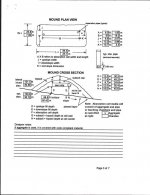
My house is a 2 bedroom but my septic system is sized for a 3 bedroom (450 gpd). I have a mound system that's 22' x 80'
 
Last edited:

ard

Well-known member
Joined
Feb 16, 2015
Messages
4,391
Location
Sierra Foothills... California
Id pay a few $ to someone that does septic design.

Here they require you dig pits and run a perc test- so you have actual values. Does you county let you use actual rates and not canned 'worse soil possible' rates?
 
OP
J

jmillican1983

Well-known member
Joined
Dec 23, 2018
Messages
52
Location
Behind my house
Id pay a few $ to someone that does septic design.

Here they require you dig pits and run a perc test- so you have actual values. Does you county let you use actual rates and not canned 'worse soil possible' rates?

I know the perc testing was done when the septic system was installed in 1987 but I don't have any info available from that. I was trying to find a way to determine my soil type, so I can better understand the drain field requirement.

As far as limiting my home to 2 bedrooms, that's actually not the case because the minimum system design is for a 3 bedroom. As far as I can tell from the research i've done, they don't allow you to size the system smaller than what would accommodate a 3 bedroom house.

It looks like my options are:
1. Determine from the county or a professional if I can reduce my secondary drain field size via determination of favorable soil which would then allow a smaller drain field, or get approval for an alternative secondary drain field type which by design may have a smaller footprint

2. Move the shop placement (which has already been designed/engineered/ submitted to county). This option would likely require removal of more trees, and/or eliminating the RV cover/gable extension portion of the design. At this point I am not willing to revisit the tree removal option.

I appreciate all the feedback.
 
OP
J

jmillican1983

Well-known member
Joined
Dec 23, 2018
Messages
52
Location
Behind my house
My house is a 2 bedroom but my septic system is sized for a 3 bedroom (450 gpd). I have a mound system that's 22' x 80'

Is this a sand filtration system? I realize everyone's soil is different in regards to absorption rate, but 22'x80' is about 1/3 the footprint of my system.
 

Dustball

Well-known member
Joined
Jun 25, 2011
Messages
2,081
Location
Hudson, WI
Is this a sand filtration system? I realize everyone's soil is different in regards to absorption rate, but 22'x80' is about 1/3 the footprint of my system.

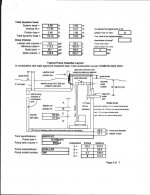
I uploaded the info for my system. I am not the original owner.
 

Attachments

  • septic_Page_1.jpg
    septic_Page_1.jpg
    94.7 KB · Views: 38
  • septic_Page_2.jpg
    septic_Page_2.jpg
    87.4 KB · Views: 37
  • septic_Page_3.jpg
    septic_Page_3.jpg
    91.9 KB · Views: 29
  • septic_Page_4.jpg
    septic_Page_4.jpg
    89.3 KB · Views: 30

Pluribus

Well-known member
Joined
Dec 16, 2012
Messages
2,143
Location
Skagit County, WA
When you refer to, "secondary drain field" I assume you're referring to an area that has not been used, but you have to keep available to build a replacement drain field if yours fails catastrophically. Where I am, that area is referred to as a reserve drainfield.

Beyond what you've already mentioned as far as seeing about a system upgrade to reduce the secondary area requirement, there might be other options. To me, it looks like you could possibly identify another area on your property that meets those requirements. It could be as simple as evaluating ground adjacent to where the existing design calls out, or it could involve identifying an area on some other part of the property.

Is the company/person who designed/built the system still in business? If you don't know who did it, county docs should have that either in permits, or at the health department. A quick call to them might result in some good information. The designer might have to come out again to perk test or soil log potential sites to make this work, but assuming you have the property space, that would be one of the first calls I made.
 
OP
J

jmillican1983

Well-known member
Joined
Dec 23, 2018
Messages
52
Location
Behind my house
When you refer to, "secondary drain field" I assume you're referring to an area that has not been used, but you have to keep available to build a replacement drain field if yours fails catastrophically. Where I am, that area is referred to as a reserve drainfield.

Beyond what you've already mentioned as far as seeing about a system upgrade to reduce the secondary area requirement, there might be other options. To me, it looks like you could possibly identify another area on your property that meets those requirements. It could be as simple as evaluating ground adjacent to where the existing design calls out, or it could involve identifying an area on some other part of the property.

Is the company/person who designed/built the system still in business? If you don't know who did it, county docs should have that either in permits, or at the health department. A quick call to them might result in some good information. The designer might have to come out again to perk test or soil log potential sites to make this work, but assuming you have the property space, that would be one of the first calls I made.

Good thinking about contacting the company who installed the existing system. I think they're listed on the info I have. I will try to get a hold of them to see if they have any helpful info.

As far as dedicating a different portion of the property for the reserve or secondary drain field, that isn't an option on my property. There's a line across the plot map that says "no drain field north of this line". The property is on the edge of a cliff and I'm sure they don't want the septic running off into the river in the valley below. I'm pretty much bound to the area called out on the plot map for the secondary drain field.
 

ard

Well-known member
Joined
Feb 16, 2015
Messages
4,391
Location
Sierra Foothills... California
I know the perc testing was done when the septic system was installed in 1987 but I don't have any info available from that. I was trying to find a way to determine my soil type, so I can better understand the drain field requirement.

.

Understood.

Your calculations use 'the worst soil'...if you could show your soil is better, that would help. Nothing to do with bedrooms

When I built in 1993, we submitted the perc tests. That is on file at the county. YMMV of course. Did you pull your old permit file?
 
OP
J

jmillican1983

Well-known member
Joined
Dec 23, 2018
Messages
52
Location
Behind my house
Understood.

Your calculations use 'the worst soil'...if you could show your soil is better, that would help. Nothing to do with bedrooms

When I built in 1993, we submitted the perc tests. That is on file at the county. YMMV of course. Did you pull your old permit file?

I will definitely look into the soil. I have at least some of the septic permit file. I should confirm with the county that there's no additional information available. There's no language in my paperwork about the perc test. Hopefully there's info available on that. Otherwise I assume I'd have to pay for another perc test to get the info I need on the soil.
 

yeldogt

Well-known member
Joined
Jan 2, 2012
Messages
18,184
What you run into is "minimum systems" .. Jurisdiction requires this size tank .. tank requires this size field. Field based on location and soil conditions .. even if the building does not need the size ... the minimum tank size does.

It's one of those - what if the next guy builds an addition. The lot will take "X" sf dwelling.

You can't reduce the field to match the house .... it matches the tank.

I have been down this road many times as I am typically rebuilding an old property -- you really get into the weeds of regulations when trying to take an nonconforming property into the 21st century zoning/ health codes.

If it was me I would call my board of health -- or better yet --- go in and ask some basic questions. Go mid morning -- trying to get an actual inspector.
 

cantupshift

Member
Joined
Sep 26, 2015
Messages
17
One county in Tennessee they have perc tests expire after 5 years. Doesn't make sense but maybe just to require it to conform to modern regulations.

I would be concerned with the county wanting to expand or play by more modern setbacks.

Getting a soil engineer out there may be worthwhile.
 
To avoid these ads, REGISTER NOW!
OP
J

jmillican1983

Well-known member
Joined
Dec 23, 2018
Messages
52
Location
Behind my house
Another thought I had is possibly allowing for a 36” depth of the secondary (reserve)drain field vs the current 24” existing drain field. The chart I have shows 375’ of drain field required if it’s installed at 36” depth with the worst soil type. If allowed that would eliminate one of the 75’ lines and move my setback 10’, solving my problem.


Sent from my iPhone using The Garage Journal mobile app
 

59 wagon man

Well-known member
Joined
Oct 25, 2010
Messages
1,589
Location
hollywood fla
have you ever thought or heard about infiltrator drainfield systems? they require less sq footage than a stone and pipe drainfield
 
OP
J

jmillican1983

Well-known member
Joined
Dec 23, 2018
Messages
52
Location
Behind my house
One county in Tennessee they have perc tests expire after 5 years. Doesn't make sense but maybe just to require it to conform to modern regulations.

I would be concerned with the county wanting to expand or play by more modern setbacks.

Getting a soil engineer out there may be worthwhile.


I know the setbacks I’m working with are current requirements. And everything I’m reading about drain field requirements are current as well.


Sent from my iPhone using The Garage Journal mobile app
 

yeldogt

Well-known member
Joined
Jan 2, 2012
Messages
18,184
Another thought I had is possibly allowing for a 36” depth of the secondary (reserve)drain field vs the current 24” existing drain field. The chart I have shows 375’ of drain field required if it’s installed at 36” depth with the worst soil type. If allowed that would eliminate one of the 75’ lines and move my setback 10’, solving my problem.


Sent from my iPhone using The Garage Journal mobile app

I don't think you understand what is typically involved -- there are few items that are as regulated as septic systems .. maybe wetlands and critical streams. NOt even wells.

You can't touch them ... septic systems

in an emergency when something crazy happens -- you can get a repair order that often includes a mandated improvement. Like a truck cracking a tank and being required to install a larger more modern model or a bear digging up part of a field and being forced to add clean outs .. but, you can't just alter the system.

New permits have to conform to current codes
 
OP
J

jmillican1983

Well-known member
Joined
Dec 23, 2018
Messages
52
Location
Behind my house
I don't think you understand what is typically involved -- there are few items that are as regulated as septic systems .. maybe wetlands and critical streams. NOt even wells.


You can't touch them ... septic systems


in an emergency when something crazy happens -- you can get a repair order that often includes a mandated improvement. Like a truck cracking a tank and being required to install a larger more modern model or a bear digging up part of a field and being forced to add clean outs .. but, you can't just alter the system.


New permits have to conform to current codes


To be clear, I’m not trying to alter my existing drain field.


Sent from my iPhone using The Garage Journal mobile app
 

walta

Well-known member
Joined
Jan 13, 2017
Messages
2,309
Location
Dutzow Missouri
Consider planning the back up field as infiltrator drainfield system.
I think the required field will be at least 25% smaller.
https://southernsepticanddesign.com/septic-services-blog/why-choose-an-infiltrator-drain-field/
Walta
Drain-field-Replacement.jpg
 
OP
J

jmillican1983

Well-known member
Joined
Dec 23, 2018
Messages
52
Location
Behind my house
After talking to the County this morning, They were able to email me more info about my septic system including the soil analysis. For my soil type (which happens to be the worst performing type) I need 450ft of drain field for they type of drain field that was installed.

They told me though, that as long as it's noted on the permit application, I would be allowed to reduce my secondary (backup) drain field footprint with the understanding that if that area was ever needed for a new drain field, I would have to use a more costly, higher maintenance type of drain field system that is designed to function in a smaller space.
 

Randy in Maine

Well-known member
Joined
Nov 21, 2010
Messages
2,176
Location
The Beach
they just want to be able to be certain that when your 30 year old system dies (and they all die eventually), you will have adequate space to locate a new system there.

One of the advantages of the fiberglass infiltrators (pictured above in a bed) is that they are able to store up wastewater when all of a sudden you have a lot of water used faster than it can be absorbed into the ground. Also if they die they can be reused with fresh sharp sand under them. The tricky part is getting the installed and removed without breaking them. A small track loader works well.
 
OP
J

jmillican1983

Well-known member
Joined
Dec 23, 2018
Messages
52
Location
Behind my house
they just want to be able to be certain that when your 30 year old system dies (and they all die eventually), you will have adequate space to locate a new system there.

One of the advantages of the fiberglass infiltrators (pictured above in a bed) is that they are able to store up wastewater when all of a sudden you have a lot of water used faster than it can be absorbed into the ground. Also if they die they can be reused with fresh sharp sand under them. The tricky part is getting the installed and removed without breaking them. A small track loader works well.

I do recognize the value in ensuring there's room for an adequate backup. That infiltrator system advertises up to a 30% smaller footprint than a traditional system. That would be perfect. I don't know what the actual sizing would be but either way it sounds like I will have options for a slightly smaller secondary drain field whether it's a sand filtration type or the infiltrator. My current system is a pumped dosing type system that I understand pumps a prescribed amount of fluid uphill (300ft) to the drain field once the septic tank reaches a certain capacity. I can only imagine what it cost for that system. Hopefully it lasts for many more years.
 

Pluribus

Well-known member
Joined
Dec 16, 2012
Messages
2,143
Location
Skagit County, WA
You'd mentioned pressurized line to pump to the drainfield, but do you have a pressure distribution system for the drainfield, or is that just a conventional field? This would make your system a pump to gravity, which is not a pressure distribution system. If indeed you're already using a pressure distribution system, it's going to be harder (read, more expensive if possible) to reduce the area of the field.

An infiltrator system, which is still a "gravity" system, will potentially reduce drainfield area over a conventional gravity system, but it won't take the place of a pressure distribution system.
 
OP
J

jmillican1983

Well-known member
Joined
Dec 23, 2018
Messages
52
Location
Behind my house
You'd mentioned pressurized line to pump to the drainfield, but do you have a pressure distribution system for the drainfield, or is that just a conventional field? This would make your system a pump to gravity, which is not a pressure distribution system. If indeed you're already using a pressure distribution system, it's going to be harder (read, more expensive if possible) to reduce the area of the field.

An infiltrator system, which is still a "gravity" system, will potentially reduce drainfield area over a conventional gravity system, but it won't take the place of a pressure distribution system.

Maybe you're right and it's still a gravity system. It says "serial distribution" and also says "standard system" but it doesn't say much else in regards to the design of the drain field. Are there any specific features that would confirm gravity vs pressure based on the drawings or permit application?
 

Randy in Maine

Well-known member
Joined
Nov 21, 2010
Messages
2,176
Location
The Beach
Keep in mind that the organic mat under a leaching field is what actually treats the wastewater.

Nothing wrong with a pump if you need one. Normally they sit in a 150 gallon pump chamber (just past the septic tank) and pump about 100 gallons at a pump cycle. Usually the pump pine is a 2" PVC pipe and it pitched to drain back to the pump chamber. It usually has a little "weep" hole to allow the pipe to stay empty when it is not pressurized to keep it from freezing. Usually installed a pump chamber with pump and alarm is about $1K so it can be real money.

A "pressure distribution system" is commonly used on really sandy areas (like a sand dune near the ocean or a lake) to build up the organic mat under the leaching system so the wastewater gets treatment sooner. It sprays kind of like a lawn sprinkler. they are a little more complicated to install and normally utilize 2" PVC pipe with a 1/8" hole about every 16-24". They work well but are prone to "clogging" up the little holes in the pipes. They sort of look like this...

images


A "serial" distribution system normally built using trenches or infiltrators and each trench drops down a couple of inches to the next lower one. They work well in hilly terrain. The pump would likely dump into the highest level and then gravity flows to the next level and so on as the organic mat under the system builds up. They work pretty well if your state allows them (not all do). It can be pretty cost effective if you have to bring in a bunch of fill.

1h9VfTYvnGt71zzqw_TzVGQiSr3U557F0psQ-EMTSkQs8aE2UcnoJ_4kDw_3rmEQYdjVZ2ksEjcEmZg8o4EWomrL9UPoJ5TTopS8sOKgvR3Ws9kpYjQ1xUSxbgE


I would talk to the guy who designed or installed your system. He can likely aswer most of the questions.
 
OP
J

jmillican1983

Well-known member
Joined
Dec 23, 2018
Messages
52
Location
Behind my house
Keep in mind that the organic mat under a leaching field is what actually treats the wastewater.

Nothing wrong with a pump if you need one. Normally they sit in a 150 gallon pump chamber (just past the septic tank) and pump about 100 gallons at a pump cycle. Usually the pump pine is a 2" PVC pipe and it pitched to drain back to the pump chamber. It usually has a little "weep" hole to allow the pipe to stay empty when it is not pressurized to keep it from freezing. Usually installed a pump chamber with pump and alarm is about $1K so it can be real money.

A "pressure distribution system" is commonly used on really sandy areas (like a sand dune near the ocean or a lake) to build up the organic mat under the leaching system so the wastewater gets treatment sooner. It sprays kind of like a lawn sprinkler. they are a little more complicated to install and normally utilize 2" PVC pipe with a 1/8" hole about every 16-24". They work well but are prone to "clogging" up the little holes in the pipes. They sort of look like this...

images


A "serial" distribution system normally built using trenches or infiltrators and each trench drops down a couple of inches to the next lower one. They work well in hilly terrain. The pump would likely dump into the highest level and then gravity flows to the next level and so on as the organic mat under the system builds up. They work pretty well if your state allows them (not all do). It can be pretty cost effective if you have to bring in a bunch of fill.

1h9VfTYvnGt71zzqw_TzVGQiSr3U557F0psQ-EMTSkQs8aE2UcnoJ_4kDw_3rmEQYdjVZ2ksEjcEmZg8o4EWomrL9UPoJ5TTopS8sOKgvR3Ws9kpYjQ1xUSxbgE


I would talk to the guy who designed or installed your system. He can likely aswer most of the questions.

I am fairly certain that I have something very similar to that last picture. The original permit application does say "serial distribution" and my property is sloped 20 feet over about a 300 foot distance.
 

Pluribus

Well-known member
Joined
Dec 16, 2012
Messages
2,143
Location
Skagit County, WA
Maybe you're right and it's still a gravity system. It says "serial distribution" and also says "standard system" but it doesn't say much else in regards to the design of the drain field. Are there any specific features that would confirm gravity vs pressure based on the drawings or permit application?

Rany in Maine has some good info. If you can find the "as-built" at the county/state/health department, then you can verify what you have.

As for trying to figure out what you have with limited info, if you see words like "dosing" or "intermittent" those are key words that indicate pressure distribution. If there's another pump besides the one that lifts the effluent from the tank to the drainfield, then it might be pressure distribution. No luck tracking down the designer/installer?
 
OP
J

jmillican1983

Well-known member
Joined
Dec 23, 2018
Messages
52
Location
Behind my house
Rany in Maine has some good info. If you can find the "as-built" at the county/state/health department, then you can verify what you have.

As for trying to figure out what you have with limited info, if you see words like "dosing" or "intermittent" those are key words that indicate pressure distribution. If there's another pump besides the one that lifts the effluent from the tank to the drainfield, then it might be pressure distribution. No luck tracking down the designer/installer?

There's definitely not another pump outside the one that pumps effluent from the septic tank to the drainfield. The paperwork I have does use the word "dosing" but I now think that is in reference to the effluent pump only pumping intermittently, once the float reaches a certain level in the tank, therefore dosing the effluent to the drain field.

I haven't been able to contact the installer yet, but I did get a call back from another septic company who said they use a product made by Orenco Systems called Advantex. It's a sand filter system. This is expensive, but reduces the drain field length from 450ft to 150ft. Another GJ user posted that same info in this thread already. This would be a perfectly viable option.
 

Randy in Maine

Well-known member
Joined
Nov 21, 2010
Messages
2,176
Location
The Beach
I agree that the dosing is really the pump cycle. Normally a cycle is about 1/4-1/3 of the daily design load. We do that to allow the pump to operate more efficiently. I would see if the regulatory agency you are dealing with will allow you to have a new field designed and to either install it or record the plan for when what you have fails. It is sort of up to them to see what they will require.

Also it is a plus to have an approved design on file if you have to sell the place someday.
 
To avoid these ads, REGISTER NOW!
Top Bottom