To avoid these ads, REGISTER NOW!

Sheet metal bending question

Joined
Mar 23, 2013
Messages
5
So I have 16 gauge sheet metal from the hood of a car that needs to be bent. I have cut the sheet metal off the frame of the hood and need to make a 90 degree bend across the front. It's less than four feet long, so you would think that a four foot 16 gauge box and pan brake would do the trick.

Here's the issue: all hoods have that slight hump in the center of the hood. This will of course require force to create the bend I need. Does anyone have an educated guess as to how much stronger of a box and pan brake might be required? Should I get a 12 gauge brake?

I just don't want to spend the money on a brake and find out that it can't do these jobs. I have been using 4 large C clamps and a rubber mallet to make these bends, but considering how often I need to do this, I really need to buy a good box and pan brake.

Thanks in advance for any suggestions or feedback.
 
To avoid these ads, REGISTER NOW!

MP&C

Well-known member
Joined
Oct 21, 2009
Messages
4,403
Location
Leonardtown, MD
What are you working on that has 16 ga metal in the hood? Seems too thick a metal for any car hood I've worked on....
 
OP
F
Joined
Mar 23, 2013
Messages
5
To reply to the first person: The center has never buckled in the past with C clamps. I haven't used a box and pan brake before. I would think that a bar would lower and clamp the piece to the work surface prior to the bend. Wouldn't this address buckling by pressing down to reduce the center bump and any buckling during the bend?

As for the second reply: Not sure what you are trying to say. Sounds like you have never dealt with hoods that are from the 50s to early seventies. Most of the ones I am bending are thinner, but some have been thicker...14 gauge. Yes I know how to use a caliper.

So back to the original request, does anyone have an educated guess or experienced based opinion as to whether or not the center rise of hoods would add enough resistance to keep a 14 gauge brake from being able to bend the piece?
 

MP&C

Well-known member
Joined
Oct 21, 2009
Messages
4,403
Location
Leonardtown, MD
Actually the reason I was asking is because I have two mid 50's hoods in the shop presently, the factory exterior sheet metal on both is 19 ga. This 19 ga is the same for most of the US auto makers to include the year range you indicated, so I was just curious what kind of car you were working on that used 16 ga on exterior sheet metal, or if perhaps I was misreading your post.

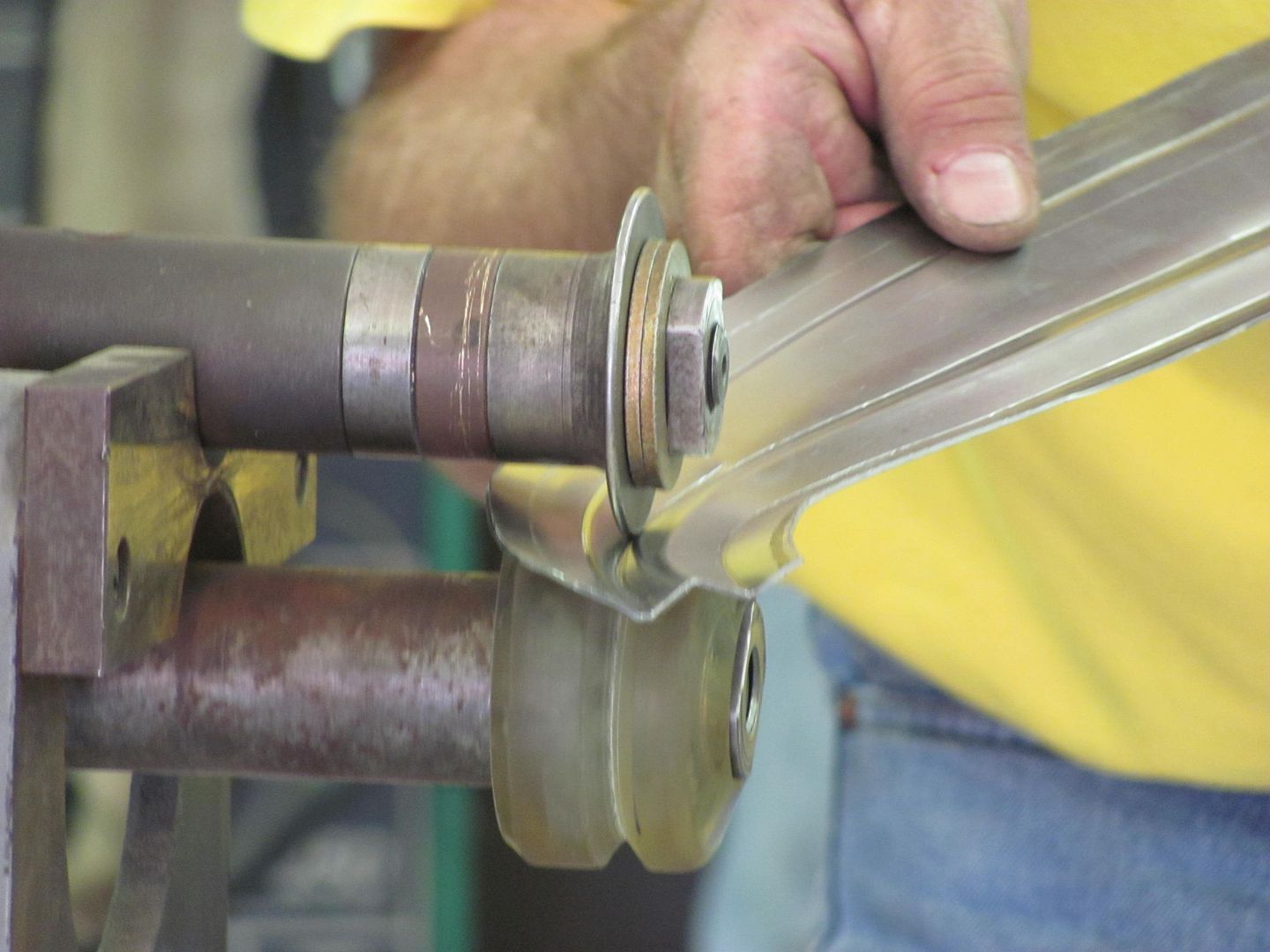
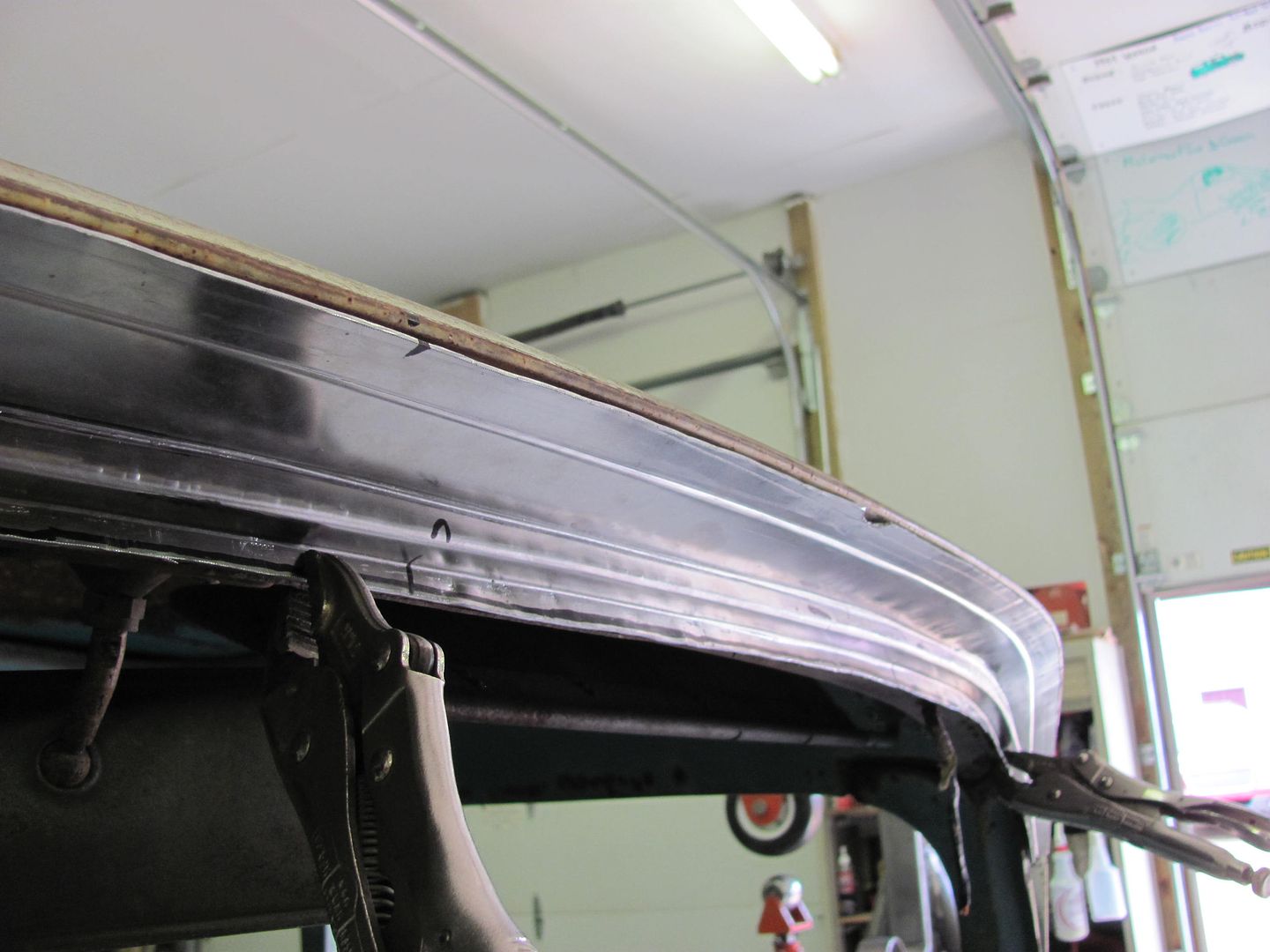
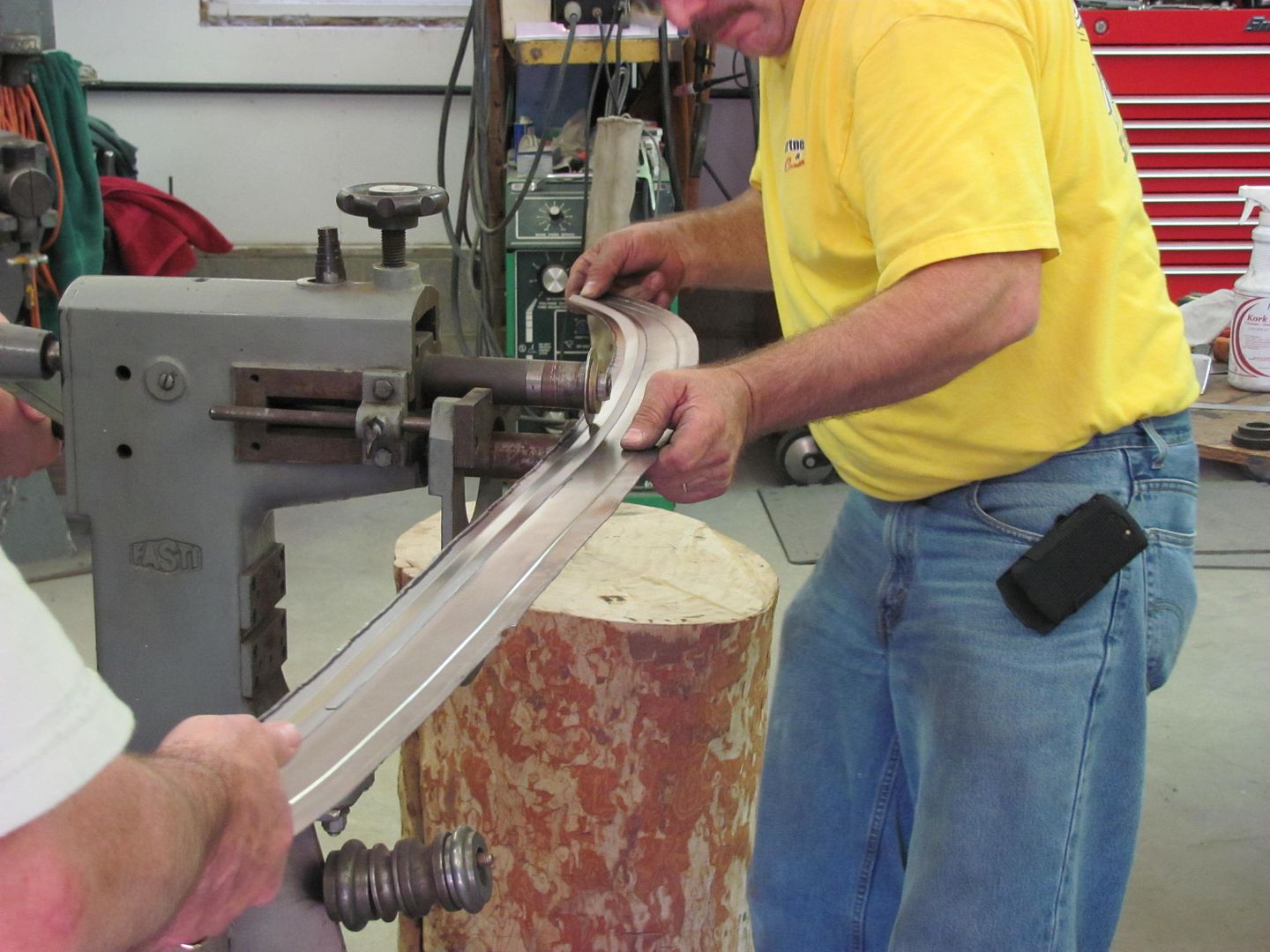
Back to your original question, most hoods I've seen haven't been straight across the front, so perhaps a tipping wheel in a bead roller could give you better flexibility and unlimited length of bend over using a 4' brake... as well as other shaping possibilities. For example:


Picture094.jpg


Picture097.jpg


Picture107.jpg
 
Last edited:

Boyd

Well-known member
Joined
Dec 16, 2009
Messages
866
Location
Forney, TX
As for the second reply: Not sure what you are trying to say. Sounds like you have never dealt with hoods that are from the 50s to early seventies. Most of the ones I am bending are thinner, but some have been thicker...14 gauge. Yes I know how to use a caliper.

Wow. Only your second post and you're already showing your ***. Sounds to me like you need to do more lurking and less posting. This site, like every other, has a member or two that is an embarrassment to the community, but the rest of the regular posters (MP&C being one) will bend over backwards to try and help someone with a question or problem. The breadth of expertise, and the willingness to share it, is one of the reasons that makes garagejournal a special place. At least for me.

Just sayin' - check your attitude when you post. Good luck with your project(s).
 

Kevin54

MEMBER EMERITUS
Joined
Jan 12, 2005
Messages
29,341
Location
Urbana, Ohio
To reply to the first person: The center has never buckled in the past with C clamps. I haven't used a box and pan brake before. I would think that a bar would lower and clamp the piece to the work surface prior to the bend. Wouldn't this address buckling by pressing down to reduce the center bump and any buckling during the bend?

As for the second reply: Not sure what you are trying to say. Sounds like you have never dealt with hoods that are from the 50s to early seventies. Most of the ones I am bending are thinner, but some have been thicker...14 gauge. Yes I know how to use a caliper.

So back to the original request, does anyone have an educated guess or experienced based opinion as to whether or not the center rise of hoods would add enough resistance to keep a 14 gauge brake from being able to bend the piece?

Damn, that answer is not going to set to well with members. You may want to just take a look at this thread http://www.garagejournal.com/forum/showthread.php?t=182565, then maybe rein in your horns a little bit. A ****** second posting like that doesn't set too well with seasoned members.

And as far as getting an answer for your question, maybe you should have stated what year of hood you are bending and how high the mid ridge is in the hood. If you have a sharp crease, you may want to cut it out, bend the hood, than add a piece of metal that is formed, back in and finish it off. Different cars around that era have anything from a rounded in front area to a sharp double crease that is raised.
 

srmofo

Well-known member
Joined
Oct 15, 2009
Messages
6,161
Location
SW ohio
Im glad Im not the only who was put off by this guys attitude. I erased what I had begun to write last night because I had had a few and wasnt about to be lowered to those levels.

Kudos to you MP&C for biting your tongue and still helping the guy out. Thats more than I would have done, especially for someone this new to the community
 

crewchief888

Well-known member
Joined
Dec 3, 2009
Messages
13,744
Location
NW indiana
Im glad Im not the only who was put off by this guys attitude. I erased what I had begun to write last night because I had had a few and wasnt about to be lowered to those levels.

Kudos to you MP&C for biting your tongue and still helping the guy out. Thats more than I would have done, especially for someone this new to the community

pretty much did the same thing...

by this morning, i was hoping there would be a pic posted of what he's trying to do.. might help to see :dunno:


:beer:
 

NASTYZEN

Well-known member
Joined
Jun 11, 2010
Messages
2,823
Location
St-Colomban,Que. Canada
As for the second reply: Not sure what you are trying to say. Sounds like you have never dealt with hoods that are from the 50s to early seventies. Most of the ones I am bending are thinner, but some have been thicker...14 gauge. Yes I know how to use a caliper.

Way to go Fullcircle. You just made a ****** entry, insulting our top sheet metal guy on here.:thumbup:

Lucky for you MP&C is also one great guy and I'm sure if you post some pic's of what your trying to make or explain it some more detail, You should get all the help you will ever need here.
Good luck with your project anyways.
 

MP&C

Well-known member
Joined
Oct 21, 2009
Messages
4,403
Location
Leonardtown, MD
Full Circle, is this for repairing a hood, or are you making tables? Quite a difference in application.. and tooling recommendation...


...and Claude, I don't think I could hold a candle to some of your work.. But thanks guys for the moral support..
 
Last edited:

gorilla

Well-known member
Joined
Dec 13, 2007
Messages
1,652
Fullcircle, Your post was not clear about what you wanted to do. I'm assuming that you want to bend steel you've salvaged from old hoods. Leaf brakes seldom work well at their full rated capacity. I think that you will need a brake rated for 14 gauge minimum. I base my opinion on 35+ years in the metal working biz.
 
To avoid these ads, REGISTER NOW!

zmaxmotorsports

Well-known member
Joined
Jan 11, 2013
Messages
11,948
Location
South of omaha
How about just flattening out the hump before you try bending it,or how about just taking the strip out of the hood from front to back if your just using it as a patch panel?
Or maybe just stop by a welding shop and buy a cut off piece that they have laying in the corner?
I consider myself to be an above average metal fab guy,but MP&C is definitely above my pay scale.
It might be a good idea to look at some of his work hes posted before tripping over your **** coming out of the gate like that,just saying.
 

retrobuilder

Well-known member
Joined
Oct 18, 2012
Messages
408
Location
Alpharetta GA
Photos please- would help tremendously. fyi, why not take a 48" 2x2x 1/8 piece of angle iron ( or two 24 inch pieces to avoid the center V), clamp with c clamps and flat stock then start at end and body hammer it vertical, start at shallow angle forming each end to center and increase same step till you get 90 degrees- that way you avoid the "V" and use of a special brake. Just do not use an air bender- likely will buckle the crease badly.
 
OP
F
Joined
Mar 23, 2013
Messages
5
Sure I can show some pictures. I appreciate the feedback from those that gave and ask you guys that thought I was being rude to re-read what I typed. I wasn't being rude at all. I just asked if the person hadn't worked with older hoods, because the ones I am working with are quite old, and I have found that manufacturers used thicker sheet metal some of the older hoods I've worked with. I won't take your comments personally, because your judgement of others is simply your perception. No ego coming from me. I know I know very little about metal work, but as I said, I do know how to use a caliper. So to the fun stuff:

To MP&C: Your suggestion would work if I only had one long bend, but I'm essentially making a shallow pan as a table top. Sounds like I should have included the information that I was making multiple bends to form corners.

CoralTable2.jpg

I think the already folded side would pose a problem if I did what you suggested? If you think it would allow me to make these bends with four corners, feel free to let me know. Maybe I'm missing something in your suggestion. This is my first time attaching a picture, so I apologize in advance if it didn't go into the message.

Someone suggested pressing the pieces prior to bending. I have thought I might have to go this route, so thanks for confirming that's a logical path.

To Retrobuilder: I hear you, and I have been using C clamps in the past. What you suggested absolutely works. I'm just trying to shave off time in making these tops, so I am hoping a finger brake or other piece of equipment might help cut down the time it takes to bends all four sides.

To Gorilla: Thanks. That's useful to hear. Maybe I should just spend the extra money on a stronger brake to help ensure, I don't start breaking fingers at these tougher parts of the hoods.

To Kevin54: The height of the ridges vary depending on the hood. I try not to buy ones that have really high or sharper central ridges in order to minimize this problem.

To JustAnOldGuy: I don't remember what the thickest hood was from. It was Chevy or Ford. I bought a number of hoods one day, so I don't remember each vehicle I pulled hoods from that day.

So based on the picture and hopefully better description of what I'm doing, what do you think? Box and pan brake or some other method to fold the sides to make corners before welding?

I don't have a TIG, so I'm trying to get by with welding these bent corners with a MIG as shown below:

SheetMetalCornerWeld.jpg

Tough to MIG sheet metal, but the finished and unfinished corners seem to turn out all right.

Again, thanks in advance for feedback and suggestions.
 
Last edited:

zmaxmotorsports

Well-known member
Joined
Jan 11, 2013
Messages
11,948
Location
South of omaha
And now for the rest of the story as Paul Harvey would say.:beer:
Those could be made with a regular sheetmetal brake if you don't have a box/pan brake,you would just have to hand work the corners a little bit is all.
Another easier option for the future if youre going to build a lot of these might be to build yourself a bead roller and just get some scrap sheets of whatever gauge you decide to make them from,even 20-18g would make a really stout table with a bead rolled into it to stiffen it up.
Not to mention all those old car hoods youll be saving for resto projects!:spit:
 

MP&C

Well-known member
Joined
Oct 21, 2009
Messages
4,403
Location
Leonardtown, MD
In reading your original post I was unsure of what you were doing, and my initial response to use a tipping die was based on the premise of making a repair patch for a rusty leading edge of a hood. It wasn't until I searched your avatar name that I came across some of your "hood" furniture. Based on that, I would say that some apron and B&P brakes out there may not have enough "throat" to get a hood in the machine for bending, however after trimming one would expect some of the crown could be pushed down. I have a couple Diacro manual press brakes, but their major shortfall in this application is they are only 24" wide. But a press brake will typically give you more throat to get something such as those hoods in between the dies. Powered versions of a press brake are available anywhere from 18" wide up to 10' or better... but many will require 3 phase power. Unsure of your shop conditions to support such machinery, but those are my thoughts pending further input...
 
Last edited:
OP
F
Joined
Mar 23, 2013
Messages
5
zmax: Thanks for the feedback. I actually want to use the hoods for artistic purposes. I'm making tables and desks and utilizing the natural weather and rusting patterns to make artistic tables.

MP&C: Yeah, I should have provided more information to let you and others know I was making multiple bends resulting in corners. Thanks for your opinion. As for my shop, we outgrew our location again last winter, and we're looking at a couple locations to put up a steel building for our rental fleet. My wife and I own Colorado Camper Rental. We rent campers to people from late Spring to Fall, and in the winter, I'm starting to teach myself what I can to make tables and desks with an artistic vibe. As I said before, I don't know much at all regarding metal work, so I'm doing my best to figure out ways to make these tables and desks. So you said a normal brake has a deeper throat. Because of my limited knowledge and zero experience with brakes, I have a question: Wouldn't a normal full length brake work for two bends on either side of the sheet metal, but wouldn't the already folded side interfere when I bend the adjacent side?
 

zmaxmotorsports

Well-known member
Joined
Jan 11, 2013
Messages
11,948
Location
South of omaha
You can bend all 4 sides on a regular brake,youll just have bend the corners on first 2 sides a little bit 2 fit the other 2 sides in the brake.
Then you can just straighten them back up with some hand folders before welding them up.
Its too cold out for me to go dig tools out of the van right now so I just googled a picture of some hand folders to show you what Im talking about.
 

Attachments

  • folders.jpg
    folders.jpg
    6.1 KB · Views: 38

theknurl

Banned
Joined
Dec 18, 2010
Messages
921
Location
SoCal
I have a question: Wouldn't a normal full length brake work for two bends on either side of the sheet metal, but wouldn't the already folded side interfere when I bend the adjacent side?

yes, thats where box & pan and press brakes come in

box & pan brakes come with a full set of fingers even used

press brakes have more clearance......but usually the dies are separate and full length, you will need shorter punches

you need to do more research to figure out what would fill your needs the best and then watch the auctions

go to the Dreis and Krump website and look around
 

ilovevocs

Well-known member
Joined
Jun 26, 2009
Messages
1,966
Location
Toledo, Ohio
To echo what z Motorsports said...


When I build boxes that won't fit in my box and pan break (its only 4') I have to use my 10' break. i start by bending one of the short sides first. Then proceed to bend the two long sides next leaving the short side hanging out of the end of the break just a bit so it clears the upper die. For the last bend on the short side I start it in the break, Bend it until you cant bend it any more. You can use plier tongs as z stated but I use a hemming tool. You can buy them or build them. I prefer to build them as I build them sturdier than you can buy them and I'm cheap. I build them from scrap 99% of the time.

I wouldn't trust this tool http://www.amazon.com/gp/aw/d/B0014E9WJG
on 16 gauge, but you could def. build something that would handle it. Once you have the bend line defined in the break you shouldn't have too much trouble finishing it off. Work it slowly, don't try to bend it all at once or you will leave kinks and dents in the material.

You may want to consider brazing in lieu if welding for you application.
 
Last edited:

MP&C

Well-known member
Joined
Oct 21, 2009
Messages
4,403
Location
Leonardtown, MD
I'm making tables and desks and utilizing the natural weather and rusting patterns to make artistic tables.

I'm starting to teach myself what I can to make tables and desks with an artistic vibe. As I said before, I don't know much at all regarding metal work, so I'm doing my best to figure out ways to make these tables and desks. So you said a normal brake has a deeper throat. Because of my limited knowledge and zero experience with brakes, I have a question: Wouldn't a normal full length brake work for two bends on either side of the sheet metal, but wouldn't the already folded side interfere when I bend the adjacent side?


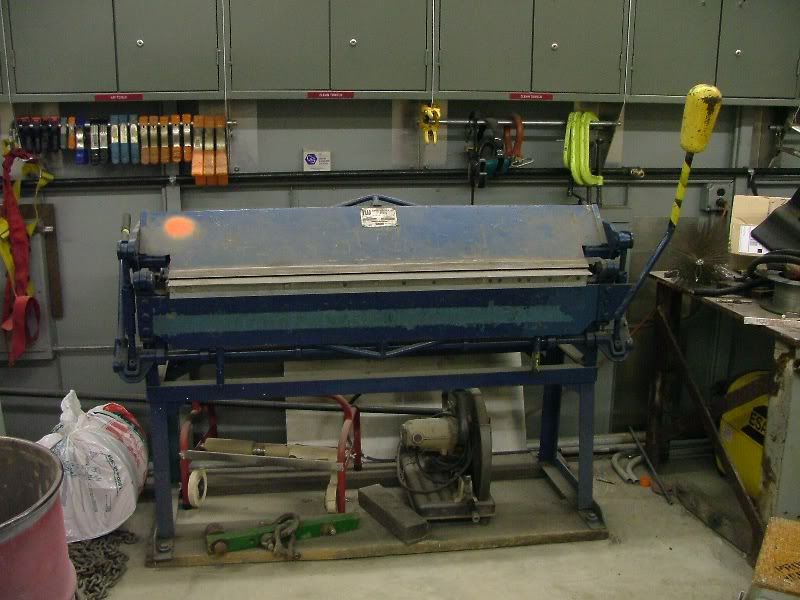
This is an apron brake, which is good for straight bends. But as you surmised, it will give you issue once you get to folding the ends. The throat I was referring to is how far it will open up to accomodate a crowned or peaked hood. As they are really designed for flat sheet metal, they normally only open an inch or so, which may be an issue with anything having a crown or creased peak.

Picture155.jpg


A finger brake will do better to accomodate the end bends, any typically would have a better throat opening based on it is designed for accomodating odd shapes. Sorry, I don't have one to show a sample..

Next, a press brake would work as well. A larger, powered version will have about the widest throat you could get. Not sure what kind of capital investment you're looking at making, but there are plenty of good used industrial machines out there. I personally would opt for a used quality machine over a new shiny offshore version, whether your choice is a manual or powered machine.

Although the press brake may not have as much flexibility in finger width, you could cut your upper die to accomodate a "standard size" ends that would fit within the side folds, and with longer bends just align the dies together end to end and clamp in place. If the corners have been notched to remove the un-needed metal, either the press brake or finger brake should equally do the job. Here's my manual press brakes, granted they are only 24" wide, so they wouldn't do the long bends you are looking for, but longer powered versions of a press brake would also serve you well..


HPIM6459.jpg
 
To avoid these ads, REGISTER NOW!
Top Bottom