To avoid these ads, REGISTER NOW!

Sheet metal surface for workbench?

jamesm113

Member
Joined
Jul 24, 2020
Messages
5
Location
california
Have a 3'x8' workbench, currently have a decent 3/4" piece of maple plywood with 1"x12"'s underneath. Used danish oil to finish the top, when I made it a few years ago.

I'm not a pro, just someone who's relatively handy and winds up with a lot of projects (fixing dirt bikes, mountain bikes, cars, house projects, etc, etc).

However, after some use, it's gathered it's share of dents, but also lots of grease stains that don't come out easily. Spraying down with brake clean seems to do the best job at cleaning, but doesn't do a great job either.

These days, I can't put down anything clean on the workbench as it will get stained.

Was thinking a nice metal surface would be easy to clean/wipe down after use.

I got a quote from a local sheet metal shop that has me intrigued- 4'x10' sheets, 24 gauge, $48 for galvanized, $120 for stainless steel. At those prices, I'd probably be go for stainless, but I don't really know enough about different gauges to know what would be good for my use.

1. Would 24 gauge be enough? I'm not too hard on the workbench, but I'm not easy on it either.
2. How much maintenance would the galvanized need to keep rust away?
3. Anything else I should be considering?
 
To avoid these ads, REGISTER NOW!

gorilla

Well-known member
Joined
Dec 13, 2007
Messages
1,649
16 ga is the right thickness, I would have a 1 1/2" 90* bend on the front edge to cap the wood and a backsplash bent on the back side if the bench is against the wall. SS'T is more pretty but galv will work just as well.
 

isb cornbinder

Well-known member
Joined
Nov 3, 2010
Messages
7,073
Location
Pacific South West, BC, Canada
I used to build custom work benches. I know that 16 gauge (1/16") is as light as you want to go.
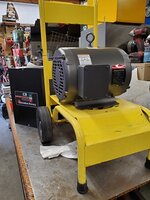
I do not recommend stainless. If you need stainless steel, that is a different situation. Stainless will show a mark every time your touch it. I call the marks, personality. I do not have stainless tops in my shop. My favorite workbench has hydraulic lift cylinders. I can go from 3" to almost 48". It is made with 14 gauge steel diamond plate. I have a half sheet of hot rolled steel that I put on the bench to give a flat surface. (pictures 2&3)
Google for METAL SUPERMARKET. They are in over 100 locations across North America.
 

Attachments

  • MOTORCYCLE LIFT 1.jpg
    MOTORCYCLE LIFT 1.jpg
    58.8 KB · Views: 254
  • phase converter foot mod 3.jpg
    phase converter foot mod 3.jpg
    56.8 KB · Views: 249
  • AMERICAN ROPTARY BASE 2.jpg
    AMERICAN ROPTARY BASE 2.jpg
    64.5 KB · Views: 247
Last edited:

ATC

Well-known member
Joined
May 12, 2012
Messages
8,255
Location
VA
Yes, 24ga is way too thin. Ever been around a carport, or an old tin shed? That's about the thickness.

I'd go as thick as you can possibly go (smaller number), preferably 1/8" (10-11ga).

You don't have to bend it on 90's either. Have it cut the same size as your top now, center it up, and screw it down. Drill, countersink, and the screwheads will be flush with the top.
 

mikedodge

Well-known member
Joined
Jun 27, 2017
Messages
2,749
I've seen lots of normal thin sheet metal on work benches over the years and it works perfectly fine if it's over something solid. You have to be trying to punch through it. The only annoying thing about it is the hollow type of feel or sound it has.
I also know people who use plywood and it holds up for years. If it does get worn in spots or soaked in oil and can't tolerate it anymore you simply replace it.
 

BillK

Well-known member
Joined
Aug 24, 2006
Messages
9,296
Location
Beautiful Southern Maryland
I have two metal benches at the shop for heavy stuff like cylinder heads but I also have one that is a piece of plywood kitchen countertop with white Formica on it. I use it as my assembly bench etc. It is easy to keep clean and still looks pretty decent after 20 years or so :) I can measure how thick the metal ones are on Monday but since you are going over plywood I dont think you need that much thickness. Also I dont think you need stainless or galvanized. Mine are both plain steel and are fine.
 
OP
J

jamesm113

Member
Joined
Jul 24, 2020
Messages
5
Location
california
16 ga is the right thickness, I would have a 1 1/2" 90* bend on the front edge to cap the wood and a backsplash bent on the back side if the bench is against the wall. SS'T is more pretty but galv will work just as well.
I already have a backsplash, not sure if I need that to be metal though.

I used to build custom work benches. I know that 16 gauge (1/16") is as light as you want to go.
I do not recommend stainless. If you need stainless steel, that is a different situation. Stainless will show a mark every time your touch it. I call the marks, personality. I do not have stainless tops in my shop. My favorite workbench has hydraulic lift cylinders. I can go from 3" to almost 48". It is made with 14 gauge steel diamond plate. I have a half sheet of hot rolled steel that I put on the bench to give a flat surface. (pictures 2&3)
Google for METAL SUPERMARKET. They are in over 100 locations across North America.
Is stainless different than stainless steel? Or are you saying that I should only get stainless if I absolutely need it?

If I get a non-stainless steel counter top, will I have to maintain it to prevent rust (oil it/etc)?

Nearest Metal Supermarket is 130 miles away :-(
 

Roert42

Well-known member
Joined
Jan 25, 2023
Messages
190
Location
NE Penn
If going metal cap I would say 16ga is good. Much thinner and you cut it open, have it flex too much. Not getting any benefit of thicker with it on top of plywood.

With no backer I would say no thinner then 10ga.


Stainless is great, yeah shows a lot of scuffs and stains, but cleans easy and no rust unless you leave a bunch of chlorine spilled on it.

Aluminum is also great, will have a similar finish to stainless.

Either one, if they hear real scratched up and it bothers you. Get a sheet of scotch right or emery and spend 10 minutes cleaning up the grain.

I have a sheet of 12ga aluminum on top my toolbox for a work surface.
 

isb cornbinder

Well-known member
Joined
Nov 3, 2010
Messages
7,073
Location
Pacific South West, BC, Canada
I already have a backsplash, not sure if I need that to be metal though.


Is stainless different than stainless steel? Or are you saying that I should only get stainless if I absolutely need it?

If I get a non-stainless steel counter top, will I have to maintain it to prevent rust (oil it/etc)?

Nearest Metal Supermarket is 130 miles away :-(
It is the same. If you want to save a few dollars, get galvanized. I like the look. marks do not show as easily
Get what you like. I am saying stainless marks easily. This looks like a nice weekend for a drive in the country.
 

LeeG

Well-known member
Joined
Nov 29, 2012
Messages
1,525
Location
Phoenix, AZ
It is a lot more work, but I prefer a heavy wood top (think 2x4's laminated together face to face). I have a smaller one that I built years ago, and when it gets too beat up, I just run a sander over it. I soaked it pretty good with boiled linseed oil when I made it, and it really holds up well. I do throw a piece of hardboard over it if I am doing something particularly dirty.

Lee
 

Jeff Ivers

Well-known member
Joined
Apr 9, 2010
Messages
2,550
Location
Oklahoma
16 ga is the right thickness, I would have a 1 1/2" 90* bend on the front edge to cap the wood and a backsplash bent on the back side if the bench is against the wall. SS'T is more pretty but galv will work just as well.

I don't remember what gauge I used, but a number of years ago I had a sheet of aluminum bent to top my workbench which is roughly 2' by 8'. My existing top was two layers of 3/4" plywood. Now, if I spill something, it can be cleaned up without leaving the top polluted. Definitely have the front edge bent down and have the back edge bent up for a "can't roll off the back of the bench" lip, which some call a backsplash. Personally, I would not use galvanized, but I don't know why I have that prejudice.
 

goldtang

Well-known member
Joined
Feb 11, 2012
Messages
469
Location
Western Australia
First bench was 1/8 mild steel plate on top of 1 1/2 angle iron frame was ok just cleaned down with wd40 etc, when I had the opportunity to build a new bench it is all aluminium (I was given all of the material it was what was left over from a job) and has a 10 mm aluminium top
it dose scratch easy but it is a work bench and very easy to clean
look at what you can afford to pay go thick and do it once
 

juddspaintballs

Well-known member
Joined
Sep 1, 2011
Messages
324
Location
Hedgesville, WV
I have a 2x8 solid metal framed work bench capped with 3/4" plywood capped with 1/2" plywood screwed and glued together. On top of that, I have a piece of 11 gauge plain steel that I screwed down to it with countersunk wood screws. It's been this way for several years now. I spray it with WD-40 once in a while and wipe it down with a rag. That keeps the metal clean and keeps it from rusting. It might be a bit of overkill, but I don't have an issue hammering on something lying on the bench or cleaning a carburetor on top of the bench with gasoline and carb cleaner dripping from it.

i-NWrF7q2-X4.jpg
 

Joemctag

Well-known member
Joined
Aug 11, 2017
Messages
813
Location
Outside raleigh nc
I already have a backsplash, not sure if I need that to be metal though.


Is stainless different than stainless steel? Or are you saying that I should only get stainless if I absolutely need it?

If I get a non-stainless steel counter top, will I have to maintain it to prevent rust (oil it/etc)?

Nearest Metal Supermarket is 130 miles away :-(
The large steel warehouses in most cities of over, say, 500,000, have a variety of sheets. You pay for any cuts and bends. A lot of small fabricators don’t have the large machine to bend something 10’ long, but they know who does.
 
To avoid these ads, REGISTER NOW!

Zeus36

Well-known member
Joined
Oct 1, 2016
Messages
814
Location
Ventura, California
1/4" aluminum plate works for me. I use it over the workbench, for a table top on an RAS converted to a surface grinder, and on top of several low Stanley Vidmar cabinets. Easy to radius the edge and round the corners.
 

mikedodge

Well-known member
Joined
Jun 27, 2017
Messages
2,749
The big question is are you replacing the top with metal or just covering up the wood one. This thick stuff is all over kill if it's going over what's existing and 1/8 is probably the thinnest you'd want to go if there's nothing underneath it.
 

pbon

Well-known member
Joined
May 14, 2017
Messages
3,498
I have a New Age Pro stainless bench top over cabinets. It is just for looks. Feels like stainless sheetmetal over a regular 3/4-1” wood top. Dents if you pound on it. Not sure of the gauge but no way is it 1/8”. Thick is better if it is for heavy duty use.
 

CraigStu

Well-known member
Joined
May 22, 2014
Messages
4,009
Location
Blacksburg, Va
First I would look at tempered hardboard. Pegboard w/o the holes. 3/16 might be ok but try to find 1/4 inch. This stuff is a great combination of tough but relatively cheap. So, if you damage it, pitch and replace it. If you still want steel then plain steel is fine. You could paint the underside, the bent flanges, or backboard sections, but the main work section just leave as is and rub it down once in a while w/ any engine oil, kerosene, or atf that you have a few ounces left over. Personally, I'd get as close to 1/8in thick as you can afford. Less will do but here a little extra thick sure isn't going to hurt.
 

smackey05

Well-known member
Joined
Oct 21, 2009
Messages
792
Location
Massachusetts
I used to build custom work benches. I know that 16 gauge (1/16") is as light as you want to go.
I do not recommend stainless. If you need stainless steel, that is a different situation. Stainless will show a mark every time your touch it. I call the marks, personality. I do not have stainless tops in my shop. My favorite workbench has hydraulic lift cylinders. I can go from 3" to almost 48". It is made with 14 gauge steel diamond plate. I have a half sheet of hot rolled steel that I put on the bench to give a flat surface. (pictures 2&3)
Google for METAL SUPERMARKET. They are in over 100 locations across North America.
Didn't now this place existed... Thanks for sharing and I'm going to try them out tonight after I take some measurements.
 

charbar

Well-known member
Joined
Feb 6, 2021
Messages
1,993
Location
Midwest
About half of my 40' workbench has 10 gauge sheet sitting on top of laminated 2x4s. Gets the **** beat out of it and other than gouges from heavy objects (tractor final drive housings, axles, transmissions, engines, etc) getting drug across it it's fine. The wood portion of the bench that I try not to really work on is dented, chipped, stained, oil saturated etc. For what I do I would never do a wood top because it just wouldn't last. Even if I had a sacrificial piece of plywood or something on top I would have to change it every two weeks.
I have no problems with rust on mine either. If you did I would think wiping it down with some WD40, PB Plaster, etc would keep the rust off it. Clean up is as easy as shooting some brake clean on it and wiping it off. Clean up on a wood top is pretty much impossible if you are working with oil, grease, diesel, gas etc.

Put sheet metal on it and be done with it for the rest of your life (y)
 

jonesg

Well-known member
Joined
Mar 15, 2010
Messages
1,698
Location
northern Maine/
maple needs no finishing, thats why they use maple in the first place .
Its a functional work surface, best not to treat like furniture.

Clean it by removing the top surface wood , use a large french knife held vertical and scrape back and forth, put some energy into it.
After its scraped back to fresh wood don't apply anything, no oils or varnish.
 

Lassen Forge

Well-known member
Joined
Apr 26, 2014
Messages
14,997
Location
The romantic hills of central Umbria, Italy,
I wouldn't go thinner than 12 ga. - the wood under it is what gives it heft and resiliance, the sheet steel gives it toughness. Thicker is always better IMO, up to whatever weight limit you set. My indoor "heavy work" bench was 10 ga over 2x6, the outdoor was 1/4" plate.

The only place I'd use 24 ga SS is in a kitchen...
 

bugnut

ALLIANCE MEMBER
Joined
Jul 14, 2012
Messages
3,837
Location
Central Ohio
@jamesm113
Suggested previously by others here is when you are working on wet greasy messy stuff on your workbench use a large aluminum cookie sheet underneath. If welding, i have a .150 2x4 sheet of steel that is placed on metal saw horses. Workbench top stays cleaner and welding is done away from areas saturated and wooden. YMMV

A full-size sheet pans Measuring 26″ x 18″ with about a 1-inch rim around the outside


simnil

Active member
Joined
Jun 22, 2020
Messages
43
Location
Sweden
Just some misc bench thoughts.

Go with as thick a sheet as you can, if you can dent it with a one handed sledge hammer it's too thin.

Aluminium is nice, but remember the sledge hammer, durability isn't the same as steel.

Just bare metal is best, any surface treatment, paint, galvanized etc will flake more or less and those flakes will go places they are not supposed too be...

Consider noice! Now you have a wood base which deadens sound, (gluing the sheet metal to the wood will probably "deaden it" better than just bolting it). I my opinion lots of all metal benches are noicy so if you go all metal you might consider going with an over-thick top to make it less so. At least in my opinion thicker is better when it comes to how it sounds when yo are muscling stuff around on the bench. My bench has a 50mm solid steel metal top and that's perfect in my opinion...until I need to move it, it literally weighs a tonne! (got it for scrap price from work, one of the best deals of my life so far)
 

jmiller_2308

Well-known member
Joined
Nov 16, 2013
Messages
551
Location
Shakopee, MN
Some comments after reading all the above:

  • My assumption is that the steel would be placed on top of the maple plywood top already there. If so, you can go a bit thinner but I'd suggest at least 16 gauge. If my assumption is wrong and there is no supporting structure under the steel then you need plate. BTW: I have one top that is 16 gauge on top of 1.5" of plywood and managed to dent the steel from hammering on something that was sitting on the bench.

  • OP, I'd suggest following the recommendation of having a back splash and front wrap bent into the top. The reason for the added bends is that it will help contain fluids from working under the steel at the back of the bench.

  • I'd personally avoid galvanized as I wouldn't want to be breathing bad fumes if I heated the metal. Keep the normal finish from a cold/hot rolled product and it should last well with minimal maintenance; just be sure to never leave standing water on the surface. You can easily clean up rust with a grinder but once the hard finish from the rolling process is gone your maintenance could increase.

  • I liked the idea of stainless but my pocket book didn't. I foolishly attempted to polish one of my steel tops and messed it up by starting with too coarse of sanding paper. Polishing can be done but my foolish attempt is what made me aware of the reality that removing that hard finish from the rolling process makes the bench require more maintenance.

  • Maintenance of a steel top isn't that hard. You can avoid most rust issues by not allowing water to stand on it for long periods of time (mind your cold beer :) ). Wax or oil it occasionally to keep other moisture from causing it to corrode. Wax works really well if you want to put things on the bench without oil staining those things. Any hard wax works from car wax to stuff like renaissance wax.

  • If you go with steel I would suggest keeping a board, mat, or other material around to lay on top of the steel for work items that might be easier to address on a less slippery surface or for when you are using chemicals that you don't want to mess up the top with (paint comes to mind).
 

BillK

Well-known member
Joined
Aug 24, 2006
Messages
9,296
Location
Beautiful Southern Maryland
I just measured the two here at my business. They both appear to be 14 ga "plain" steel. One is on a 3/4" plywood base and the other is just the steel on a steel framework. Both of these benches have had the **** beat out of them in an Automotive Machine Shop for at least 35 years and still look pretty darn good. The plain steel one is my cylinder head bench so it gets heads thrown on it all day every day. The other one has my bench mounted press and a vise on it. It gets beat up pretty good o a regular basis.
 

clutch47

Well-known member
Joined
Aug 8, 2008
Messages
379
Location
Elysburg, PA
If your issue is how it looks, make some stain with steel wool and vinegar... and stain it black. When it wears...it'll be very cool looking.
Meanwhile you're ahead by the $hundie+ you were about to drop.
 

jonshonda

Well-known member
Joined
Jul 17, 2017
Messages
4,731
Location
Wisconsin
16ga will be fine if it's going over a solid top. I agree that you should have the front and sides (if they are exposed faces) broke down so you don't have to worry about catching the edge on anything, and for durability. Also not a bad idea to have it broke for a backsplash as well.

Also you can do stainless if you want, not all of it is brushed stainless such as a No 1 or No 2 finish which is a dull finish w/o polishing or brushing applied. Funny everyone things all stainless has a brushed finish. rookies
 

RMERR

Well-known member
Joined
Mar 22, 2017
Messages
429
Location
Northern CA
I'm with the replaceable wood top crowd. Not a fan of galvanized tops, just don't like the look or feel. While stainless will clean nicely, I find it to be too slick, it's a slip and slide for nuts and bolts and will show every scratch (if you care). Hardboard is ok, but for replaceable wood tops, I prefer 1" MDF with two or three quick coats of a wipe-on polyurethane. It's super flat, cheap, and if it gets ugly either flip it or do a quick sanding and recoat and its like new. Or just replace the top sheet, as I said, super cheap. If I've got got something kinda messy, I'll lay down a large sheet of cardboard first to protect the top.

As mentioned, all depends on your usage. In fairness, I currently have multiple benches, commercial Shopmate, oak, MDF, Al and steel. Probably do 90% of my projects on the wood tops, but then I'm not doing transmissions or small engine repair.
 
To avoid these ads, REGISTER NOW!
Top Bottom