Shelf Pins not true to size?

gamp945

Well-known member
Joined
Jun 4, 2014
Messages
1,549
Hi all,

I recently decided to up my shelf pin game and use a router instead of a drill.

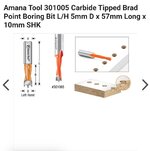
I purchased a high-quality 5mm upcut bit and cut my holes. To my surprise, the shelf pins fit somewhat loosely in the holes.

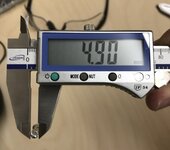
I measured the diameter of three different styles of shelf pins I have on hand. They all measure about 4.90mm.

Are 5mm shelf pins undersized on purpose? Or, do I just have low-quality shelf pins? When I look at different manufacturer's pin specifications, their drawings indicate that their pins should be precisely 5mm in diameter.

Is anyone out there willing to measure the diameter of their 5mm shelf pins with a caliper? I'd like to find a source that is actually true to size.
 
To avoid these ads, REGISTER NOW!

BTL-A4

Well-known member
Joined
Feb 28, 2018
Messages
1,263
Location
Santa Clarita
They could be 3/16" pins. 4.9mm is 0.193" which is about 0.005" less, within manufacturing tolerances.
 

legenddc

Well-known member
Joined
Aug 19, 2012
Messages
1,082
I just measured mine. The cheap Home Depot ones were all closer to 5 and the Lee Valley ones I bought were 4.9mm.

I bought the Lee Valley ones because the Home Depot ones required pliers to get out of the shelf pin holes.
 
OP
G

gamp945

Well-known member
Joined
Jun 4, 2014
Messages
1,549
Thanks for measuring, legenddc!

How do you drill out your holes - a router or a drill bit? What size do you drill? And do the Lee Valley (4.9mm) fit snugly inside your holes?

I'd really like to know why some sources are 4.9mm whereas others are actually 5.0mm. Maybe it's like BTL-A4 said and some pin manufacturers make them in a 3/16" diameter but sell them as 5mm.
 

legenddc

Well-known member
Joined
Aug 19, 2012
Messages
1,082
Thanks for measuring, legenddc!

How do you drill out your holes - a router or a drill bit? What size do you drill? And do the Lee Valley (4.9mm) fit snugly inside your holes?

I'd really like to know why some sources are 4.9mm whereas others are actually 5.0mm. Maybe it's like BTL-A4 said and some pin manufacturers make them in a 3/16" diameter but sell them as 5mm.
I have the Kreg jig that uses a drill bit.

I noticed the Home Depot pins seemed like they were stamped and some of the ends seemed deformed a little. The Lee Valley ones fit just fine and seem more substantial.

What material are you using? I used solid cherry lumber. Maybe softwood or particleboard would have the holes be bigger?
 

jar944

Well-known member
Joined
Jul 26, 2010
Messages
6,016
Location
Northern VA
They are usually so tight after a bit of finish I resort to pliers to install the pins.
 
OP
G

gamp945

Well-known member
Joined
Jun 4, 2014
Messages
1,549
I'd be curious if there was any wobble in the router bit/jig. Is the hole a perfect 5mm?
I've used this jig from Rockler in the past and do not recall any issues. It's been hanging on my wall for many years. https://www.rockler.com/rockler-shelf-pin-drilling-jig
At first I assumed that my new jig must be making holes way too large due to runout in the router chuck, an imperfect 5mm bit, a sloppy router plunge base, or operator error. But when I measure the holes with a caliper, I measure just barely over 5mm (~5.05mm) which is what I'd expect due to the compounded errors mentioned above.

Frustratingly, my cheapo Kreg jig produces holes that the 4.90mm pins fit snugly in. When I measure the holes that the Kreg produces, they seem to be closer to 4.90mm than 5.0mm.
 
OP
G

gamp945

Well-known member
Joined
Jun 4, 2014
Messages
1,549
I have the Kreg jig that uses a drill bit.

I noticed the Home Depot pins seemed like they were stamped and some of the ends seemed deformed a little. The Lee Valley ones fit just fine and seem more substantial.

What material are you using? I used solid cherry lumber. Maybe softwood or particleboard would have the holes be bigger?
I also have the Kreg jig. What size holes do you measure? I get a measurement closer to 4.90mm than 5.0mm, but maybe there is some measurement error on my part.

All three styles of pins that I have on hand appear stamped and the shanks are clearly not perfect. They are visually a bit oblong, and my calipers indicate as much. The widest part measures about 4.90mm. One of my three sources of pins is from Kreg. The other two are from a cabinet shop.

I'm using 18mm Baltic (Russian) birch. My new jig is made by Bosch. I imported all the pieces from Germany and all told it cost several hundred dollars.

Last week I placed an order for 5mm pins manufactured by Hafele (a top shelf German manufacturer). Their pins are made in France. Their website has CAD drawings that clearly show a shank diameter of 5.0mm. I assume these are about the highest-quality pins available, so we'll see whether they actually measure 5.0mm as their CAD drawings indicate.
 

PCustoms

Well-known member
Joined
Jul 23, 2011
Messages
23,684
Location
VT
@gamp945 what does your bit measure?

What brand bit?

I use the cheap kreg jig and a drill. Pins fit snug but not overly tight
 

alinc100

Well-known member
Joined
May 26, 2013
Messages
3,070
Location
Dearborn,MI
Possibly unscientific: Can you get a hold of a 5mm drill rod? transfer punch? Something that would be untainted 5mm dia.?
 
To avoid these ads, REGISTER NOW!
OP
G

gamp945

Well-known member
Joined
Jun 4, 2014
Messages
1,549
Possibly unscientific: Can you get a hold of a 5mm drill rod? transfer punch? Something that would be untainted 5mm dia.?
I have a metric set of brad point bits (Fisch Germany) and used the 5mm to check the size of the holes I'm creating. The shank side of the bit needs force to go into holes created with my Kreg jig, and fits just a tiny bit loose into holes created with my Bosch router jig.

For now I'm concluding that the Kreg jig creates slightly undersized holes (~0.10mm) and my Bosch jig creates slightly oversized holes (~0.05mm).
 

jar944

Well-known member
Joined
Jul 26, 2010
Messages
6,016
Location
Northern VA
I have a metric set of brad point bits (Fisch Germany) and used the 5mm to check the size of the holes I'm creating. The shank side of the bit needs force to go into holes created with my Kreg jig, and fits just a tiny bit loose into holes created with my Bosch router jig.

For now I'm concluding that the Kreg jig creates slightly undersized holes (~0.10mm) and my Bosch jig creates slightly oversized holes (~0.05mm).

Line bore bits are brad point, I'd try to find a 5mm carbide Brad point bit with 1/4 or 6mm shank. Unfortunately the standard line bore bits are 10mm shank or it would be easy to just use one of those.

I've run the kreg drill bit in a router before I got my hinge borer. It worked well enough but bit life was shorter than ideal.

Edit: the festool lr32 system uses a line bore bit with 8mm shank
Screenshot_20250908_073652_Chrome.jpg

Standard 10mm bit
Screenshot_20250908_074721_Chrome.jpg
 
Last edited:
OP
G

gamp945

Well-known member
Joined
Jun 4, 2014
Messages
1,549
I received and measured the Hafele shelf pins today - also 4.90mm, despite their CAD drawings clearly specifying 5.0mm
 

Attachments

  • IMG_4972b.JPG
    IMG_4972b.JPG
    122.4 KB · Views: 3

PCustoms

Well-known member
Joined
Jul 23, 2011
Messages
23,684
Location
VT
I received and measured the Hafele shelf pins today - also 4.90mm, despite their CAD drawings clearly specifying 5.0mm

You know a 5mm pin won't fit a 5mm hole, right?

I see you concluded the router is cutting oversized, but still:

@gamp945 what does your bit measure?

What brand bit?

I use the cheap kreg jig and a drill. Pins fit snug but not overly tight
 

GrayFlattop

Well-known member
Joined
Jan 18, 2018
Messages
1,053
Location
Chicago
I received and measured the Hafele shelf pins today - also 4.90mm, despite their CAD drawings clearly specifying 5.0mm
Do their CAD drawings specify a tolerance? Likely not. We’re talking about shelf pins for cabinets- not precision bearing fits / tolerances for tooling or engine builds. The shelf pins were manufactured to a commercial tolerance. For this type of product, the manufacturer (and the user) would not want the pins to be oversized, so it’s likely a -/- tolerance.

To compound your frustration, it’s entirely possible that the same pins purchased a year from now may fit “better” or “worse”. No manufacturer for this type of product would be able to offer parts like this at a reasonable price point with theoretically perfect accuracy.
 
OP
G

gamp945

Well-known member
Joined
Jun 4, 2014
Messages
1,549
Update: I ordered Everbilt 5mm shelf pins from Home Depot after reading in the reviews that they have an actual diameter of 5mm. My caliper confirms that they measure about 5.02mm in diameter and they fit perfectly (snugly) in the holes made with my Bosch jig.

@GrayFlattop: you make a good point about tolerances. None of the drawings I've seen specify a tolerance. But when I measure the diameters of the FIVE different sources of shelf pins that I now have, the tolerance (variability) of pins within each source are consistent (about 4.90mm). The Everbilt brand pins are also consistently 5.02mm.

I'm frustrated that I've had to waste time figuring this out but glad that I at least have a source of pins that are actually 5mm diameter to fit in actual 5mm holes.
 
OP
G

gamp945

Well-known member
Joined
Jun 4, 2014
Messages
1,549
I measured one of the line bore bits I have here at .1925" / 4.94mm
Just wanted to let you know that I appreciate your posts and did investigate using line bore bits. I read on another forum that typical upcut and downcut spiral bits are meant to route rabbets and dados - not bore holes - and that a specialized brad-point line bore bit should be used for shelf pins. I'm not sure if that is true or not and can't find other sources that discuss this issue.

The problem is that there does not appear to be line bore bits in 1/4" or 6mm shank which are common router collet sizes. Almost all line bore bits appear to be 10mm shank. Festool makes one in 8mm. So at least in the US, using line bore bits in a regular router is a PITA.

I started looking into using an adapter bushing to change my 1/4 or 1/2" routers to 8mm or 10mm shank so that I could try using a brad point line bore bit, but tonight I discovered this is all unnecessary because the Everbilt shelf pins at HD are actually 5mm and fit into the holes I can make with my current 5mm upcut spiral router bit and 1/4" router.
 

RoninB4

Well-known member
Joined
Jul 22, 2020
Messages
3,689
Location
Under My House
I'm frustrated that I've had to waste time figuring this out but glad that I at least have a source of pins that are actually 5mm diameter to fit in actual 5mm holes.
-Just FYI it's almost always necessary to do a test cut/fitment for things like this. There are several factors that can/will affect sizing besides cutter diameter. Cutting edge concentricity to shank, runout in cutter holder (collet), cutter condition (dull?), cutter geometry, material being removed, and even how much material is being removed in one pass. This is true in metal working and I would think also true for woodworking as some woods deform under pressure but "spring back". Some might even tend to tear out more fibers/particles than the cutter actually severs. The difference in a preferred fitment in any material can be as little as .01mm so any cumulative error can add up real quick.

-Using manufacturer supplied drawings on websites isn't any guarantee of what you'll get. What you'll see on websites is almost never what is used in the manufacturer facility, those are just there to provide general info to the public. Unless you see things on a drawings like title block, material used, third angle projection, tolerance chart, part number, etc. then it's just a graphic representation and should not be considered precise/accurate information. There's even a possibility that tolerances aren't clearly indicated per feature and a "sheet tolerance" is used to reduce drawing clutter when all features can vary an equal allowable amount. Material suppliers change for manufacturers all the time so having an allowable tolerance of +/- means the costs can be kept reasonable. Tighter tolerances means higher costs for everybody. Order what you will but everything should be tested under actual conditions and verified before going further. It's like that for precision metal working too. Not what you wanted to hear but hope it helps for future reference.
 
To avoid these ads, REGISTER NOW!
Top Bottom