To avoid these ads, REGISTER NOW!

show us your spot welds

toplessHO

Well-known member
Joined
Oct 20, 2014
Messages
14,146
Location
central florida
show us your spot welds and tools,tongs etc

Whats the limits of using the TIG torch with blunt end of rod?

I have a couple 120v hand held tong type spot welders but they are challenged by material(16 ga) and space.
One of the areas is the wheel arch on rear 1/4 panels.

Plug welds are hard to do giving the appearance of factory spot welds.
What Ive done in the past was plug weld then grind smooth on exposed side
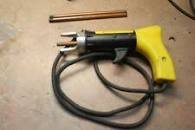
and use my carbon rod gizmo connected to the DC arc welder.
My small Mig(140A) has a spot weld timer thats great for plug welds.
 
Last edited:
To avoid these ads, REGISTER NOW!

no704

Well-known member
Joined
Apr 27, 2016
Messages
5,262
Not tried on spot welds, but when running Mig on vertical, or especially overhead, I find having a strong magnet on the backside to be very helpful.
 

Chris_Hamilton

Well-known member
Joined
Dec 2, 2012
Messages
1,023
Nothing but a modern type spot welder is going to give you perfect factory looking spot welds. Something like a Pro Spot i4. I've tried many things. Very hard to emulate the clean crisp depressed outline of a spot weld. Everything else is just a plug weld. I have made a fixture with a drill bit modified to flat bottom that I will go over a plug weld with. It works but is very time consuming. Most customers don't want to pay for that.

Another option is to TIG weld then make a simple fixture and dies for an air hammer that has a male and female side. I have used a crimping tool for this. Change the dies in the crimping tool to the "spot weld" dies. Then go over your plug/rosette weld and use the tool. One hit. The idea is sound IMO but the tool generally doesn't have enough power to make the depression. It will only work with a TIG as well as a MIG weld is too hard due to the carbon in the shielding gas. I am going to try the same setup using a 4X rivet gun. That should work. Just have to make the fixture. I will when I get something in that requires it.

You could also try using a die grinder and appropriate carbide burr to grind by hand depressions that simulate the spot weld. This works better on older stuff (50's early 60's) that had the deeper looking spot welds. With TIG welded plug welds I have also used a hammer and appropriate sized punch to put that depression in. Doesn't work everywhere though. A final option and one that might be achievable for most folks is to use a spot weld bit and drill slightly after the plug weld is ground. It does leave a depression where the center point of the spot weld bit is, but if you are careful, you can drill and make a nice round depression and carefully fill the center depression with a little glaze later. I will epoxy the metal then use a toothpick or similar and apply the glaze to the center mark left by the spot weld bit. Works pretty well.
 
Last edited:
OP
T

toplessHO

Well-known member
Joined
Oct 20, 2014
Messages
14,146
Location
central florida
good tips Chris.
Have you tried the TIG method of having the blunt end of tungsten almost contacting the work?
I think the handhelds will work if you get the larger 240v.
I have this 480V DC traction pack from a Chevy volt.
Have thought of using the frame and tongs of a handheld and tapping the voltage to whats suitable to weld,
varying with material thickness.
Have you ever seen the carbon rod welder?
This has been my go to method for duplicating an older factory weld.
 

Chris_Hamilton

Well-known member
Joined
Dec 2, 2012
Messages
1,023
Problem with all of the handhelds is that they don't have the power or the clamping force to duplicate factory spotwelds. The old ones that made the spot welds at the factory weighed hundreds of pounds. No conventional handheld can make 1/4"-5/16" spot welds. Even the 220V ones can do at most a 1/8"ish type spot weld. Not really good enough for automotive work IMO.
I'm no Engineer but in a nutshell the bigger the diameter of the spot weld the more power it takes. So to make a 3/16 versus 1/8 spot weld it takes double the power. Automotive work we are generally replacing 1/4" (6mm) - 5/16 (8mm) spot welds. Some spot welds are structural and 3/8".

The inverter units are the only ones that have the power to duplicate factory spot welds and can actually do structural spot welds. They are very expensive and out of reach for most. $25K and up for Pro Spot models. I hope to be able to afford one at some point in the future as they are very nice and allow you to take your work to the next level.

HTP does sell a handheld inverter unit that comes close. But the spot welds are about 3/16" which will work for some stuff (roof skin channels) and is OK for putting on a quarter panel etc. Just doesn't look exactly factory.
Have you ever seen the carbon rod welder?
This has been my go to method for duplicating an older factory weld.

I'd be interested is seeing some pics of your spot welds with it. I can make nice flush plug welds with MIG or TIG and the backside looks similar but nothing replicates the actual precise round indentation that a spot welder leaves. Ultimately barring having the high dollar spot welder I have to resort to using methods like I described above to replicate the look on stuff that needs to be perfect.
 
OP
T

toplessHO

Well-known member
Joined
Oct 20, 2014
Messages
14,146
Location
central florida
please dont wait up at night for those pics,its gonna be a while before I can get
back to shop to set up some demo.
Ive looked all over the net to find the carbon rod welder. I bought it at least 40 yrs ago,
I think it was from eastwood.The carbon rod is powered via bussbox or tombstone.
Im gonna try the new to me Miller 250 inverter stick/Tig machine for power.
This was made for doing one sided spot welds but it kinda sux at that,
really need the clamping force that the tongs or multiton machines have.
But it can finish off a plug weld to look like the nice fat factory welds.
This is WAY more work than a proper set up but for the novice or small shop
its another option.
Heres the only info I could find on the carbon rod gun.


Eastwood is promoting their"system", clamping pliers and a MIG spotweld nozzle
and that seems to work OK but I havent seen what the back side of weld looks like.
 
To avoid these ads, REGISTER NOW!

jmdirk

Well-known member
Joined
May 4, 2015
Messages
714
heres the one showing a TIG
put the nozzle on ,reverse the tungsten and go.


The nozzle isn't even that necessary. Just a guide to make sure you get the right distance assuming you have the stick out on your tungsten right.

Obviously still not exactly a factory style spot weld though.

I think I get where you're going though. You have a high amp power source (your welder). You should theoretically be able to use it as a spot welder.

The OEM spot welders clamp the pieces together, and provide high energy in a very focused space to do fusion welding. The ProSpot mentioned by Chris_Hamilton above seems like it can provide up to ~1500 lbs of clamping force. But it doesn't look like you'll get anywhere close to the output using a conventional welder. 12500A - I think that's AC. Can't really find a spec for how thick of a joint that machine can accommodate though.
 

Chris_Hamilton

Well-known member
Joined
Dec 2, 2012
Messages
1,023
Can't really find a spec for how thick of a joint that machine can accommodate though.
If you are talking about the inverter based spot welders like ProSpot, they can do structural spot weld. In my former life working as a collsion guy, we had one and I have done three panel (sandwich) spot welds with aproximately .100 thickness. These were structural spot welds on HSLA steel on a unibody rail. Those machines are awesome and for collision shops today almost essential considering the amount of HSS steel used on unibodies today.
 
OP
T

toplessHO

Well-known member
Joined
Oct 20, 2014
Messages
14,146
Location
central florida
Just saying my solution to a $25k machine.
Plug weld with a timer(for consistency) and put lipstick on the pig
by finishing off with my carbon arc unit to sloppy the weld up like factory welds.

On using the TIG gun I wonder if changing the gas to air makes a difference in weld appearance?
Logic is the resistive welders use no shielding gas

tutorials say to double the amps on the TIG. From what to what?
Most def need the clamps since the only pressure on it is the TIG nozzle.

Im still tempted in trying the 480v battery,can tap it at many different voltages in 50 v increments.
 
Last edited:

Monza Harry

Well-known member
Joined
Dec 29, 2018
Messages
1,433
Location
Windsor ON
found something on the carbon rod gun
*******, have you been able to get a functional weld from that? I too bought one from Eastwood, untold decades ago [30-35 years ago at least maybe more], and grew tired of making a mess of my projects. It may well have been my youth, inexperience, but at that time I felt product design. I now have an HF tong unit (240V) it is awkward but can do an ok job with a little more practice than I have. LOL! Harry
 

NYBODYMAN

Well-known member
Joined
Sep 10, 2013
Messages
5,021
Location
NY
I have seen and done regular plug welds and dress them when finished. Then epoxy primer and while the primer is still wet, dip a punch/pencil eraser/cigarette **** or anything of the correct likeness and size into the primer and simulate a spot weld.
 
OP
T

toplessHO

Well-known member
Joined
Oct 20, 2014
Messages
14,146
Location
central florida
*******, have you been able to get a functional weld from that? I too bought one from Eastwood, untold decades ago [30-35 years ago at least maybe more], and grew tired of making a mess of my projects. It may well have been my youth, inexperience, but at that time I felt product design. I now have an HF tong unit (240V) it is awkward but can do an ok job with a little more practice than I have. LOL! Harry
yes it took quite a bit of scrap metal practice
Its not ideal I only use it when backed into a corner.

As Chris has said and I agree,the 120v and 240v transformer type pinch spot welders
still dont have the power that the factory welder have.

Destructive testing will show this.
perhaps ,when time permits will show some different methods.
 
OP
T

toplessHO

Well-known member
Joined
Oct 20, 2014
Messages
14,146
Location
central florida
I have seen and done regular plug welds and dress them when finished. Then epoxy primer and while the primer is still wet, dip a punch/pencil eraser/cigarette **** or anything of the correct likeness and size into the primer and simulate a spot weld.
haha
a buddy who owned a car lot showed me the wet primer/pencil eraser trick about 45 yrs ago.
He also showed me the paper match stick touch up brush trick for those cheap azz used cars.
 

MoonRise

Well-known member
Joined
Nov 5, 2010
Messages
4,045
Location
NJ
On using the TIG gun I wonder if changing the gas to air makes a difference in weld appearance?
Logic is the resistive welders use no shielding gas
Nope.

With no shielding gas, an arc weld instantly oxidizes and makes a **** attempt. MIG, TIG, stick and FCAW (the flux burns and forms the shielding gas around the arc and the molten puddle of weld) all have shielding gas.

With no shielding gas, as soon as you strike an arc with the TIG you will crappify (technical term :lol: ) not only the base metal but also the tungsten electrode (into tungsten oxides of various types).

Actual spot welding doesn't use a shielding gas because there is typically no open arc and the combination of the electric resistance heating and the clamping pressure from the tongs squeezes the sheets together to form the weld nugget at the faying surfaces. Spot welding is not an arc welding process, but it does use electricity as the energy source for the heating.

For steel sheet metal spot welds, the weld parameters might be ~9000 amps for ~0.2 seconds with ~2000 lbs of tong pressure. No way are you getting that sort of amperage from your TIG machine at home. Without some sort of capacitor bank to insta-dump the electrical energy into a transformer (electrical, not robot vehicle :lol2: ) and some timing circuits to consistently time the power release to milliseconds or an individual number of PoCo AC cycles (about 10 or so cycles, or about 1/6 of a second give or take). Time, power/amperage, and clamping tong pressure are the usual controlled/varied weld parameters for spot welds.

And sunken depressed surfaces are actually NOT desired for quality spot welds most of the time. Surface indentation is usually a sign of non-optimized weld parameters (too much current and/or clamping pressure) and a weaker weld nugget.
 
To avoid these ads, REGISTER NOW!
Top Bottom