Private Lugnutz
Well-known member
Very well could be. I didn't take a photo, but the tip has a cruciform opening. High quality construction.


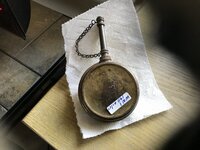
Really cool and very nice conditionFound this at the flea market this morning. I was a little worried about its condition, but it cleaned up well. Brass stopper and fixtures, leather gaskets. Pumps like the day it was made. Guessing it holds a half-pint or so. No markings, but I'm really liking it.






 www.esslinger.com
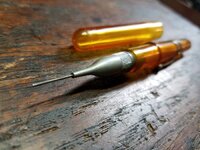
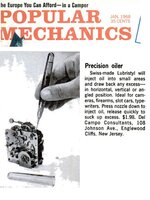
My thoughts exactly. I think they had watches in mind, but I'm thinking firearms.Leave it to the Swiss to make an ultra-cool pocket oiler.
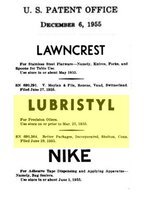
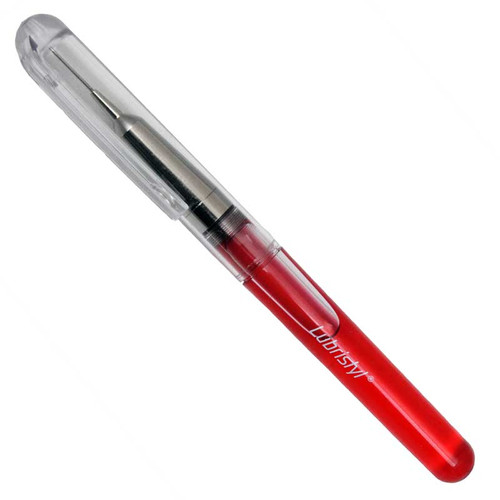
Wow. I didn't even think to see if they were still being made. They got a little fancier in style, but pretty much the same.P.S. Just found them new, at the watch repair tool website.
It was on the 'Everything is $1' table.Don't know how much you paid Lugz, but - if was less than $34 - you did well.
Ingenious! Looks just like a jingle bell!I make the small ones into Christmas ornaments
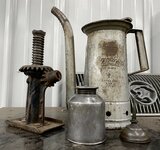
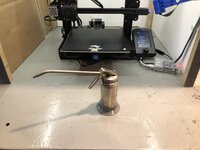

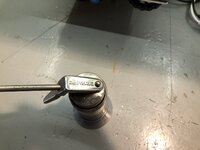
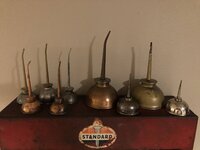


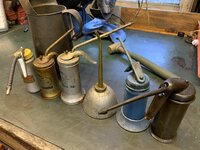
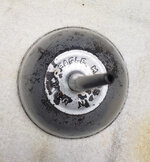
That is an oil can for a Browning machine gun. WWI and WWII and Korea.Can’t for the life of me remember when or where I got this. Says 1911 WW1 Oiler on the sticker but no other markings. Any body verify, seems like I’ve seen it on someone’s post.
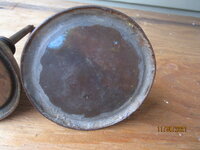
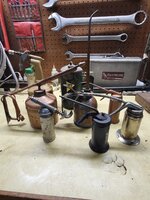
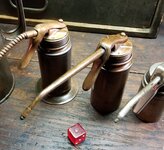
Very cool, Joe. I'm most curious about the bottoms. I have delved a little into oil can construction via WWII specs for jeep oilers. As you might expect in that era, the vessels were seamless heavy gauge high-grade cold rolled steel. But the "push-bottoms" (as you know, most oil cans are stubborn to drip due to the viscosity and the tiny opening in the spout without a little help) were very thin (.012") carbon or tempered spring steel electrically welded to the vessel. Is the bottom on the one on the left cast with the body?! What is the composition of the bottom on the one that is soldered to the body on the right? If you've had oil in them, how well do they work?those on the left and right are cast iron
Vintage hand pump oilers (Plews, etc) seal fairly well, jon. That is, they won't dispense unless you pump them. And they won't generally leak, even if left inadvertently upside down. I imagine your concern is evaporation (drying up rapidly) and perhaps flammability. I will emphasize that I have not done it. I'm just thinking about my pump oilers with regular oil.Anyone aware of an oiler can that would be good for boiled linseed oil? Needs to be air tight when not in use.
Vintage hand pump oilers (Plews, etc) seal fairly well, jon. That is, they won't dispense unless you pump them. And they won't generally leak, even if left inadvertently upside down. I imagine your concern is evaporation (drying up rapidly) and perhaps flammability. I will emphasize that I have not done it. I'm just thinking about my pump oilers with regular oil.

Thanks,That is an oil can for a Browning machine gun. WWI and WWII and Korea.
The bottoms on both cast iron cans are sheet brass so I am pretty sure that they have to be soldered, the larger can has so much excess I have to assume that it is a repair. BTW your comment on the WWII Jeep under hood oil cans reminded me it is time to oil the generator on my 53 Willys truck. Why do you suppose they eliminated the oil can when civilian production resumed?Very cool, Joe. I'm most curious about the bottoms. I have delved a little into oil can construction via WWII specs for jeep oilers. As you might expect in that era, the vessels were seamless heavy gauge high-grade cold rolled steel. But the "push-bottoms" (as you know, most oil cans are stubborn to drip due to the viscosity and the tiny opening in the spout without a little help) were very thin (.012") carbon or tempered spring steel electrically welded to the vessel. Is the bottom on the one on the left cast with the body?! What is the composition of the bottom on the one that is soldered to the body on the right? If you've had oil in them, how well do they work?
Vintage hand pump oilers (Plews, etc) seal fairly well, jon. That is, they won't dispense unless you pump them. And they won't generally leak, even if left inadvertently upside down. I imagine your concern is evaporation (drying up rapidly) and perhaps flammability. I will emphasize that I have not done it. I'm just thinking about my pump oilers with regular oil.
Why do you suppose they eliminated the oil can when civilian production resumed?
Thanks. That's interesting.The bottoms on both cast iron cans are sheet brass
Outlaw and 4.c are on it, Joe. The under-the-hood spring-loaded oil can bracket, affixed to the firewall, was a US Army QMC spec. Engineering Spec 422C, for all wheeled vehicles except motorcycles and trailers, March 26, 1941. Same document specified jacks, a fire extinguisher, grease gun, and a small, standardized on-board tool kit. It wasn't a Willys thing. Most trucks had the oil can in the bracket. Most of them were made by a company named Bassick. Gem, Eagle, and Noera cans.Why do you suppose they eliminated the oil can when civilian production resumed?
You are probably right but in practice most civilian owners simply neglect service until something breaks. In the military timely maintenance is usually encouraged by inspirational messages from the sergeant.I'd guess that a civilian owner was expected to have a home garage to keep an oil can in. where as an Army Jeep in the field might never see an actual maintenance depot.


I personally love it when you have to play catch up and make individual remarks on months of posts because it is a succinct reminder of what I found and what everyone else found, which is often too easily forgotten!t's been a while since I've posted on this thread

I appreciate the lubricating effects of his appreciation!TIN MAN wants to tip his funnel to Private Lugnuts
Wow. Just wow. So dang cool. Its own little compartment. And the kit even has the equation on the label. Speaking of which, I wonder if that "K&E" is Keuffel & Esser!This oiler is part of a water current meter kit.