To avoid these ads, REGISTER NOW!

Shrinking Distorted Sheet Metal

kidsandJeep

Member
Joined
Apr 24, 2008
Messages
9
Hello,

Could someone please help me understand how to shrink out oil canning/distortion in a body panel? I am practicing and now know (well I knew heat was bad before just not how much) that heat is the real enemy when installing a patch panel, my question is how to I fix oil canning? I have experimented with just welding in smaller patches in the oil canning areas and this works. I have also tried shrinking with a torch and water but this didn't work so well. My current patch technique invloves **** welding in a piece of 18g with short tack welds (Lincoln 180C w/ factory settings) and hitting the tacks with compressed air as I work. My earlier patches had the oil canning/distortion from too much neat and I am fixing these now. Any tips/advice would be appreciated.

Thanks,

--Scott
 
To avoid these ads, REGISTER NOW!
OP
K

kidsandJeep

Member
Joined
Apr 24, 2008
Messages
9
Thanks Randy, Great tutorial, wish I had seen that months ago. I'll give your techniques a try. I have only been using a tack-tack method not running 1 inch beads because of fear of over heating. I like the cutting disk idea also, I have been useing a 36 grit flap disk, just hitting the proud bead, again keeping the heat down. Are you using an Eastwood Shrinking Disk? I have seen it in the catalog maybe I need to invest, the idea is it pull the metal like a ******* to shink out the distortion, right?

--Scott
 

e-tek

Well-known member
Joined
Dec 19, 2007
Messages
10,690
Location
Saskatoon, SK
Kidsand jeep - First thing you need to know - the metal after welding needs to be stretched, not shrinked (shrunk?) due to the weld heat pulling the two metal pieces together.
I agree Randy does some nice work, but he's working on a relatively THICK gauge of metal, that used on earlier vehicles, which I would argue are MUCH easier to weld on with that much overlap (read: HEAT). If you try that with a mid 70's and up vehicle, I'd imagine many people burning through the original piece being repaired!
For thinner metal used in 70's and up vehicles, I prefer to use the same method, but not to overlap the welds. There's really no need to. Just make sure you move the weld zone around, so as not to add more heat than necessary, until the panel is fully welded.
In the case of thinner sheet metal used in "newer" cars, most would prefer to have a slight gap between panels being welded, as it reduces the distortion that you have to work after welding. Eastwood makes some good ****-weld clamps(below), but I normally just use a thin screwdriver to set the gap, then clamp the two pieces togther with a strip of copper in behind. The copper ***** up a lot of the heat, thereby reducing the HAZ even more. It also keeps the weld beautifully flat on the other side which saves a lot of finishing time on the underside of a panel - if it will show!

p354.jpg


p32627.jpg


As for using a shrinking disc, this is fairly advanced stuff, few are available (Sunchaser or self-made) and I have found - after many years of this - they aren't that effective in a welded zone, due to the hardened nature of the weld itself (mig specifically). You're advice to hammer on dolly is what's needed here, especially for a beginner/intermediate metalman!

As for "shrinking" with a torch and wet rag (quenching), this is used when the metal has been stretched due to collision, or if you ended up strecthing some spots when hammering on dolly a little too far. A great way to "watch" the high and low spots is to shoot a light coat of flat black paint (or any color) over the repair and then lightly go over it with a sanding board. You'll immediatly see the spots you need to pick up, knock down or move around.
Good luck and post some pics!!
:beer:
 
Joined
Dec 16, 2007
Messages
14
The shrinking disc I use is from Wray Schelin. He's a master sheet metal shaper and makes very high quality tools. I think there's a link to his ebay auction on my website. If not, just search shrinking disc on ebay and it should pop up. He also sells an instructional video for using the disc. It's very simple with just a little practice.

e-tek, I've worked on countless "newer" vehicles and use the same technique as with the 19ga (.042) I prefer to have a very tightly butted seam as opposed to the gap method. It's personal preference and if you're successful, roll with it!!

Scott, as for your oilcanning/distortion. Work within the Heat Affected Zone to get it smooth and you should be in good shape. If the panel was good before you welded in the patch panel, then the only thing causing the distortion is from the shrink occurring during the welding process.
 

Vernmotor

Well-known member
Joined
Jan 12, 2008
Messages
1,318
Location
Mt.vernon oh
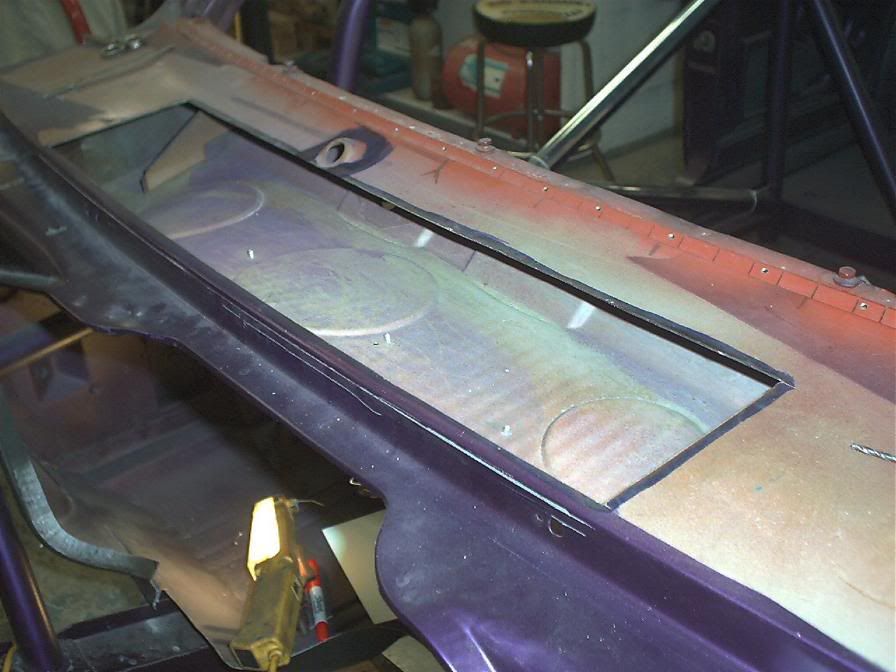
I need to weld a panel on my car that I can not get to the back side..What is the best way to deal with that ?? It is in the cowl .and will about 20" X 6" Thanks Jamie
 

e-tek

Well-known member
Joined
Dec 19, 2007
Messages
10,690
Location
Saskatoon, SK
If I may, htere's a few ways you can go here. Obviously mine are just my preferences and others will have different, maybe even better methods!
One way would be to weld some tabs onto your patch panel, so that when you set it into the hole, the tabs would hold it in place. You'd then spot-tack different areas, working around the perimeter to minimize distortion. Without access to the backside, you'll only be able to work down high spots, then will have to fill any lows after grinding. Remove the tabs once your weld are holding it solid.
If you want to metal finish, or use minimal filler, you would need to cut an access hole somewhere - under the dash or in the cowl. I'd cut something just big enough to get a handled dolly in behind, which would alow you to work it quite proficiently.
Looks like a cool project!
 
Joined
Dec 16, 2007
Messages
14
I would have to agree. Working in areas with no access is always a challenge.

Good luck with it. Keep us posted.
 

Vernmotor

Well-known member
Joined
Jan 12, 2008
Messages
1,318
Location
Mt.vernon oh
Ok here what I am thinking.. I am going to frange the sides,make a lip with my bead roller. there are two small holes I can stick something though and hold it up in place. leave a gap and try to keep the weld in the gap.tack-weld and try to cool it each tack weld with ????? air or damp rag and lay a piece copper on it ? grind the welds and cool as I do that too ?
 
Joined
Dec 16, 2007
Messages
14
So you're not **** welding it?

Rapid cooling has little to no effect on warpage. I've been down that road and saw no real advantage to it. The metal in the Heat Affected Zone (the blued area after welding) is going to shrink regardless. It's this shrinkage that causes the warpage even beyond the heat affected zone. By stretching slightly within the heat affected zone will relieve those stresses and the distortion will disappear.
 
Last edited:
To avoid these ads, REGISTER NOW!
OP
K

kidsandJeep

Member
Joined
Apr 24, 2008
Messages
9
E-Tek/Randy,

Thanks for your thoughts and help with this. I know that heat is the enemy when welding in these patches. I have been using the Eastwood **** weld clamps and try to move the HAZ around, from what you're both saying I am missing the step of stretching the metal in the HAZ after welding. I am going to read back on this but do either of you cool (air/mist), sounds like neither of you do, the HAZ after you stretch (hammer/dolly) the area? I am guessing rapid cooling would negate the stretching that was just done, meaning it would shrink the metal in the HAZ.

I would post pics, but I have one panel that looks like Dr. Frankenstein was trying to create something, maybe when my work looks a little better. The idea for my project was to add a small stretch in the jeep to create a little more room, then dealing with the rust etc. I think I have too many peices in there. I think I need to remove the whole thing and start with a new larger panel. I ordered a shrinking disk to try on some practice panels, I didn't care for the torch/quench method to shrink. I am sure I was doing something wrong..... With oil canning (stretched areas) the shrinking disk should do that type of work, right? Shrinking the area around the oil can should tighten the panel????

You help is greatly appreciated.

--Scott
 

e-tek

Well-known member
Joined
Dec 19, 2007
Messages
10,690
Location
Saskatoon, SK
You'll want to make your "shrinks" right on, or near, the tops of the high spots, this is where the shrink will reverse the stretched metal. I think you know this, but the spot you heat to red is only step one. Step two is on-dolly hammering of the metal in circles towards the centre where you heated it. If you need more explanation, let me know.

Don't think you ever posted pics of the larger area/project you just referred to did you? GO ahead and post it - I've done lots of crappy looking work in the past - that's how you learn! A good quote from a builder I heard was: "It's only "effed" if you can no longer work it."

As for cooling WHILE you're welding - NO. The heat from the weld has already done it's thing....cooling it quickly won't do anything more. Sometimes buildedrs use air - but mostly just to not melt/burn any attached parts!
 
OP
K

kidsandJeep

Member
Joined
Apr 24, 2008
Messages
9
e-tek,

I read the book "Metal Bumping" and the torch/shrinking procedure is pretty well explain in there, not that I can execute it correctly. Like anything practice probably makes perfect. I'll work on posting some pics of my project, feedback would be appreciated.

--Scott
 

Vernmotor

Well-known member
Joined
Jan 12, 2008
Messages
1,318
Location
Mt.vernon oh
Here is a pic of the flanging tool for my bead roller. the top one is what I was going to do ?
 

Attachments

  • p1031B.jpg
    p1031B.jpg
    3.1 KB · Views: 357
Joined
Dec 16, 2007
Messages
14
I am guessing rapid cooling would negate the stretching that was just done, meaning it would shrink the metal in the HAZ.

Scott, There is no stretching taking place, so to speak. As the metal is heated during the welding process, the metal does expand, however, it's trapped by the surrounding metal and has nowhere to go. The forces involved cause the grain of the metal to compress along the slip planes. Then, as the metal cools, rather than the grains relaxing to their previous location, they tend to pull the surrounding material, which causes the distortion (warpage). This same effect can be seen easily by taking a paper towel, weight the edges down or have someone hold it secure to a table top, then pinch an area in the center. Look at the effect that slight movement has on the entire piece. This is the easiest way I know to explain it. With metal, you can easily relieve that stress from the shrunken area by lightly stretching it with a hammer and dolly. I actually prefer a ******* to a hammer, as the ******* will spread the blow out over a broader area and much easier to keep under control.

When shrinking with the disc, you don't want the metal to become red hot. Even blue is beyond what you need to shrink metal. Metal will start to shrink at around 500-600 degrees F. Well before it turns red. A good indication of whether it's hot enough to shrink is if you spray the area with water and you see steam, it's hot enough to shrink.

The following links are, in my opinion, the most valuable information ever written on this subject. Although the information provided is focused on removing a dent, the same methods apply to metalfinishing weld seams. I use these techniques daily as a professional sheet metal shaper. I can assure perfect results every time if you just follow Wray's advice. He now manufactures his own shrinking disc with a 1/4" flanged edge for added safety and rigidity. He also has an instructional video available that is well worth owning. If anyone wants his contact info, please contact me via PM or e-mail [email protected]

http://www.jag-lovers.org/xk-lovers/library/dent_tools.html

http://www.jag-lovers.org/xk-lovers/library/removing_dents.html
 
Joined
Dec 16, 2007
Messages
14
Vern, why the flanges?

Ed gave you very sound advice in using a tack welded tab.

If you don't plan to **** weld, then go ahead and use the flanges, but it will be nearly impossible to metalfinish.

Although, if you plan to use filler anyway and are more comfortable with the flange, do what makes you happy!!
 

Vernmotor

Well-known member
Joined
Jan 12, 2008
Messages
1,318
Location
Mt.vernon oh
I just did't know if it was a good or bad idea ! Sounds like a bad one LOL .What would make me happy to to try and do this right.
 

e-tek

Well-known member
Joined
Dec 19, 2007
Messages
10,690
Location
Saskatoon, SK
Vern - by the time you finish gleaning info off this board, plus the links Randy gave, all that will be left is - as you said - experience. A good idea would be to cut a square hole on a scrap fender or door and fill it. Cut a plate the same size, trim it to fit, weld some tabs on, drop it in and start tacking. Use those Eastwood holders or a thin screwdriver to keep the edges even as you move around. Once it's all welded, get a dolly back there (handled dolly's are great for this) and work it out. Then let's see pics!!!
 
OP
K

kidsandJeep

Member
Joined
Apr 24, 2008
Messages
9
All,

Okay here are some pics of my project, this is my first exposure to sheet metal after practicing on some scrap, I started out wedling with a Hobart 175 and then upgraded to a Lincoln 180C. All welding is with the door setting with Gas. The project was a much abused and previously moded 1951 M38, I had planned a restoration but the body (rusty with no floor) and frame was heavily modified and cut up. No original Go Devil Engine/Transmission/T-Case. The Jeep came with a SBC 327, I located a TH350 and D300. Anyway flame gently the panels are roughed in with minimal dolly work so far, which is why I am here. I have some early areas that are oil canning and needed the repair advice.

The new floor bracing,

100_0077.jpg


Drivers Door

100_0079.jpg


Inner Drivers Door, Bracing and Frankenstein patches.

100_0085.jpg


Passenger Door Stretch

100_0075.jpg


100_0074.jpg
 
Last edited:

John Kelly

New member
Joined
Feb 21, 2009
Messages
4
You have already gotten some good advice. If you are interested in a simple oil can fix, I have posted something I did a while back on youtube that might be of help (second video):

http://www.youtube.com/profile?user=GullWingInn&view=videos

Torch shrinking is not as controllable a shrinking disc, but it can be done very effectively if you ignore most of the advice you are likely to get; which states that you must get the metal red hot. Heat just until the metal swells a little bit, then quench. No color change. Steam tells you that you have shrunk.

John www.ghiaspecialties.com
 

Stephenw

Well-known member
Joined
Dec 21, 2006
Messages
1,911
Location
Utah
Randy's tutorial is great. I have found that the 3M Roloc sandpaper discs work great for sanding down the weld seam. I use them in an air angle grinder. I have had better results using the sanding discs instead of the 1/16th cutoff discs that Randy suggests.
 

Stephenw

Well-known member
Joined
Dec 21, 2006
Messages
1,911
Location
Utah
The sanding discs are available in different grits.
 

Attachments

  • Sand.jpg
    Sand.jpg
    60.4 KB · Views: 12

Stephenw

Well-known member
Joined
Dec 21, 2006
Messages
1,911
Location
Utah
Reason to use cut-off discs is that you'll go through a thousand sanding disks grinding down weld seems before you go though one cut-off disc.

The coarse discs knock a sheet metal weld seam down pretty fast. I find them easier to control and less likely to cut too deep.

Edit...

I think the feel is comparable (on a small scale) to using a grinding disc on your 4 1/2" versus using a flap disc.
 
Last edited:
OP
K

kidsandJeep

Member
Joined
Apr 24, 2008
Messages
9
Thanks for the replies, since I last posted here I have done some work on the stretched areas. The shrinking disk does wonders in removing the oil canning that I had from over stretching the panels. I've used the torch method to shrink areas and it didn't work well for me, the disk seems easier to understand without too much heat involved. The cut off disk for taking down the high part of the weld was a great tip also, I used the flap disk but they are expensive and may heat up the panel more. I just got my slapping hammer today and will try that out soon!
 
To avoid these ads, REGISTER NOW!
Top Bottom