MichaelP
Well-known member
Can anybody suggest one?

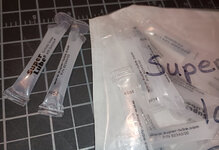
Their silicone base formulation is only available in NLGI 2 that I can find unlike their multipurpose synthetic grease which is available in lighter viscosities.Super Lube. They have varying viscosities for different applications.
AFAIK they carry silicone oils in 100-5000cst formulations. The 5000 should be sort of like honey.Their silicone base formulation is only available in NLGI 2 that I can find unlike their multipurpose synthetic grease which is available in lighter viscosities.
I didnt look under oils, good find. I had OO corn head grease on my mindAFAIK they carry silicone oils in 100-5000cst formulations. The 5000 should be sort of like honey.
We have some at work, and honey is a pretty good reference. Very $$ tho.AFAIK they carry silicone oils in 100-5000cst formulations. The 5000 should be sort of like honey.
Whatever lowers your tonearm, dude.5000 lowers my tonearm perfectly every time.


You can go even thinner... I've been meaning to grab some 50cst silicone for a watch project for a while.AFAIK they carry silicone oils in 100-5000cst formulations. The 5000 should be sort of like honey.
What other options are there!Thank you for the ideas, guys. I need it for something totally unrelated to mechanical work or personal lubrication.
Impersonal lubricationWhat other options are there!
DIY eye surgery? Building high energy transformers or capacitors? Starting your own cosmetics firm? Molding fiberglass? Making liquid lenses?Thank you for the ideas, guys. I need it for something totally unrelated to mechanical work or personal lubrication.
Brazilian **** liftsDIY eye surgery? Building high energy transformers or capacitors? Starting your own cosmetics firm? Molding fiberglass? Making liquid lenses?
Their silicone base formulation is only available in NLGI 2 that I can find unlike their multipurpose synthetic grease which is available in lighter viscosities.
Coincidentally, I have an odd file handle--apparently made for draw-filing--that's labeled a File-EZE. Looking that up on the interwebby thing got me... dental lubricant. Might try that.Somebody gave me a sample of an even better lubricant for my purposes. Unfortunately, it's long out of production. It was made by Bosworth company for dentistry and called Masque.
It's a silicon lubricant/coating agent that creates thin quite resistant to water film. The consistency is hard to describe. It's a transparent rubbery jelly. If you ever had a chance to touch live jellyfish, it fees similar. You can smear it in a very thin film which will stay on a surface way better than vaseline or any "regular" lubricant we use in our workshops, and it's not messy. When you touch it, it leaves a thin long lasting slick film on your skin.
it would probably help a lot more if you actually gave some information on what you're trying to accomplish, rather than a vague request for suggestions.Thank you for the ideas, guys. I need it for something totally unrelated to mechanical work or personal lubrication.
For the string I'm using, 3.5 is sufficient.it would probably help a lot more if you actually gave some information on what you're trying to accomplish, rather than a vague request for suggestions.
Is 4 too much? how long is a string?
Wouldn't you be looking at a mold release product?I need to prevent sticking of acrylics and composite resins while they're cured to various surfaces in moist environment. Exactly what the above mentioned Masque product was made for. So I need to find a substitute for Masque.
It should also allow for an easy cleanup without leaving any traces on the surface.
Infinitely immiscible was the phrase someone used here (probably incorrectly). You just push it around forever, it won't pick up with towels 100%. Nothing breaks it down. You have to hope to wear it down, without tracking it all over the shop.Silicone lube/release is nearly impossible to remove from material. It can't be used in many applications due to the issues it causes in paint and additional bonding.
I've worked in environments where it is "banned" due to the risk of containing the facility, as you can't get rid of it
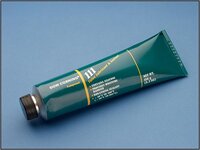
This ^^If you want thick, go Dow Corning 1 1 1. That's probably what you're after.
Secondary bonding is paramount for my application. I don't know the exact content of Masque, but they called it silicon, and it's super easy to remove completely to allow bonding to the surface.Silicone lube/release is nearly impossible to remove from material. It can't be used in many applications due to the issues it causes in paint and secondary bonding.
I've worked in environments where it is "banned" due to the risk of containing the facility, as you can't get rid of it
Secondary bonding is paramount for my application. I don't know the exact content of Masque, but they called it silicon, and it's super easy to remove completely to allow bonding to the surface.
I was going to try Trident silicone lube for gaskets and Super Lube liquid gasket lube, but you made me worried.
Whoever the supplier is for your resins will have compatible mold releases to go with them.Some biologic experiments with bone and similar tissues: taking impressions of it with composite resins and self-curing acrylics and then bonding other materials to the tissues.