The rusty spots will come off with steel wool with no problem. The black spots however are an indication that the steel is pitted underneath. Even going at it with 240 wet and dry will leave little black indentations in the steel that are below the surface. So here lies the dilemma. The harder you rub, even with steel wool, the more steel you remove and the shinier the saw plate. Unfortunately, you also stand a good chance of damaging the etching.
If the etching wasn't in such good shape, I'd start with 240 and work my way up to 1000 or 1200 grit, which leaves the saw plate in a nice smooth shiny condition.
There are people out there who can restore saws so the etching remains almost pristine, unfortunately I'm not one of them. I still have a 1920's Spear and Jackson with a good etch but lots of those black spots that I've put off restoring simply because I'm afraid of screwing it up. I tried steel wool on the back side and it wasn't enough. 400 wet and dry was better but would kill the etch so I stopped until I find a better method. Sometimes those etches are a curse.

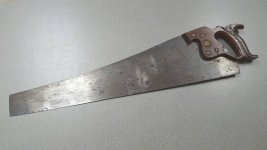

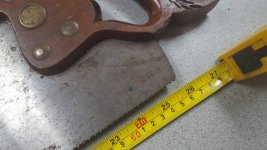
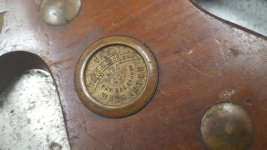
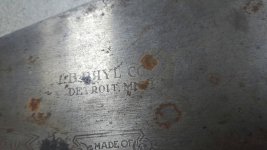
 I bet that was a small fortune back in the day, that is why all the old timers used to tell me stories that they would sharpen the blades till nothing was left because they cost so much money.