To avoid these ads, REGISTER NOW!

Sizing Circuits for Electric Motors

anythingyoucanimagine

Well-known member
Joined
Feb 6, 2019
Messages
425
Location
New England
I'm picking up a radial arm saw and a cabinet saw (table saw) that are big (14") and wired for 1ph 220V. Both saws are old (1940's) and I don't know much more than that.

For the most part, I've only looked at the motor plate and where it says 115V, 17A or 230V, 8.5A, I have assumed that a 20A 240V circuit would be fine for the listed 8.5A. Seeing as these will be bigger motors, I'd like to do it properly however I'm not sure I have all of the required information to properly size a circuit. Some of these motors from the 1940's and 1950's don't have all of the info stamped on them like modern motors do.

I'm capable of looking up the tables in the nec but not having all of the info makes it a lot harder. Are there rules of thumb I can follow? What I don't want to do is put a 20A motor on a 30A circuit (or 30A on 50A, etc.).


Thanks.
 
To avoid these ads, REGISTER NOW!
OP
A

anythingyoucanimagine

Well-known member
Joined
Feb 6, 2019
Messages
425
Location
New England
Do the saws have an existing cord and plug? If so, what amp size plug are on the saws?

One does and one does not. The radial arm saw has a 6-20p. By the looks of the pictures it could possibly be an original power cord. That one I'm a little less worried about because there's a forum for Dewalt radial arm saws with some crazy Dewalt RAS fans that know pretty much everything about those saws. Someone over there will know something -or at least the motor specs. (just have to get it first to ID year, model, production run, etc.


The TS is an old Delta/Rockwell 12-14" cabinet saw. Rockwell bought Delta in 1945 and I believe this is an early production machine so probably 1948-ish. It's pretty trashed. The power cord is the least of my worries. Going to need a full restore. Power cord was clipped at the saw by some idiot. I've seen them with everything from 3hp to 7.5hp motors in them. I realize that's a wide range and also there is a threshold where something must be hardwired.


Where do I go to learn about all of that?
 
OP
A

anythingyoucanimagine

Well-known member
Joined
Feb 6, 2019
Messages
425
Location
New England
Does the nameplate list the HP?

The radial arm saw should be a 3hp 1ph motor. I found the manual online and it looks like it came with a 6-15P when new. If it has the 5hp motor it'll be obvious when I see it. That came with 6-20p.


No clue about the cabinet saw. I believe it should be a 5hp motor. Don't have it yet so can't look at motor. The thing is from the 1940's or early 50's. No idea if it is original motor either. If I have to buy a new motor, with today's HP ratings, I'll either find a good, used vintage 5hp or I'll buy a new 7.5hp motor. I realize circuit sizes will vary greatly between 1ph 220v and 3ph. Is there a point when something needs to be hardwired?
 

mike93lx

ALLIANCE MEMBER
Joined
Dec 9, 2013
Messages
37,894
Location
Richmond, VA
7.5 is a lot for a table saw. If the motor needs to be replaced, a 3 or 5hp wouldve more than enough for all but the heaviest uses.

There are plugs rated for 5hp, but they aren't common and are expensive. Hard wiring is cheaper too, plus you won't be moving around a saw that big anyway
 

Norcal

Well-known member
Joined
Mar 16, 2008
Messages
13,769
3 HP is the smallest motor and 7.5 the largest motor on the Rockwell/Crescent 12/14 saw with a 5HP being the most common, early ones had the Crescent brand on them as that is where they originally came from, there are a number of people who have used a 3 HP VFD on a 5 HP motor in the 12/14 saw but I do not care for that way of doing things.
 
OP
A

anythingyoucanimagine

Well-known member
Joined
Feb 6, 2019
Messages
425
Location
New England
7.5 is a lot for a table saw. If the motor needs to be replaced, a 3 or 5hp wouldve more than enough for all but the heaviest uses.

There are plugs rated for 5hp, but they aren't common and are expensive. Hard wiring is cheaper too, plus you won't be moving around a saw that big anyway

My Delta/Rockwell 10" TS + 6" jointer combo machine has a 4hp Westinghouse motor on it. I feel like the motor is fine for the jointer but on the TS it can be a little under powered at times. A full 5hp would be great and 7.5 would be amazing.... I'll remind you: That's on a 10" TS and 6" jointer (both spin at same time). The new saw is bigger (12-14 model with 14" blade). I wouldn't want to run my 4hp westinghouse motor with a 14" blade. Maybe I'd try a legit 5hp but 7.5 doesn't seem unreasonable. (to me)


I was mostly thinking a receptacle so when I'm not using it I can coil up the power cord to avoid a trip hazard. And also I have welders and things too. The saw will be on a movable base so I can push it out of the way when I want to weld or grind. As for hardwire/receptacle prices, look at the price of 14" blades. A halfway decent blade is $75-$100 and a good blade is $200.


3 HP is the smallest motor and 7.5 the largest motor on the Rockwell/Crescent 12/14 saw with a 5HP being the most common, early ones had the Crescent brand on them as that is where they originally came from, there are a number of people who have used a 3 HP VFD on a 5 HP motor in the 12/14 saw but I do not care for that way of doing things.

I got lucky and found a free saw. I didn't ask questions... said I'll be there then called my brother and told him I need my trailer back ASAP.


It's a 12/14. I have residential 208Y at my house which won't really help given this situation. I believe it's got a 1ph motor wired for 220V. My guess is that it's a 1ph 5hp 240V motor. I think the only 3 phase motors they made back then were 230/440??


I'm not interested in a vfd for this saw. I have to buy a new motor I hope I'll be able to find something OEM/vintage. If not we'll see. I have options that won't require VFD.


Really just interested in learning how to properly (NEC) size circuits for electric motors.
 

Norcal

Well-known member
Joined
Mar 16, 2008
Messages
13,769
My Delta/Rockwell 10" TS + 6" jointer combo machine has a 4hp Westinghouse motor on it. I feel like the motor is fine for the jointer but on the TS it can be a little under powered at times. A full 5hp would be great and 7.5 would be amazing.... I'll remind you: That's on a 10" TS and 6" jointer (both spin at same time). The new saw is bigger (12-14 model with 14" blade). I wouldn't want to run my 4hp westinghouse motor with a 14" blade. Maybe I'd try a legit 5hp but 7.5 doesn't seem unreasonable. (to me)


I was mostly thinking a receptacle so when I'm not using it I can coil up the power cord to avoid a trip hazard. And also I have welders and things too. The saw will be on a movable base so I can push it out of the way when I want to weld or grind. As for hardwire/receptacle prices, look at the price of 14" blades. A halfway decent blade is $75-$100 and a good blade is $200.


I got lucky and found a free saw. I didn't ask questions... said I'll be there then called my brother and told him I need my trailer back ASAP.


It's a 12/14. I have residential 208Y at my house which won't really help given this situation. I believe it's got a 1ph motor wired for 220V. My guess is that it's a 1ph 5hp 240V motor. I think the only 3 phase motors they made back then were 230/440??


I'm not interested in a vfd for this saw. I have to buy a new motor I hope I'll be able to find something OEM/vintage. If not we'll see. I have options that won't require VFD.


Really just interested in learning how to properly (NEC) size circuits for electric motors.

If you have 208V 3 PH a vintage 220V motor will do fine on 208 but the circuit will have to be sized to the table in NEC art 430. I wanted a 12/14 badly but only have the real estate for a Unisaw.
 

wyliesdiesels

Well-known member
Joined
Aug 14, 2012
Messages
20,073
Location
Modesto, CA
The radial arm saw should be a 3hp 1ph motor. I found the manual online and it looks like it came with a 6-15P when new. If it has the 5hp motor it'll be obvious when I see it. That came with 6-20p.


No clue about the cabinet saw. I believe it should be a 5hp motor. Don't have it yet so can't look at motor. The thing is from the 1940's or early 50's. No idea if it is original motor either. If I have to buy a new motor, with today's HP ratings, I'll either find a good, used vintage 5hp or I'll buy a new 7.5hp motor. I realize circuit sizes will vary greatly between 1ph 220v and 3ph. Is there a point when something needs to be hardwired?

check the HP ratings on the 6-15p and 6-20p. theyre most likely not rated for the correct HP.

And any motor over 3Hp will require hardwiring UNLESS you have the money to spring for expensive pin and sleeve plugs and outlets...
 
OP
A

anythingyoucanimagine

Well-known member
Joined
Feb 6, 2019
Messages
425
Location
New England
pin and sleeve plugs and outlets...

Holy Christ... Yes I have the money but god I could 3d print those things for $5/ea... The UL must have given early retirement packages to everyone on staff after listing those things!


Isn't pin & sleeve what they use on movie sets? If yes, I might know someone who knows someone... If no --F that. Wouldn't be the first time I put a diamond blade on a $25 Craigslist circ saw... I'll cut a trench in the slab. F that.


If you want to kick me while I'm down, feel free to tell me that code doesn't allow putting outlets/receptacles in a garage floor like you can in a home...


Thanks wyliesdiesels. Is that 3hp rule across the board? Meaning I should have the 4hp motor for my 10" TS hardwired too? (it's a westinghouse 208Y motor) Thanks again.
 

wyliesdiesels

Well-known member
Joined
Aug 14, 2012
Messages
20,073
Location
Modesto, CA
Holy Christ... Yes I have the money but god I could 3d print those things for $5/ea... The UL must have given early retirement packages to everyone on staff after listing those things!


Isn't pin & sleeve what they use on movie sets? If yes, I might know someone who knows someone... If no --F that. Wouldn't be the first time I put a diamond blade on a $25 Craigslist circ saw... I'll cut a trench in the slab. F that.


If you want to kick me while I'm down, feel free to tell me that code doesn't allow putting outlets/receptacles in a garage floor like you can in a home...


Thanks wyliesdiesels. Is that 3hp rule across the board? Meaning I should have the 4hp motor for my 10" TS hardwired too? (it's a westinghouse 208Y motor) Thanks again.

Specifically, the plug must have the proper HP rating. So if you can find a nema outlet rated for the motor HP rating(you won't above about 3HP), then you can use it.

Otherwise, it needs to be hardwired. Code also requires a local disconnect if the motor is more than 50' from and not within sight of the breaker panel.
 
OP
A

anythingyoucanimagine

Well-known member
Joined
Feb 6, 2019
Messages
425
Location
New England
Understood on the (not a 1-pole light switch) disconnect.

That *****. I didn't want to hardwire this stuff. What is the difference between twist lock and pin & sleeve? Startup draw?
 

wyliesdiesels

Well-known member
Joined
Aug 14, 2012
Messages
20,073
Location
Modesto, CA
Nema twist locks will have same HP ratings as the non twist locks so no go with those.

The pin and sleeve plugs have shrouds and guards that are designed to prevent any arc flash from hitting you in the face. As mentioned, they have higher HP ratings but are very pricey.
 

Cruzan80

Well-known member
Joined
Jul 22, 2015
Messages
4,307
Location
Denver, CO
This also has to do if you are working at home or in a shop environment. As Wylie said, it prevents bad stuff from happening when unplugged and powered. At home (while not strictly code compliant), you can wire as needed if you aren't an idget and turn it off before unplugging.
 
OP
A

anythingyoucanimagine

Well-known member
Joined
Feb 6, 2019
Messages
425
Location
New England
wire as needed if you aren't an idget and turn it off before unplugging.


I watched my first wife plug a US 120V hair dryer into a 240V receptacle (using an adapter). That was fun... First night of our honeymoon she took down the entire B&B/hotel. Was awesome... I've also heard horror stories about guys running 240V to 5-15 receptacles "because it's their shop and they know".


As much as it might pain my bank account, I do believe (except for the lobbyists that pushed some of afci code) that the NEC is a good thing. I don't understand why I can use a twist lock plug for my generator or my boat --but it's not OK to use for a table saw... But I'm also not an electrician so if I want to be ignorant I'll either spend up and buy the stupid $1000 fittings or I'll hardwire the saw.


(that was a polite way of saying that I will be code compliant and not break the rules)
 

Norcal

Well-known member
Joined
Mar 16, 2008
Messages
13,769
You can always look on eBay for pin & sleeve devices, I use Hubbell IEC style P&S for my welder and they are a quality product, don't care for the European competitive products although they interchange between the same ampere & voltage rating. but fleabay is not as cheap as it once was.

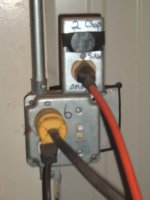
The photo below shows a 60A 250V single phase pin & sleeve in the background.


HP ratings for Hubbell pin and sleeve devices.

https://hubbellcdn.com/catalogpage/Wiring_Catalog_G11_CatPage.pdf
 
Last edited:

sberry

Banned
Joined
Jun 18, 2005
Messages
35,747
Location
Brethren, Michigan
Holy Christ... Yes I have the money but god I could 3d print those things for $5/ea... The UL must have given early retirement packages to everyone on staff after listing those things!


Isn't pin & sleeve what they use on movie sets? If yes, I might know someone who knows someone... If no --F that. Wouldn't be the first time I put a diamond blade on a $25 Craigslist circ saw... I'll cut a trench in the slab. F that.


If you want to kick me while I'm down, feel free to tell me that code doesn't allow putting outlets/receptacles in a garage floor like you can in a home...


Thanks wyliesdiesels. Is that 3hp rule across the board? Meaning I should have the 4hp motor for my 10" TS hardwired too? (it's a westinghouse 208Y motor) Thanks again.
You are trying a little too hard. My pressure washer is 5 hp, comes factory 30A plug. The rules are for a good reason but many,,, and I would say most of us slide by a bit with the awareness of the real risk. I have a plug on a 5 comp,,, there is a breaker next to it and its off, its my backup/demand unit. I still have a couple range plugs used for welders I need to change out,,, they are bonded if needed but should be replaced and will be.
I don't install violations on other jobs, don't try to pass inspections with them and am pretty sure of the risk.
 

Attachments

  • chop saw only.JPG
    chop saw only.JPG
    30.3 KB · Views: 17

W-Cummins

Well-known member
Joined
Jan 9, 2006
Messages
1,642
Location
Iowa
Yep the ole HP rated plug stuff can get strange. My pressure washer (11hp) is compliant when plugged into my water resistant outlets, but if I use my extension cord it's not. In my case it's all about the disconnect under load deal, 10hp vs 15hp ratings (same plug), the outlets are $$$ switched mechanical interlocked units.


William....
 
OP
A

anythingyoucanimagine

Well-known member
Joined
Feb 6, 2019
Messages
425
Location
New England

Thanks. I have a question about these things: My current 10" TS has a 4hp Westinghouse 3ph 120/208Y motor on it. In that pdf link you provided, the only 3ph 120/208 connector/receptacle is 60/63 amp rated (and 10HP). Does that mean I'd have to use that connector/receptacle combo and then also size the wire for the whole circuit up to 60/63 amps? That doesn't seem right either --like I'd need in-line fuse/over-current protection between the receptacle and the motor. That would be like plugging a hair dryer into a 50A stove/oven receptacle.


You are trying a little too hard...
If I seem a little all over the place it's because I have a lot going on. I'm doing a gut/reno on a ski house we bought. I brought a bunch of tools from home up there to do the work. She gave me the green light to build a 3-car garage/shop out back this spring which means everything up there is going to stay. And I get to buy new (bigger) stuff for home. Home is 120/208Y and ski house is 120/240V.

I also feel like I'm trying too hard. What I'm trying to do is idiot-proof the ski house. I know there will be times when family/friends are up there without us and I want to make sure sparks don't fly and no one gets hurt. What I don't want is to buy orange 5-15r for 220V and white 5-15r for 120V. As long as every receptacle is what it is supposed to be, there should be no sparks. This is a home/home shop. I have those magnetic auto-off stop switches on just about everything and everything is within line of sight. In my mind that's good enough. I don't need to spend $3k on pin & sleeve, I just want to size the circuits correctly for the motors.

One of the reasons why I'm all over the place is because I swapped out a lot of my motors to 3ph because home is 3ph. It's easy to swap the motors back to original 120/220 but a lot of the power cords were junk so I tossed them. A lot of the small stuff (115V 1/4hp bandsaw motor) is easy. That's a bad example because I ran that on 120V at home too. Other stuff like my 10" table saw is where it gets complicated. It is currently running a 4hp westinghouse 3ph 208Y motor. I was able to source a 115/230V 4hp motor for that saw. (same motor just 1ph). I don't know how to properly size the 1ph circuit because I've never owned a home with 120/240V split phase power.


The reason why I want cord-and-plug is because I'd like the option to store a car up there or pull a car in to do work, etc.
 
To avoid these ads, REGISTER NOW!

Bert_

Well-known member
Joined
Dec 24, 2016
Messages
9,775
Location
NW Iowa
I usually avoid these threads because I usually do it the wrong way.

I wire bigger single phase motors with a cord and plug often. I just size it for the fla of the motor. I've wired dozens of 10hp single phase motors with cord and plug. Doesn't make it right but it works fine. The issue is pulling the plug under a load. Most people have enough sense not to do that. I put a disconnect either by the recepacle or on the equipment that has the cord. Takes away any temptation to pull the plug while it's running. Many times the disconnect is also used for on/off control.
 

Cruzan80

Well-known member
Joined
Jul 22, 2015
Messages
4,307
Location
Denver, CO
anythingyoucanimagine said:
I also feel like I'm trying too hard. What I'm trying to do is idiot-proof the ski house. I know there will be times when family/friends are up there without us and I want to make sure sparks don't fly and no one gets hurt. What I don't want is to buy orange 5-15r for 220V and white 5-15r for 120V. As long as every receptacle is what it is supposed to be, there should be no sparks. This is a home/home shop. I have those magnetic auto-off stop switches on just about everything and everything is within line of sight. In my mind that's good enough. I don't need to spend $3k on pin & sleeve, I just want to size the circuits correctly for the motors.

No offense taken earlier, the above makes more sense about your worries. I am the only one working in my shop, or I am out there with others. Good luck!

Sent from my Moto G (5) Plus using The Garage Journal mobile app
 

sberry

Banned
Joined
Jun 18, 2005
Messages
35,747
Location
Brethren, Michigan
I live rural and have simple power. I have been a compulsive overkill future proofer too. I can still do it. But, I am getting better. I like **** runs on 120V, and really don't use anything that would over heat a number 10 wire. Do I need 4 hp everything? If I run a 5 hp on a plug its probably better than 7.5, I cheat a little but as I said, not on anyway. I can wire my table saw 240 but it runs fine on 120.
My neighbor has small machine shop and wood working. All but 1 machine he would probably trade runs on 120V. Even a lot of welding today is done 120. A lot of it today is wire as we go. Leave it so its not impossible to access and when you got something new run a wire.
 

W-Cummins

Well-known member
Joined
Jan 9, 2006
Messages
1,642
Location
Iowa
I usually avoid these threads because I usually do it the wrong way.

I wire bigger single phase motors with a cord and plug often. I just size it for the fla of the motor. I've wired dozens of 10hp single phase motors with cord and plug. Doesn't make it right but it works fine. The issue is pulling the plug under a load. Most people have enough sense not to do that. I put a disconnect either by the recepacle or on the equipment that has the cord. Takes away any temptation to pull the plug while it's running. Many times the disconnect is also used for on/off control.


Pet peeve of mine..... The NEC fantasy that they can control whats plugged into the outlet. The inspection is OVER when the CO is granted!!!!


Funny story... The local city demigod AKA rental inspector, came by and unplugged my toaster! No screw on the multi outlet adapter... and then went on for 10 min telling me that extension cords were not legal in the city, I asked him if true, why you could purchase one at the local Menards?? laughing as he went out the door, I plugged the toaster back in.


Now should some one ( NEMA???))) make a 30-40 amp 250v standard that is 5hp rated YES they would be popular... but don't hold you breath for that one.


The OP could make it difficult to prevent plugging into the "Wrong" outlet by choosing a 30amp 250V twist lock, at least that way no one could plugin a hair dryer by accident ! They would have to at least work hard to get a plug and attach it to the cord to dry their hair.


The suggestion of using different color same plug style outlets in NOT a good idea.


William....
 

JeepJohn62

Well-known member
Joined
Feb 25, 2019
Messages
157
Location
Alaska
A 20A ckt will work for most. This common as #12 is rated for 20A. A better choice is a 30A ckt with #10 wire. The larger breaker will reduce nuisance tripping. An electric motor has a large starting current. Just change the plug at each machine to match the outlet. Use a standard straight plug rated for the current. Arc flash is not an issue. You are not disconnecting under load.
 

sberry

Banned
Joined
Jun 18, 2005
Messages
35,747
Location
Brethren, Michigan
You don't change the plug if it has what came from the factory. If it comes 15 plug then it's limited to 15/20 circuit. If it comes 20/240 then it's limited to 20. Parts of the tool, the cord, the short circuit protection is provided by the circuit breaker.
 
OP
A

anythingyoucanimagine

Well-known member
Joined
Feb 6, 2019
Messages
425
Location
New England
If its a ski house do they need every tool ever invented?

Yes and no. We will use it in the summer too. It'll have a nice little shop out back with a table saw, bandsaw, planer, jointer, drill press, compressor, dust collection, bench grinder... I'll probably throw the Lincoln Weld-pak 140 gmaw up there too. That stuff is easy because it stays put.

The hard decision is whether or not I buy a second set of battery tools or not...
 

JeepJohn62

Well-known member
Joined
Feb 25, 2019
Messages
157
Location
Alaska
The circuit breaker is intended to protect the outlet and primary wire only.

I could plug my iPhone into a 50A ckt if I wish. It will work just fine unless I exceed 50A. It does not protect the iPhone, nor will it protect a power tool.
 

sberry

Banned
Joined
Jun 18, 2005
Messages
35,747
Location
Brethren, Michigan
The circuit breaker is intended to protect the outlet and primary wire only.

I could plug my iPhone into a 50A ckt if I wish. It will work just fine unless I exceed 50A. It does not protect the iPhone, nor will it protect a power tool.

It will work but it's not the way it was designed. It is meant to be plugged in to a current limited circiut. Why do we have small circuit breakers and individual circuits if we could just plug it all in to a 50? Things that come 15 end are designed to be plugged in to circuits limited to 20.
It's not designed to protect the tool but to provide short circuit protection for the cord, within the tool up to any additional protection if it requires it.
Same controls in a machine like my pressure washer, same equipment in 120 volt as 240 but one for 20A and the other 30, small control wires up sized to 14 despite they use 1/2 the current.
 
Last edited:

sberry

Banned
Joined
Jun 18, 2005
Messages
35,747
Location
Brethren, Michigan
There are very few places the breaker actually protects the wire for thermal. The main one is general uses circuits where the operator can plug too much in at once thru multiple outlets. The other is the cord in an electric range. Maybe someone can list others.
Probably not on the range either come to think about it. The other place could be where someone wired a smaller end on a larger appliance. Wired too large appliance on an undersized wire.
 
Last edited:

sberry

Banned
Joined
Jun 18, 2005
Messages
35,747
Location
Brethren, Michigan
The circuit breaker is intended to protect the outlet and primary wire only.
It does this in some cases for thermal but its really the least of the 2. Its meant to provide short circuit for the wire but also to anything plugged in to it. I had a cord on a battery charger trip one a while back in a line to line fault. Didn't even trip the gfci. It was sitting on a grounded bench, it probably would have tripped the gfi if it arced long enough.
 

JeepJohn62

Well-known member
Joined
Feb 25, 2019
Messages
157
Location
Alaska
There are many misconceptions surrounding electrical codes. #12 wire is a standard and is sized for a 20A breaker. Remember, the #12 wire is sized for a 20A breaker. It has nothing to do with the load. Most 20 A circuits are lightly loaded, especially with new led lamps and such. The exception is in the kitchen or bathroom for a blow dryer.

If a lamp cord shorts and only draws 10 amps, it will happily burn away and the breaker will not trip. However, most electrical shorts will ramp the current way up and the breaker will trip. The gfci trips when the current is not equal. It is not based on total current.
 

sberry

Banned
Joined
Jun 18, 2005
Messages
35,747
Location
Brethren, Michigan
A lamp cord doesn't short at 10A,, or should say will draw it way past 10 in a hurry. I had 1 hair like strand from a 16 cord trip the 20, tripped the 60 that fed the sub.
Cords must be sized for short circuit interruption for circuits they plug in to, 16 on a 20.
There are many misconceptions surrounding electrical codes. #12 wire is a standard and is sized for a 20A breaker. Remember, the #12 wire is sized for a 20A breaker. It has nothing to do with the load. Most 20 A circuits are lightly loaded, especially with new led lamps and such. The exception is in the kitchen or bathroom for a blow dryer.
A couple things here, lots of 12 wire in the world on larger breakers. Some to 50A but much hardwired to motors and appliances, AC and such. It has everything to do with the load, its a wire sized for a calculated load. The kitchen and bathroom examples are such that these are circuits with multiple outlets. Any one device will not trip the breaker on thermal, most stuff in the world have 15A ends. Some appliances do allow 18 wire, I believe alarm clocks and such but the practical limit for cords and fixtures is 16 due to short circuit.
I can tell from the post there is still some confusion in the nature of circuit design here. There is a difference between faults, or short circuits and thermal overload.
The understanding of the gfci is correct.
Lots of appliance designed with wire upsized farther than the actual load to meet fault demands without adding further protection.
 
Last edited:

Bert_

Well-known member
Joined
Dec 24, 2016
Messages
9,775
Location
NW Iowa
There are many misconceptions surrounding electrical codes. #12 wire is a standard and is sized for a 20A breaker. Remember, the #12 wire is sized for a 20A breaker. It has nothing to do with the load. Most 20 A circuits are lightly loaded, especially with new led lamps and such. The exception is in the kitchen or bathroom for a blow dryer.

This is true only for general purpose circuits, something feeding multiple receptacles or a room full of lights.

This thread is asking about motor circuits specifically. The code clearly has different requirements for this stuff.

Sberry has the concept covered pretty well.
 

wyliesdiesels

Well-known member
Joined
Aug 14, 2012
Messages
20,073
Location
Modesto, CA
There are many misconceptions surrounding electrical codes. #12 wire is a standard and is sized for a 20A breaker. Remember, the #12 wire is sized for a 20A breaker. It has nothing to do with the load. Most 20 A circuits are lightly loaded, especially with new led lamps and such. The exception is in the kitchen or bathroom for a blow dryer.

If a lamp cord shorts and only draws 10 amps, it will happily burn away and the breaker will not trip. However, most electrical shorts will ramp the current way up and the breaker will trip. The gfci trips when the current is not equal. It is not based on total current.

a short circuit will draw way more than 10a so your lamp cord example is poor.
 
OP
A

anythingyoucanimagine

Well-known member
Joined
Feb 6, 2019
Messages
425
Location
New England
This thread is asking about motor circuits specifically. The code clearly has different requirements for this stuff.

Yes, thank you for remembering my initial question. I have 3hp & 4hp electric motors. Both motors are essentially without factory/original cords/wiring. I was fortunate enough to find a copy of the original setup instructions for the 3hp motor (big radial arm saw). It came new with either a 6-15P or a 5-20P... and 3ph motors came with nothing. (Maybe they assumed the owner would hard wire the saws??)

I'm comfortable buying a new cord for the radial saw and putting a 6-15P on the end, just as it was when new. I'll plug it into a 6-20R and run it on a 208V, 20A circuit.


The 4hp motor I have no clue about. It's a table saw. When I called Delta and spoke to Tech Support the guy did say they used 4hp Westinghouse motors at one point but the saw is so old and since I couldn't confirm that this was the original motor... His guess is as good as mine...

The other thing I'm concerned about: I have documentation for the radial saw so I can get a much better interrupt switch (sized properly). But I need to install a magnetic interrupt switch on the table saw.


The only thing I know for a fact is that Delta says their 1ph saws all came with a cord & plug. The tech support guy questioned me saying are you sure the plate isn't scratched and it's not a 3/4hp motor and you can't see the "3/" part of 3/4? Am I really sure it says 4hp.... I Googled the motor type/frame, etc. and I'd bet my left nut that it's a 4hp motor wired for 230V.


I haven't shared everything about what's going to happen with the table saw. I'm going to build a workbench/cabinet style contraption for it extending the outfeed side a bit and also to operator's right of the blade, so I can extend the fence and also incorporate a router. I'll probably pick up a small 4-slot sub panel and shove it in the cabinet so I can properly step down to 120V @ 15/20A. That means I can easily hard wire the 4hp table saw motor --but I still don't know what size breaker and what gauge wire to use.

I guess maybe I'll use #10 wire and a 20A breaker to start. Then if I trip the 20A breaker I already have #10 there so I can bump it up to 30A.
 

brewchief

Well-known member
Joined
Sep 20, 2008
Messages
2,370
Location
Michigan
Use an actual motor starter for the saw, it will give you a proper on /off switch and can provide your overload protection.

Sent from my SM-G965U using Tapatalk
 

JeepJohn62

Well-known member
Joined
Feb 25, 2019
Messages
157
Location
Alaska
I guess maybe I'll use #10 wire and a 20A breaker to start. Then if I trip the 20A breaker I already have #10 there so I can bump it up to 30A.

This is reasonable approach. I suggest you buy or rent an inductive amp meter and see you what the actual load is.

Despite the previous code wrangling posts, I hope that you find a solution.

Best wishes!
 

sberry

Banned
Joined
Jun 18, 2005
Messages
35,747
Location
Brethren, Michigan
Wire on most motor circuits is,, or may be matched for the motor, not always for the breaker. Dedicated circuits are tailored for the load, the hp, different than generals with recepts. Pretty much other than a welder the recept, the wire and breaker need to match. Different than hard wired equipment where it may be tailored specifically for the app.
In some cases over size wire isn't good. It's rarely against code but in practice there can be drawbacks. It doesn't fit terminations and can lead to tripping as it simply allows more current faster on starts. I add 50 ft of 14 to my roofing comp. If it's close to a panel with sturdy service will trip a 20 every few starts.
 
Last edited:
To avoid these ads, REGISTER NOW!
Top Bottom