To avoid these ads, REGISTER NOW!

Snap-On in the Operating Room

Joined
Dec 27, 2019
Messages
16
Location
Philly
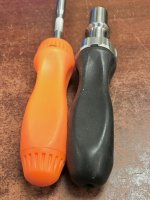
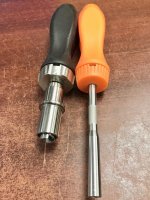
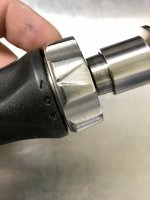
I do repair & maintenance worker at a hospital. The other day I got this “broken” hand piece awaiting replacement. It’s a Conmed Linvatec D8640 Grafix Handle, used in orthopedic cases like ACL surgery.

A nurse told me the selector was stuck. These handles are about $600 w/ contract pricing.

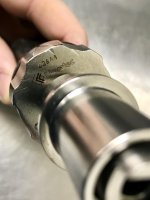
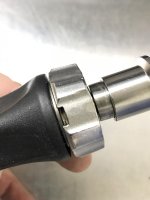
I took one look at it and realized it was just a modified Snap On ratcheting screwdriver. I know that handle shape anywhere. Same markings, same tooth count.

One big difference: the retaining spring has had its “tabs” ground off so that it can’t be easily disassembled. Still, I fixed it in about 2 minutes.

Anyone who’s ever dropped a Snap-on ratcheting screwdriver from a decent height probably has experienced this problem, which is so simple to fix.

For liability reasons they can’t use it anymore, and said I could have it for parts. I’d like to tear it down for a closer look.

The soft grip handle is beginning to get sticky. I hate rubberized coatings. (Look at the dust that gets stuck on this handle- wouldn’t a hard handle be easier to sanitize?) Some of the nicer surgical instruments use micarta handles which are great & grippy.

This is a good example of one of the many ways healthcare costs are inflated.
Not only is the handle itself overpriced, but it was modified to be hard to service. Even worse, the company explicitly forbids in-field servicing, and won’t repair these when damaged.

But it’s kind of interesting to see Snap-on in use in operating rooms!
 

Attachments

  • 6795254D-118D-472D-A4F1-6B4B7BE906AB.jpg
    6795254D-118D-472D-A4F1-6B4B7BE906AB.jpg
    90.7 KB · Views: 553
  • 4DC1D36B-4455-4FFC-8300-A38771AA696D.jpg
    4DC1D36B-4455-4FFC-8300-A38771AA696D.jpg
    95.2 KB · Views: 470
  • A58491C3-49D9-4256-8E0F-2313B23AD6D1.jpg
    A58491C3-49D9-4256-8E0F-2313B23AD6D1.jpg
    96.5 KB · Views: 463
  • DE6ED7AC-4C96-43F6-8B74-1070BF0A61C3.jpg
    DE6ED7AC-4C96-43F6-8B74-1070BF0A61C3.jpg
    131 KB · Views: 505
  • E6CC6EFA-D9E2-4E8F-9B34-A31FFF37E079.jpg
    E6CC6EFA-D9E2-4E8F-9B34-A31FFF37E079.jpg
    55.4 KB · Views: 486
  • AECF8303-C09A-4371-AC4C-25AC20826B50.jpg
    AECF8303-C09A-4371-AC4C-25AC20826B50.jpg
    53.3 KB · Views: 409
  • 2BCBF1CB-1BEF-456A-846E-11C47CE81938.jpg
    2BCBF1CB-1BEF-456A-846E-11C47CE81938.jpg
    62.9 KB · Views: 380
To avoid these ads, REGISTER NOW!

Bigblockyeti

Banned
Joined
Feb 1, 2018
Messages
2,550
Location
Upstate, SC
My uncle ran micro stamping in NJ for a while after the founders son bought a Bentley for a company car and took similar actions to incompetently destroy what his father had worked for. At any rate, they make a variety of precision yet disposable surgical instruments that could safely be sanitized and reused. In countries other than the USA they often are as they're not even close to being worn out after a single surgery, 50 maybe but one, absolutely not. Most sell between $50-$100 and are usually billed to the patient then thrown away.
 
OP
B
Joined
Dec 27, 2019
Messages
16
Location
Philly
My uncle ran micro stamping in NJ for a while after the founders son bought a Bentley for a company car and took similar actions to incompetently destroy what his father had worked for. At any rate, they make a variety of precision yet disposable surgical instruments that could safely be sanitized and reused. In countries other than the USA they often are as they're not even close to being worn out after a single surgery, 50 maybe but one, absolutely not. Most sell between $50-$100 and are usually billed to the patient then thrown away.

Sure, MICRO Stamping is a big supplier. And you’re right, the way things are billed and certain regulations make things so much more expensive. Hospitals and doctors over charge knowing the insurance company will negotiate a lower price. In the end, the companies get rich, unprofitable hospitals close and we get screwed.

But there’s a lack of regulations on bizarre things, like medical suction, which is just under NFPA 99. Better hope the regulator attached to your mouth was cleaned after a colonoscopy!
 
OP
B
Joined
Dec 27, 2019
Messages
16
Location
Philly
I'm looking at it and I'm wondering, what is the fastener that it drives?

They drive these mean looking taps and insert tools, (don’t know the real name.) Imagine a tap on a 1/4” shank, over which a grub screw is fitted. They have a tray w/ a bunch of different shanks, depending on the depth and diameter needed.

Mean looking stuff.
 

RTM

Well-known member
Joined
May 13, 2019
Messages
13,128
Location
SF Bay Area
I have essentially a toggle bolt in my upper arm, holding the upper end of the bicep tendon. I imagine they are tightening something like that with the tool.

With all the news of failed in house sterilization causing infections, I am ok with single use tools.
 
OP
B
Joined
Dec 27, 2019
Messages
16
Location
Philly

I didn’t realize Bradshaw was in Kenosha! I haven’t seen as many of their instruments but looking at te catalog, some are definitely Snap-on.... Yeah, some of these instrument sets are really nice. And when they get a little work out, you bet I’m all over them!
 
Last edited:
OP
B
Joined
Dec 27, 2019
Messages
16
Location
Philly
I have essentially a toggle bolt in my upper arm, holding the upper end of the bicep tendon. I imagine they are tightening something like that with the tool.

With all the news of failed in house sterilization causing infections, I am ok with single use tools.

There’s definitely advantages to single use, but it’s a bit of a red herring. I’ve seen damaged packaging on single use items, and there’s many times where a nurse or tech catches it in the middle of the case. Imagine how many times they don’t...

This year alone we’ve had about 11 recalls on single use items- after using the products for months. There’s also been 2 cases this year where single use instruments broke during the case. One instance, they had to use a sterilized pair of my Aven stainless pliers to extract the broken piece. Incident report filed, and though there wasn’t any damage, the patient had to compensated and sign a contract, (I’m not privy to the legal details, which were handled by the surgeons insurance and not the hospital.)

Some of the issues w/ sterilization relate less to the capability of the CSR department and more to the bottom line.

Some places don’t want to filter the water supply for the autoclave leading to microscopic mineral deposits that contamination clings onto. It’s cheaper and more “efficient” to run fast wash cycles, even if a longer cycle would be better. (Generally, instruments get an ultrasonic wash in an enzymatic cleanse, followed by a washer similar to an industrial dishwasher w/ disinfectant, then an autoclave.) Instruments that aren’t regularly inspected can have little imperfections that can hide contaminants.

It’s similar to the Ebola outbreak a couple years back, where it spread among healthcare workers in part because the company that makes surgical gowns did some tricky marketing about their level of protection, and bean counters tried to save a few bucks.

Stay healthy, my friends!
 

neophyte

Well-known member
Joined
Apr 23, 2012
Messages
9,585
Location
Pennsylvannia
Fein Multimasters are very similar to saws used for certain medical uses, like the removal of casts for broken bones, and those bone saws you see in medical shows.
I don’t know it they’re used for surguries, but I’ve seen the cordless multimasters being sold thru medical suppliers with adapters for the removal of casts, since the actual medical saws are somewhere between $1000 and $2000.
 
OP
B
Joined
Dec 27, 2019
Messages
16
Location
Philly
Fein Multimasters are very similar to saws used for certain medical uses, like the removal of casts for broken bones, and those bone saws you see in medical shows.
I don’t know it they’re used for surguries, but I’ve seen the cordless multimasters being sold thru medical suppliers with adapters for the removal of casts, since the actual medical saws are somewhere between $1000 and $2000.

They’re probably not used in the OR, but they are definitely used in some facilities. I’ve seen a fair share of Dremels, too, and at a rural clinic, a Harbor Freight, (used w/ great skill, btw.)

The issue in the OR is the dust created when cutting, so the Stryker rotary saws have a built-in vacuum system. They also use stainless blades, so they can be cleaned. They’re expensive & the new ones are a PITA to service.

It’s all a matter of what the bean counters and doctors are willing to spend and risk.

I know a plastic surgeon who uses special carbon steel scalpel blades, (not a typo.) they’re probably 63-65 HRC but still get sharpened at least once. The maker suggests a ceramic stone.

I have a $5 one from the hardware store that worked great, but he spent a couple hundred to get a virtually identical stone with a pretty box.

Guess he figures the patients will pay for it.
 

HazetMatt

Active member
Joined
Sep 17, 2018
Messages
43
Location
Underground
I have a $5 one from the hardware store that worked great, but he spent a couple hundred to get a virtually identical stone with a pretty box.

Well.. that sounds like all of us here who will pay a ton of money for a tool when the Harbor Freight version does approximately the same thing.
 
OP
B
Joined
Dec 27, 2019
Messages
16
Location
Philly
Well.. that sounds like all of us here who will pay a ton of money for a tool when the Harbor Freight version does approximately the same thing.

I have never, ever done that. Now, excuse me while I admire my rarely used Hilti....:bounce:

Truly though, the best wrench I’ve ever used for working on medical gas lines is the new Tekton US-made 30/60. Actually does outperform my tool truck wrenches.
 

Rabid Badger

Well-known member
Joined
Apr 2, 2018
Messages
1,338
My uncle ran micro stamping in NJ for a while after the founders son bought a Bentley for a company car and took similar actions to incompetently destroy what his father had worked for. At any rate, they make a variety of precision yet disposable surgical instruments that could safely be sanitized and reused. In countries other than the USA they often are as they're not even close to being worn out after a single surgery, 50 maybe but one, absolutely not. Most sell between $50-$100 and are usually billed to the patient then thrown away.

If I ever have to go under the knife I'll be sure to tell the surgeon to drop my new tools off at my recovery room. :)
 
OP
B
Joined
Dec 27, 2019
Messages
16
Location
Philly
If I ever have to go under the knife I'll be sure to tell the surgeon to drop my new tools off at my recovery room. :)

Ha! We had a surgeon who asked for some instruments for his BIL, a carpenter. He got some nice German chisels, shears & tweezers in his discharge bag. Our OR coordinator allowed it, since the doc is so friendly & good to the staff.
 

Bigblockyeti

Banned
Joined
Feb 1, 2018
Messages
2,550
Location
Upstate, SC
If I ever have to go under the knife I'll be sure to tell the surgeon to drop my new tools off at my recovery room. :)

I've wondered about that too. I had surgery on my hand after I ripped it open at work and I elected to remain conscience so I got to see what he was doing, after he decided I wouldn't freak by seeing the top of my hand laid open. He wasn't using anything special, just sewing up a tendon and I'd expect everything would be reusable after being sanitized. When I was in the ER 4 days prior to get initially stitched up, there was a guy getting stitches that was an computer hardware tech and after discussing his work a little with the doc, he realized the forceps were something he could use so he let him have them as they were otherwise going to be discarded.
 
To avoid these ads, REGISTER NOW!

Serrat Yasargil

Well-known member
Joined
Aug 30, 2019
Messages
75
Location
New Mexico
The stuff we use in the ER, cheaper to throw out, often Pakistan manufacture; in the OR, a lot is reuse, but much is single use designed that way by the particular manufacturer as it might not be able to be effectively cleaned, is cheaper to toss, decreases various liabilities, etc, makes the supplier more money. America likes to sue, so there is sometimes excessive CYA, thus higher costs, as one small contributing factor. ‘Overcharge’ at the level of the physician does not occur as the prices are set by negotiations by insurance companies and hospitals (its much more complicated than that). Most of us have no roll in determining the costs, we just mark what was done and insurance pays whatever they determine they will pay. Certainly more complex than this, but at least for me, I do not somehow say that I am gonna charge more for a particular procedure or whatever. I am essentially a laborer who writes my notes following the encounter, procedure, etc and someone else goes through it and determines what to charge insurance, or insurance determines what they will pay. In any aspect where you may have an opportunity to make a billing error, then huge fines and jail time. Much of us are on the side of our patients and worry about the expenses they will incur, but I do agree, it all costs a hell of a lot. I don’t just order imaging and often it is not needed, for example, but insurance requires certain check boxes ordered/completed for the patient to have what they medically require; insurance has not helped keep costs down, but rather inflates it in other ways. It’s all so frustrating.
Back to the vises of GarageJournal!
 

FerrariPower

Banned
Joined
Dec 25, 2019
Messages
60
Location
Modena
There’s definitely advantages to single use, but it’s a bit of a red herring. I’ve seen damaged packaging on single use items, and there’s many times where a nurse or tech catches it in the middle of the case. Imagine how many times they don’t...

This year alone we’ve had about 11 recalls on single use items- after using the products for months. There’s also been 2 cases this year where single use instruments broke during the case. One instance, they had to use a sterilized pair of my Aven stainless pliers to extract the broken piece. Incident report filed, and though there wasn’t any damage, the patient had to compensated and sign a contract, (I’m not privy to the legal details, which were handled by the surgeons insurance and not the hospital.)

Some of the issues w/ sterilization relate less to the capability of the CSR department and more to the bottom line.

Some places don’t want to filter the water supply for the autoclave leading to microscopic mineral deposits that contamination clings onto. It’s cheaper and more “efficient” to run fast wash cycles, even if a longer cycle would be better. (Generally, instruments get an ultrasonic wash in an enzymatic cleanse, followed by a washer similar to an industrial dishwasher w/ disinfectant, then an autoclave.) Instruments that aren’t regularly inspected can have little imperfections that can hide contaminants.

It’s similar to the Ebola outbreak a couple years back, where it spread among healthcare workers in part because the company that makes surgical gowns did some tricky marketing about their level of protection, and bean counters tried to save a few bucks.

Stay healthy, my friends!

Where is the advantage to single use medical items (and their extreme costs) when the Doctors don't bother to wash their hands going from room to room (or even use Purell at the stations)?

People are the problem. Not the instruments.
 
OP
B
Joined
Dec 27, 2019
Messages
16
Location
Philly
Where is the advantage to single use medical items (and their extreme costs) when the Doctors don't bother to wash their hands going from room to room (or even use Purell at the stations)?

People are the problem. Not the instruments.

Sadly true, (there’s definitely a few items that should be single use, but I take your point.)

I got a few complaints after I installed timers on all the scrub sinks, fwiw.

Scrub services are so cheap, (ours is $0.48 a set,) there’s no real excuse for wearing the same scrubs after a long or messy procedure.

But again, lot of the “people” problems really are profit-driven. Everyone is in a rush to get more customers, whoops I mean patients, in and out.

There’s also no excuse for rusty gas cylinders in a hospital, but the government says that’s fine, and it’s on companies like Airgas to maintain them. I at least wipe them down w/ a disinfectant, and won’t allow rusty cylinders in the OR. But that’s not a regulation.

Today I’m gonna look at some other instruments and see if I can spot any more tool brands.
 
Last edited:
OP
B
Joined
Dec 27, 2019
Messages
16
Location
Philly
There are several other names I've seen. Arthrex, Stryker. Are they any relation to those or made by a different mfr?

Different companies, but probably they source instruments from the same places. Very few seem to actually make the products they sell.

We have a lot of stuff from Depuy-Mitek, Conmed Linvatec, Stryker, & Arthrex. A few Bradshaw trays. For individual pieces, there’s a lot of Storz, Black & Black, Integra / Jarit; there’s so many buyouts and mergers it’s tough to keep track.

A lot of the nicer bits are from Germany, a lot of the more complex things are assembled in the US, but there’s a lot of “disposable” instruments from Pakistan.

If you need heat sinks for soldering, make friends with a hospital employee. We go thru hemostats like water.
 
OP
B
Joined
Dec 27, 2019
Messages
16
Location
Philly
The stuff we use in the ER, cheaper to throw out, often Pakistan manufacture; in the OR, a lot is reuse, but much is single use designed that way by the particular manufacturer as it might not be able to be effectively cleaned, is cheaper to toss, decreases various liabilities, etc, makes the supplier more money. America likes to sue, so there is sometimes excessive CYA, thus higher costs, as one small contributing factor. ‘Overcharge’ at the level of the physician does not occur as the prices are set by negotiations by insurance companies and hospitals (its much more complicated than that). Most of us have no roll in determining the costs, we just mark what was done and insurance pays whatever they determine they will pay. Certainly more complex than this, but at least for me, I do not somehow say that I am gonna charge more for a particular procedure or whatever. I am essentially a laborer who writes my notes following the encounter, procedure, etc and someone else goes through it and determines what to charge insurance, or insurance determines what they will pay. In any aspect where you may have an opportunity to make a billing error, then huge fines and jail time. Much of us are on the side of our patients and worry about the expenses they will incur, but I do agree, it all costs a hell of a lot. I don’t just order imaging and often it is not needed, for example, but insurance requires certain check boxes ordered/completed for the patient to have what they medically require; insurance has not helped keep costs down, but rather inflates it in other ways. It’s all so frustrating.
Back to the vises of GarageJournal!

I missed this, but it’s 100% true.

I’d add, that even if you somehow could charge less, The insurance company isn’t passing that savings to the patient.

Speaking of insurance, in Philly, after Hahnemann closed, all the Drexel residents were left to pay their own malpractice insurance. Drexel’s residents are mostly working and lower-middle class, and they’re paid about $60,000 a year. Their malpractice is about 7-8k for the docs, and probably 4-5x that for the surgeons.

What a system!

Suddenly Snap-On doesn’t seem so expensive 🤣
 

General Geoff

Well-known member
Joined
Jan 12, 2013
Messages
3,872
Location
Allentown, Pennsylvania
It's all about liability and certification with medical tools. Chance of infection, especially in folks with weakened immune systems, is just too great to risk re-using complex tools which are difficult to sterilize.
 

engineer2

Well-known member
Joined
Dec 13, 2009
Messages
11,798
Location
Chicago burbs
We used to make a part to Snap On that cost us around $100 to build. I don't know what we sold it to them for, but Snap on sold it for $1000.
 
OP
B
Joined
Dec 27, 2019
Messages
16
Location
Philly
2667031.jpg


I forgot these beauties: Gear Wrench I’m the actual tray for a Vaser Handpiece. The rep actually told me they were stainless and fine to be disinfected in an autoclave.

Of course they rusted like crazy. I have no idea what they are charging but it’s a lot; they could at least provide some Aven stainless wrenches.

We replaced these after a case was delayed when they open the tray to find a bit of rust, and had to get a substitute unit.
 
OP
B
Joined
Dec 27, 2019
Messages
16
Location
Philly
Well, I guess Id be worried if the doctor pulled out a 6 in 1 Harbor Freight freebie lol

I might actually be impressed: that’s some confidence right there!

Seriously tho, the clinic where I saw HF was doing great work, helping people w/o much money. Anywhere else, it’d probably get funny looks.

Where I work now tries to donate useable old equipment, but there’s liability with that as well.

A fair bit now ends up in places like Haiti, where I hope it can help.
 

pcmeiners

Well-known member
Joined
Aug 13, 2009
Messages
7,890
Location
In the only town in Pennsylvania, Bloomsburg.
"Where is the advantage to single use medical items (and their extreme costs) when the Doctors don't bother to wash their hands going from room to room "

Ok, been to a number of NYC hospitals, ever notice how they touch the opening to the surgical glove box, every hand that goes for a glove touches the opening on both sides...thankfully we do not have an Ebola outbreak

Have you ever seen them clean the bed rails between patients ?, they wipe the top surfaces of some of the rails. My mom was a nurse around the 40s, they use to autoclave the entire bed for every patient. Me, I bring a can of disinfectant foam cleaner with me.
 
OP
B
Joined
Dec 27, 2019
Messages
16
Location
Philly
"Where is the advantage to single use medical items (and their extreme costs) when the Doctors don't bother to wash their hands going from room to room "

Ok, been to a number of NYC hospitals, ever notice how they touch the opening to the surgical glove box, every hand that goes for a glove touches the opening on both sides...thankfully we do not have an Ebola outbreak

Have you ever seen them clean the bed rails between patients ?, they wipe the top surfaces of some of the rails. My mom was a nurse around the 40s, they use to autoclave the entire bed for every patient. Me, I bring a can of disinfectant foam cleaner with me.

The dirty secret is the nitrile gloves aren’t (really) there to protect the patient, but the wearer. They’re unsterile.

Surgical gloves are double packed in thick plastic and then a kind of wax paper.

And you’re right about the rails; the idea being those are in “non-clean” environments, so they only get a wipe down.

Surgical Tables are thoroughly disinfected, but I could still tell you horror stories of what I’ve found underneath the base of a few of them.

Regulations are a PITA, but honestly, there’s too much to cover for even current regs to be sufficient.

I go back to the auction regulators that are hooked up to some anesthesia masks. No regulations on those beyond NFPA 99, so you literally can get a regulator that just was sucking out someone’s bowels hooked up to your face.

Sure the suction is pulled away, but some controlled tests still found over 90% contamination.

Also, despite every single maker saying to set a max level of vacuum using static pressure, literally less than 1% of users actually do this.

So they set the vacuum wide open, basically setting a minimum level instead of a maximum. I usually measure a 200-300% increase in vacuum over what they think they’re getting. Again, it saves a minute here & there, and time is money. SMH.
 

PacificaVette

Well-known member
Joined
Nov 30, 2013
Messages
186
Location
Pacifica, CA
"Where is the advantage to single use medical items (and their extreme costs) when the Doctors don't bother to wash their hands going from room to room "

Ok, been to a number of NYC hospitals, ever notice how they touch the opening to the surgical glove box, every hand that goes for a glove touches the opening on both sides...thankfully we do not have an Ebola outbreak

Have you ever seen them clean the bed rails between patients ?, they wipe the top surfaces of some of the rails. My mom was a nurse around the 40s, they use to autoclave the entire bed for every patient. Me, I bring a can of disinfectant foam cleaner with me.

I work in infection Prevention at a large hospital. The gloves in boxes are not sterile, and they are not for protection of the patient, rather they protect the wearer. How well do they protect? Research on "glove failure" shows that ~15% of gloves leak after 10 minutes of wearing. Your best protection is to clear your hands after removing the gloves.

As far as autoclaving beds goes, how could they possibly autoclave the mattress? That is likely to be the dirtiest part of the bed.
 

pcmeiners

Well-known member
Joined
Aug 13, 2009
Messages
7,890
Location
In the only town in Pennsylvania, Bloomsburg.
As far as glove, if the dispensing boxes were opened with infection prevention in mind (top ripped off), and personal adhered to removing the gloves from the box as they were taught, everyone would be a lot safer. Last hospital stay, I notice the interns general removed the glove properly.


"As far as autoclaving beds goes, how could they possibly autoclave the mattress?"

They placed entire beds, with mattress(es) in an autoclave, the autoclave was like 6-7' tall, like they use now a days for treating lumber. Super heat steam was used, so little moisture remained in the mattress material. Mind you that was done on EVERY bed used for a new patient. Now in the 40s, in the London area, there were minimal "wonder" drugs or antiseptics. Even penicillin was not available, as it was in short supply and it went to the war front. People still commonly died from sepsis, diphtheria, tetanus, TB, typhoid, etc.


autoclaves bigger then this...

https://cnmiracletrade.en.made-in-c...0m-Wood-Impregnated-Flame-Retardant-Tank.html

or this...

http://www.ambicasterilizer.com/
 
Last edited:

driz

Well-known member
Joined
May 22, 2008
Messages
701
Location
Northern NY
I work in infection Prevention at a large hospital. The gloves in boxes are not sterile, and they are not for protection of the patient, rather they protect the wearer. How well do they protect? Research on "glove failure" shows that ~15% of gloves leak after 10 minutes of wearing. Your best protection is to clear your hands after removing the gloves.


.


So you’re telling me that that time the Proctologist and I were chatting away while he “felt me up” that wasn’t a truly sterile glove[emoji2359]. Oh the indignity...... and he never even took me to dinner. I feel so [emoji2960] used. Time to head off to my safe space for a bit or I just won’t feel good about myself anymore[emoji3061]


Sent from my iPad using Tapatalk
 
To avoid these ads, REGISTER NOW!
Top Bottom